House On The Crescent

All Posts By Elody Von

Rothy’s Review — Are They Worth It?

By Posted on 0 Comments13min read0 views

Rothy’s Review — Are They Worth It?

Rothy's Review — Are They Worth It?

Rothy’s most credible piece of evidence across this entire research cycle is a specific, four-plus-year ownership account from a reviewer who has worn the Points, Sneakers, and Mary Janes across that full period and keeps buying more. Pairing that kind of sustained, repeat-purchase loyalty against a specific warranty refusal — $30 off a replacement pair offered when strap fabric tore after just a couple of wears on what the same reviewer describes as a design flaw — gives this review its most useful, balanced structure.

Quick Highlights

  • ✅ Updated July 2026: Rothy’s remains one of the top picks for sustainable women’s footwear, with The Point and The Flat at $145–$165 confirmed — multiple 4+ year owners keep buying more pairs
  • ✅ Machine-washable confirmed across multiple multi-year, independent testers — including a PureWow editor with the same knit sneaker pair for five years through repeated machine washes, still structurally intact
  • ✅ Made from 100% recycled plastic water bottles — over 700,000 pounds of plastic diverted from oceans confirmed directly, with production in the brand’s own LEED-certified Gold factory in China
  • ✅ 3D knitting process produces virtually zero manufacturing waste — a genuine, specific production advantage over cut-and-sew construction
  • ✅ Lightweight and packable — described across multiple travel-focused reviewers as “flatten[ing] out and tak[ing] up nearly zero space” while retaining shape, a genuine practical travel advantage
  • ✅ Now available at select Nordstrom locations in addition to direct and rothys.com — a meaningful retail expansion confirmed March 2026
  • ✅ Replaceable insoles available on select styles — a practical extended-life feature confirmed by a multi-style, multi-year owner
  • ❌ A specific, documented design flaw complaint: Mary Jane strap fabric ripped after just a couple of wears due to how tightly the bow must be tied to stay secure, with Rothy’s response being $30 off a replacement pair rather than repair or replacement of a product the same reviewer characterizes as having a clear design issue
  • ❌ A separate, specific account describes clogs unravelling at the front near the ankle after 1.5 years of ownership — with the company pointing to its standard recycling program rather than offering repair or replacement
  • ❌ A documented Trustpilot account describes loafer fabric deteriorating after hand-washing in lukewarm water with mild detergent — “threads in the recycled material are breaking and sticking out, like white dust all over the black fabric” — with customer service attributing this to the washing method despite the customer following standard hand-wash guidance
  • ❌ Arch support is consistently and specifically documented as minimal across multiple separate, independent sources — specifically not recommended for plantar fasciitis, flat feet, or buyers needing meaningful structural support without an additional insole
  • ❌ Not water resistant — a reviewer describes stepping in shallow puddles and walking in what felt like wet socks for most of an afternoon, characterizing them specifically as “fair-weather flats”
  • ❌ Sizing runs genuinely inconsistent across styles and markets — a UK Trustpilot reviewer describes a UK size 7 foot not fitting a UK size 7 shoe at all, confirmed not to be a US/UK conversion error; multiple other reviewers recommend sizing up half a step as standard guidance
  • ❌ Odor retention in warm weather is a specific, repeated practical complaint — the plastic knit doesn’t breathe as naturally as fabric, requiring more frequent washing during warmer months

Best for: Buyers who specifically want stylish, lightweight, machine-washable flats for fair-weather city wear, travel, and everyday desk-to-errand contexts — who size up half a step from their usual, don’t have flat feet or need meaningful arch support, and who treat machine washability as a core feature rather than a bonus.

Why Trust This Review

Cross-referenced from We Tried It’s detailed 4+ year, multi-style ownership review (updated July 2026), Thingtesting’s 112+ aggregated customer review collection, PureWow’s comparative multi-tester review across men’s and women’s styles, The Atlas Heart’s detailed year-plus travel wear test, The Primpy Sheep’s detailed pros-and-cons multi-wear evaluation, Trustpilot’s 195-review Canada collection including the documented fabric-deterioration complaint, and PureWow’s detailed Rothy’s vs Vivaia three-year comparative review. No commercial relationship with Rothy’s.

Table of Contents

  • About Rothy’s
  • Rothy’s Review: Full Breakdown
  • Best Rothy’s Products Worth Buying
  • What Customers Actually Think
  • Is Rothy’s Worth It?
  • Rothy’s vs Vivaia
  • Where to Buy
  • FAQs
  • Final Verdict

About Rothy's

Rothy’s was founded in 2012 in San Francisco by Stephen Hawthornthwaite and Roth Martin, built around a specific founding premise: take single-use plastic water bottles and turn them into stylish, machine-washable shoes through a 3D knitting process that produces virtually no manufacturing waste. The brand produces shoes in its own factory in China — LEED-certified Gold, zero-waste production — and has confirmed diverting over 700,000 pounds of plastic from the ocean to date. The current lineup spans The Point (signature pointed flat), The Flat (rounded toe version), The Loafer, The Driver, Sneakers in slip-on and lace-up configurations, Clogs, and an expanding men’s range, alongside bags and accessories. Retail availability expanded to select Nordstrom locations in 2026 in addition to direct and rothys.com.

Rothy's Review: Full Breakdown

The Machine-Washability Claim — Genuinely Confirmed, With One Specific Documented Exception

This is where Rothy’s most consistently earns its reputation, and the evidence spans genuine multi-year duration. A PureWow editor who tested men’s styles across the brand confirms the durability directly from personal experience: “I’ve had the same pair of Rothy’s sneakers for five years and at this point, the only thing that’s showing wear is the soles. The fabric, while strong, will stain.” A separate, detailed 4+ year owner who has washed multiple pairs repeatedly through standard machine cycles confirms the same pattern.

The one documented exception deserves careful, direct treatment: a Trustpilot reviewer who specifically hand-washed their black loafers in lukewarm water with a small amount of detergent — standard, gentle care — describes the fabric deteriorating anyway, with threads breaking and giving the appearance of white dust across the black material. The company’s documented response attributed this to the washing method, despite the customer following what most would consider appropriate hand-wash care. This is a specific, real account rather than a broad pattern — but it’s worth knowing before assuming machine-washability is universal across all Rothy’s styles and colorways.

The Durability Split — Multi-Year Satisfaction Alongside Specific Early Failures

This is the most important quality nuance in the entire review, and it deserves direct, honest treatment: Rothy’s durability appears genuinely variable across styles rather than uniform. Multiple long-term accounts describe shoes lasting 5+ years through regular use and repeated washing — a PureWow editor’s five-year sneaker pair, a Thingtesting reviewer’s “well over 5 years” of Points with only a front-sole coming-away issue resolved with shoe glue, a Thingtesting clogs owner of multiple years still wearing them regularly.

Running alongside that evidence: a Mary Jane strap ripping after a couple of wears due to a documented design issue with how tightly the bow must be tied, clogs unravelling at the front near the ankle after 1.5 years, and loafer fabric deteriorating after hand-washing. The honest synthesis: the core knit fabric on the flagship styles (The Point, The Sneaker) appears genuinely durable across years. Styles with structural stress points — bows, straps, ankles on the clog design — show a more documented vulnerability pattern. Choose core styles over more complex structural designs if long-term durability is the priority.

The Warranty and Design Flaw Response — A Specific, Documented, Recurring Concern

This deserves direct, complete treatment because it appears consistently across separate, independent accounts: Rothy’s responds to warranty and defect claims with store credit or a discount toward replacement rather than repair, replacement, or refund. A Mary Jane strap tearing after just a couple of wears from a documented design issue: $30 off a replacement. Clogs unravelling after 1.5 years: a link to the standard shoe recycling program. Loafer fabric deteriorating after hand-washing: attribution to washing method without remedy.

One specific Trustpilot reviewer captures the practical frustration precisely: “I bought the shoes for $119, and they now cost $159, with another $13 just in taxes. I don’t think it’s reasonable for me to pay MORE than I originally bought the shoes for to replace a defective product.” A second documents another frustration: the review link sent with the original purchase confirmation doesn’t work, and there’s no other way to leave an honest review of the specific product on the brand’s own platform — a specific, documented review transparency gap.

Arch Support — Consistently, Specifically Absent

This is one of the most consistent, most specifically documented limitations across this entire research base and deserves direct, prominent acknowledgment. Multiple independent sources reach the same conclusion: Rothy’s provides minimal to no meaningful arch support in the standard footbed. Specifically not recommended for plantar fasciitis. Not recommended for flat feet. A multi-style, multi-year Thingtesting reviewer who previously relied on Rothy’s as her go-to office shoe describes needing more support after having children — “I just wish they had more support” — ultimately keeping only the slippers while giving away other pairs. The In Love Insole, rolled out to select styles as of 2026, is specifically described as more cushioned than the original footbed but not plush — providing more stability on uneven surfaces without transforming the shoe into a support-forward option.

For buyers with any history of plantar fasciitis, flat feet, or pre-existing foot conditions: consider whether an aftermarket insole specifically suited to your foot structure is a reasonable add-on before purchasing, rather than assuming the shoe’s footbed will provide adequate support on its own.

Sizing — A Genuine, Style-Specific Variance Worth Planning Around

The sizing guidance is consistent across multiple independent sources: size up half a step from your usual as the default starting strategy. The Points run narrow, and buyers at the boundary between two sizes typically find sizing up half a step gives more comfortable toe room without significantly affecting heel fit. A UK Trustpilot account documents a more extreme case — a UK size 7 foot that genuinely couldn’t fit into a UK size 7 shoe at all, confirmed not to be a US/UK conversion error — suggesting sizing issues can extend beyond typical half-step variance on some styles or batches.

For wide feet specifically: multiple independent sources confirm Rothy’s generally runs narrow across most styles. The Sneaker is specifically identified as the most accommodating style for wider feet. Most other styles, including the Point and Loafer, are specifically described as not ideal for wide feet even when sized up.

Not Water Resistant — A Specific, Practical Limitation to Know

This deserves direct, practical mention because Rothy’s visible construction — the open-weave knit from recycled plastic — can mislead buyers into assuming water resistance. One specific detailed account: stepping in shallow puddles, immediate soaking through, walking in what felt like wet socks for hours. The characterization across multiple reviewers: “fair-weather flats.” This is not a defect — it’s an inherent characteristic of the construction — but it’s worth knowing before wearing on a rainy day without waterproofing treatment.

The Sustainability Credentials — Genuine, Verified, Specific

For buyers motivated by the brand’s environmental positioning: the specific, verifiable claims are genuinely credible rather than marketing language. 700,000+ pounds of plastic diverted from oceans is a specific, stated figure from confirmed production data. The LEED-certified Gold factory in China is a genuine third-party certification. The 3D knitting process’s near-zero waste advantage over cut-and-sew construction is a real, documentable manufacturing distinction. The brand’s recycling program — bring in any old Rothy’s to a store for recycling — provides a genuine end-of-life option beyond landfill disposal.

Best Rothy's Products Worth Buying
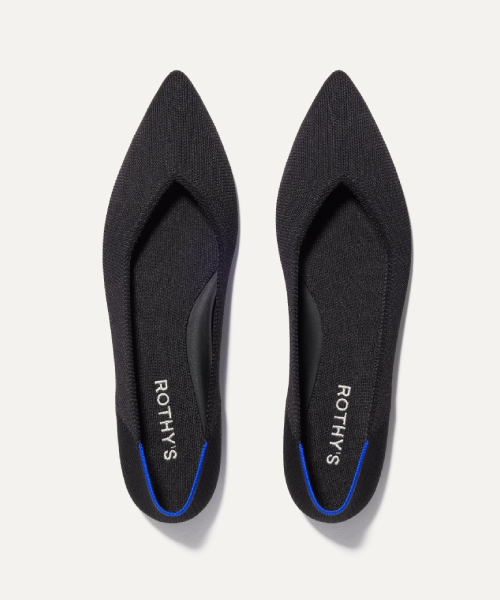
Best for: The brand’s flagship, most extensively reviewed, most consistently praised style — pointed toe flat for work, errands, and elevated casual wear.

Top Features:

  • The specific style that generates the brand’s longest, most consistent multi-year positive ownership accounts — including a 5+ year owner who still gets compliments
  • Lightweight and packable — described as flattening to nearly zero thickness for easy travel packing while retaining shape on arrival
  • Machine-washable confirmed across years of independent testing on this specific style

One Honest Drawback: Narrow across the toe box — size up half a step from your usual, and specifically not recommended for wide feet without first verifying fit through a return-eligible purchase.

Verdict: The right starting point for any first-time Rothy’s buyer, with the explicit half-size-up guidance as a non-negotiable first step.
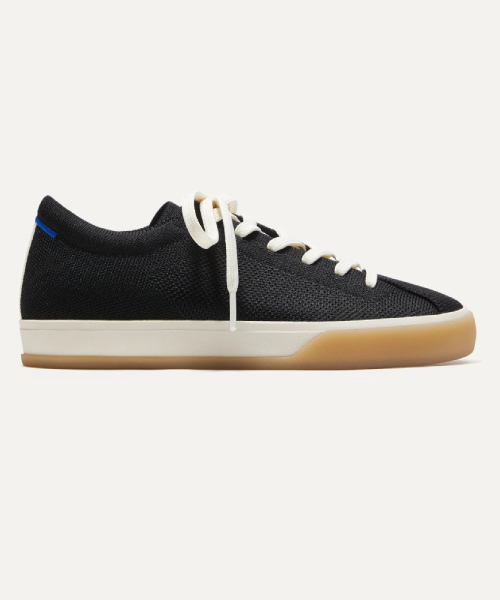
Best for: Buyers wanting the brand’s most breathable, most wide-foot-accommodating style — and the most documented multi-year durability evidence of any Rothy’s category.

Top Features:

  • A PureWow editor’s five-year ownership account — through repeated machine washes with only sole wear to show — is the single strongest durability evidence in the brand’s entire catalog
  • The most accommodating style for wider feet across all Rothy’s silhouettes
  • Knit construction allows more natural flex than the flatter styles

One Honest Drawback: White colorways stain visibly and quickly — spot treat immediately for best results; waiting too long to wash after exposure makes discoloration harder to fully reverse.

Verdict: The most durability-validated, most accommodating-fit option in the lineup.
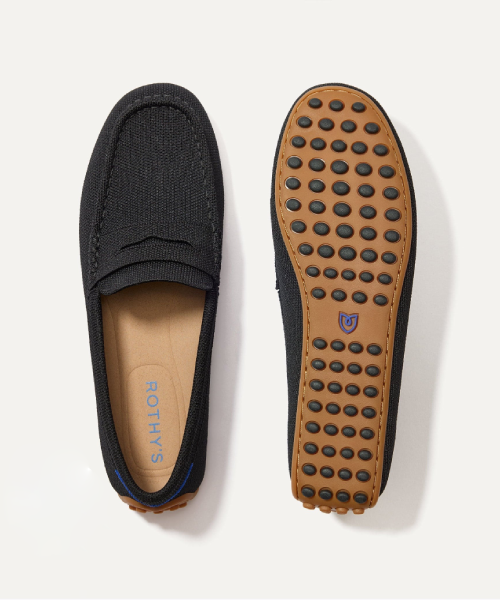
Best for: Buyers wanting a loafer-adjacent slip-on style for everyday casual wear with the brand’s signature machine-washability.

Top Features:

  • Multiple Thingtesting reviewers specifically praise the Driver’s comfort profile as an easy everyday shoe
  • Available in a wide range of seasonal colorways

One Honest Drawback: As with the broader Rothy’s loafer and driver category, the documented fabric deterioration account (loafer, black colorway, after hand-washing) is worth knowing about — machine wash on gentle cycle rather than hand-washing, and avoid dark colorways if fabric performance over time is a concern.

Verdict: A strong everyday option, with the explicit recommendation to machine-wash rather than hand-wash given the documented hand-wash deterioration account.
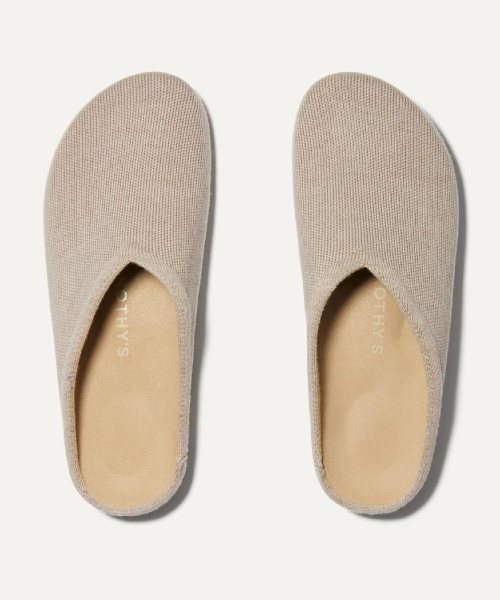
Best for: Home and light-use buyers specifically — multiple Thingtesting accounts describe the clogs as “perfect for wearing around the house” with multi-year durability in that specific, lower-intensity context.

Top Features:

  • Multiple reviewers confirm genuine comfort and sustained durability for around-the-house use over two or more years
  • Machine-washable, confirmed practical in home contexts

One Honest Drawback: A specific, documented Trustpilot account describes the front ankle area of clogs unravelling after 1.5 years of wear — a stress-point vulnerability that appears specific to the ankle construction of this style rather than the broader knit fabric.

Verdict: A reasonable choice for low-intensity home use; approach with more caution for high-frequency outdoor wear given the specific ankle unravelling account.

What Customers Actually Think

Real accounts paraphrased:

  • “We’ve worn Rothy’s for 4+ years across their Points, Sneakers, and Mary Janes, and we keep buying them. The only sting: when a design flaw hit, they offered $30 off a replacement instead of fixing it.”
  • “I’ve had my Rothy’s for well over 5 years now and I still get compliments on them. The front of the sole was coming off a little bit, but shoe glue fixed it.”
  • “I own many Rothy’s shoes, but a pair of casual clogs started unravelling near the ankle after 1.5 years. Rothy’s pointed to their standard recycling program rather than offering repair or replacement.”
  • “The loafer fabric is now deteriorating — threads in the recycled material are breaking and sticking out. It looks like white dust all over the black fabric. Rothy’s said it was my handwashing.”
  • “I stepped in a few shallow puddles to have my shoes soak up the mucky water. I ended up walking around in what felt like wet socks for most of a Saturday afternoon. These are fair-weather flats.”
  • “After having children, I find Rothy’s no longer give me the support I need. I still wear the slippers, but for the most part I’ve given them away to friends. I just wish they had more support.”
  • “I’ve had the same pair of Rothy’s sneakers for five years and the fabric is as durable as they come, even after multiple turns in the washing machine.”

Is Rothy's Worth It?

For buyers specifically wanting lightweight, stylish, machine-washable flats or sneakers for fair-weather everyday wear and travel — who size up half a step, don’t have flat feet or arch support needs, and choose core styles (Point, Sneaker) over more structurally complex ones: yes, with reasonable confidence — the multi-year, repeat-purchase evidence base is genuine and specific.

For buyers with wide feet, flat feet, plantar fasciitis, or any need for meaningful structural foot support: approach with significant caution given the consistent, specific documentation of narrow sizing and minimal arch support across independent sources.

For any purchase: understand the warranty response pattern — $30 off a replacement is the documented standard remedy for documented defects and design flaws — and treat this as a premium casual shoe rather than a long-investment workhorse piece expected to last a decade with warranty backing.

Rothy's vs Vivaia


Rothy’s

Vivaia

Material

Recycled plastic bottles

Recycled plastic bottles

Comfort (insole)

Minimal standard, In Love Insole on select styles

✅ Plush shock-absorbing herbal foam standard

Knit durability

✅ Confirmed 5+ years on sneakers

Shorter track record (founded 2020)

Machine-washable

✅ Yes

✅ Yes

Style range

Good — Points, Sneakers, Loafers, Clogs

Wider variety

Wide-foot suitability

❌ Narrow — mostly not recommended

More varied by style

Price range

$145–$165

$120–$160

Best for

Core style durability, travel-packable flats

Better cushioning, wider fit variety

Where to Buy

rothys.com — direct, full catalog, free shipping on orders over $75 in the US. Select Nordstrom locations — confirmed in-person retail availability as of 2026 for buyers wanting to evaluate fit before purchase. Size up half a step from your usual as a default starting point.

FAQs

Are Rothy's actually machine washable?

Yes, confirmed across multiple 4–5 year ownership accounts through repeated machine washes on gentle cycle, cold water. One specific documented case describes fabric deterioration after hand-washing — machine wash rather than hand-wash for best results.

Do Rothy's have arch support?

Minimal to none in the standard footbed — consistently and specifically documented across multiple independent sources as not suitable for plantar fasciitis, flat feet, or buyers needing meaningful structural support. The In Love Insole on select styles improves stability modestly.

Should I size up in Rothy's?

Yes — sizing up half a step from your usual is the most consistent recommendation across multiple independent sources, particularly for The Point and other narrow-toe styles.

Are Rothy's waterproof?

No — the open-weave knit construction absorbs water and is specifically characterized by multiple reviewers as “fair-weather flats” not suitable for rain or puddles.

Do Rothy's last a long time?

Variable by style — core knit styles (The Point, The Sneaker) have the strongest multi-year durability evidence, including a confirmed 5-year PureWow sneaker account. Styles with structural stress points (bows, ankle areas on clogs) show more documented early wear cases.

Final Verdict

Rothy’s earns its genuine, sustained following through a specific combination that’s harder to achieve than it sounds: stylish silhouettes that age well, machine-washability that actually holds up over years of regular use, and a genuine sustainability production model backed by verifiable certifications and specific diversion figures. The 4+ year repeat-purchase accounts from independent reviewers aren’t marketing content — they reflect real, sustained satisfaction from buyers who’ve tested the shoes across seasons and circumstances.

The warranty response pattern, the specific early-failure cases on more structurally complex styles, the arch support absence, and the narrow fit across most silhouettes are real, honest limitations that should shape who buys Rothy’s and what specific styles they choose. Start with The Point or The Sneaker, size up half a step, and treat machine-washability as a feature you’ll actively use — that’s the buyer profile where this brand consistently, specifically delivers.

Overall Rating: 7.6 / 10

Category

Score

Knit Durability (core styles)

9 / 10

Machine-Washability

8.5 / 10

Arch Support

3.5 / 10

Sizing Accuracy

6 / 10

Warranty & Defect Response

4.5 / 10

Sustainability Credentials

9 / 10

Value for Money

7.5 / 10

Overall

7.6 / 10

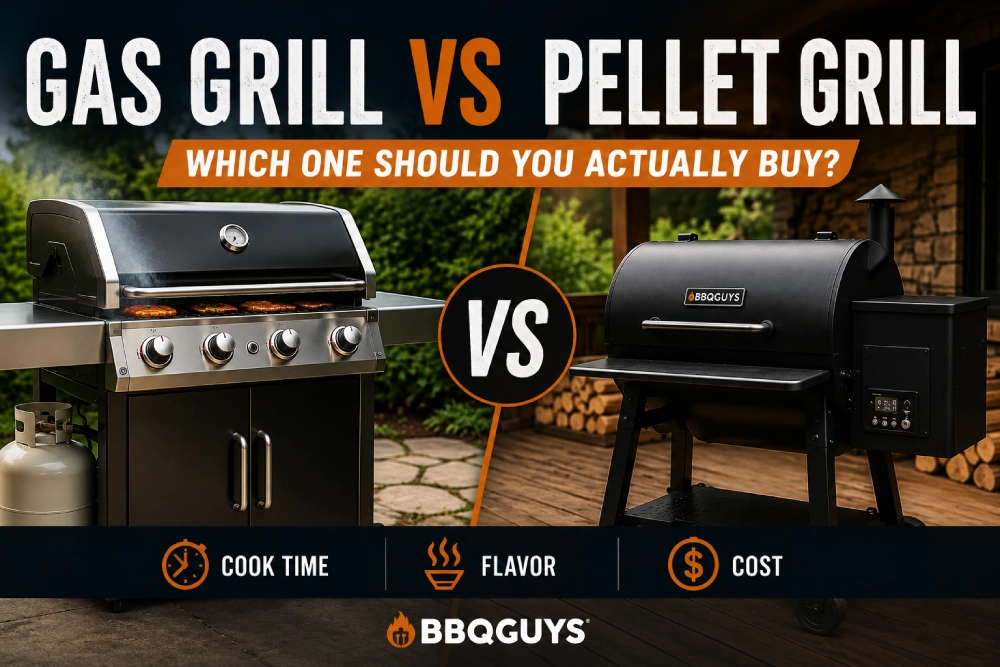
BBQGuys Gas Grill vs Pellet Grill — Which One Should You Actually Buy?

By Posted on 0 Comments13min read0 views
BBQGuys Buying Guide

BBQGuys Gas Grill vs Pellet Grill — Which One Should You Actually Buy?

BBQGuys Gas Grill vs Pellet Grill

Every backyard cook eventually lands on the same question: gas grill vs pellet grill — which one is actually worth it?

The honest answer is that both questions matter more than which technology is objectively superior. What you cook, how often you cook it, and what you want from your backyard setup will tell you more about the right choice than any spec comparison ever will.

This guide breaks down the real differences between gas and pellet grills, walks through six specific models available from BBQGuys, and gives you a clear recommendation framework based on how you actually cook — not how grill reviewers think you should.

The Real Difference Between Gas and Pellet Grills

Gas grills are immediacy machines. Turn a knob, wait ten minutes, and you’re cooking over controlled, direct heat. High temperatures for searing come easily. Multiple independently-controlled burner zones let you run a hot side and a cool side at the same time. Cleanup is straightforward and weekly maintenance is minimal.

Pellet grills are flavor machines. They burn compressed wood pellets as both a heat source and a smoke generator, which means every cook carries genuine wood-smoke character that a gas grill simply cannot produce. The digital PID controller manages temperature automatically, making them genuinely hands-off once you dial in a target temperature. The tradeoffs are a 20–30 minute warmup period, lower maximum temperatures on most models, and more involved maintenance between cooks.

Neither is the universal right answer. Both are genuinely excellent at different things. And increasingly, serious backyard cooks own one of each — deployed for the specific tasks each handles best.

When Gas Beats Pellet

A gas grill is the right starting point if most of what you cook is weeknight food — steaks, burgers, chicken thighs, fish, vegetables — and you want to be cooking within 15 minutes of walking outside. If you regularly cook for larger groups and need consistent, high heat across a large surface, gas handles that more naturally than pellet. If you already have a natural gas line run to your outdoor kitchen, gas also eliminates the propane refill cycle entirely.

Gas grills are also the stronger direct-heat searing tool. Most pellet grills max out around 450–500°F with indirect heat, which is fine for smoking and general cooking but doesn’t produce the same exterior crust on a steak that a properly dialed-in gas burner does. Some pellet grills address this with direct flame access systems, but most buyers with serious searing goals are better served by a dedicated gas setup for that specific task.

When Pellet Beats Gas

A pellet grill earns its place when wood smoke flavor is the point of the cook. Briskets, pork shoulders, full racks of ribs, whole chickens, salmon fillets — anything that benefits from 4–12 hours of gentle, smoky heat is where pellet grills genuinely outperform gas. The set-and-monitor capability makes them practical for overnight or all-day cooks in a way that gas grills simply aren’t designed for.

Pellet grills are also meaningfully more beginner-friendly for smoking than traditional offset smokers. The digital controller handles the temperature management that takes experienced pitmasters years to develop on wood and charcoal, which means a new cook can produce genuinely good smoked food on their first or second attempt rather than after months of trial and error.

Gas Grill vs Pellet Grill: Side-by-Side

BBQGuys Buying Guide

Gas Grill vs Pellet Grill

Gas Grill
Pellet Grill
Warmup time
10–15 min
20–30 min
Max cooking temp
650°F+
450–650°F
Wood smoke flavor
Minimal
Genuine
Temperature precision
Manual burner zones
Digital PID
Hands-off cooking
Limited
Set-and-monitor
High-heat searing
Excellent
Adequate to good
Best cooking style
Direct-heat grilling
Low-and-slow smoking
Weekend BBQ (brisket, ribs)
Possible with add-ons
Purpose-built
Weeknight grilling
Ideal
Good with planning
Maintenance
Simple
More involved

The Gas Grills

Blaze Professional LUX Gas Grill
Featured Pick

Blaze Professional LUX Gas Grill

304 Stainless Steel 18,000 BTU Burners Rotisserie Included H-Style Cast Burners
Lifetime warranty on all stainless steel components
Buy Now on BBQGuys →

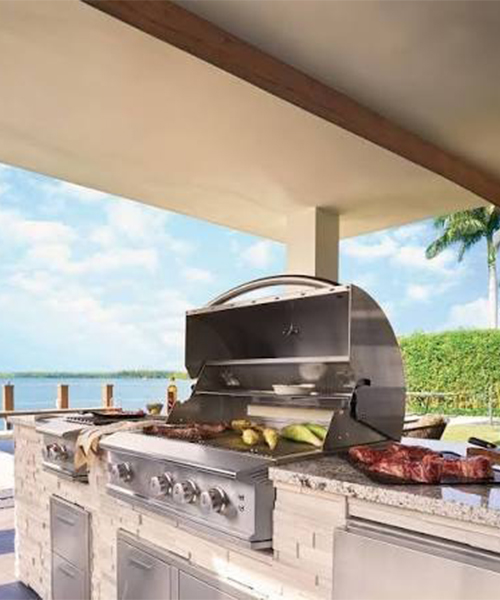
The Blaze Professional LUX is the product that results when a manufacturer decides commercial-grade materials should apply to every component of a residential grill. BBQGuys' Chef Tony verified with an XRF gun that every component — firebox, burners, flame tamers, searing rods, control panel, drip pan, and both inner and outer hood walls — is 304 stainless steel throughout.

The 12mm hexagonal searing rods sit on H-style cast stainless steel burners running 18,000 BTU each. The H-burner design delivers broader flame coverage and more even heat across the entire grate. A waterproof rotisserie kit and 10,000 BTU rear infrared burner come included — ideal for whole birds, pork loins, and large roasts.

⚠️ Honest note: Flare-up management requires some attention at high heat. Technique adjustment is needed with high-fat cooks like steaks and burgers.
Best for: Buyers building a permanent outdoor kitchen who want verified 304 stainless steel construction and a lifetime warranty on the components that matter most.
Napoleon Prestige Pro Gas Grill
Featured Pick

Napoleon Prestige Pro Gas Grill

Canadian Made 1,800°F Sizzle Zone Infrared Rear Burner RGB LED Knobs
Lifetime warranty on housing, cooking grids & stainless steel box
Buy Now on BBQGuys →

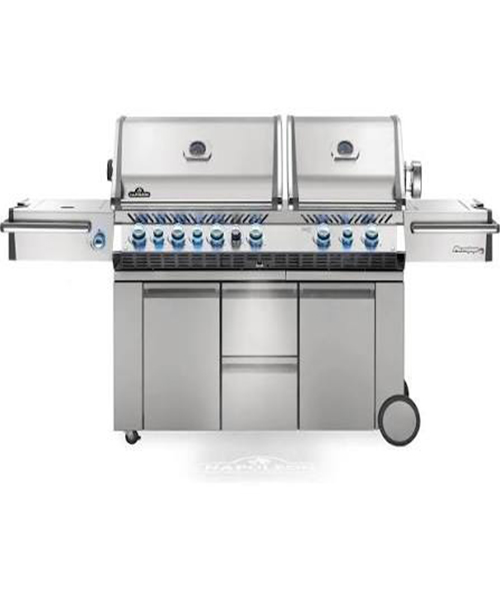
Napoleon manufactures in Canada under Wolf Steel Ltd. — a meaningful distinction when most competitors at this price point have shifted production overseas. That origin shows in the fit and finish of every grill off the line, and it's why Napoleon holds its position as one of the most consistently recommended premium gas grill brands among buyers who've also owned competitive alternatives.

The standout feature is the SIZZLE ZONE infrared side burner, reaching 1,800°F in just 30 seconds — the range where professional steakhouse broilers operate. Use the main surface for indirect cooking and hit the SIZZLE ZONE for finishing sears without waiting on a separate grill. Also included: an infrared rear burner, commercial-grade rotisserie kit, RGB LED safety knobs, interior hood lighting, and a double-lined Lift-Ease lid for one-handed opening.

⚠️ Honest note: Not fully all-stainless construction. Cart legs, back panels, and certain components are cast aluminum and porcelain-enameled steel. Buyers specifically shopping for fully all-stainless builds should know this upfront.
Best for: Buyers who want genuine infrared searing at steakhouse temperatures alongside a well-featured, Canadian-made premium gas grill with a strong multi-tier warranty structure.
Victory Gas Grill
Best Value

Victory Gas Grill

Stainless Steel 3 Burner Infrared Side Burner BBQGuys Support
Backed by BBQGuys direct customer support
Buy Now on BBQGuys →

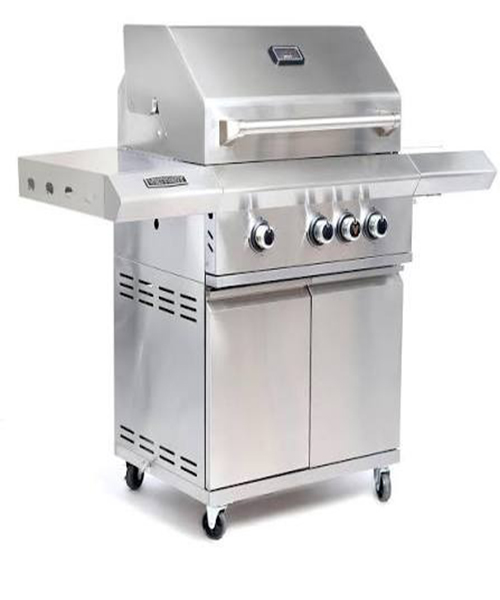
The Victory sits at the value end of the premium gas grill tier — a category that's often the most practically useful for buyers whose honest cooking frequency doesn't justify flagship pricing, or who are splitting a budget between a gas grill and a pellet grill and want to invest more meaningfully in the latter.

Stainless steel construction, solid BTU output for reliable high-heat performance, and BBQGuys' own direct customer support make the Victory a capable workhorse for regular family grilling. It isn't competing with the Blaze Pro LUX on construction spec or the Napoleon Prestige Pro on feature depth — it's competing on value, and it wins that comparison clearly against comparably-priced alternatives from other brands.

Best for: Buyers cooking for a family several nights a week who want genuine quality without the premium investment of flagship options — particularly those pairing a gas grill alongside a separate pellet smoker where budget allocation matters.

The Pellet Grills

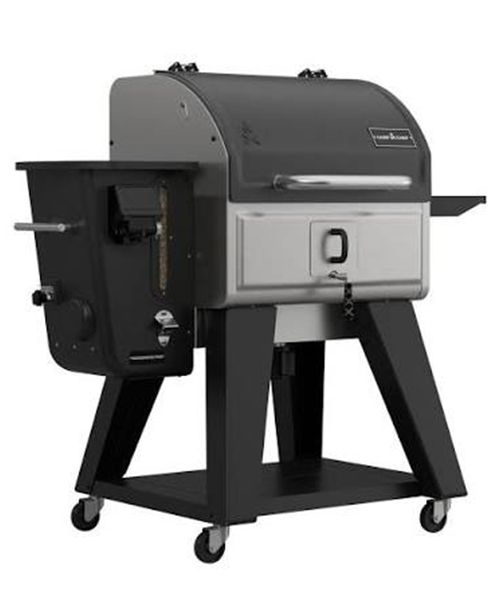
Camp Chef Woodwind Wi-Fi Pellet Grill
Best Versatility

Camp Chef Woodwind Wi-Fi Pellet Grill

Slide & Grill Direct Flame Ash Cleanout System Smoke Control 1–10 Wi-Fi App Control
Camp Chef manufacturer warranty included
Buy Now on BBQGuys →

The Woodwind's most specific differentiator is the Slide and Grill direct flame access system — letting you slide open a section above the fire pot to cook directly over live flame. This meaningfully closes the gap between what a pellet grill can do and what a gas grill handles naturally for high-heat finishing and searing, making it one of the most versatile single-grill options in this price range.

The Ash Cleanout System is the most practically useful day-to-day detail — pull a lever and it empties ash and unburned pellets into a small cup at the base. No removing grates, drip pans, or baffles. Smart Smoke Technology lets you dial smoke output on a scale of 1 to 10, giving real control over smoke intensity for different proteins without swapping pellet varieties between cooks. Wi-Fi connectivity through the Camp Chef app allows temperature monitoring and adjustment from anywhere during a long cook.

⚠️ Honest note: The Camp Chef app isn't as polished as Traeger's. Signal issues can also occur depending on the distance between your router and outdoor cooking area — worth considering for buyers with larger properties.
Best for: Buyers who want a single pellet grill that handles both genuine low-and-slow smoking and direct-flame finishing without needing a second grill or a dedicated separate sear station.
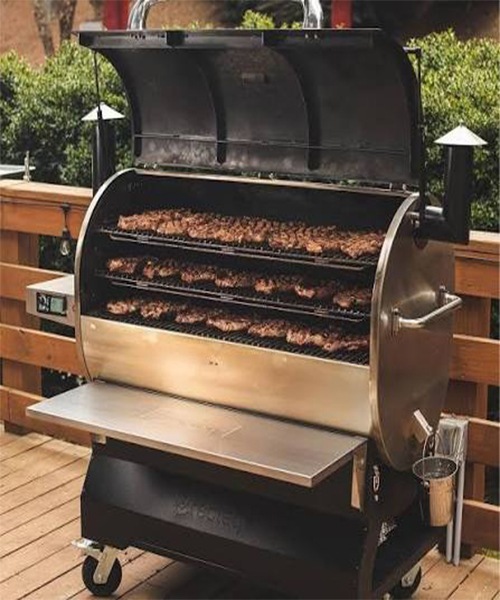
recteq RT-2500 BFG Pellet Grill
Best Large Capacity

recteq RT-2500 BFG Pellet Grill

2,535 Sq In Cooking Space 53-Hour Hopper 180–650°F Range PID Smart Controller
6-year limited warranty against manufacturing defects
Buy Now on BBQGuys →

The RT-2500 is for cooks who have genuinely outgrown what a standard-capacity pellet grill can offer. With 2,535 square inches of cooking space, it fits 15 briskets, 27 racks of baby back ribs, or 30 whole chickens simultaneously. A 53-pound hopper supports up to 53 hours of continuous cooking without a refill — making it one of the most capable backyard pellet grills on the market by raw capacity alone.

Built-in PID Smart Grill Technology maintains temperature within five degrees Fahrenheit of target and is adjustable via the recteq app throughout a cook. The temperature range runs 180–650°F — low-and-slow smoking through high-heat cooking in a single unit. Construction includes 304 stainless steel throughout the firepot, heat deflector, and drip pan, with a heavy-duty powder-coated lid and thick 2¼-inch cooking grates.

⚠️ Honest note: At least one owner reported the heat deflector cracking during initial burn-off and a grease leak developing early in ownership. A documented exception — the majority of RT-2500 accounts describe strong long-term performance, but worth knowing before purchase.
Best for: Caterers, competition BBQ cooks, and serious backyard hosts who regularly feed large groups and need genuine capacity to run multiple large cuts simultaneously without compromising temperature consistency.
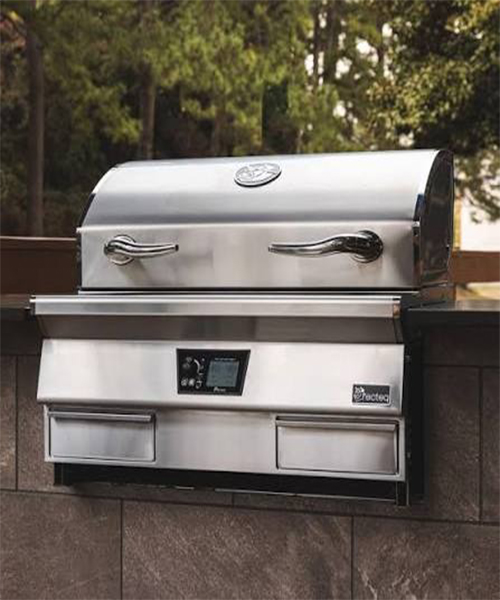
recteq E-Series 1300 Pellet Grill
Best for Apartments & Condos

recteq E-Series 1300 Pellet Grill

No Open Flame 1,300 Sq In Cooking Space Electric Heating Real Wood Smoke
recteq manufacturer warranty included
Buy Now on BBQGuys →

The E-Series 1300 occupies a specific and genuinely useful position in the pellet grill market: it's the solution for buyers who want real wood smoke flavor but live somewhere an open flame grill isn't permitted. Rather than burning pellets as its primary heat source, it uses electric heating elements to maintain cooking temperature and burns pellets purely for smoke generation.

The practical result is genuine pellet-smoke flavor in finished food without the open flame that HOA regulations, condominium bylaws, or apartment building rules prohibit on decks and balconies. At 1,300 square inches of cooking space, the E-Series handles substantial cooks without requiring the patio footprint of larger freestanding pellet grills.

Best for: Apartment residents, condo owners, and anyone subject to regulations that restrict open-flame grills who still want genuine wood-smoke flavor from real wood pellets.
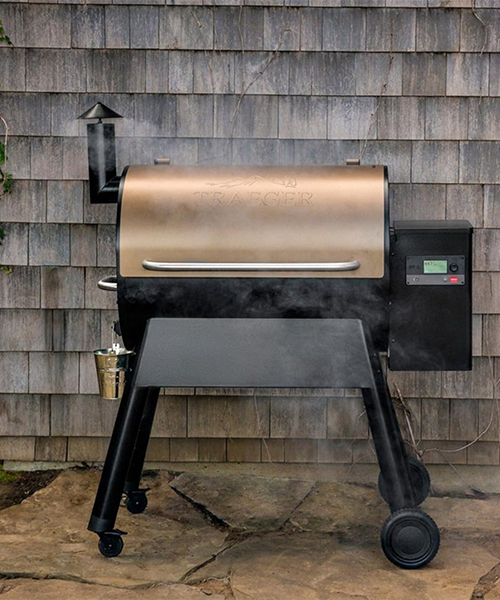
Traeger Pro 780 Pellet Grill
Best for Beginners

Traeger Pro 780 Pellet Grill

780 Sq In Cooking Space WiFIRE App Control D2 Direct Drive Motor Large Owner Community
Traeger manufacturer warranty included
Buy Now on BBQGuys →

Despite the "Pro" in the name, the Traeger Pro 780 is the entry-level model in Traeger's current lineup — something worth understanding clearly before comparing it directly to the Woodwind or RT-2500 on specs. That context doesn't diminish what it does well; it just sets accurate expectations about where it sits within the pellet grill category.

Traeger's specific strength is ecosystem and app quality. The WiFIRE app is widely considered the most polished, most reliable pellet grill app currently available — clean interface, consistent connectivity, a large recipe library, and a substantial owner community that generates genuinely useful real-world cooking guidance. The D2 Direct Drive brushless motor is a reliability-focused detail that reduces motor failures during long overnight cooks — a practical consideration when a 12+ hour cook is at stake.

⚠️ Honest note: At similar price points, several alternatives offer better ash management, variable smoke controls, and direct-flame searing. If performance per dollar is the primary consideration, the Camp Chef Woodwind deserves a direct side-by-side comparison before deciding.
Best for: First-time pellet grill buyers who specifically value the most polished app experience, the largest owner community, and a straightforward path to learning smoked cooking without the steeper learning curve of a traditional offset smoker.

Which One Should You Buy?

You cook on weeknights — steaks, burgers, chicken, fish, vegetables:
Go gas. The Napoleon Prestige Pro for infrared searing capability, the Blaze Professional LUX for fully verified 304 stainless construction, or the Victory for strong value without the flagship investment.

You want to smoke brisket, ribs, and pork shoulder on weekends:
Go pellet. Camp Chef Woodwind Wi-Fi for versatility including direct-flame searing, recteq RT-2500 if you cook for large groups, Traeger Pro 780 if app experience and community matter most.

You want to do both without making significant compromises on either:
The honest answer most experienced cooks land on is two grills. Victory Gas Grill paired with a Camp Chef Woodwind Wi-Fi covers both direct-heat grilling and genuine smoking at a combined investment that stays competitive with a single flagship gas grill.

You live somewhere an open flame grill isn’t permitted:
The recteq E-Series 1300 is the only realistic path to real wood smoke flavor within those restrictions.

You’re new to smoking and want the most forgiving entry point:
Traeger Pro 780 for the app, the online community, and the most accessible learning environment in the pellet grill category.

The Bottom Line on Pellet vs Gas Grill

There’s no universally correct answer in the gas grill vs pellet grill debate, and anyone who tells you otherwise is optimizing for their own cooking style rather than yours.

Gas grills do certain things better — instant heat, high-temperature searing, weeknight simplicity, zone cooking for varied proteins. Pellet grills do other things better — genuine wood smoke flavor, long unattended cooks, digital temperature precision, accessible smoking for beginners. Neither technology replicates what the other does naturally.

The most satisfied backyard cooks own one of each, deployed deliberately for the tasks each handles best. But if you’re choosing just one, let your actual cooking habits make the decision. What you cook most of the time matters more than occasional aspirational use.

Nisolo Shoes Review — Are They Worth The Price? My Honest Experience

By Posted on 0 Comments3min read16 views

Nisolo Shoes Review — Are They Worth The Price? My Honest Experience

Nisolo Shoes Review — Are They Worth The Price? My Honest Experience

Nisolo makes ethical shoes. They pay their workers above living wage (published on their website with specifics), use sustainably sourced materials where possible, and produce at a smaller scale than fast fashion competitors in a way that allows quality control. The sustainability story is documented rather than claimed, which is meaningful in a category where greenwashing is common.

The product has to stand alongside this story rather than relying on it, and here is my honest assessment of whether it does.

What I Bought

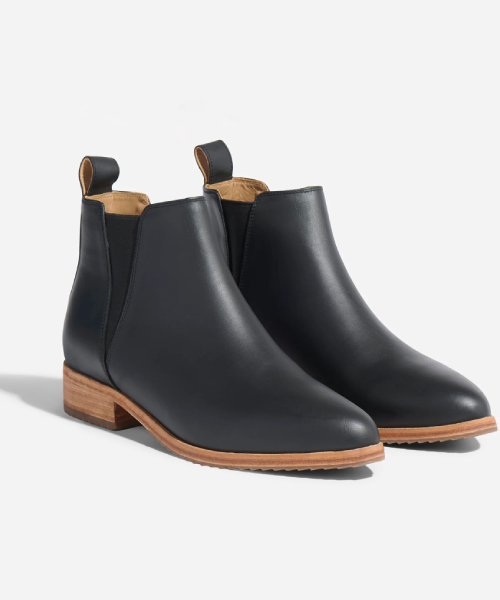
The Nisolo Huarache Loafer in cognac and the Nisolo Chelsea Boot in black. Both purchased approximately fourteen months ago.

The Huarache Loafer is the Nisolo product I’d recommend without qualification. The woven leather construction is genuinely distinctive — the interlaced leather strips produce a texture that no other shoe in my collection has and that looks interesting rather than unusual in the specific way that makes me reach for them repeatedly.

The leather quality is above what I expected at the price. After fourteen months of regular wear (approximately twice per week through the warmer months), the leather has developed a patina rather than showing wear damage. The woven construction has remained tight at every intersection — I’d expected some loosening with repeated wear and haven’t observed it.

The comfort from the first wearing, without break-in required, was noticeable. The footbed is adequately cushioned for a flat shoe and the fit is consistent with European sizing.

Price: £195-215
Available at: Nisolo directly (nisolo.com)
Verdict: Genuinely worth buying. The design is distinctive, the quality is above the price, and the ethical production credentials are documented rather than claimed.

The Chelsea Boot at £215-235 is a more mixed story. The leather quality is equivalent to the loafers — genuinely good — but the construction of the elastic gussets (the fabric panels on the sides of a Chelsea boot that allow it to be put on and removed) is less impressive than on comparable quality boots from other brands.

After fourteen months, the elastic has relaxed more than I’d expect from quality Chelsea boots at this price. The boot still fits and functions, but the fit at the ankle is slightly looser than when new in a way that wouldn’t occur on boots with better gusset construction.

The sole is solid and shows minimal wear after fourteen months. The leather at the toe and heel — the areas of highest contact — shows appropriate wear marks that buff to acceptable appearance.

Verdict: Good but the elastic construction is a limitation. Worth buying at sale price; at full price, I’d compare to other Chelsea boots at the same tier.

The Overall Assessment

Nisolo’s ethical production story is genuine and worth supporting if sustainable and fairly produced goods align with your purchasing values. The product quality is above what I expected and justifies the price in most categories.

The loafers are the clear recommendation. The Chelsea boots are good but have a specific construction limitation that’s worth being aware of. The brand’s other categories — the Derby shoes and Oxford silhouettes — receive reviews that are more consistently positive than the Chelsea boot and would be my next purchase.

Everyday Leather Bags for Women That Are Truly Worth Buying — Honest Picks That Last

By Posted on 0 Comments4min read10 views

Everyday Leather Bags for Women That Are Truly Worth Buying — Honest Picks That Last

The Best Everyday Leather Bags For Women Worth Buying In 2026 — Honest Picks That Last

The bag that I carry most days is a Polène Numéro Un in camel. I’ve carried it for eighteen months. It looks better than it did when new — the matte leather has developed the specific warmth that good leather develops with handling, the edges are slightly darkened at the points of most contact, and the overall patina reads as quality rather than wear.

This is what a good leather bag does. It ages into something better than it was. A bag that looks worse at eighteen months than at new is either poor quality leather or has been mistreated — usually the former, occasionally both.

What I Look For In An Everyday Leather Bag

Full-grain leather is the first criterion. Full-grain is the outermost layer of the hide — the most durable, the layer that develops patina with age rather than simply deteriorating. Top-grain leather (sanded to remove surface imperfections) is acceptable for the price tier below full-grain. Bonded leather and PU are not alternatives worth considering for a bag intended for years of daily use.

The hardware. Zippers should glide smoothly at first use and continue to do so after a year. Clasps should close with positive resistance rather than rattling loosely. D-rings for straps should have no flex when the strap is pulled at bag weight. Hardware that’s lightweight at purchase doesn’t improve.

The stitching at the corners and the handle attachment points. These are the areas of highest stress. Quality stitching at these points doesn’t pull or loosen when pressed. Cheap stitching shows weakness at the first application of force.

The Bags I'd Recommend

I’ve covered my experience of the Numéro Un already. The specific things worth noting for those considering it: the Peau de Blé leather is genuinely distinctive — the matte, textured surface looks different from most leather bags on the market in a way that reads as deliberately designed rather than simply different. The storage system (the magnetic pan rack equivalent for bags — the structure that keeps the bag organised and accessible) is thoughtfully considered.

Available in a range of colours that are updated seasonally with a core permanent range. The neutral tones — camel, black, greige — are the ones to buy for a bag that works with most wardrobes.

Price: £290-350
Available at: Polène directly (polene-paris.com)

I bought the Strathberry East/West Mini last year and have used it specifically for occasions where the Polène is slightly too large — evenings out, events where a smaller bag makes more sense than a day bag.

The bar closure hardware is the distinctive detail — a horizontal bar that opens to access the bag — and it works as well in practice as it looks in product photographs. The leather is full-grain, made in Spain, and the construction at every inspection point is careful.

Price: £495
Available at: Strathberry directly (strathberry.com), Selfridges, Nordstrom

The Cuyana Classic Zip Tote is the work bag that does the job I need a work bag to do: holds a laptop up to 13 inches, a notebook, daily essentials, and doesn’t look like a work bag in the way that briefcases and laptop bags do.

The Argentinian leather holds up to the daily use of a work bag — which is more than a handbag faces: being set on floors, desks, and public transport seats repeatedly. After a year of this use, the Cuyana looks like a quality leather bag that’s been used well rather than a quality leather bag that’s been damaged by use.

Price: £265-295
Available at: Cuyana directly (cuyana.com)

At £178-228, the Madewell Transport Tote is the bag I’d recommend for someone who wants genuine full-grain leather quality at the most accessible price in the category. The open-top format is practically better for daily access than zipped alternatives, the leather quality is above the price, and the bag has the simplicity that makes it versatile across outfit contexts.

Price: £178-228
Available at: Madewell directly, Nordstrom

Conclusion

The leather bag worth buying is the one that improves with use rather than deteriorating through it. Polène delivers this in a design that’s distinctive enough to be interesting and neutral enough to be versatile. Strathberry is the smaller bag for occasions where the day bag is too much. Cuyana solves the work bag problem. And Madewell is the most accessible quality leather bag recommendation for those building a bag wardrobe without large investments. Whatever you choose, buy full-grain leather and care for it with appropriate conditioner — the bag that’s conditioned every few months looks better at year three than the same bag neglected looks at year one.

Bemz IKEA Sofa Covers Review — Worth It Or Not?

By Posted on 0 Comments3min read7 views

Bemz IKEA Sofa Covers Review — Worth It Or Not?

Bemz IKEA Sofa Covers Review 2026 — Worth It Or Not?

Bemz is a Swedish company that makes premium replacement covers for IKEA sofas. The proposition is straightforward: if you have an IKEA sofa frame that’s structurally sound but whose original cover is worn, stained, or simply not what you wanted, Bemz allows replacing the cover with a higher-quality alternative in a range of fabrics that IKEA doesn’t offer.

I had a Söderhamn sofa with a standard beige cover that had survived two years and a child and looked it. The frame was fine. The cover was not.

What I Ordered

The Söderhamn cover in Bemz’s Brera Linen in the colour “Mushroom” — a warm greige that I’d been unable to find in IKEA’s standard cover range. The linen content (40% linen, 60% cotton) was the primary reason for choosing Bemz over replacing with another IKEA standard cover.

The Ordering And Fitting Experience

The Bemz website specifies which cover fits which IKEA sofa configuration — you enter the sofa model and the number of sections and the system identifies the compatible covers. This is more straightforward than I expected.

Delivery took approximately three weeks from Sweden. The cover arrived with fitting instructions that were genuinely useful rather than aspirationally simple — the actual fitting is a physical process requiring approximately forty-five minutes and a second pair of hands for the larger sections.

The fit was precise. The cover sat on the Söderhamn frame in a way that looked considerably more tailored than the standard IKEA cover — the Bemz cover doesn’t have the slightly loose quality that IKEA standard covers develop over time.

The Quality After Fourteen Months

The linen-cotton blend has developed in the way that linen develops with use and washing — slightly softer, with the texture becoming more pronounced rather than degrading. The colour has been consistent through six washes (cold, gentle cycle, air dry).

The specific quality improvement over the standard IKEA cover is visible in person in a way that’s difficult to convey in photographs. The Brera Linen has a texture and weight that’s noticeably different from IKEA’s polyester and cotton blends, and the difference makes the sofa read as a considered choice rather than an accessible purchase.

The Honest Assessment

Worth buying if:

  • Your IKEA sofa frame is in good condition and you want to extend its life with a better cover
  • You want a fabric or colour that IKEA doesn’t offer in standard covers
  • The quality difference between IKEA standard covers and natural fiber alternatives matters to you

Consider alternatives if:

  • The total cost of the Bemz cover plus IKEA frame purchase approaches or exceeds the cost of a different sofa entirely
  • You’re replacing a cover primarily for aesthetic reasons that could be served by IKEA’s own cover range at lower cost

The price: The Söderhamn cover in my configuration cost approximately £285. This is significant — it’s a third of what the sofa cost. But the resulting sofa looks and feels like a genuinely different piece of furniture, which for another five to ten years of daily use represents acceptable value.

Products:

Price: £200-350 depending on configuration
Available at: Bemz directly (bemz.com)

Conclusion

Bemz is worth buying for the specific scenario where a good IKEA sofa frame has an inadequate cover and the replacement cost with a better material is justified by the remaining life of the frame. The quality difference is genuine and the fabric range, particularly the natural fiber options, produces a result that IKEA’s standard covers don’t. The fitting process is more involved than simply ordering but produces a result that looks considerably more considered than an off-the-shelf replacement cover.

Away Luggage Review — I’ve Travelled With It For Two Years. Here’s My Honest Take

By Posted on 0 Comments3min read8 views

Away Luggage Review — I’ve Travelled With It For Two Years. Here’s My Honest Take

Away Luggage Review — I've Travelled With It For Two Years. Here's My Honest Take

Away luggage is one of those products that accumulated a cultural following before I paid much attention to it, and when I finally bought a carry-on in 2023, I was prepared to be disappointed by something whose reputation seemed built more on aesthetics and marketing than on genuine product quality.

Two years and a significant number of trips later, I’m not disappointed. But I also have specific things to say about what it does well and where the gaps are that other luggage might close more effectively.

What I Bought And How I've Used It

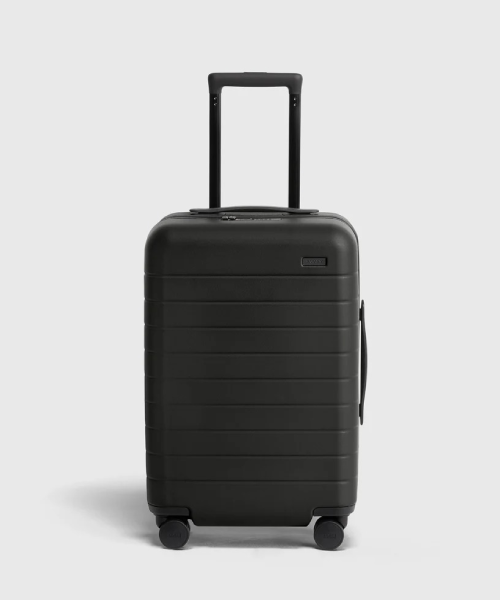
The Away Carry-On Aluminium in slate. I travel for work four to six times per year and with the family three to four times per year, which means the bag gets regular use in a range of contexts — quick one-night business trips, long-weekend family trips where I’m carrying the minimum, and the occasional week-long trip where carry-on only is a commitment that requires careful packing.

What Works Genuinely Well

The spinner wheels are the most immediately apparent quality feature. Luggage wheels are one of those components where the quality difference is immediately tactile — cheap wheels resist direction changes, vibrate on smooth surfaces, and require effort to control. The Away spinner wheels on smooth airport floors genuinely feel like the bag is floating rather than being dragged. In busy airports where the difference between a luggage that’s easy to navigate and one that requires constant correction is significant, this matters.

The compression system (a divider that compresses the main compartment) is genuinely useful in the specific scenario of trying to fit slightly more than the bag comfortably holds. It’s not miraculous — you can’t compress an overpacked bag into a carry-on allowance — but it bridges the gap between a well-packed bag and a correctly-sized bag in a way that’s useful in practice.

The hardshell construction has survived two years without cracking, despite a specific incident where it was dropped from an overhead bin height (approximately 2 metres) onto the floor of a plane by someone who did not handle other people’s luggage with the care I’d apply to my own. There are scuff marks that I consider patina. There is no structural damage.

What's Less Good

The interior organisation. For a bag marketed as thoughtfully designed, the main compartment is essentially one large space with a compression divider. The front compartment has some organisation (a laundry bag, a few pockets) but the main packing space requires either packing cubes or acceptance of everything loose together.

The battery option (which Away offers on some models) is no longer the differentiator it once was — battery regulations on airlines have become more restrictive and several airports have issues with lithium batteries in checked bags, making the ejectable battery a more complicated proposition than it was when the feature was introduced.

The price. The Carry-On Aluminium is approximately £650-700, which positions it at the top of the premium luggage market without quite reaching the absolute reference brands (Rimowa, Samsonite’s premium lines). Whether this price is justified is a calculation based on how much you travel, whether you value the specific quality features, and what comparative alternatives you’ve tried.

The Honest Verdict

Away makes genuinely good luggage that’s worth the price if you travel frequently enough that the quality features (spinner wheels, compression system, hardshell durability) are experienced regularly rather than occasionally. For someone who travels once or twice a year, the premium over a mid-range alternative isn’t justified by usage frequency regardless of the absolute quality.

For someone who travels eight to twelve times per year in a professional context — which is the use case the brand is primarily targeting — the daily-use quality is worth the investment.

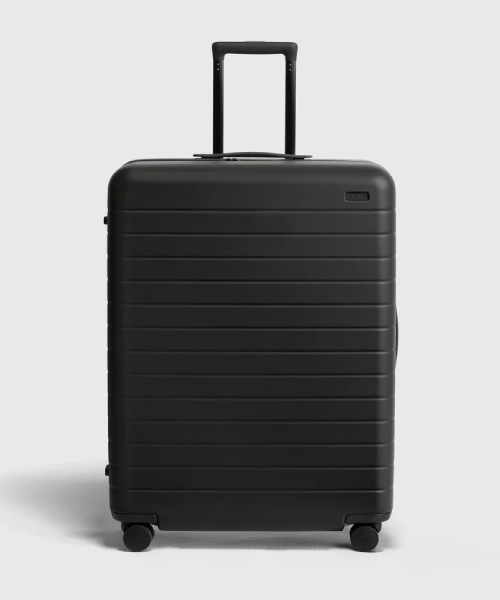
The Carry-On in polycarbonate (the standard plastic rather than aluminium) at £295-375 is the recommendation for most buyers — it provides the same wheel quality, the same compression system, and comparable hardshell durability at approximately half the aluminium price.

Our Product Picks

Price: £295-375
Available at: Away directly (awaytravel.com), in Away stores

Price: £345-425
Available at: Away directly, in Away stores

Eucalypso Home Review — Are The Cooling Sheets Actually Worth It?

By Posted on 0 Comments3min read7 views

Eucalypso Home Review — Are The Cooling Sheets Actually Worth It?

Eucalypso Home Review — Are The Cooling Sheets Actually Worth It?

Eucalypso is the bedding brand that appeared on my radar through a specific search: “sheets for people who sleep hot.” I sleep hot. My partner sleeps cold. Finding bedding that serves both people in the same bed has been a years-long search that produced various compromises, none entirely satisfying.

The Eucalypso sheets are not a compromise. They are a specific solution to a specific problem, and whether they’re the right solution depends entirely on which problem you have.

What Eucalypso Is

Eucalypso makes sheets from TENCEL Lyocell, a fiber derived from eucalyptus wood pulp through a closed-loop production process. The fiber properties are different from cotton in specific ways: it’s finer than cotton at the same weight (producing a softer surface), it wicks moisture more effectively than cotton (the specific property that makes it cooler to sleep in), and it’s produced with significantly less water than conventional cotton.

The cooling property is not a surface treatment or a phase-change material — it’s intrinsic to the fiber structure. This means it doesn’t wash away, doesn’t degrade over time, and produces the same effect after fifty washes as after five.

My Experience After Six Months

The first night, the cooling difference was immediately apparent. The sheets felt cool rather than neutral when getting into bed — a subtle but perceptible temperature difference from cotton. Through the night, the moisture management produced less of the clammy warmth that I’ve experienced with cotton sheets during warm weather.

My partner, who was concerned the cooling sheets would make them too cold, reported that the temperature regulation produced a comfortable neutral rather than the over-cooling they’d expected. The sheets adjust to body temperature rather than maintaining a constant cool that would be uncomfortable for cold sleepers.

After six months and approximately thirty washes (cold, gentle cycle, air dry as recommended), the cooling effect is unchanged. The softness has maintained rather than improved in the way cotton percale improves — TENCEL Lyocell doesn’t have the same improving-with-washing quality that cotton does, but it doesn’t degrade either.

The Honest Comparison With Parachute Percale

I have both sets and use them seasonally — Eucalypso in the warmer months when temperature management is the priority, Parachute in the cooler months when I want the specific texture and warmth of well-broken-in percale.

This seasonal rotation is the honest answer to “which is better?” They’re different products for different needs. The Parachute is better as a material experience — the texture development with washing, the specific quality of well-broken-in cotton. The Eucalypso is better as a temperature management experience.

If forced to choose only one: for hot sleepers, Eucalypso. For neutral or cold sleepers who want the most luxurious cotton experience, Parachute.

The Products

Price: £149-199 for a queen set
Available at: Eucalypso Home directly (eucalypsohome.com)

Price: £119-149
Available at: Eucalypso Home directly

Conclusion

Eucalypso sheets work as described for hot sleepers and work better than cotton alternatives at temperature regulation for most people who try them. The cooling property is genuine and lasting. The sustainability credentials (closed-loop production, significantly lower water usage than cotton) are documented rather than claimed. And the softness from the first night is genuinely different from cotton.

They are not the sheets for those who specifically love the texture of cotton percale — the TENCEL Lyocell feel is distinct and some people prefer cotton’s specific hand. Sample if possible before buying a full set, and if Eucalypso offers a trial option (they have in the past), use it.

IKEA Review — What’s Worth Buying And What To Avoid, Honestly

By Posted on 0 Comments3min read5 views

IKEA Review — What’s Worth Buying And What To Avoid, Honestly

IKEA Review 2026 — What's Worth Buying And What To Avoid, Honestly

IKEA is possibly the most honest furniture retailer I’ve experienced, in the specific sense that the quality and limitations of their products are entirely consistent with the price — which is a quality that most furniture retailers at higher price points can’t claim. The IKEA sofa that disappoints at £400 would not have been better for £800 at IKEA. The IKEA storage system that works excellently at £89 is not inferior to alternatives at £300 — it’s often better.

The challenge with IKEA is knowing which categories represent their best value and which categories are served better by alternatives at comparable or slightly higher prices.

What's Worth Buying

KALLAX, PAX wardrobes, BILLY bookshelves, ALEX drawer units — these are IKEA products that consistently outperform what you’d expect for the price because the engineered wood construction is more durable than solid wood alternatives in similar price tiers and the design systems are genuinely well-considered.

The PAX wardrobe specifically is the product I’d recommend unreservedly. The internal fittings (drawers, shelves, hanging rails in various combinations) allow configuring exactly the storage required, the construction quality holds through decades of regular use (this is not a claim — the PAX design has been in production for decades and people keep them across multiple house moves), and the price for a configured wardrobe is a fraction of equivalent custom-fitted alternatives.

The IKEA APTITLIG bamboo chopping board at £7 is the best budget chopping board available. The bamboo is harder than plastic and gentler on knives than ceramic or glass, and the price makes it replaceable when worn.

The IKEA POKAL glasses and IKEA VARDAGEN kitchen basics are genuinely good functional kitchen products at prices that make breakage and replacement unconcerning.

IKEA’s seasonal plant availability varies, but the terracotta pots and basic ceramic pots are consistently the best value for plant display at accessible prices. The functional quality is appropriate for the purpose.

What To Get Elsewhere

Sofas — IKEA's Most Variable Category

IKEA sofas range from excellent (the Söderhamn, mentioned elsewhere on this site, is a genuinely good sofa for its price) to genuinely disappointing (the entry-level upholstered sofas that lose their shape within two years of regular use). The specific sofa matters enormously and the lowest-price options in the category should be approached with research.

The frame construction on most IKEA sofas is solid — the issue is the cushion density and the cover durability. Read specific reviews for the specific sofa rather than IKEA sofas generally.

Beds — The Frame Is Fine, Invest In The Mattress

IKEA bed frames are structurally solid and appropriately priced. The MALM and HEMNES frames are both durable and well-designed.

The IKEA mattresses are where I’d spend more carefully. The HÁSVÅG and MORGEDAL mattresses at lower price points receive mixed reviews for longevity and comfort maintenance. At the price, the alternative is a significantly better mattress from Emma, Simba, or Casper at comparable or slightly higher total cost.

Curtains — The Textile Category To Approach Carefully

IKEA curtains are the category where the quality variability is highest and the disappointment is most frequent. The specific complaint: the blackout curtains that are partially blackout, the linen-look curtains that wrinkle dramatically and don’t hang with the natural fall that genuine linen achieves.

For curtains specifically, the John Lewis own-brand ready-made range or Dunelm’s made-to-measure service at similar price points produces more consistent results.

The Honest Summary

IKEA is excellent at: storage systems, kitchen basics, lighting infrastructure, plant pots, and specific furniture pieces (Söderhamn sofa, POÄNG chair, HEMNES storage) with strong review histories.

IKEA requires more research in: sofas generally, mattresses, and curtains.

IKEA is not where I’d buy: the statement pieces that define a room aesthetically — these are better sourced from secondhand markets or mid-range brands with more consistent design quality.

Cashmere Sweaters for Women Worth Buying — What Doesn’t Pill

By Posted on 0 Comments4min read4 views

Cashmere Sweaters for Women Worth Buying — What Doesn’t Pill

The Best Cashmere Sweaters For Women Worth Buying — What Doesn't Pill

The cheap cashmere that pills within the first three months is the knitwear equivalent of jeans that stretch out by noon — a product that demonstrates its quality limitations in the first season of ownership. The pilling happens because the fibre is short-staple cashmere: short fibres break loose from the yarn and tangle into pills at the friction points (underarms, elbows, where bag straps contact the shoulder) in a timeline that reveals the quality tier purchased.

Long-staple cashmere — the fibre length specification that distinguishes quality cashmere from commodity cashmere — pills significantly less because the longer fibres are more securely held in the yarn structure. The visible pilling pattern of an expensive cashmere sweater after three years of regular wear looks better than the pilling pattern of a cheap cashmere sweater after three months.

What I Buy And Why

Johnstons of Elgin has manufactured cashmere in Elgin, Scotland since 1797. The continuity of this manufacturing history is not merely heritage marketing — it represents accumulated knowledge of cashmere processing that produces results observable in the finished garment.

The cashmere they use is long-staple from Inner Mongolia, processed in Scotland using water from the local river (which has specific mineral properties that affect the finishing). The resulting sweater has a weight and drape that I’ve noticed is different from other cashmere — a specific density and warmth that lighter cashmere doesn’t replicate.

After three winters of regular wear on the crewneck I bought from them, the pilling is confined to the underarm area and is modest rather than dramatic. The colour has maintained its depth. The shape is as it was when purchased.

At £350-420 for a crewneck, this is a genuine investment. The per-year cost over ten years of ownership — which is entirely achievable with appropriate care — works out to £35-42 per year of wearing something beautiful every day from October through March.

Price: £350-420
Available at: Johnstons of Elgin directly (johnstonsofelgin.com), Selfridges, Net-A-Porter

I want to include this because it answers a question that the cashmere conversation often avoids: what’s the right choice when you want quality knitwear without the cashmere investment?

Uniqlo’s Extra Fine Merino is not cashmere. It’s merino wool, processed finely enough that it doesn’t itch against bare skin. It has different properties — slightly more durable than cashmere, less insulating per weight, a slightly different hand. It is, for everyday wear where the knitwear is the top layer and practicality matters as much as luxury, the correct choice.

At £39.90, I buy multiple colours and wear them hard. They wash well, hold their shape, and the Extra Fine Merino specification means they don’t itch. This is what budget knitwear should look like — not cheap cashmere that disappoints, but quality merino at the right price for the material.

Price: £39.90
Available at: Uniqlo directly, in stores

Arket’s merino is a step up from Uniqlo in construction and colourway quality while remaining accessible. The GOTS certification covers both the organic fibre standard and the processing conditions. The turtleneck construction specifically is well-done — the ribbing is tight and consistent, the seam at the neck-to-body transition is clean, and the overall shape retention after washing is above what the price would predict.

Price: £89-110
Available at: Arket directly (arket.com), ASOS, in stores

Everlane’s cashmere is the place I’d direct someone who wants to try cashmere before committing to Johnstons pricing. The Grade-A specification is genuine — the fibre is longer than commodity cashmere and the pilling timeline is longer than cheap alternatives.

The honest limitation: it’s not Johnstons quality. After a season of regular wear, there’s more pilling than I’d see on the Scottish cashmere at the same point. The trade-off is a price approximately three times lower, which means the per-year cost comparison is closer than it appears.

Price: £100-140
Available at: Everlane directly (everlane.com)

How To Prevent Cashmere From Pilling

Hand wash or use the delicate cycle in a mesh bag — the mechanical action of a standard wash cycle accelerates fibre breakage. Lay flat to dry rather than tumble drying — heat and tumbling accelerate shrinkage and fibre stress. Store folded rather than hung — cashmere stretches under its own weight when hung for extended periods. Remove pills with a cashmere comb or fabric shaver — this doesn’t address the underlying cause but removes the visible evidence and improves appearance.

Conclusion

Cashmere is the category where buying quality once is more satisfying and ultimately more economical than buying cheap repeatedly. Johnstons of Elgin is the reference — the investment that produces genuine luxury for a decade of wearing. Uniqlo Extra Fine Merino is the correct alternative when the investment doesn’t make sense — quality merino is genuinely better than cheap cashmere at the same price. Arket bridges the gap at a quality level above Uniqlo. And Everlane is the accessible cashmere starting point for those who want cashmere without the Johnstons commitment. Whatever you choose, the fibre length is the specification that determines how long the sweater looks good — invest in that specification rather than in the brand name.

Reformation Review — Is It Actually Worth The Price? My Honest Take

By Posted on 0 Comments3min read7 views

Reformation Review — Is It Actually Worth The Price? My Honest Take

Reformation Review — Is It Actually Worth The Price? My Honest Take

Reformation is the brand that appeared in my feed first as a sustainability story and then, once I’d bought a few things, as an actual product assessment. The sustainability story is genuine — the brand publishes RefScale data for each product showing water usage, carbon output, and waste generated, and the numbers reflect genuine investment in sustainable production rather than greenwashing. I appreciated this when buying and continue to appreciate it.

The product assessment is more nuanced. Some Reformation pieces are genuinely excellent. Some have been disappointing in ways that matter. Here’s the honest account after two years and several purchases.

What I've Bought And What I Think

The Elara is the dress that most consistently justifies Reformation’s positioning. The Tencel-Lyocell fabric drapes in a way that makes the dress look considerably more expensive than the price, the adjustable straps accommodate different torso lengths so the length falls correctly across heights, and the colour options are thoughtfully curated rather than simply comprehensive.

After six months of regular wear and monthly washing (following their specific care instructions — cool wash, air dry), the Elara looks essentially the same as when I bought it. The drape hasn’t changed, the colour hasn’t faded, and the stitching at the adjustable straps is intact.

Price: £198-248
Available at: Reformation directly (thereformation.com)
Verdict: Worth buying. The drape and quality justify the price at this specific piece.

Reformation’s Los Angeles factory produces denim that’s among the most honest in the accessible luxury category. The Cynthia wide leg uses rigid denim that holds its shape because it can’t stretch significantly — no elastane, cotton construction, and the specific silhouette that wide-leg jeans should have (wide from the hip rather than from the knee).

The waistband fits high and stays there. The leg falls straight and maintains its fall through a day of wear. After washing, the dimensions return accurately.

Price: £148
Available at: Reformation directly
Verdict: Worth buying for the denim quality and shape retention.

I’ve bought two Reformation linen pieces — a shirt and a pair of trousers. Both are good. Neither is exceptional for the price in the specific way the dresses and denim are.

The linen is a blend rather than pure linen, which means the texture is softer and less distinctive than pure linen’s characteristic feel. The pieces look good and wear comfortably but at the price, I’d have preferred pure linen. This is a specific criticism rather than a general quality complaint.

Price: £98-168
Verdict: Good but check whether the linen content suits what you’re looking for before buying.

The Reformation knitwear has received more mixed reviews in my experience than the other categories. The pieces I’ve tried have pilled earlier than the price would predict. For knitwear specifically, Uniqlo’s Extra Fine Merino or Arket’s equivalent provides better quality per pound.

Price: £98-148
Verdict: Look elsewhere for knitwear at this price.

The Honest Overall Assessment

Reformation is genuinely good at: dresses (the Tencel drape is exceptional), denim (the rigid construction holds its shape), and the sustainability credentials (genuinely substantive rather than superficial).

Reformation is not exceptional at: knitwear, linen blends, and any category where the fabric blend falls short of what the price suggests.

The brand is worth buying from if you’re buying the right pieces. The dress and denim categories are the right pieces. The knitwear category is not.