
Featured Pick
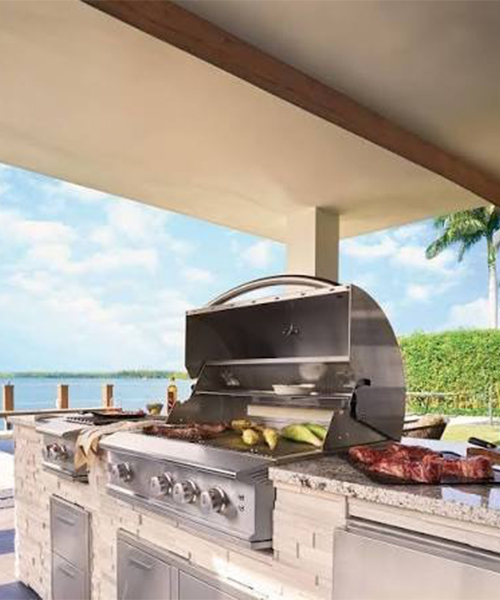
Blaze Professional LUX Gas Grill
Lifetime warranty on all stainless steel components
Buy Now on BBQGuys →
Overview
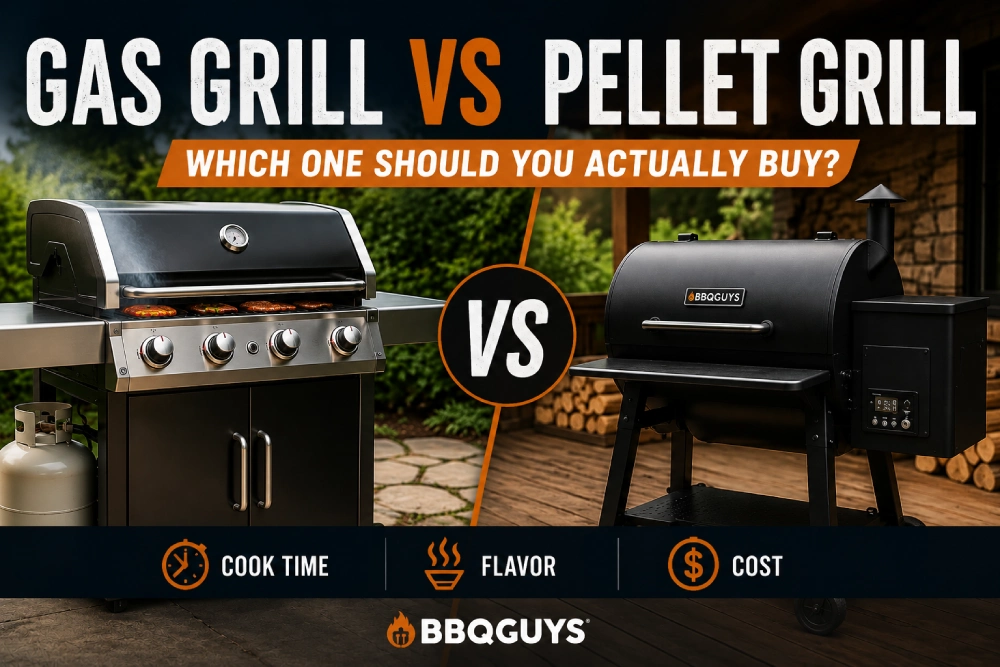
The Blaze Professional LUX is the product that results when a manufacturer decides commercial-grade materials should apply to every component of a residential grill. BBQGuys' Chef Tony verified with an XRF gun that every component — firebox, burners, flame tamers, searing rods, control panel, drip pan, and both inner and outer hood walls — is 304 stainless steel throughout.
Cooking Performance
The 12mm hexagonal searing rods sit on H-style cast stainless steel burners running 18,000 BTU each. The H-burner design delivers broader flame coverage and more even heat across the entire grate. A waterproof rotisserie kit and 10,000 BTU rear infrared burner come included — ideal for whole birds, pork loins, and large roasts.
⚠️ Honest note: Flare-up management requires some attention at high heat. Technique adjustment is needed with high-fat cooks like steaks and burgers.
Best for: Buyers building a permanent outdoor kitchen who want verified 304 stainless steel construction and a lifetime warranty on the components that matter most.
Featured Pick
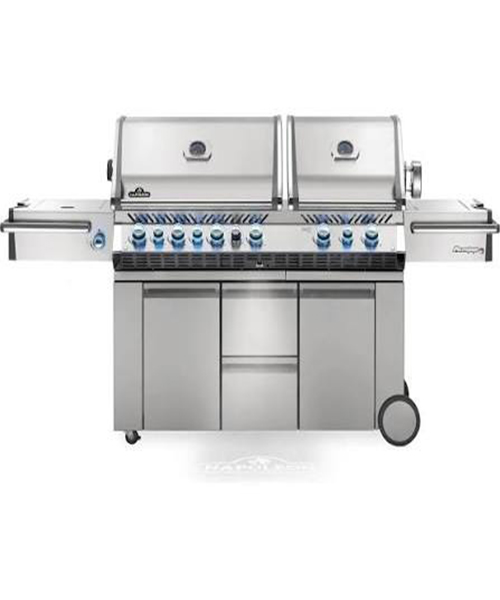
Napoleon Prestige Pro Gas Grill
Lifetime warranty on housing, cooking grids & stainless steel box
Buy Now on BBQGuys →
Overview
Napoleon manufactures in Canada under Wolf Steel Ltd. — a meaningful distinction when most competitors at this price point have shifted production overseas. That origin shows in the fit and finish of every grill off the line, and it's why Napoleon holds its position as one of the most consistently recommended premium gas grill brands among buyers who've also owned competitive alternatives.
Cooking Performance
The standout feature is the SIZZLE ZONE infrared side burner, reaching 1,800°F in just 30 seconds — the range where professional steakhouse broilers operate. Use the main surface for indirect cooking and hit the SIZZLE ZONE for finishing sears without waiting on a separate grill. Also included: an infrared rear burner, commercial-grade rotisserie kit, RGB LED safety knobs, interior hood lighting, and a double-lined Lift-Ease lid for one-handed opening.
⚠️ Honest note: Not fully all-stainless construction. Cart legs, back panels, and certain components are cast aluminum and porcelain-enameled steel. Buyers specifically shopping for fully all-stainless builds should know this upfront.
Best for: Buyers who want genuine infrared searing at steakhouse temperatures alongside a well-featured, Canadian-made premium gas grill with a strong multi-tier warranty structure.
Overview
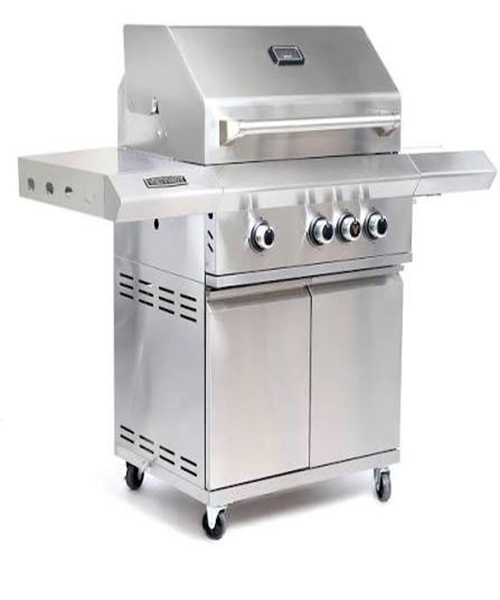
The Victory sits at the value end of the premium gas grill tier — a category that's often the most practically useful for buyers whose honest cooking frequency doesn't justify flagship pricing, or who are splitting a budget between a gas grill and a pellet grill and want to invest more meaningfully in the latter.
Cooking Performance
Stainless steel construction, solid BTU output for reliable high-heat performance, and BBQGuys' own direct customer support make the Victory a capable workhorse for regular family grilling. It isn't competing with the Blaze Pro LUX on construction spec or the Napoleon Prestige Pro on feature depth — it's competing on value, and it wins that comparison clearly against comparably-priced alternatives from other brands.
Best for: Buyers cooking for a family several nights a week who want genuine quality without the premium investment of flagship options — particularly those pairing a gas grill alongside a separate pellet smoker where budget allocation matters.
Best Versatility
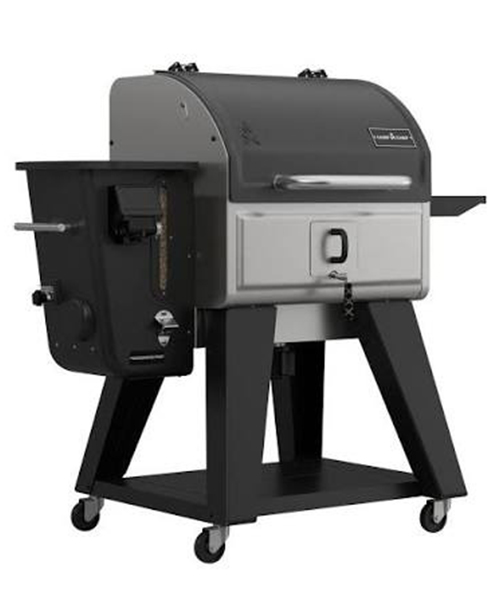
Camp Chef Woodwind Wi-Fi Pellet Grill
Camp Chef manufacturer warranty included
Buy Now on BBQGuys →
Overview
The Woodwind's most specific differentiator is the Slide and Grill direct flame access system — letting you slide open a section above the fire pot to cook directly over live flame. This meaningfully closes the gap between what a pellet grill can do and what a gas grill handles naturally for high-heat finishing and searing, making it one of the most versatile single-grill options in this price range.
Standout Features
The Ash Cleanout System is the most practically useful day-to-day detail — pull a lever and it empties ash and unburned pellets into a small cup at the base. No removing grates, drip pans, or baffles. Smart Smoke Technology lets you dial smoke output on a scale of 1 to 10, giving real control over smoke intensity for different proteins without swapping pellet varieties between cooks. Wi-Fi connectivity through the Camp Chef app allows temperature monitoring and adjustment from anywhere during a long cook.
⚠️ Honest note: The Camp Chef app isn't as polished as Traeger's. Signal issues can also occur depending on the distance between your router and outdoor cooking area — worth considering for buyers with larger properties.
Best for: Buyers who want a single pellet grill that handles both genuine low-and-slow smoking and direct-flame finishing without needing a second grill or a dedicated separate sear station.
Best Large Capacity
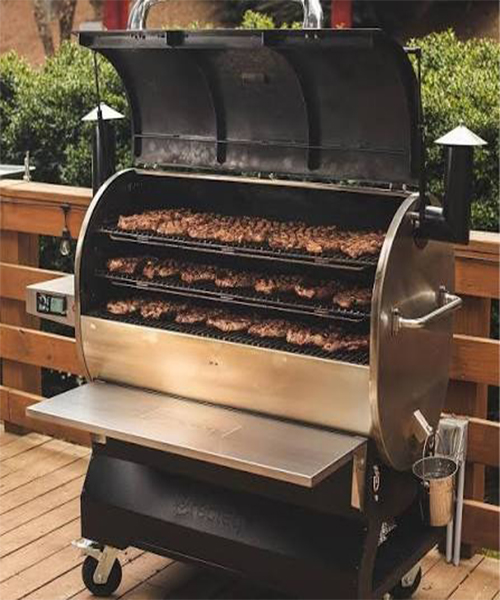
recteq RT-2500 BFG Pellet Grill
6-year limited warranty against manufacturing defects
Buy Now on BBQGuys →
Overview
The RT-2500 is for cooks who have genuinely outgrown what a standard-capacity pellet grill can offer. With 2,535 square inches of cooking space, it fits 15 briskets, 27 racks of baby back ribs, or 30 whole chickens simultaneously. A 53-pound hopper supports up to 53 hours of continuous cooking without a refill — making it one of the most capable backyard pellet grills on the market by raw capacity alone.
Construction & Performance
Built-in PID Smart Grill Technology maintains temperature within five degrees Fahrenheit of target and is adjustable via the recteq app throughout a cook. The temperature range runs 180–650°F — low-and-slow smoking through high-heat cooking in a single unit. Construction includes 304 stainless steel throughout the firepot, heat deflector, and drip pan, with a heavy-duty powder-coated lid and thick 2¼-inch cooking grates.
⚠️ Honest note: At least one owner reported the heat deflector cracking during initial burn-off and a grease leak developing early in ownership. A documented exception — the majority of RT-2500 accounts describe strong long-term performance, but worth knowing before purchase.
Best for: Caterers, competition BBQ cooks, and serious backyard hosts who regularly feed large groups and need genuine capacity to run multiple large cuts simultaneously without compromising temperature consistency.
Best for Apartments & Condos
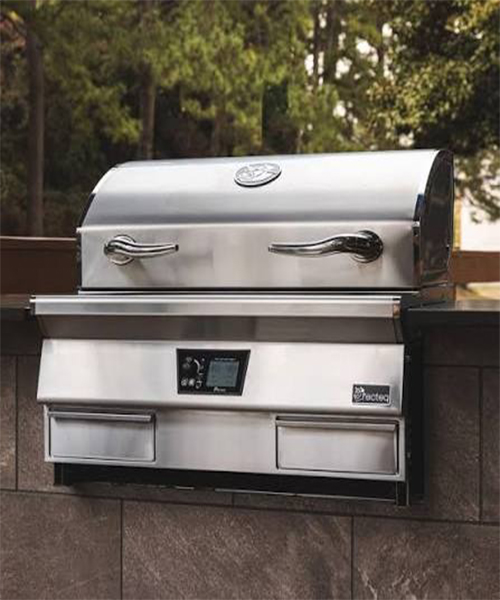
recteq E-Series 1300 Pellet Grill
recteq manufacturer warranty included
Buy Now on BBQGuys →
Overview
The E-Series 1300 occupies a specific and genuinely useful position in the pellet grill market: it's the solution for buyers who want real wood smoke flavor but live somewhere an open flame grill isn't permitted. Rather than burning pellets as its primary heat source, it uses electric heating elements to maintain cooking temperature and burns pellets purely for smoke generation.
Why It's Different
The practical result is genuine pellet-smoke flavor in finished food without the open flame that HOA regulations, condominium bylaws, or apartment building rules prohibit on decks and balconies. At 1,300 square inches of cooking space, the E-Series handles substantial cooks without requiring the patio footprint of larger freestanding pellet grills.
Best for: Apartment residents, condo owners, and anyone subject to regulations that restrict open-flame grills who still want genuine wood-smoke flavor from real wood pellets.
Best for Beginners
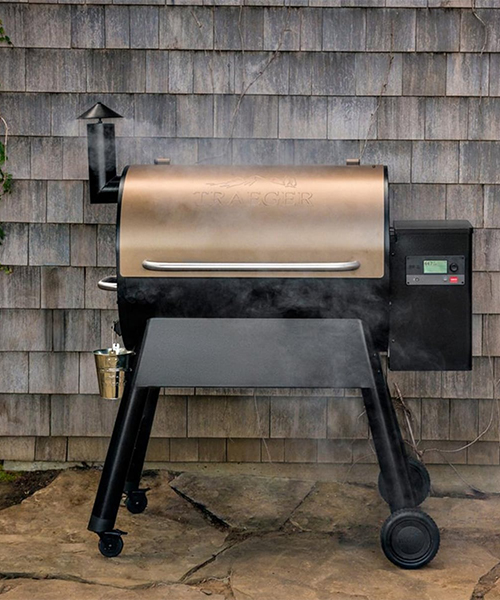
Traeger Pro 780 Pellet Grill
Traeger manufacturer warranty included
Buy Now on BBQGuys →
Overview
Despite the "Pro" in the name, the Traeger Pro 780 is the entry-level model in Traeger's current lineup — something worth understanding clearly before comparing it directly to the Woodwind or RT-2500 on specs. That context doesn't diminish what it does well; it just sets accurate expectations about where it sits within the pellet grill category.
Where It Stands Out
Traeger's specific strength is ecosystem and app quality. The WiFIRE app is widely considered the most polished, most reliable pellet grill app currently available — clean interface, consistent connectivity, a large recipe library, and a substantial owner community that generates genuinely useful real-world cooking guidance. The D2 Direct Drive brushless motor is a reliability-focused detail that reduces motor failures during long overnight cooks — a practical consideration when a 12+ hour cook is at stake.
⚠️ Honest note: At similar price points, several alternatives offer better ash management, variable smoke controls, and direct-flame searing. If performance per dollar is the primary consideration, the Camp Chef Woodwind deserves a direct side-by-side comparison before deciding.
Best for: First-time pellet grill buyers who specifically value the most polished app experience, the largest owner community, and a straightforward path to learning smoked cooking without the steeper learning curve of a traditional offset smoker.