
Rothy’s Review — Are They Worth It?

Rothy’s most credible piece of evidence across this entire research cycle is a specific, four-plus-year ownership account from a reviewer who has worn the Points, Sneakers, and Mary Janes across that full period and keeps buying more. Pairing that kind of sustained, repeat-purchase loyalty against a specific warranty refusal — $30 off a replacement pair offered when strap fabric tore after just a couple of wears on what the same reviewer describes as a design flaw — gives this review its most useful, balanced structure.
Quick Highlights
- ✅ Updated July 2026: Rothy’s remains one of the top picks for sustainable women’s footwear, with The Point and The Flat at $145–$165 confirmed — multiple 4+ year owners keep buying more pairs
- ✅ Machine-washable confirmed across multiple multi-year, independent testers — including a PureWow editor with the same knit sneaker pair for five years through repeated machine washes, still structurally intact
- ✅ Made from 100% recycled plastic water bottles — over 700,000 pounds of plastic diverted from oceans confirmed directly, with production in the brand’s own LEED-certified Gold factory in China
- ✅ 3D knitting process produces virtually zero manufacturing waste — a genuine, specific production advantage over cut-and-sew construction
- ✅ Lightweight and packable — described across multiple travel-focused reviewers as “flatten[ing] out and tak[ing] up nearly zero space” while retaining shape, a genuine practical travel advantage
- ✅ Now available at select Nordstrom locations in addition to direct and rothys.com — a meaningful retail expansion confirmed March 2026
- ✅ Replaceable insoles available on select styles — a practical extended-life feature confirmed by a multi-style, multi-year owner
- ❌ A specific, documented design flaw complaint: Mary Jane strap fabric ripped after just a couple of wears due to how tightly the bow must be tied to stay secure, with Rothy’s response being $30 off a replacement pair rather than repair or replacement of a product the same reviewer characterizes as having a clear design issue
- ❌ A separate, specific account describes clogs unravelling at the front near the ankle after 1.5 years of ownership — with the company pointing to its standard recycling program rather than offering repair or replacement
- ❌ A documented Trustpilot account describes loafer fabric deteriorating after hand-washing in lukewarm water with mild detergent — “threads in the recycled material are breaking and sticking out, like white dust all over the black fabric” — with customer service attributing this to the washing method despite the customer following standard hand-wash guidance
- ❌ Arch support is consistently and specifically documented as minimal across multiple separate, independent sources — specifically not recommended for plantar fasciitis, flat feet, or buyers needing meaningful structural support without an additional insole
- ❌ Not water resistant — a reviewer describes stepping in shallow puddles and walking in what felt like wet socks for most of an afternoon, characterizing them specifically as “fair-weather flats”
- ❌ Sizing runs genuinely inconsistent across styles and markets — a UK Trustpilot reviewer describes a UK size 7 foot not fitting a UK size 7 shoe at all, confirmed not to be a US/UK conversion error; multiple other reviewers recommend sizing up half a step as standard guidance
- ❌ Odor retention in warm weather is a specific, repeated practical complaint — the plastic knit doesn’t breathe as naturally as fabric, requiring more frequent washing during warmer months
Best for: Buyers who specifically want stylish, lightweight, machine-washable flats for fair-weather city wear, travel, and everyday desk-to-errand contexts — who size up half a step from their usual, don’t have flat feet or need meaningful arch support, and who treat machine washability as a core feature rather than a bonus.
Why Trust This Review
Cross-referenced from We Tried It’s detailed 4+ year, multi-style ownership review (updated July 2026), Thingtesting’s 112+ aggregated customer review collection, PureWow’s comparative multi-tester review across men’s and women’s styles, The Atlas Heart’s detailed year-plus travel wear test, The Primpy Sheep’s detailed pros-and-cons multi-wear evaluation, Trustpilot’s 195-review Canada collection including the documented fabric-deterioration complaint, and PureWow’s detailed Rothy’s vs Vivaia three-year comparative review. No commercial relationship with Rothy’s.
Table of Contents
- About Rothy’s
- Rothy’s Review: Full Breakdown
- Best Rothy’s Products Worth Buying
- What Customers Actually Think
- Is Rothy’s Worth It?
- Rothy’s vs Vivaia
- Where to Buy
- FAQs
- Final Verdict
About Rothy's
Rothy’s was founded in 2012 in San Francisco by Stephen Hawthornthwaite and Roth Martin, built around a specific founding premise: take single-use plastic water bottles and turn them into stylish, machine-washable shoes through a 3D knitting process that produces virtually no manufacturing waste. The brand produces shoes in its own factory in China — LEED-certified Gold, zero-waste production — and has confirmed diverting over 700,000 pounds of plastic from the ocean to date. The current lineup spans The Point (signature pointed flat), The Flat (rounded toe version), The Loafer, The Driver, Sneakers in slip-on and lace-up configurations, Clogs, and an expanding men’s range, alongside bags and accessories. Retail availability expanded to select Nordstrom locations in 2026 in addition to direct and rothys.com.
Rothy's Review: Full Breakdown
The Machine-Washability Claim — Genuinely Confirmed, With One Specific Documented Exception
This is where Rothy’s most consistently earns its reputation, and the evidence spans genuine multi-year duration. A PureWow editor who tested men’s styles across the brand confirms the durability directly from personal experience: “I’ve had the same pair of Rothy’s sneakers for five years and at this point, the only thing that’s showing wear is the soles. The fabric, while strong, will stain.” A separate, detailed 4+ year owner who has washed multiple pairs repeatedly through standard machine cycles confirms the same pattern.
The one documented exception deserves careful, direct treatment: a Trustpilot reviewer who specifically hand-washed their black loafers in lukewarm water with a small amount of detergent — standard, gentle care — describes the fabric deteriorating anyway, with threads breaking and giving the appearance of white dust across the black material. The company’s documented response attributed this to the washing method, despite the customer following what most would consider appropriate hand-wash care. This is a specific, real account rather than a broad pattern — but it’s worth knowing before assuming machine-washability is universal across all Rothy’s styles and colorways.
The Durability Split — Multi-Year Satisfaction Alongside Specific Early Failures
This is the most important quality nuance in the entire review, and it deserves direct, honest treatment: Rothy’s durability appears genuinely variable across styles rather than uniform. Multiple long-term accounts describe shoes lasting 5+ years through regular use and repeated washing — a PureWow editor’s five-year sneaker pair, a Thingtesting reviewer’s “well over 5 years” of Points with only a front-sole coming-away issue resolved with shoe glue, a Thingtesting clogs owner of multiple years still wearing them regularly.
Running alongside that evidence: a Mary Jane strap ripping after a couple of wears due to a documented design issue with how tightly the bow must be tied, clogs unravelling at the front near the ankle after 1.5 years, and loafer fabric deteriorating after hand-washing. The honest synthesis: the core knit fabric on the flagship styles (The Point, The Sneaker) appears genuinely durable across years. Styles with structural stress points — bows, straps, ankles on the clog design — show a more documented vulnerability pattern. Choose core styles over more complex structural designs if long-term durability is the priority.
The Warranty and Design Flaw Response — A Specific, Documented, Recurring Concern
This deserves direct, complete treatment because it appears consistently across separate, independent accounts: Rothy’s responds to warranty and defect claims with store credit or a discount toward replacement rather than repair, replacement, or refund. A Mary Jane strap tearing after just a couple of wears from a documented design issue: $30 off a replacement. Clogs unravelling after 1.5 years: a link to the standard shoe recycling program. Loafer fabric deteriorating after hand-washing: attribution to washing method without remedy.
One specific Trustpilot reviewer captures the practical frustration precisely: “I bought the shoes for $119, and they now cost $159, with another $13 just in taxes. I don’t think it’s reasonable for me to pay MORE than I originally bought the shoes for to replace a defective product.” A second documents another frustration: the review link sent with the original purchase confirmation doesn’t work, and there’s no other way to leave an honest review of the specific product on the brand’s own platform — a specific, documented review transparency gap.
Arch Support — Consistently, Specifically Absent
This is one of the most consistent, most specifically documented limitations across this entire research base and deserves direct, prominent acknowledgment. Multiple independent sources reach the same conclusion: Rothy’s provides minimal to no meaningful arch support in the standard footbed. Specifically not recommended for plantar fasciitis. Not recommended for flat feet. A multi-style, multi-year Thingtesting reviewer who previously relied on Rothy’s as her go-to office shoe describes needing more support after having children — “I just wish they had more support” — ultimately keeping only the slippers while giving away other pairs. The In Love Insole, rolled out to select styles as of 2026, is specifically described as more cushioned than the original footbed but not plush — providing more stability on uneven surfaces without transforming the shoe into a support-forward option.
For buyers with any history of plantar fasciitis, flat feet, or pre-existing foot conditions: consider whether an aftermarket insole specifically suited to your foot structure is a reasonable add-on before purchasing, rather than assuming the shoe’s footbed will provide adequate support on its own.
Sizing — A Genuine, Style-Specific Variance Worth Planning Around
The sizing guidance is consistent across multiple independent sources: size up half a step from your usual as the default starting strategy. The Points run narrow, and buyers at the boundary between two sizes typically find sizing up half a step gives more comfortable toe room without significantly affecting heel fit. A UK Trustpilot account documents a more extreme case — a UK size 7 foot that genuinely couldn’t fit into a UK size 7 shoe at all, confirmed not to be a US/UK conversion error — suggesting sizing issues can extend beyond typical half-step variance on some styles or batches.
For wide feet specifically: multiple independent sources confirm Rothy’s generally runs narrow across most styles. The Sneaker is specifically identified as the most accommodating style for wider feet. Most other styles, including the Point and Loafer, are specifically described as not ideal for wide feet even when sized up.
Not Water Resistant — A Specific, Practical Limitation to Know
This deserves direct, practical mention because Rothy’s visible construction — the open-weave knit from recycled plastic — can mislead buyers into assuming water resistance. One specific detailed account: stepping in shallow puddles, immediate soaking through, walking in what felt like wet socks for hours. The characterization across multiple reviewers: “fair-weather flats.” This is not a defect — it’s an inherent characteristic of the construction — but it’s worth knowing before wearing on a rainy day without waterproofing treatment.
The Sustainability Credentials — Genuine, Verified, Specific
For buyers motivated by the brand’s environmental positioning: the specific, verifiable claims are genuinely credible rather than marketing language. 700,000+ pounds of plastic diverted from oceans is a specific, stated figure from confirmed production data. The LEED-certified Gold factory in China is a genuine third-party certification. The 3D knitting process’s near-zero waste advantage over cut-and-sew construction is a real, documentable manufacturing distinction. The brand’s recycling program — bring in any old Rothy’s to a store for recycling — provides a genuine end-of-life option beyond landfill disposal.
Best Rothy's Products Worth Buying
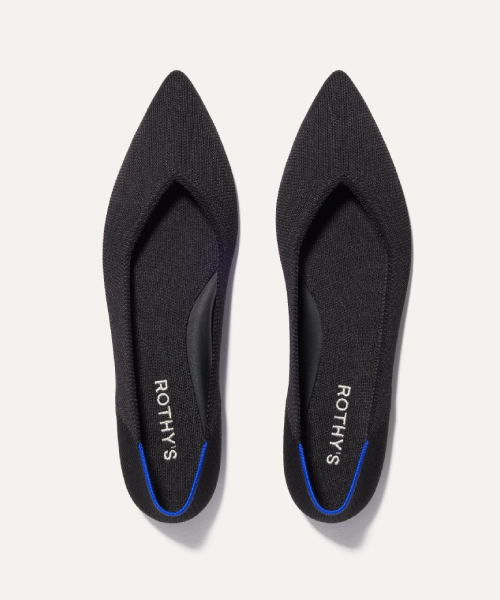
Best for: The brand’s flagship, most extensively reviewed, most consistently praised style — pointed toe flat for work, errands, and elevated casual wear.
Top Features:
- The specific style that generates the brand’s longest, most consistent multi-year positive ownership accounts — including a 5+ year owner who still gets compliments
- Lightweight and packable — described as flattening to nearly zero thickness for easy travel packing while retaining shape on arrival
- Machine-washable confirmed across years of independent testing on this specific style
One Honest Drawback: Narrow across the toe box — size up half a step from your usual, and specifically not recommended for wide feet without first verifying fit through a return-eligible purchase.
Verdict: The right starting point for any first-time Rothy’s buyer, with the explicit half-size-up guidance as a non-negotiable first step.
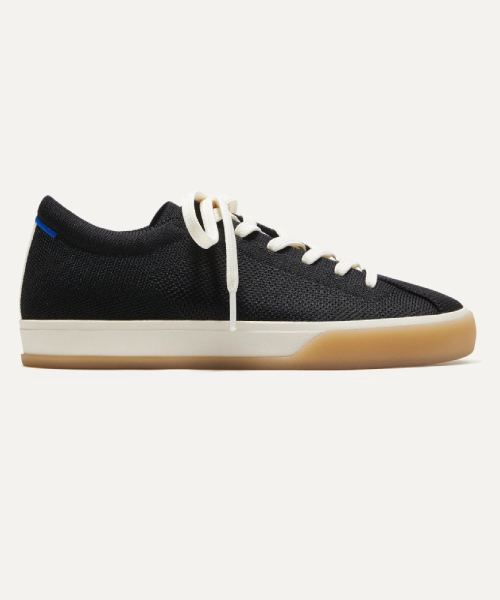
Best for: Buyers wanting the brand’s most breathable, most wide-foot-accommodating style — and the most documented multi-year durability evidence of any Rothy’s category.
Top Features:
- A PureWow editor’s five-year ownership account — through repeated machine washes with only sole wear to show — is the single strongest durability evidence in the brand’s entire catalog
- The most accommodating style for wider feet across all Rothy’s silhouettes
- Knit construction allows more natural flex than the flatter styles
One Honest Drawback: White colorways stain visibly and quickly — spot treat immediately for best results; waiting too long to wash after exposure makes discoloration harder to fully reverse.
Verdict: The most durability-validated, most accommodating-fit option in the lineup.
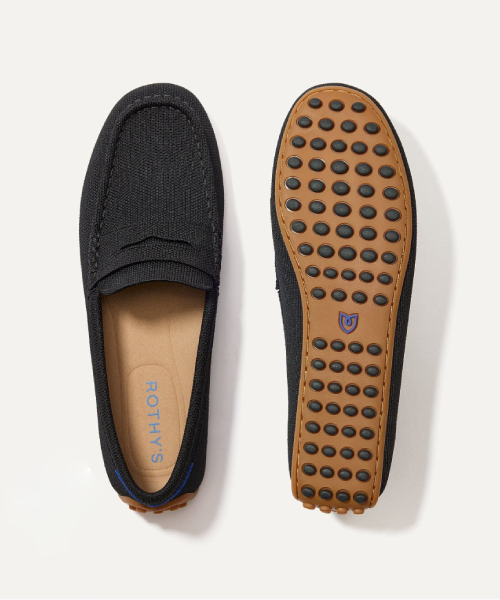
Best for: Buyers wanting a loafer-adjacent slip-on style for everyday casual wear with the brand’s signature machine-washability.
Top Features:
- Multiple Thingtesting reviewers specifically praise the Driver’s comfort profile as an easy everyday shoe
- Available in a wide range of seasonal colorways
One Honest Drawback: As with the broader Rothy’s loafer and driver category, the documented fabric deterioration account (loafer, black colorway, after hand-washing) is worth knowing about — machine wash on gentle cycle rather than hand-washing, and avoid dark colorways if fabric performance over time is a concern.
Verdict: A strong everyday option, with the explicit recommendation to machine-wash rather than hand-wash given the documented hand-wash deterioration account.
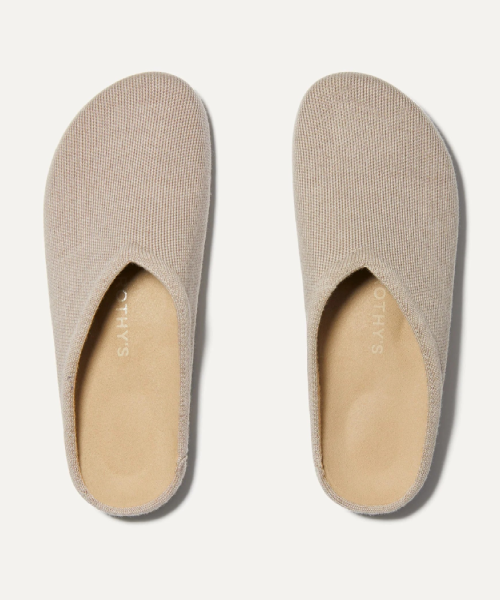
Best for: Home and light-use buyers specifically — multiple Thingtesting accounts describe the clogs as “perfect for wearing around the house” with multi-year durability in that specific, lower-intensity context.
Top Features:
- Multiple reviewers confirm genuine comfort and sustained durability for around-the-house use over two or more years
- Machine-washable, confirmed practical in home contexts
One Honest Drawback: A specific, documented Trustpilot account describes the front ankle area of clogs unravelling after 1.5 years of wear — a stress-point vulnerability that appears specific to the ankle construction of this style rather than the broader knit fabric.
Verdict: A reasonable choice for low-intensity home use; approach with more caution for high-frequency outdoor wear given the specific ankle unravelling account.
What Customers Actually Think
Real accounts paraphrased:
- “We’ve worn Rothy’s for 4+ years across their Points, Sneakers, and Mary Janes, and we keep buying them. The only sting: when a design flaw hit, they offered $30 off a replacement instead of fixing it.”
- “I’ve had my Rothy’s for well over 5 years now and I still get compliments on them. The front of the sole was coming off a little bit, but shoe glue fixed it.”
- “I own many Rothy’s shoes, but a pair of casual clogs started unravelling near the ankle after 1.5 years. Rothy’s pointed to their standard recycling program rather than offering repair or replacement.”
- “The loafer fabric is now deteriorating — threads in the recycled material are breaking and sticking out. It looks like white dust all over the black fabric. Rothy’s said it was my handwashing.”
- “I stepped in a few shallow puddles to have my shoes soak up the mucky water. I ended up walking around in what felt like wet socks for most of a Saturday afternoon. These are fair-weather flats.”
- “After having children, I find Rothy’s no longer give me the support I need. I still wear the slippers, but for the most part I’ve given them away to friends. I just wish they had more support.”
- “I’ve had the same pair of Rothy’s sneakers for five years and the fabric is as durable as they come, even after multiple turns in the washing machine.”
Is Rothy's Worth It?
For buyers specifically wanting lightweight, stylish, machine-washable flats or sneakers for fair-weather everyday wear and travel — who size up half a step, don’t have flat feet or arch support needs, and choose core styles (Point, Sneaker) over more structurally complex ones: yes, with reasonable confidence — the multi-year, repeat-purchase evidence base is genuine and specific.
For buyers with wide feet, flat feet, plantar fasciitis, or any need for meaningful structural foot support: approach with significant caution given the consistent, specific documentation of narrow sizing and minimal arch support across independent sources.
For any purchase: understand the warranty response pattern — $30 off a replacement is the documented standard remedy for documented defects and design flaws — and treat this as a premium casual shoe rather than a long-investment workhorse piece expected to last a decade with warranty backing.
Rothy's vs Vivaia
Rothy’s | Vivaia | |
Material | Recycled plastic bottles | Recycled plastic bottles |
Comfort (insole) | Minimal standard, In Love Insole on select styles | ✅ Plush shock-absorbing herbal foam standard |
Knit durability | ✅ Confirmed 5+ years on sneakers | Shorter track record (founded 2020) |
Machine-washable | ✅ Yes | ✅ Yes |
Style range | Good — Points, Sneakers, Loafers, Clogs | Wider variety |
Wide-foot suitability | ❌ Narrow — mostly not recommended | More varied by style |
Price range | $145–$165 | $120–$160 |
Best for | Core style durability, travel-packable flats | Better cushioning, wider fit variety |
Where to Buy
rothys.com — direct, full catalog, free shipping on orders over $75 in the US. Select Nordstrom locations — confirmed in-person retail availability as of 2026 for buyers wanting to evaluate fit before purchase. Size up half a step from your usual as a default starting point.
FAQs
Are Rothy's actually machine washable?
Yes, confirmed across multiple 4–5 year ownership accounts through repeated machine washes on gentle cycle, cold water. One specific documented case describes fabric deterioration after hand-washing — machine wash rather than hand-wash for best results.
Do Rothy's have arch support?
Minimal to none in the standard footbed — consistently and specifically documented across multiple independent sources as not suitable for plantar fasciitis, flat feet, or buyers needing meaningful structural support. The In Love Insole on select styles improves stability modestly.
Should I size up in Rothy's?
Yes — sizing up half a step from your usual is the most consistent recommendation across multiple independent sources, particularly for The Point and other narrow-toe styles.
Are Rothy's waterproof?
No — the open-weave knit construction absorbs water and is specifically characterized by multiple reviewers as “fair-weather flats” not suitable for rain or puddles.
Do Rothy's last a long time?
Variable by style — core knit styles (The Point, The Sneaker) have the strongest multi-year durability evidence, including a confirmed 5-year PureWow sneaker account. Styles with structural stress points (bows, ankle areas on clogs) show more documented early wear cases.
Final Verdict
Rothy’s earns its genuine, sustained following through a specific combination that’s harder to achieve than it sounds: stylish silhouettes that age well, machine-washability that actually holds up over years of regular use, and a genuine sustainability production model backed by verifiable certifications and specific diversion figures. The 4+ year repeat-purchase accounts from independent reviewers aren’t marketing content — they reflect real, sustained satisfaction from buyers who’ve tested the shoes across seasons and circumstances.
The warranty response pattern, the specific early-failure cases on more structurally complex styles, the arch support absence, and the narrow fit across most silhouettes are real, honest limitations that should shape who buys Rothy’s and what specific styles they choose. Start with The Point or The Sneaker, size up half a step, and treat machine-washability as a feature you’ll actively use — that’s the buyer profile where this brand consistently, specifically delivers.
Overall Rating: 7.6 / 10
Category | Score |
Knit Durability (core styles) | 9 / 10 |
Machine-Washability | 8.5 / 10 |
Arch Support | 3.5 / 10 |
Sizing Accuracy | 6 / 10 |
Warranty & Defect Response | 4.5 / 10 |
Sustainability Credentials | 9 / 10 |
Value for Money | 7.5 / 10 |
Overall | 7.6 / 10 |