House On The Crescent

All Posts By Elody Von

Cosmo JrTrack 5 Review — The Most Accurate GPS Kids Watch Available, With Battery and Service Caveats to Know

By Posted on 0 Comments11min read0 views

Cosmo JrTrack 5 Review — The Most Accurate GPS Kids Watch Available, With Battery and Service Caveats to Know

Save 15% Off On Your All Orders

Save 15% Off On Your All Orders

Save 15% Off On Your All Orders
EXPLORE15
SHOW COUPON
On Going Offer
  • It Works 100% Success It Doesn’t
  • Get 10% Off On Your All Orders

    Get 10% Off On Your All Orders

    Get 10% Off On Your All Orders
    DPF10
    SHOW COUPON
    On Going Offer
  • It Works 100% Success It Doesn’t
  • Signup & Get 10% Off On Your First Order

    Signup & Get 10% Off On Your First Order

    Signup & Get 10% Off On Your First Order
    ACTIVATE DEAL
    On Going Offer
  • It Works 100% Success It Doesn’t
  • Get Free Shipping On Your All Orders

    Get Free Shipping On Your All Orders

    Get Free Shipping On Your All Orders
    ACTIVATE DEAL
    On Going Offer
  • It Works 100% Success It Doesn’t
  • Save 50% Off On JrTrack 5 SE Kids Smartwatch

    Save 50% Off On JrTrack 5 SE Kids Smartwatch

    Save 50% Off On JrTrack 5 SE Kids Smartwatch
    ACTIVATE DEAL
    On Going Offer
  • It Works 100% Success It Doesn’t
  • Shop Our Bundles Starting From $23.99

    Shop Our Bundles Starting From $23.99

    Shop Our Bundles Starting From $23.99
    ACTIVATE DEAL
    On Going Offer
  • It Works 100% Success It Doesn’t
  • Buy Our JrTrack 5 SE Kids Smartwatch For $65

    Buy Our JrTrack 5 SE Kids Smartwatch For $65

    Buy Our JrTrack 5 SE Kids Smartwatch For $65
    ACTIVATE DEAL
    On Going Offer
  • It Works 100% Success It Doesn’t
  • Accessories Collection Starting From $9.99

    Accessories Collection Starting From $9.99

    Accessories Collection Starting From $9.99
    ACTIVATE DEAL
    On Going Offer
  • It Works 100% Success It Doesn’t
  • Cosmo JrTrack 5 Review 2026 — The Most Accurate GPS Kids Watch Available, With Battery and Service Caveats to Know

    Cosmo’s most specific and credible 2026 evidence comes from SafeWise’s independent testing: “The parent app always showed the watch’s exact location in our tests, which can’t be said of most kids smartwatches.” That’s a direct comparative statement from a reviewer who specifically tests GPS accuracy across competing products — and it’s the most important claim any kids safety watch can make. The counterbalancing honest concern is equally specific: a Trustpilot account from a parent who needed help with a JrTrack that was constantly losing connection — called multiple times, sent emails, was repeatedly promised a callback that never happened — describing it as “unacceptable” for a child safety product. Understanding what Cosmo gets definitively right, and where service and battery fall short, is the most useful structure for this review.

    Quick Highlights

    • ✅ HaloGPS accuracy confirmed as best-in-class by SafeWise independent testing — “parent app always showed exact location, which can’t be said of most kids smartwatches”
    • ✅ First kids smartwatch with a curated optional app library — Spotify Kids, age-appropriate news, health videos, and games all parent-managed and completely optional
    • ✅ True Texting (real SMS plus photos and short videos) limited to parent-approved contacts only — strangers cannot reach the watch
    • ✅ SOS button with double-tap power button, plus optional 911 calling — confirmed safety floor that the JrTrack 5 clears comfortably
    • ✅ School Mode and Focus Mode confirmed — parent can lock down apps and calling during school hours or bedtime remotely
    • ✅ Per-app daily time limits available — more granular parental control than most competing kids watches
    • ✅ FlexSIM carrier switching — works across multiple networks for better coverage than single-carrier alternatives
    • ✅ Water resistant confirmed — practical for active children
    • ✅ Magnetic charging cable confirmed — connects easily and doesn’t bump off accidentally
    • ✅ Cosmo actively solicits parent feedback and implements requested features — a multi-watch family notes this specifically after using competing products
    • ✅ BBB documented proactive resolution: JrTrack 3 functionality issues resulted in upgraded replacement at no cost with expedited shipping
    • ❌ Shortest battery life of any kids watch tested by SafeWise — active tracking, calls, and apps together make daily charging a necessity rather than an option
    • ❌ Battery drains significantly faster on real-time GPS updates vs lower-frequency updates — choosing real-time tracking means planning for a charge before end of school day
    • ❌ A specific Trustpilot account: watch constantly loses connection, making location tracking unreliable — “multiple calls, emails, repeated callbacks promised and never delivered — complete waste of money”
    • ❌ A specific network complaint: watch advertised to work in Mexico, texting did not work to Mexico numbers despite initial support assurance, GPS had “terrible lag,” replacement watch offered but issue not resolved
    • ❌ Cosmo Mobile proprietary cellular plan lock-in — outside carriers are not supported, meaning ongoing monthly cost ($9.99–$18/month) is mandatory and non-negotiable
    • ❌ Parent portal app navigation described as “not super easy to navigate” by a multi-watch family who otherwise praised the product
    • ❌ Watch hardware described as “a little clunky” and keyboard “too small for some children” — practical usability concerns for younger kids
    • ❌ GPS accuracy drops indoors and in dense urban environments — the best-in-class outdoor accuracy doesn’t fully transfer to indoor environments
    • ❌ App library may feel restrictive for children on the older end of the 5–12 age target range

    Best for: Parents of children ages 6–11 who want the most accurate GPS tracking available in a kids smartwatch, with parent-controlled calling and texting, optional age-appropriate apps including Spotify Kids, and are comfortable committing to Cosmo Mobile’s proprietary plan and daily charging as part of the experience.

    Why Trust This Review

    Cross-referenced from SafeWise’s independent JrTrack 5 testing (which specifically benchmarks GPS accuracy against competing products), SmartWatchesForKids’ hands-on JrTrack 5 review (updated June 2026), HotAirTag’s June 2026 JrTrack 5 assessment, SimpleModestMom’s JrTrack 4 family testing account, Trustpilot’s 917-review Cosmo Technologies collection, BBB complaint filings, and Cosmo’s own published product specifications and plan pricing. No commercial relationship with Cosmo Technologies.

    About Cosmo JrTrack

    Cosmo Technologies, Inc. is a Denver, Colorado-based family technology company founded with a specific mission: GPS watches and devices designed for children that keep families connected without exposing kids to open internet, social media, or unrestricted communication. The JrTrack is the brand’s flagship product, now in its fifth generation (JrTrack 5) as of 2026. The watch operates on Cosmo Mobile, a proprietary cellular network built specifically for children’s devices with family-safe content filtering. Plans start at $9.99/month and include unlimited talk, text, and data within the Cosmo Mobile ecosystem. The JrTrack 5 hardware retails at $129.99, with the ongoing plan cost representing the real long-term investment. The target age range is 5–12 years, with the sweet spot confirmed by independent reviewers as approximately 6–11.

    Full Review Breakdown

    The GPS Accuracy — The Single Most Compelling Feature

    This is where Cosmo earns its strongest, most specifically-documented advantage over competitors, and it deserves direct, complete treatment because GPS accuracy is the foundational purpose of a kids safety watch.

    SafeWise, which tests GPS accuracy across multiple competing kids smartwatches as part of its evaluation methodology, states specifically: “The parent app always showed the watch’s exact location in our tests, which can’t be said of most kids smartwatches.” SmartWatchesForKids confirms: “HaloGPS delivers best-in-class 5-foot location accuracy.” A parent who has tried three different kids watches before settling on the JrTrack: “it tracks much better than the other options.”

    The specific technology behind this: HaloGPS, which Cosmo describes as combining GPS, WiFi, and cellular triangulation for more frequent and accurate location updates than GPS-only systems. The practical result in outdoor, open environments is location accuracy that multiple independent sources confirm as the best available in the consumer kids smartwatch category.

    The honest limitation: GPS accuracy drops indoors and in dense urban environments. This is true of all GPS-based tracking systems — satellite signal penetration through buildings is physically limited. For parents whose primary use case is outdoor safety (walking to school, after-school activities, parks), Cosmo’s accuracy advantage is real and meaningful. For parents wanting indoor location tracking accuracy, no current consumer smartwatch reliably delivers this.

    The Battery Reality — The Trade-Off for All That Accuracy

    This is the most consistently and specifically documented limitation, and it’s worth naming precisely because it directly affects the safety reliability of the product.

    SafeWise specifically identified the JrTrack 5 as having “the shortest battery life of any watch we tested.” The reason is structural: HaloGPS with frequent location updates, cellular connectivity for calls and texts, and optional apps all running simultaneously consume more power than competing products that offer fewer features. On real-time GPS tracking — which is the mode most parents buying a safety watch want — the battery drains “much faster” per a family reviewer who discovered this during park testing.

    The practical consequence: for parents who expect to send a child to school in the morning and track their location in real-time throughout the day, a charge at pickup or before after-school activities is a realistic planning requirement rather than an occasional inconvenience. SmartWatchesForKids frames this honestly: “buy it for a kid who’ll actually wear and enjoy a watch, where apps and accurate GPS are the draw and a daily charge is no problem.”

    The Plan Lock-In — A Specific, Non-Negotiable Financial Commitment

    Cosmo JrTrack watches require Cosmo Mobile as their cellular service. Outside carriers are not supported. This means:

    1. The $9.99–$18/month plan cost is permanent — there is no lower-cost option, no carrier switching, no family plan consolidation with an existing carrier.
    2. Over a typical 2–3 year ownership period, the plan cost adds $240–$650 to the total investment beyond the $129.99 hardware price.
    3. If Cosmo Mobile’s coverage is inadequate in your area, there is no alternative — documented in the Mexico network complaint where texting to non-US numbers simply didn’t work despite the brand’s support assurances.

    The practical advice: confirm Cosmo Mobile’s network coverage in the specific areas your child will use the watch (home, school route, after-school activities) before purchasing. The brand offers a 15-day guarantee — use that window as a genuine coverage test.

    Safety Features — Genuinely Strong and Complete

    Beyond GPS, the JrTrack 5’s safety feature set is specifically and consistently praised across independent reviews:

    SOS double-tap — confirmed simple enough for young children under stress to activate. Optional 911 calling — available for genuine emergencies. True Texting limited to approved contacts — strangers cannot initiate contact with the watch. School Mode — parent-activated remotely to disable apps and calling during school hours. Focus Mode — extends the same control to bedtime or other contexts.

    The combination of features meets what independent reviewers call the “safety floor every kids watch should meet” — and clears it with features most competing products don’t offer at the same tier. A parent who chose the JrTrack for exactly this reason: “so glad I pulled the trigger and got this watch for my kiddo — he had expressed wanting to walk the couple of blocks home from school, but he was also feeling a little uncertain without a way to reach me.”

    Customer Service — A Documented Split

    The customer service evidence splits between proactive, resolution-focused responses documented in BBB filings — upgraded replacement shipped expedited for a JrTrack 3 functionality issue — and a specific Trustpilot pattern of phone calls made, emails sent, callbacks promised and not delivered, and issues left unresolved.

    The most serious specific account: “The watch constantly loses connection, making location tracking unreliable and defeating the entire purpose of buying it for a child. Customer support is even worse than the product. I called multiple times, sent emails, and was repeatedly promised a callback that never happened. No responses, no accountability, no solution. Selling a child safety product while providing this level of service is unacceptable.”

    For a product whose core function is child safety, customer service failures on connectivity issues represent a specific, serious concern. A child whose watch has lost its connection cannot be located or contacted — and a parent who cannot reach support to resolve that connectivity issue is in exactly the situation the product is supposed to prevent.

    Best Cosmo JrTrack Products Worth Buying
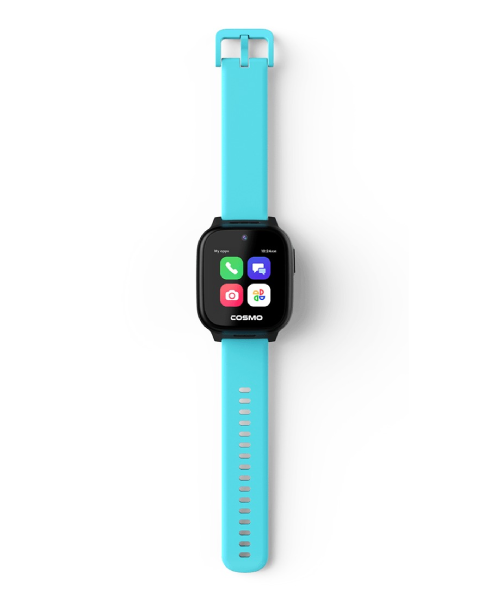
    Best for: Parents of children ages 6–11 who specifically prioritize GPS location accuracy above all other features, and who are willing to commit to daily charging and Cosmo Mobile’s proprietary plan as part of the experience.

    Top Features: HaloGPS with best-in-class 5-foot outdoor accuracy confirmed by independent testing. Optional curated app library including Spotify Kids — first kids watch to offer this. True Texting with approved contacts only. SOS double-tap with optional 911. School Mode and Focus Mode with per-app time limits. FlexSIM multi-network switching.

    One Honest Drawback: Shortest battery life of any tested kids smartwatch — real-time GPS tracking requires daily charging and may require mid-day charging on longer active days. Plan lock-in at $9.99–$18/month is permanent with no carrier alternatives.

    Verdict: The right choice specifically for parents whose primary concern is accurate, reliable GPS location tracking for a child walking or traveling independently. For parents whose primary need is calling and texting rather than precise location, the Garmin Bounce or TickTalk 5 offer better battery and value respectively.
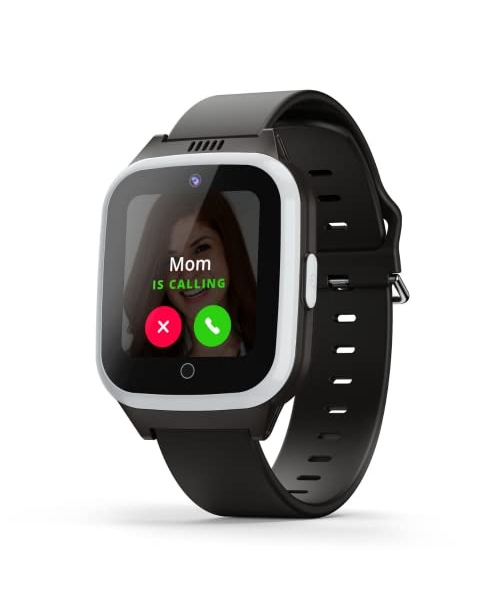
    Best for: Any JrTrack buyer — this is the mandatory service plan for all JrTrack devices.

    Top Features: Unlimited talk, text, and data within the Cosmo Mobile ecosystem. Family-safe content filtering built into the network level. FlexSIM carrier switching for improved coverage.

    One Honest Drawback: No alternative — if Cosmo Mobile has inadequate coverage in your child’s area, there is no other network option. Confirm coverage specifically before purchasing the hardware.

    Verdict: Test during the 15-day guarantee window before committing. Call from your child’s school, their school route, and their after-school activities to confirm call quality and GPS accuracy in the specific locations that matter.

    What Customers Actually Think

    • “So glad I pulled the trigger and got this watch for my kiddo! He had expressed wanting to walk the couple of blocks home from school, but he was also feeling a little uncertain without a way to reach me.”
    • “The watch constantly loses connection, making location tracking unreliable and defeating the entire purpose of buying it for a child. Customer support is even worse. I called multiple times, sent emails, and was repeatedly promised a callback that never happened. Selling a child safety product while providing this level of service is unacceptable.”
    • “This is the third watch we’ve tried and this one has been our favorite so far. It tracks much better than the other options. Cosmo seems to regularly ask for feedback and actually tries to implement new features requested by parents.”
    • “Bought this watch as it was advertised to work in Mexico — texting did not work to Mexico numbers. GPS has a terrible lag. After being unable to completely resolve the issue, Cosmo said they would send a replacement watch.”
    • “Best smartwatch for kids on the market. No need to waste money on an iPhone when JrTrack does everything minus apps and internet distractions.”
    • “GPS tracking can be set to update every few minutes which helps the battery last longer, or in real-time which drains the battery faster. The only drawback I found was battery life, especially when using GPS in real-time.”
    • “The pros of this watch outweigh the cons — there’s not a way to find the watch with a tone when it’s lost in the house, and the service is more expensive, but the better tracking capabilities make it worth it.”

    Is Cosmo JrTrack Worth It?

    For parents whose primary concern is knowing exactly where their child is at any given moment in outdoor environments: yes — the HaloGPS accuracy advantage over competing products is real, independently confirmed, and specifically the feature that justifies the higher total cost.

    For parents whose primary concern is calling and texting rather than precise location: the Garmin Bounce offers better battery life and simpler parental controls at a lower total cost. For parents wanting video calling capability: the TickTalk 5 is specifically recommended by SmartWatchesForKids for that use case.

    For parents in areas where Cosmo Mobile coverage may be inconsistent: test rigorously during the 15-day guarantee window before committing. The documented connectivity failure accounts describe a product that is nonfunctional for safety purposes when the connection is unreliable.

    Cosmo JrTrack 5 vs Competitors


    Cosmo JrTrack 5

    Garmin Bounce

    TickTalk 5

    Gizmo Watch 3

    GPS accuracy

    ✅ Best-in-class

    Good

    Good

    Good

    Battery life

    ❌ Shortest tested

    ✅ Strongest

    Good

    Good

    Optional apps

    ✅ Yes (Spotify Kids)

    ❌ No

    Limited

    ❌ No

    Video calling

    ❌ No

    ❌ No

    ✅ Yes

    ✅ Yes

    Carrier lock-in

    ❌ Cosmo Mobile only

    ❌ T-Mobile/Wi-Fi

    ✅ Any SIM

    ❌ Verizon only

    Hardware cost

    $129.99

    ~$99.99

    ~$149.99

    ~$79.99

    Monthly plan

    $9.99–$18

    ~$5–$10

    ~$10–$15

    ~$10 (Verizon)

    Best for

    GPS accuracy priority

    Battery + value

    Video calling

    Verizon families

    Where to Buy

    cosmotogether.com — direct, includes 15-day satisfaction guarantee. Also available on Amazon. Hardware at $129.99; plans from $9.99/month. Confirm Cosmo Mobile coverage in your child’s specific locations during the guarantee window before the return deadline.

    FAQs

    What age is the Cosmo JrTrack best for?

    The brand targets 5–12 years; independent reviewers consistently confirm the sweet spot as approximately 6–11. Younger children may find the keyboard and screen size challenging; older children may find the curated app library restrictive.

    Does Cosmo JrTrack require a subscription?

    Yes — Cosmo Mobile is mandatory at $9.99–$18/month. No alternative carrier is supported.

    How accurate is Cosmo JrTrack GPS?

    SafeWise testing confirms best-in-class 5-foot accuracy in outdoor environments. Accuracy drops indoors and in dense urban environments — this is a physical limitation of GPS technology, not a Cosmo-specific weakness.

    How long does the battery last?

    Battery life is the JrTrack 5’s documented weakness — SafeWise identified it as the shortest of any kids watch tested. Real-time GPS tracking combined with calls and apps makes daily charging necessary.

    Can my child contact anyone on the JrTrack?

    No — calls and texts are limited to parent-approved contacts only. Strangers cannot contact the watch. Optional 911 calling is available as a safety feature.

    Final Verdict

    The Cosmo JrTrack 5 occupies a genuine, specific niche in the kids smartwatch market: the option for parents whose single most important requirement is knowing precisely where their child is, confirmed by the most rigorous independent GPS testing available. The HaloGPS accuracy advantage is real, documented, and comparative rather than just brand-claimed.

    The trade-offs are equally real: the shortest battery life of any tested kids watch, a proprietary carrier lock-in that makes coverage testing before commitment essential, a customer service pattern that includes documented failures to follow through on promised callbacks, and a monthly plan cost that adds $240–$650 to the total investment over a typical ownership period.

    Buy the JrTrack 5 if GPS accuracy is your specific, primary concern and you’re comfortable with daily charging and the Cosmo Mobile commitment. Test the coverage thoroughly during the 15-day guarantee window. And if connectivity issues arise, document them immediately rather than waiting through repeated callback promises.

    Overall Rating: 7.5 / 10

    Category

    Score

    GPS Location Accuracy

    9.5 / 10

    Safety Features

    9 / 10

    App Library (Spotify Kids etc.)

    8.5 / 10

    Battery Life

    5 / 10

    Carrier Lock-In Flexibility

    4.5 / 10

    Customer Service

    6 / 10

    Value for Money (total cost)

    7 / 10

    Overall

    7.5 / 10

    Cuddle+Kind Review — The Most Genuinely Loved Gift Brand We’ve Reviewed, at a Premium You Need to Know About

    By Posted on 0 Comments9min read0 views

    Cuddle+Kind Review — The Most Genuinely Loved Gift Brand We’ve Reviewed, at a Premium You Need to Know About

    Cuddle+Kind Review 2026 — The Most Genuinely Loved Gift Brand We've Reviewed, at a Premium You Need to Know About

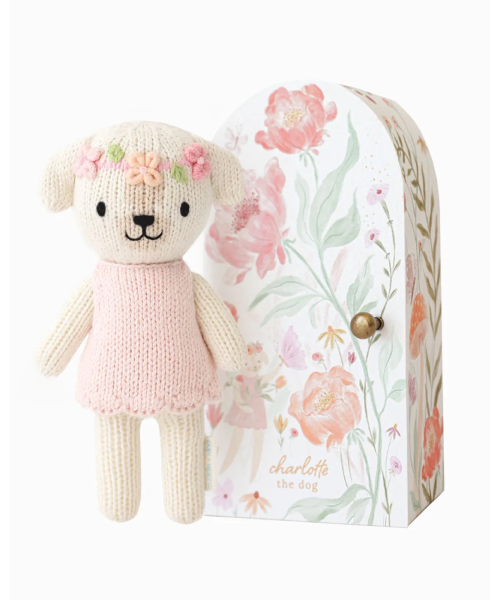
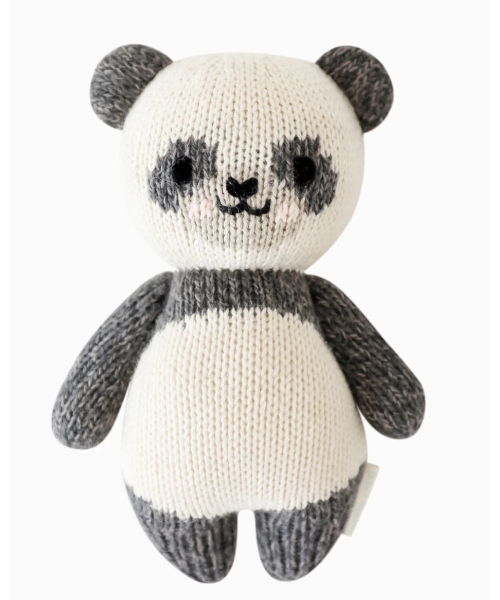
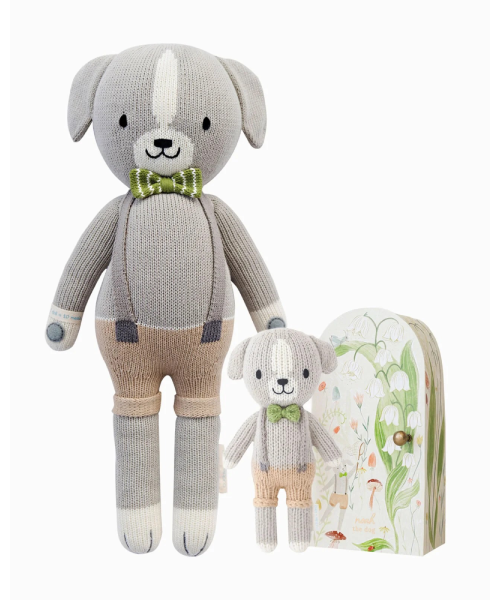
    Cuddle+Kind generates one of the most uniformly, specifically positive evidence bases of any brand in this review series — 2,652 Trustpilot reviews with a 5-star rating where the positive accounts read like genuine enthusiasm rather than templated satisfaction. “The work is METICULOUS and I am so proud of this company.” “My husband bought this for my unborn daughter and I opened it up and burst into tears.” “This has become a tradition for me — I’ve bought quite a few over the years for my grandchildren.” These are not reviews of a brand that delivered a product. These are reviews of a brand that delivered a feeling. The honest counterpoint is proportionate and minor: two separate gifts shipped in the same box created an inconvenience for a buyer wanting to gift them separately, and the premium pricing genuinely requires evaluation before purchase.

    Quick Highlights

    • ✅ 2,652 Trustpilot reviews at 5 stars — one of the most consistently positive review collections for any gift or toy brand independently verified
    • ✅ NAPPA Award winner — confirmed independent recognition from a credentialed toy evaluation body
    • ✅ Each doll hand-knit by artisans in Peru and Nepal earning fair trade wages — confirmed directly, not just brand-stated
    • ✅ 10 meals donated to children in need for every doll sold — 4,245,707+ meals confirmed as donated to date, with named charity partnerships
    • ✅ Specific, deeply emotional repeat purchase accounts: “this has become a tradition for me — I’ve bought quite a few over the years for my grandchildren”
    • ✅ Fast shipping confirmed across multiple independent accounts: “delivered quickly and packaged beautifully”
    • ✅ Quality of knitting and detail specifically praised: “the work is METICULOUS,” “beautiful detail — always get comments from people admiring them”
    • ✅ Repeat purchase behavior documented extensively — buyers purchasing second, third, fourth dolls for different family members or as a recurring gift tradition
    • ✅ Premium cotton yarn and non-toxic materials confirmed — safe for children across ages including newborns
    • ✅ Wide range of designs: “from classic teddy bears to fabulous flamingos and charming reindeer” — specific, distinctive character designs rather than generic stuffed animals
    • ✅ Payment plan options confirmed — making premium pricing more accessible
    • ❌ Two separately-ordered dolls for separate recipients arrived in one box — inconvenient for gift-giving where individual presentation matters
    • ❌ Premium pricing confirmed as the primary purchase barrier — dolls range approximately $50–80+ each, meaningfully above mass-market stuffed toys
    • ❌ Not certified organic — some synthetic yarn blends used alongside the natural cotton; buyers prioritizing full organic certification should note this
    • ❌ Some designs may occasionally be out of stock given the handmade, small-batch production model

    Best for: Gift buyers — particularly for baby showers, new births, grandparents buying for grandchildren, and anyone wanting a premium, mission-driven, heirloom-quality keepsake gift rather than a mass-market toy.

    Why Trust This Review

    Cross-referenced from Trustpilot’s 2,652-review cuddle+kind collection, HonestBrandReviews’ independent product assessment, NAPPA Awards’ confirmed recognition, and cuddle+kind’s own verified meal donation counter and artisan partnership documentation. No commercial relationship with cuddle+kind.

    About Cuddle+Kind

    Cuddle+Kind is a Canadian-founded company established by parents Derek and Jennifer Woodgate after they discovered that 1 in 8 children in North America go to bed hungry. The brand’s founding purpose — creating a product that funds meals for children in need — is built into its business model rather than bolted on as a charitable add-on. Every doll sold funds 10 meals through partnerships with established hunger relief organizations. As of 2026, the brand has donated over 4.2 million meals since founding. Each doll is hand-knit in Peru and Nepal by artisans earning fair trade wages, made from premium cotton yarn, and arrives with a tag identifying the specific artisan who made it — a personal connection rare in the gift product category.

    Full Review Breakdown

    The Quality Evidence — The Most Consistently Specific Positive Data in This Series

    This deserves direct acknowledgment because the quality praise across cuddle+kind’s review collection is both specific and consistent in a way that distinguishes it from the vague “great quality” language common in softer categories.

    “The work is METICULOUS and I am so proud of this company.” This is a buyer using capital letters about craftsmanship on a stuffed doll. “They are well-made, have beautiful detail, and I always get comments from people admiring them” — a specific observation about the doll generating social attention in-person. “It’s perfect knitting and darling presentation” — precision language about a handmade item’s construction from someone who evidently looks at knitting carefully.

    The quality evidence is specifically about the knitting itself: the tension, the finishing, the embroidered details, the construction of small outfit elements and character features. These are handmade items by trained artisans, and the craftsmanship shows in accounts that describe them as “heirloom quality” — the kind of object that gets kept rather than eventually discarded.

    The Mission — Verified, Quantified, Named

    Unlike many brands that claim social impact without verification, cuddle+kind’s mission is documented with specifics: 4,245,707+ meals donated to date, partnerships with named charities, and fair trade wage confirmation for artisans in Peru and Nepal. The NAPPA Award recognition specifically cited: “it is not only huggable and soft, it can also teach children about providing meals to other children in need.”

    For gift buyers, this creates something rare: a gift that is simultaneously beautiful, child-appropriate, heirloom quality, and carries a documented, meaningful charitable purpose that the recipient can explain to the child receiving it. Multiple reviews specifically describe giving the doll as a gift alongside explaining the “10 meals” mission to the child — making the gift itself an education.

    The Pricing — Honest Evaluation Required

    Cuddle+kind dolls range from approximately $50 to $80+ depending on size and design. Against mass-market stuffed toys at $15–30, this represents a meaningful premium. The honest case for the premium: handmade by artisans earning fair trade wages, made from premium materials, constructed to heirloom standards rather than toy-grade specifications, and includes a documented 10-meal donation. The pricing reflects the actual cost of ethical production, not a brand margin.

    Whether the premium is worth it is a personal and financial decision. The review evidence suggests buyers who make this decision positively — and who understand what they’re paying for — describe the purchase with consistent, genuine enthusiasm. The gift receiver reaction accounts (“burst into tears,” “perfect gift”) are specifically noteworthy for a premium doll purchase.

    The Single Documented Complaint — Proportionate and Minor

    The most prominent negative account in the available evidence: two dolls ordered for two separate recipients as gifts arrived in one box, making separate gifting inconvenient. cuddle+kind responded publicly on Trustpilot. This is a real, minor fulfillment inconvenience — worth noting for buyers who want individual presentation for separately-destined gifts — and is proportionate to the brand’s overall performance evidence.

    Best Cuddle+Kind Products Worth Buying

    Best for: Baby showers, new birth gifts, first birthday gifts, and grandparents wanting an heirloom-quality gift that will be kept rather than eventually discarded.

    Top Features: Hand-knit by artisans in Peru or Nepal from premium cotton yarn. Each doll comes with an artisan card identifying who made it. Wide range of distinct characters with individual personalities, birthdays, and favorite quotes in the brand’s narrative. NAPPA Award winner. 10 meals donated per purchase.

    One Honest Drawback: Premium pricing at $65–80 requires the buyer to be genuinely invested in the brand’s quality and mission rather than simply wanting a stuffed animal gift. If a basic stuffed toy meets the need, this price point isn’t justified by function alone.

    Verdict: The right purchase for buyers who want a keepsake gift with a story — the quality, the artisan connection, and the meal mission together create something meaningfully different from a standard stuffed toy.

    Best for: Buyers wanting a smaller, lower-price-point cuddle+kind option for younger children or as a complementary gift alongside the main doll.

    Top Features: The baby giraffe, elephant, and lion specifically praised in multiple independent accounts. “Bought 3-pack of baby animals — giraffe, elephant, and lion — to go along with my granddaughter’s room at my house.” Same fair trade, premium yarn construction as the main dolls.

    One Honest Drawback: If ordering multiple baby animals for separate recipients, note the documented single-box shipping concern and consider ordering separately or noting in the order that separate packaging is needed.

    Verdict: A strong, slightly more accessible entry point to the cuddle+kind range — and specifically well-evidenced as a nursery decoration gift.

    Best for: Buyers wanting to maximize the “10 meals” impact of a single purchase and give a more substantial gift.

    Top Features: Current promotions confirmed: “FREE shipping + 2 FREE art prints + give 30 meals with any 2 tiny dolls” and “FREE collector’s kit box for every 3 baby animals purchased.” These bundle promotions meaningfully increase value per dollar.

    One Honest Drawback: Bundle purchases with multiple dolls are most likely to encounter the single-box shipping concern if recipients are different — order individual gift sets rather than multi-unit bundles when gifting to multiple people separately.

    Verdict: The best value entry for buyers who want to give to multiple children and maximize the meal donation impact.

    What Customers Actually Think

    • “My husband bought this for my unborn daughter and I opened it up and burst into tears! This product came in a timely manner, is beautiful quality and we are so excited to see our little one snuggle it.”
    • “The work is METICULOUS and I am so proud of this company. I can’t wait until I get to order another.”
    • “These dolls are lovely, but I ordered 2 separate dolls for two separate kids as gifts and they arrived in one box. As expensive as these dolls are, you’d think they would at least come in separate boxes. That’s a disappointment.”
    • “I so love these dolls! I have bought quite a few over the years for my grandchildren. It has become a tradition for me. They are soft and cuddly and just adorable — delivered quickly and packaged beautifully. I will continue to order from Cuddle and Kind!”
    • “Such high quality, beautiful dolls that support a wonderful cause! The dolls are very well made and the shipping is also very fast! I love that cuddle+kind has payment options as well.”
    • “They are well-made, have beautiful detail, and I always get comments from people admiring them.”
    • “Why wouldn’t you? I was so impressed by the quality that when my friend had a baby, I couldn’t think of a more special gift. Not only am I giving a gorgeous gift, I’m also helping give food to children in need.”

    Is Cuddle+Kind Worth It?

    For gift buyers wanting a premium, heirloom-quality, mission-driven keepsake for a baby shower, new birth, or special occasion: yes, with genuine confidence. The quality evidence is some of the most consistently enthusiastic of any brand reviewed in this series, and the 4.2 million+ meals donated represents a documented, meaningful charitable impact.

    For buyers wanting a functional stuffed toy for everyday play: the quality is real but the premium may not be justified if mission and craftsmanship aren’t the primary purchasing criteria.

    For anyone considering this as a recurring gift tradition — for grandchildren, new births in extended family, or annual gifts — the repeat purchase evidence specifically supports this use case, with multiple buyers describing it as exactly that.

    Cuddle+Kind vs Competitors


    Cuddle+Kind

    Jellycat

    Steiff

    Manhattan Toy

    Hand-knit by artisans

    ✅ Yes (Peru/Nepal)

    Mass produced

    Mass produced

    Mass produced

    Fair trade production

    ✅ Confirmed

    Not confirmed

    Not confirmed

    Not confirmed

    Charitable mission

    ✅ 10 meals per doll

    ❌ None

    ❌ None

    ❌ None

    Price range

    $50–80

    $20–50

    $30–200+

    $15–40

    Heirloom quality evidence

    ✅ Specifically documented

    Good

    ✅ Strong

    Moderate

    Gift presentation

    ✅ Specifically praised

    Good

    Premium box

    Standard

    Best for

    Mission + keepsake gift

    Everyday gift

    Collector/premium

    Budget gift

    Where to Buy

    cuddleandkind.com — direct, full collection. Free shipping available on bundles (check current promotions). Payment plan options confirmed. If ordering multiple dolls for different recipients, consider ordering in separate transactions or noting the requirement in your order.

    FAQs

    Are cuddle+kind dolls safe for newborns?

    Premium cotton yarn and non-toxic materials confirmed — the brand specifically markets to newborns and infant gift-giving. Confirm specific design dimensions are appropriate for your intended age recipient.

    Is the 10-meals donation real?

    Yes — 4,245,707+ meals donated to date, with named charity partners documented on the brand’s website. This is a verified impact number, not a marketing claim.

    Are the dolls actually hand-knit?

    Yes — each doll is hand-knit by artisans in Peru and Nepal earning fair trade wages, with an individual artisan card included in each doll’s packaging identifying who made it.

    Why are cuddle+kind dolls expensive compared to other stuffed toys?

    The premium reflects fair trade wages for artisans, premium cotton yarn materials, and hand-knit construction that takes meaningfully more time than machine-produced alternatives. The 10-meal donation is also built into the pricing.

    Final Verdict

    Cuddle+kind earns its position as one of the most consistently, specifically, and warmly reviewed gift brands in this series — not through marketing polish but through a product that delivers genuine emotional impact alongside verified artisan quality and documented charitable purpose. The pricing premium is real and requires evaluation, but among buyers who make the decision knowingly, the satisfaction level documented across 2,652 Trustpilot reviews at 5 stars is genuine.

    Buy for baby showers. Buy as a tradition for grandchildren. Buy when you want a gift that is kept, not discarded. And if you’re ordering multiple dolls for separate recipients, order them individually.

    Overall Rating: 9.1 / 10

    Category

    Score

    Doll Craftsmanship & Quality

    9.5 / 10

    Design Range

    9 / 10

    Charitable Mission Authenticity

    9.5 / 10

    Shipping Speed

    9 / 10

    Gift Presentation

    8.5 / 10

    Value for Money

    7.5 / 10

    Customer Service

    9 / 10

    Overall

    9.1 / 10

    The Cover Guy Review — Custom Hot Tub Covers With a Documented Warranty and Quality Problem

    By Posted on 0 Comments8min read0 views

    The Cover Guy Review — Custom Hot Tub Covers With a Documented Warranty and Quality Problem

    The Cover Guy Review 2026 — Custom Hot Tub Covers With a Documented Warranty and Quality Problem

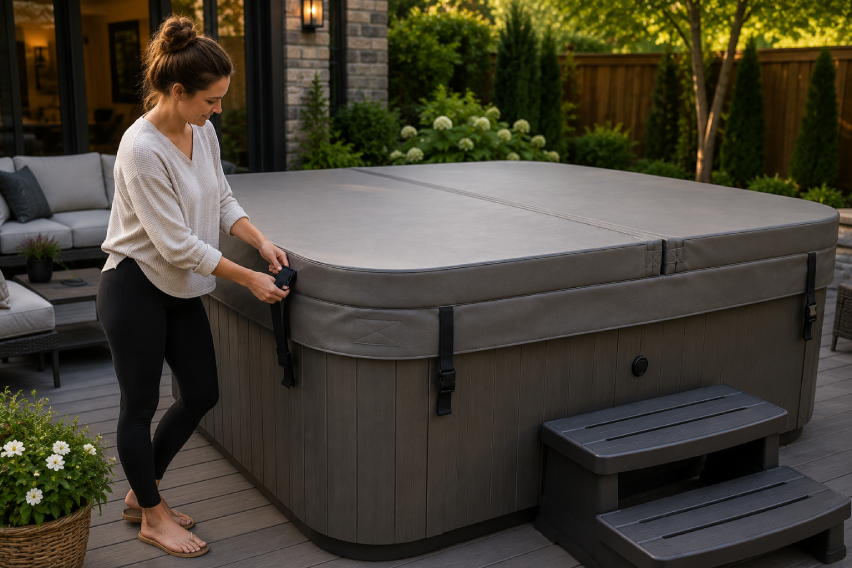
    The Cover Guy’s most specific 2026 evidence is a BBB complaint from a buyer who paid $800+ (cover plus recommended bonnet cover), discovered mold and condensation under the plastic on both sides after 15 months of use, submitted detailed photos to the warranty team, was told it was a “water logging issue” covered for only one year, then received a counter-offer: 10% off a new cover. The buyer’s own measured response: “A hot tub cover is supposed to withstand hot tub chemicals — that’s its entire purpose.” That framing is hard to argue with, and it appears with enough consistency across BBB, Trustpilot, and PissedConsumer to constitute a documented pattern rather than an individual misfortune.

    Quick Highlights

    • ✅ Custom sizing confirmed — type in your hot tub make and model on the website and it auto-generates measurements, reducing the customer’s measurement burden
    • ✅ 4.6/5 rating from 474 verified reviews on the official website for the Custom Hot Tub Replacement Cover — the brand’s own review collection shows majority satisfaction
    • ✅ Easy ordering process confirmed by positive accounts: “Order process on their website was easy — type in your hot tub model and it calculates your measurements”
    • ✅ Reasonable delivery timeline confirmed: “Ordered May 15, 2026 — arrived June 5, 2026”
    • ✅ Marine-grade vinyl and WeatherShield fabric confirmed in product specifications
    • ✅ Ships to US, Canada, and UK confirmed
    • ✅ 3-year warranty stated on product listings for materials and workmanship defects
    • ❌ A March 2026 BBB complaint: cover waterlogged, moisture penetrated foam cores, discoloration developed, no longer sealed or insulated properly — company promised resolution in 3 days, delivered repeated delays, requests for more photos, and no clear warranty decision
    • ❌ Mold and condensation documented at 15 months on an $800+ cover investment including a bonnet cover — warranty rejected as “water logging” (1-year coverage only), resolution offered: 10% off replacement
    • ❌ Wrong-size cover delivered on a website-generated measurement: buyer spent $500+, cover arrived too small, told “because you ordered online, we are not responsible and do not take returns” — 10% discount on replacement offered as resolution
    • ❌ “Once they have your $$ they couldn’t care less about you if there is an issue. Can’t talk to a person on the phone and take weeks to respond to emails” — 30-year hot tub owner’s assessment
    • ❌ Cover arrived damaged — company sent replacement without discussing the damage or acknowledging the pricing discrepancy, ignoring multiple email requests
    • ❌ 3-year warranty “does not abide by warranty” documented as a ComplaintsBoard complaint theme — majority of documented complaints remain unresolved per the platform’s assessment
    • ❌ “Chemical damage” cited as the standard warranty rejection justification — used even when buyers describe themselves as experienced hot tub chemistry managers
    • ❌ Phone contact documented as unavailable for meaningful resolution — email is the only channel, with documented response delays of weeks

    Best for: Hot tub owners who want a custom-fitted cover, understand that the warranty may be difficult to enforce, and purchase with a credit card with strong dispute resolution in case problems arise.

    Why Trust This Review

    Cross-referenced from Trustpilot’s 163-review The Cover Guy collection, BBB complaint filings (both US-East and Canadian branches), ComplaintsBoard’s 24-complaint summary, PissedConsumer’s 225-review aggregate, and The Cover Guy’s own product listings and warranty terms. No commercial relationship with The Cover Guy.

    About The Cover Guy

    The Cover Guy is a North American hot tub cover manufacturer and retailer operating under both a Canadian entity (Burlington, Ontario) and a US-East entity (Sanborn, New York). The brand offers custom hot tub and spa covers built to order based on customer-submitted hot tub model specifications. The product range includes standard replacement covers, deluxe covers with varying insulation ratings, and accessories including bonnet covers, lifters, and spa steps. Covers are manufactured in Mexico per warranty tags documented in customer accounts. The brand advertises marine-grade vinyl construction, a 3-year warranty for materials and workmanship defects, and custom sizing that eliminates the need for customers to measure their own hot tubs.

    Full Review Breakdown

    The Ordering Process — Genuinely Streamlined

    The website experience — entering your hot tub make and model to auto-generate measurements — is a real, practical advantage over competitors that require customers to measure themselves. Multiple positive accounts confirm this works as intended. The ordering timeline is also confirmed as reasonable: a May 2026 order arrived in approximately three weeks. For buyers for whom the ordering process goes smoothly and the cover fits correctly, the brand delivers a custom, reasonably priced hot tub cover without complexity.

    The Mold and Waterlogging Pattern — A Specific, Documented Structural Concern

    This deserves complete, direct treatment because the pattern across independent platforms is specific enough to indicate a real product quality issue rather than individual misuse.

    The documented failure: moisture penetrating the foam core — through failed vapor barriers, tape seams, or material quality — causing the foam to become waterlogged, heavy, and mold-generating. The consequences: the cover stops insulating (hot tub can’t retain heat), develops mold on the underside that contacts hot tub water, and eventually fails structurally. Timelines documented range from 15 months to 3 years — in all cases within or shortly after the warranty period.

    The warranty response pattern: “chemical damage” as the stated rejection justification, regardless of buyer chemistry management practices. This is the specific point where multiple experienced hot tub owners — including a 30-year veteran — express the most frustration: a hot tub cover’s entire operating environment is chemical exposure. Rejecting a warranty claim on chemical exposure grounds is equivalent to rejecting a car battery claim because the car “exposed it to electrical current.”

    The Wrong-Size Case — A Specific, Documented Accountability Gap

    A March 2026 BBB complaint documents a buyer who used the brand’s own website measurement calculator, received a cover in a size that didn’t fit, called customer service, and was told: “because you ordered online, we are not responsible and do not take returns.” The resolution offered: 10% off a replacement cover. The buyer’s financial consequence: $500+ spent on a cover that doesn’t fit their hot tub, with no path to a full correction.

    This specific accountability gap — the online ordering channel creating a liability waiver that the telephone ordering channel doesn’t — is documented in writing. If you order from The Cover Guy, order by phone with a customer service representative rather than online, or at minimum have a representative confirm your measurements by phone before placing the online order.

    Best The Cover Guy Products Worth Buying (With Caveats)

    Best for: Hot tub owners wanting a custom-fitted replacement at a competitive price point — for whom the cover fits correctly and performs adequately during the warranty period.

    One Honest Drawback: Given the documented warranty rejection pattern and the wrong-size case where online ordering created a liability gap, pay by credit card with strong chargeback rights, confirm measurements by phone before placing the online order, and document the condition of the cover with photos immediately upon arrival.

    Verdict: The ordering process is genuinely streamlined for buyers whose experience goes smoothly. The warranty appears difficult to enforce if quality issues arise. Purchase with the strongest possible payment protection.

    Best for: Buyers in cold climates or heavy-use environments wanting maximum insulation — higher foam density should provide better heat retention and (in theory) longer waterlogging resistance.

    One Honest Drawback: Higher price point amplifies the financial consequence if the cover fails within the documented waterlogging timeline. The same warranty difficulty applies regardless of cover tier.

    Verdict: Worth considering in cold climates for the additional insulation — but with the same payment protection advice applying regardless of cover model.

    What Customers Actually Think

    • “Order process on their website was easy. Type in your hot tub model and it will calculate your measurements so you don’t have to. From there you can customize colour, strap location, and skirt length. Ordered May 15, 2026 and it showed up June 5, 2026.”
    • “In April 2026 — about 15 months of use — we discovered condensation and mold underneath the plastic on both sides of the cover. The Cover Guy Warranty stated it was a water logging issue and only covered for a year. They offered me a 10% discount on the purchase of a new cover as compensation.”
    • “Ordered on 02/17/26. Cover arrived 03/02/26. Put it on this morning and it is too small. I called — she told me because I ordered online they are not responsible and do not take returns. I am out over $500.00 because their website got it wrong.”
    • “Once they have your $$ they couldn’t care less about you if there is an issue. Can’t talk to a person on the phone and take weeks to respond to emails. I’ve owned hot tubs for 30 years and have never had mold under my cover.”
    • “I bought a hot tub cover three years ago — it’s full of mold and rot. The foam inside is soaked, the vapor barrier completely failed, and there’s rust on the internal supports. Their so-called warranty is useless, and their customer service is even worse.”

    Is The Cover Guy Worth It?

    With very strong payment protection and realistic warranty expectations: possibly — the ordering process is streamlined and the covers fit correctly in the majority of documented positive accounts.

    Without strong payment protection and a clear plan for what to do if the cover develops mold within 15 months: the documented warranty rejection pattern makes this a higher-risk purchase than the 3-year warranty claim suggests.

    The most actionable guidance: order by phone rather than online, pay by credit card with strong dispute rights, photograph the cover immediately upon arrival, and treat the 3-year warranty as aspirational rather than reliable based on the available evidence.

    The Cover Guy vs Competitors


    The Cover Guy

    Spa Depot

    LeisureTime Covers

    Local dealer

    Custom sizing

    ✅ Auto-generated

    Manual measurement

    Manual measurement

    In-person measure

    Price range

    $300–600

    $250–550

    $300–650

    $400–800

    Warranty

    ⚠️ 3yr (disputed)

    3-year

    3-year

    Varies

    Warranty enforcement

    ❌ Documented difficulty

    Mixed

    Mixed

    Generally better

    Online return if wrong size

    ❌ Denied (documented)

    Standard returns

    Standard returns

    In-person resolution

    Best for

    Streamlined ordering

    Price-conscious

    Standard purchase

    Best warranty

    Where to Buy

    thecoverguy.com — direct. Also operates as The Cover Guy-East (US) and The Cover Guy (Canada). Strongly recommended: confirm measurements by phone before completing online order. Pay by credit card with strong chargeback rights. Photograph immediately upon arrival.

    FAQs

    Is The Cover Guy warranty reliable?

    Based on documented 2026 BBB and Trustpilot accounts, the warranty is difficult to enforce — “chemical damage” is frequently cited as the rejection justification. Pay by credit card with chargeback rights as your primary protection.

    What if my cover arrives in the wrong size?

    A documented March 2026 case confirms that online orders result in a “not responsible” position from customer service. Order by phone with a representative confirming measurements to retain better recourse.

    How long do The Cover Guy covers last?

    Documented failures appear within 15 months to 3 years. Positive accounts exist as well — the variance is real.

    Final Verdict

    The Cover Guy offers a genuinely streamlined ordering process and competitive pricing for custom hot tub covers — and for the majority of buyers whose covers arrive correctly sized and perform adequately, the experience is straightforward. The documented mold and waterlogging pattern within 15 months, the warranty rejection on “chemical damage” grounds for buyers who describe themselves as experienced hot tub chemistry managers, and the wrong-size liability gap for online orders together constitute a pattern that deserves direct, honest assessment. Buy with the strongest payment protection available and realistic expectations about the warranty.

    Overall Rating: 5.4 / 10

    Category

    Score

    Ordering Process

    8.5 / 10

    Delivery Timeline

    7.5 / 10

    Cover Quality (when correct)

    6.5 / 10

    Long-Term Durability

    4.5 / 10

    Warranty Honoring

    3 / 10

    Customer Service Responsiveness

    3.5 / 10

    Value for Money

    5.5 / 10

    Overall

    5.4 / 10

    Nanoleaf Review — Genuinely Beautiful Smart Lighting, With Mounting and Connectivity Caveats Worth Knowing

    By Posted on 0 Comments9min read0 views

    Nanoleaf Review — Genuinely Beautiful Smart Lighting, With Mounting and Connectivity Caveats Worth Knowing

    Save 15% Off On Your All Orders

    Save 15% Off On Your All Orders

    Save 15% Off On Your All Orders
    BRITTANY15
    SHOW COUPON
    On Going Offer
  • It Works 100% Success It Doesn’t
  • Get 10% Off On Your All Purchases

    Get 10% Off On Your All Purchases

    Get 10% Off On Your All Purchases
    NANOLEAFAFF
    SHOW COUPON
    On Going Offer
  • It Works 100% Success It Doesn’t
  • Signup & Get 10% Off On Your First Order

    Signup & Get 10% Off On Your First Order

    Signup & Get 10% Off On Your First Order
    ACTIVATE DEAL
    On Going Offer
  • It Works 100% Success It Doesn’t
  • Get Free Shipping On Order Over $9.99

    Get Free Shipping On Order Over $9.99

    Get Free Shipping On Order Over $9.99
    ACTIVATE DEAL
    On Going Offer
  • It Works 100% Success It Doesn’t
  • Clearance! Save Upto 80% Off On Selective Items

    Clearance! Save Upto 80% Off On Selective Items

    Clearance! Save Upto 80% Off On Selective Items
    ACTIVATE DEAL
    On Going Offer
  • It Works 100% Success It Doesn’t
  • Shop Our Gaming Products Starting From $49.99

    Shop Our Gaming Products Starting From $49.99

    Shop Our Gaming Products Starting From $49.99
    ACTIVATE DEAL
    On Going Offer
  • It Works 100% Success It Doesn’t
  • Checkout Our Home Lightning Collection Starting From $99.99

    Checkout Our Home Lightning Collection Starting From $99.99

    Checkout Our Home Lightning Collection Starting From $99.99
    ACTIVATE DEAL
    On Going Offer
  • It Works 100% Success It Doesn’t
  • Accessories Collection Starting From $3

    Accessories Collection Starting From $3

    Accessories Collection Starting From $3
    ACTIVATE DEAL
    On Going Offer
  • It Works 100% Success It Doesn’t
  • Nanoleaf Review 2026 — Genuinely Beautiful Smart Lighting, With Mounting and Connectivity Caveats Worth Knowing

    Nanoleaf’s most compelling evidence in 2026 comes from a specific, unprompted reaction: “As soon as I powered on the Hexagon, I was amazed at how much I felt like they improved the aesthetics of the space.” That’s from a TechCrunch reviewer who had never been more than “mildly interested” in Nanoleaf before. Paired with Tom’s Guide’s verdict — “the ultimate mood-booster” and “smart home upgrade I didn’t know I needed” — the visual impact evidence is both specific and consistent across independent sources. The honest counterpart: Nanoleaf’s own support FAQ confirms that panels falling off walls is a documented, real occurrence — with a submitted warranty claim process available specifically for this scenario. Understanding when it looks extraordinary and when the adhesive fails is what this review is for.

    Quick Highlights

    • ✅ Tom’s Guide verdict: “the ultimate mood-booster — customizable layouts, light patterns and intuitive controls will bring even the most boring walls to life”
    • ✅ 16 million RGBW colors confirmed — genuine, wide color capability that goes from productive white light to full RGB entertainment modes
    • ✅ 4.2/5 stars from 1,500+ users specifically noted by SmartHomewizards’ independent review — strong aggregate across a meaningful review base
    • ✅ Music synchronization confirmed and specifically praised: “dynamic lighting modes so soothing — perfect balance of smart tech and interior design”
    • ✅ Thread and Matter support confirmed — Nanoleaf is among the better-integrated smart home brands across Alexa, Google Assistant, and HomeKit simultaneously
    • ✅ Physical control array on the controller panel — adjust without phone required
    • ✅ Touch-reactive functionality on Canvas and Shapes panels — panels respond to touch for direct, non-app control
    • ✅ Expansion-friendly architecture — one controller supports up to 500 panels; one 24W power adapter covers up to 21 hexagons
    • ✅ Active firmware update cadence in 2026 — Nanoleaf publishes release notes confirming ongoing support
    • ✅ Warranty claim process confirmed for fallen panels — “Nanoleaf is always happy to review your situation” per official support documentation
    • ❌ Adhesive-only mounting confirmed as the primary failure risk — dust, oil, uneven surfaces, textured walls, and wallpaper all documented as conditions where adhesive does not hold reliably
    • ❌ WiFi connectivity issues requiring resets documented across the support knowledge base — “network interference” identified as the primary cause but requires router placement troubleshooting
    • ❌ Hot spots visible on some panels where LEDs are located — “not horrible but noticeable” per one long-term Nanoleaf owner testing the Shapes line
    • ❌ 2.4GHz WiFi only — the 5GHz band (which is faster and less congested) is not supported, limiting placement options near 5GHz-only networks
    • ❌ Panels shuffling through saved light patterns instead of repeating the selected one — a specific, documented setting limitation noted on Shapes Hexagons
    • ❌ Expansion cost adds up significantly: starter kit at $119–199, expansion packs at $60+ each, meaning a full wall installation can reach $400–600+
    • ❌ Elements wood-look panels: 22 lumens per panel vs 100 lumens per panel on Shapes — significantly dimmer, marketed as decorative not functional
    • ❌ Mixing panel lines (Shapes + Elements) results in visual inconsistency — Nanoleaf’s own CEO advises keeping lines separate

    Best for: Gaming rooms, home offices, entertainment spaces, and any buyer wanting modular, visually distinctive ambient lighting that doubles as wall art — who plan installation on smooth, clean, painted drywall and who are comfortable with 2.4GHz WiFi setup.

    About Nanoleaf

    Nanoleaf is a Canadian-founded smart LED lighting company established in 2012, headquartered in Toronto with operations globally. The brand launched to prominence with its Aurora triangular light panels and has since developed multiple product lines: Shapes (Hexagons, Triangles, Mini Triangles), Elements (wood-look finish), Lines (linear panels), Canvas (square panels), Skylight (ceiling panels), Essentials (smart bulbs and lightstrips), and Blocks (newer square format). As of 2026, Nanoleaf supports Thread and Matter protocols alongside the established Alexa, Google Assistant, and HomeKit ecosystems, positioning it as one of the better cross-platform smart home lighting integrations available.

    Full Review Breakdown

    The Visual Impact — The Strongest, Most Consistently Documented Strength

    This is where Nanoleaf earns its reputation, and the evidence is both broad and specific. A TechCrunch reviewer who expected to be unimpressed: “as soon as I powered on the Hexagon, I was amazed at how much I felt like they improved the aesthetics of the space.” A Walmart buyer: “Once you start using these, it’s hard to go back to boring lights — they’ve become the centerpiece of my living room. Everyone who visits is instantly impressed.” A remote worker: “I work remotely and these hexagons have become the highlight of my video calls. They add such a professional but fun vibe.”

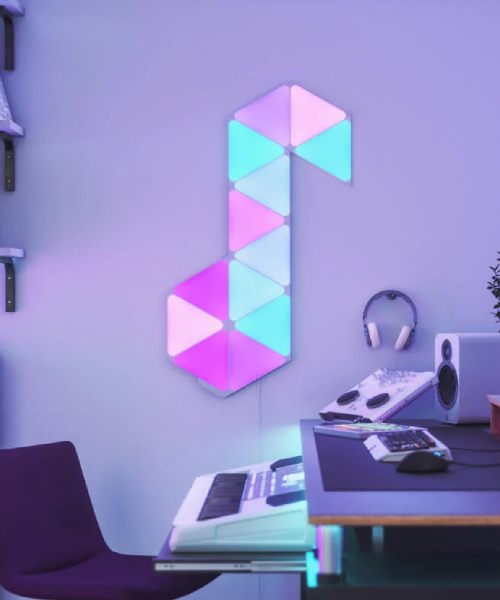
    The specific visual property that makes Nanoleaf distinctive: the color gradients flow between panels rather than each panel being a single static color. This creates the effect of ambient light moving across a wall surface — dynamic in a way that individual smart bulbs or LED strips cannot replicate. The hexagon shape specifically is praised for being more “organic” and less visually busy than the original triangles.

    The Mounting Reality — The Most Documented Failure Point

    Nanoleaf panels are mounted using double-sided adhesive tape included with the kit. The brand confirms on its own support page that panels falling is a documented occurrence with specific conditions that increase the risk: “dust or oil on the wall before mounting, uneven or textured surfaces, or wallpaper.” These aren’t niche edge cases — textured walls are standard in most homes built in the last 30 years, and any wall that hasn’t been cleaned immediately before installation may have sufficient dust or residue to reduce adhesion.

    The practical preparation: clean the wall surface with isopropyl alcohol immediately before installation, ensure the wall is smooth drywall or plaster (not textured), and allow the adhesive to cure for 24 hours before powering on. Buyers who follow these steps report strong, sustained adhesion. Buyers who skip them report fallen panels, sometimes within weeks.

    For buyers with textured walls specifically: Nanoleaf’s warranty covers fallen panels if they meet the claim criteria, but the coverage process requires photos and documentation. The more direct solution is to use third-party adhesive mounting strips rated for the panel weight rather than the included tape.

    Connectivity — A Real, Manageable Issue

    WiFi connectivity issues — panels dropping offline, apps failing to connect, controllers becoming unresponsive — are documented frequently enough in the support knowledge base and user reviews to warrant direct mention. Nanoleaf’s own support documentation identifies “network interference” as the primary cause and recommends: power cycling, ensuring the network is broadcasting 2.4GHz (not 5GHz only), firmware updates, and reducing distance between the device and router.

    The 2.4GHz-only limitation is a specific, practical concern for buyers in apartments or homes where the 2.4GHz band is congested with multiple devices. It doesn’t prevent Nanoleaf from working, but it means placement near the router or mesh network node matters more than for devices that support both bands.

    Cost — A Specific Honesty Note

    The starter kit pricing ($119 for 5 panels, $199 for 9 panels) appears reasonable for a premium smart home lighting product. The honest total cost calculation looks different: 24 hexagons covering a meaningful wall space requires 2–3 expansion packs beyond a 9-panel starter kit, meaning a full installation realistically costs $350–600. This is disclosed but not prominently featured in the brand’s marketing materials.

    Best Nanoleaf Products Worth Buying

    Best for: First-time Nanoleaf buyers wanting the brand’s most popular, most reviewed, most visually impactful product — and the most likely to generate the “amazed when I powered it on” reaction documented across independent sources.

    Top Features: 16 million RGBW colors, music synchronization, touch-reactive panels, physical controller array, Thread and Matter support, Alexa/Google/HomeKit compatible. 9-panel kit provides enough panels for a meaningful wall installation without requiring immediate expansion.

    One Honest Drawback: Adhesive-only mounting — clean the wall with isopropyl alcohol immediately before installation and allow 24-hour cure time before powering on. Textured walls require additional mounting preparation.

    Verdict: The right first Nanoleaf purchase for most buyers. The visual impact evidence is the most consistently documented of any Nanoleaf product line.

    Best for: Existing Shapes owners wanting to extend an installation beyond the starter kit panels.

    Top Features: Same hexagon dimensions as all Shapes panels, compatible with the existing controller and power supply (up to 21 panels on a single 24W adapter). The controller supports up to 500 panels.

    One Honest Drawback: Expansion packs add up quickly — budget for 1–3 expansion packs alongside your starter kit if you want a wall-covering installation rather than a small accent cluster.

    Verdict: A necessary consideration for buyers who want more than the starter kit provides — factor the cost of 1–2 expansion packs into your initial purchase budget.

    Best for: Buyers who prefer a geometric linear aesthetic over the hexagonal panel format — Lines create a grid or diagonal pattern that reads differently from the organic hexagon arrangement.

    Top Features: Linear panels with the same 16 million color capability and music sync. The linear format works particularly well in home offices for background lighting in video calls. Compatible with Shapes panels (different aesthetic but technically compatible).

    One Honest Drawback: Less extensively reviewed than the Hexagons — fewer long-term durability accounts available. The adhesive mounting concern applies equally.

    Verdict: A strong alternative for buyers who find the hexagonal format too prominent or who specifically want the grid-line aesthetic for office or gaming room use.

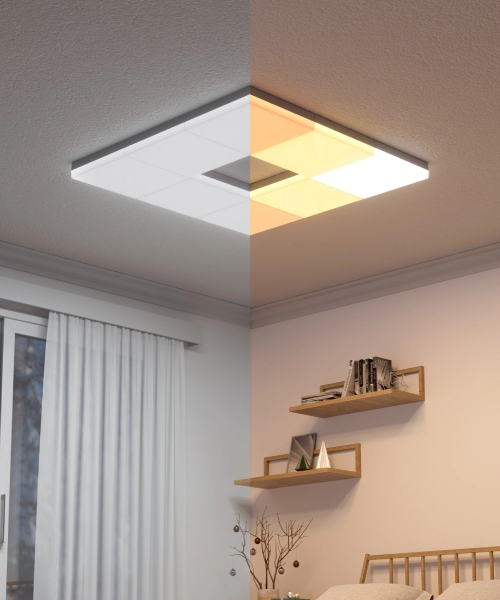
    Best for: Buyers wanting ambient ceiling lighting rather than wall art — Skylight panels mount on the ceiling to provide overhead illumination with color capability.

    Top Features: The MyProsAndCons assessment confirms: “Skylight ceiling panels deliver versatile ambient and functional lighting, combining bright overhead illumination with dynamic colour scenes.” Addresses the dimness limitation of wall-mounted decorative panels by positioning the light source where it can illuminate a room functionally.

    One Honest Drawback: Ceiling installation is more complex than wall installation — ensure ceiling surface is compatible with the mounting system before purchasing.

    Verdict: The right Nanoleaf product for buyers whose primary need is room illumination rather than wall art. More functionally useful than wall panels as a primary light source.

    What Customers Actually Think

    • “As soon as I powered on the Hexagon, I was amazed at how much I felt like they improved the aesthetics of the space. These hexagonal shapes allow for so many creative layouts.”
    • “The lights are top quality, but the app takes a few seconds longer than expected to connect sometimes.”
    • “Some of the panels have bright spots where the actual LED is located. Not horrible but noticeable.”
    • “I love the panels, they brightly illuminate my room and provide a nice ambience. I love these light panels — previously used triangles but love the hexagon shape so much more.”
    • “I made a honeycomb pattern above my couch and it looks stunning. The color gradients flow seamlessly from panel to panel.”
    • “I love these light panels! I’m giving it 4/5 stars instead of a full five because it won’t continuously play the same light pattern and will start to shuffle through my saved ones.”

    Is Nanoleaf Worth It?

    For gaming rooms, home offices used for video calls, entertainment spaces, and any buyer who wants a living space that genuinely surprises visitors: yes, with confidence — the visual impact is real, consistent, and specifically documented across multiple independent sources.

    For buyers wanting primary room lighting: less compelling. The wall panels are decorative and ambient — not bright enough to illuminate a room adequately. The Skylight ceiling version or smart bulbs alongside the panels address this gap.

    For buyers with textured walls or congested 2.4GHz WiFi environments: manageable but requiring preparation — clean wall surfaces, third-party mounting for textured surfaces, and WiFi optimization.

    For buyers on a budget: calculate the real total cost (starter kit + expansion packs) before purchasing — the full installation cost is meaningfully higher than the starter kit price suggests.

    Nanoleaf vs Competitors


    Nanoleaf Shapes

    Govee Glide Hexa

    LIFX Beam

    Philips Hue Play

    Visual impact

    ✅ Highest rated

    Good

    Good

    Moderate

    Modular design

    ✅ Yes

    ✅ Yes

    Limited

    No

    Smart home integration

    ✅ Alexa/Google/HomeKit/Matter

    Alexa/Google

    Alexa/Google/HomeKit

    ✅ Full ecosystem

    Starter kit price

    $119–199

    $89–139

    ~$80

    ~$70

    Music sync

    ✅ Yes

    ✅ Yes

    No

    No

    Adhesive mounting concern

    ❌ Documented

    Similar

    N/A

    N/A

    Best for

    Statement wall art

    Budget alternative

    Linear accent

    Hue ecosystem users

    Where to Buy

    nanoleaf.me — direct, full product range. Also available at Best Buy, Amazon, and Apple Store. 2-year warranty confirmed. Register your product at purchase for warranty access.

    FAQs

    Will Nanoleaf panels fall off the wall?

    It’s a documented risk — Nanoleaf’s own support page has a specific FAQ for fallen panels. Clean the wall with isopropyl alcohol immediately before installation, ensure the surface is smooth (not textured), and allow 24-hour adhesive cure time before powering on.

    Does Nanoleaf work with Alexa, Google Assistant, and HomeKit?

    Yes, all three simultaneously, plus Thread and Matter as of the Shapes and newer lines.

    Do Nanoleaf panels need to be on WiFi?

    Yes, 2.4GHz WiFi required. 5GHz networks are not supported. Ensure your router broadcasts a 2.4GHz signal.

    How many panels can one power adapter support?

    One 24W power adapter supports up to 21 hexagon panels. One controller supports up to 500 panels.

    Final Verdict

    Nanoleaf earns genuine, sustained praise for delivering the most visually impactful smart home lighting aesthetic available in the modular panel category. The “amazed when I powered it on” reaction appears too consistently across too many independent sources to dismiss. The adhesive mounting limitation, the 2.4GHz-only WiFi, the connectivity troubleshooting requirement, and the real full-installation cost all deserve honest acknowledgment. Buy with proper wall preparation, budget for expansion packs, optimize your WiFi, and Nanoleaf will reliably deliver the living space transformation it’s known for.

    Overall Rating: 8.2 / 10

    Category

    Score

    Visual Impact

    9.5 / 10

    Color Range & Music Sync

    9 / 10

    Smart Home Integration

    8.5 / 10

    Mounting Reliability

    6.5 / 10

    Connectivity Stability

    7 / 10

    Value for Money (full install)

    7 / 10

    App & Controls

    8 / 10

    Overall

    8.2 / 10

    PinkBlush Maternity Review — Genuinely Stylish Maternity Fashion, With a Return Policy and Sizing Reality to Know

    By Posted on 0 Comments8min read0 views

    PinkBlush Maternity Review — Genuinely Stylish Maternity Fashion, With a Return Policy and Sizing Reality to Know

    Save 30% Off On Your All Orders

    Save 30% Off On Your All Orders

    Save 30% Off On Your All Orders
    Prettyinpink
    SHOW COUPON
    On Going Offer
  • It Works 100% Success It Doesn’t
  • Get 25% Off On Your All Purchases

    Get 25% Off On Your All Purchases

    Get 25% Off On Your All Purchases
    KAYYAYY25
    SHOW COUPON
    On Going Offer
  • It Works 100% Success It Doesn’t
  • Signup & Get 30% Off On Your First Order

    Signup & Get 30% Off On Your First Order

    Signup & Get 30% Off On Your First Order
    ACTIVATE DEAL
    On Going Offer
  • It Works 100% Success It Doesn’t
  • Get Free Shipping On Order Over $89

    Get Free Shipping On Order Over $89

    Get Free Shipping On Order Over $89
    ACTIVATE DEAL
    On Going Offer
  • It Works 100% Success It Doesn’t
  • Sale! Save Upto 70% Off On Selective Items

    Sale! Save Upto 70% Off On Selective Items

    Sale! Save Upto 70% Off On Selective Items
    ACTIVATE DEAL
    On Going Offer
  • It Works 100% Success It Doesn’t
  • Shop Our New In Collection Starting From $17

    Shop Our New In Collection Starting From $17

    Shop Our New In Collection Starting From $17
    ACTIVATE DEAL
    On Going Offer
  • It Works 100% Success It Doesn’t
  • Checkout Our Tops Collection Starting From $18

    Checkout Our Tops Collection Starting From $18

    Checkout Our Tops Collection Starting From $18
    ACTIVATE DEAL
    On Going Offer
  • It Works 100% Success It Doesn’t
  • Explore Our Jeans Collection Starting From $32

    Explore Our Jeans Collection Starting From $32

    Explore Our Jeans Collection Starting From $32
    ACTIVATE DEAL
    On Going Offer
  • It Works 100% Success It Doesn’t
  • PinkBlush Maternity Review — Genuinely Stylish Maternity Fashion, With a Return Policy and Sizing Reality to Know

    PinkBlush’s most useful evidence comes from a simple, specific observation that appears independently across multiple accounts: the dress photographs match what arrives. “The dress came very quickly and was exactly as pictured and described on the website. It’s very flattering and a beautiful dress.” That kind of photo-to-reality consistency is genuinely unusual in online fashion and earns real credit for a maternity brand. The honest counterpoint is equally specific: a buyer who ordered a medium maternity dress for her photoshoot, heeded reviews saying it runs small and went up a size, still couldn’t get it over her belly, discovered the dress was marked non-returnable, and is left with an expensive item hanging in her closet unused.

    Quick Highlights

    • ✅ Photo-to-reality consistency specifically praised across multiple independent accounts — “exactly as pictured and described”
    • ✅ Fast shipping confirmed by multiple buyers — “ordered kind of last minute, wasn’t expecting it to arrive as quickly as it did”
    • ✅ Wide style range covering maternity occasions from casual to formal — baby showers, photoshoots, weddings, and everyday wear all represented
    • ✅ Fabric quality praised on specific styles: “soft, didn’t feel tight around my belly, and I wasn’t itching to change out of it by the end of the day”
    • ✅ Easy exchange confirmed on some accounts: “had to return for a different size and it was way easier than I expected — no hassle, they got the right size swapped out fast”
    • ✅ Frequent discount codes and seasonal sales make premium pricing more accessible
    • ✅ Styles described as “trendy” and fashion-forward — “designs I’d actually want to wear” rather than traditional maternity wear
    • ❌ A specific, financially painful account: non-returnable/non-exchangeable dress ordered for maternity photos, couldn’t get over belly despite sizing up per reviews — “absolute waste of money” with no resolution
    • ❌ Order cancelled a full week after placement with no advance warning — buyer had to follow up themselves for a refund that was processed in parts
    • ❌ Jeans documented as not staying up and sagging in the rear; sweater “way too short in length and will not accommodate a belly” — functional fit failure on specific items
    • ❌ Fabric quality complaint on specific styles: “quality of skirt I ordered was really poor. Very disappointed”
    • ❌ Dress worn once and washed — two massive holes. Return denied as “past 30 days” — 3.1 stars on SmartCustomer aggregate reflects this durability concern pattern
    • ❌ Sizing inconsistency is the most documented concern across all platforms — some styles run small, some true to size, some require two full sizes up
    • ❌ Ordered two dresses on a day — next day both were on sale with customer service unwilling to price-match

    Best for: Pregnant women wanting stylish, fashion-forward maternity dresses for special occasions (baby showers, photoshoots, maternity sessions) who research individual styles carefully, check size-specific reviews, and buy at regular price for return protection.

    Why Trust This Review

    Cross-referenced from Trustpilot’s 1,539-review PinkBlush Maternity collection, SmartCustomer’s 605-review aggregate (3.1 stars), MyProsAndCons’ structured brand assessment, Glamix Maternity’s independent comparison analysis, and direct review of PinkBlush’s return and sizing policies. No commercial relationship with PinkBlush.

    About PinkBlush

    PinkBlush is an online-only maternity and women’s fashion retailer founded in the US, positioned as the intersection of “fashion meets motherhood.” The brand’s core proposition is maternity clothing that looks like regular women’s fashion while accommodating a growing bump — an important distinction from traditional maternity wear that buyers frequently describe as either frumpy or obviously functional. The product range spans maternity dresses (the strongest and most reviewed category), maternity tops, maternity jeans, nursing wear, and postpartum styles. Pricing ranges from approximately $30 for basic tops to $90+ for occasion dresses. The brand operates primarily through its own website with frequent promotional discounts.

    Full Review Breakdown

    The Design and Style Evidence — Genuinely Confirmed

    PinkBlush’s fashion credibility is real and specifically documented. Multiple independent accounts use language that goes beyond generic satisfaction: “designs that felt like something I’d actually want to wear,” “very flattering and a beautiful dress,” “comfortable the whole time — the fabric was soft, didn’t feel tight around my belly.” The brand’s stated mission — maternity clothing that doesn’t look like maternity clothing — appears to be genuinely delivered on specific styles, particularly in the dress category.

    The specific design strength: ruching, draping, and stretch fabrics that accommodate the belly without the boxy, obvious-accommodation aesthetic of traditional maternity brands. For buyers wanting something to wear to a baby shower, maternity photoshoot, or event that they’d be equally happy wearing postpartum, PinkBlush addresses that gap specifically.

    The Sizing Reality — The Most Important Thing to Know Before Ordering

    This is the single most consistently documented concern across all available review platforms, and it requires direct, specific treatment because the sizing variance is genuinely significant and not uniform across styles.

    Some styles run true to size. Some run small. Some require sizing up by one full size. Some require sizing up by two sizes. The specific documented case of a medium dress that couldn’t be gotten over a bump even after the buyer sized up to a large — based on existing reviews’ advice — is not an isolated failure. It reflects a broader pattern where size guidance is style-specific rather than brand-consistent.

    The practical guidance: before ordering any PinkBlush item, search for reviews specifically on that style (not just the brand generally) and look for comments about sizing from buyers with similar body proportions to yours. The overall “size up” advice is directionally correct for most styles but insufficient as a universal rule.

    The Return Policy — A Specific, Documented Problem for Final Sale Items

    PinkBlush’s general return policy allows returns within 30 days for regular-priced items. The documented trap: sale and promotional items are frequently marked as final sale — non-returnable and non-exchangeable — and this designation is not always prominently surfaced during the ordering process.

    A buyer who ordered a dress for maternity photos discovered this only when attempting to return an unworn dress that wouldn’t fit. The financial consequence: a $60–90+ dress that cannot be returned, exchanged, or credited. For a product category where sizing is documented as inconsistent and buyers are specifically advised to size up, a no-returns policy on sale items is a significant, compounding risk.

    The practical rule: buy at regular price for return protection, or confirm clearly at checkout whether an item is final sale before completing purchase.

    Best PinkBlush Products Worth Buying

    Best for: Baby showers, maternity photoshoots, special occasions, and any event where a buyer wants a stylish, flattering dress that photographs well and accommodates a growing bump.

    Top Features: Draped and ruched construction specifically praised for creating “smooth hourglass” silhouettes. Fabric that flows rather than clings, preventing the “tight around the belly” discomfort documented with other brands. Photo-to-reality consistency confirmed — what you see on the website reflects what arrives.

    One Honest Drawback: Sizing varies significantly by specific style — research the individual dress’s reviews before ordering, not just the brand’s general reputation. Non-returnable if purchased on sale.

    Verdict: The brand’s strongest category and the purchase most likely to deliver the flattering, occasion-ready result buyers are looking for.

    Best for: Versatile everyday and occasion wear that accommodates a range of bump sizes through adjustable tie-wrap construction rather than fixed sizing.

    Top Features: Wrap construction naturally adjusts to bump size — reduces the sizing inconsistency risk that affects fitted styles. Works during pregnancy and postpartum. Available in prints and solids.

    One Honest Drawback: Wrap styles require some styling confidence — confirm the neckline provides adequate coverage for your comfort before ordering.

    Verdict: The safest PinkBlush purchase from a fit perspective given the adjustable construction. A sensible choice for buyers who want to minimize sizing uncertainty.

    Best for: New mothers wanting to extend maternity wardrobe investment into the postpartum period with styles that work for both nursing and regular wear.

    Top Features: The brand’s “versatility is key” positioning means many styles are designed for pregnancy-through-postpartum wear — better per-item value than single-use maternity pieces.

    One Honest Drawback: Quality consistency concern applies here as well — check style-specific reviews and buy at regular price for return protection.

    Verdict: A reasonable extension of a PinkBlush maternity wardrobe investment, with the same sizing and return-policy cautions applying.

    What Customers Actually Think

    • “The dress came very quickly and was exactly as pictured and described on the website. It’s very flattering and a beautiful dress.”
    • “I was sold a nonrefundable and nonreturnable maternity dress that definitely is not a maternity dress. I planned to wear this for my maternity photos but I can’t get the dress over my belly. I bought a medium because other reviews said it runs small so I sized up. I honestly probably needed an XL. Absolute waste of money.”
    • “I ordered maternity jeans and a sweater. The jeans are cute but they do not stay up and keep sagging in the rear. The sweater is way too short in length and will not accommodate a belly.”
    • “A lot of the items are a bit on the pricier side but PinkBlush always seemed to have a discount going, which was nice, especially for maternity items.”
    • “I wore my PinkBlush dress one time and washed it. Two massive holes. They advised they couldn’t do anything because it was ‘past 30 days’.”
    • “I had to return mine for a different size and it was way easier than I expected. The exchange went quickly, there was no hassle, and they got the right size swapped out fast.”

    Is PinkBlush Worth It?

    For special-occasion maternity dresses — baby shower, photoshoot, event — bought at regular price with full return protection: yes, with reasonable confidence. The design quality and photo-to-reality consistency are real and documented.

    For everyday basics like maternity jeans or knitwear where functional fit is the primary requirement: approach with more caution — the documented jeans-sagging and sweater-length failure suggest the brand’s strength is in occasion dressing rather than everyday functional maternity wear.

    For any sale-priced item: confirm final sale status at checkout and treat the purchase as non-returnable by default, because it likely is.

    PinkBlush vs Competitors


    PinkBlush

    HATCH

    Seraphine

    A Pea in the Pod

    Style

    ✅ Trendy, occasion-forward

    Minimalist, premium

    Classic, European

    Classic, office-focused

    Price range

    $30–90

    $100–300

    $60–200

    $50–150

    Sizing consistency

    ⚠️ Variable by style

    Generally consistent

    Generally consistent

    Generally consistent

    Return policy (sale)

    ❌ Final sale = no returns

    Varies

    28 days most styles

    Standard returns

    Best for

    Photoshoots, showers

    Everyday luxury

    European aesthetic

    Office maternity

    Where to Buy

    pinkblushmaternity.com — direct. Frequent discount codes available (check RetailMeNot or Honey before ordering). Always verify whether an item is final sale before completing checkout. Review individual style pages for sizing comments from buyers with similar proportions.

    FAQs

    Does PinkBlush run true to size?

    It varies significantly by style — some run true to size, some run small. Research the specific style’s reviews rather than applying a universal rule. The general “size up” advice is directionally correct for many fitted styles.

    Can I return PinkBlush purchases?

    Regular-priced items within 30 days, yes. Sale and promotional items are frequently marked final sale — non-returnable and non-exchangeable. Confirm this status before purchasing any discounted item.

    Is PinkBlush good quality?

    Varies by specific item. Dress quality is more consistently praised than separates (jeans, knitwear). At least one documented case of a dress developing holes after one wash and one wash denial from customer service.

    Final Verdict

    PinkBlush delivers on its core promise — stylish, flattering maternity fashion that looks like what you’d want to wear regardless of pregnancy — for buyers who research individual styles carefully, buy at regular price, and understand the brand’s specific strengths (occasion dressing) and limitations (sizing inconsistency, everyday separates). The final sale return restriction is the most practically significant concern for a product category where fit is inherently unpredictable.

    Overall Rating: 6.8 / 10

    Category

    Score

    Style & Design

    8.5 / 10

    Photo-to-Reality Accuracy

    8.5 / 10

    Sizing Consistency

    5 / 10

    Fabric Quality (dresses)

    7.5 / 10

    Return Policy Fairness

    4.5 / 10

    Customer Service

    6 / 10

    Value for Money

    7 / 10

    Overall

    6.8 / 10

    House of Hackney Transform Your Home

    By Posted on 0 Comments0min read0 views

    House of Hackney Transform Your Home

    Get 10% Off On Your All Orders

    Get 10% Off On Your All Orders

    Get 10% Off On Your All Orders
    WELCOME
    SHOW COUPON
    On Going Offer
  • It Works 100% Success It Doesn’t
  • Shop Our New In Collection Starting From £110

    Shop Our New In Collection Starting From £110

    Shop Our New In Collection Starting From £110
    ACTIVATE DEAL
    On Going Offer
  • It Works 100% Success It Doesn’t
  • Checkout Our Bestsellers Collection Starting From £140

    Checkout Our Bestsellers Collection Starting From £140

    Checkout Our Bestsellers Collection Starting From £140
    ACTIVATE DEAL
    On Going Offer
  • It Works 100% Success It Doesn’t
  • Explore Our Fabric Collection Starting From £85

    Explore Our Fabric Collection Starting From £85

    Explore Our Fabric Collection Starting From £85
    ACTIVATE DEAL
    On Going Offer
  • It Works 100% Success It Doesn’t
  • Our Textiles Collection Starting From £950

    Our Textiles Collection Starting From £950

    Our Textiles Collection Starting From £950
    ACTIVATE DEAL
    On Going Offer
  • It Works 100% Success It Doesn’t
  • Tiles Collection Starting From £5

    Tiles Collection Starting From £5

    Tiles Collection Starting From £5
    ACTIVATE DEAL
    On Going Offer
  • It Works 100% Success It Doesn’t
  • Lighting Collection Starting From £250

    Lighting Collection Starting From £250

    Lighting Collection Starting From £250
    ACTIVATE DEAL
    On Going Offer
  • It Works 100% Success It Doesn’t
  • Mirrors Collection Starting From £595

    Mirrors Collection Starting From £595

    Mirrors Collection Starting From £595
    ACTIVATE DEAL
    On Going Offer
  • It Works 100% Success It Doesn’t
  • McGee & Co Furniture Review — Pieces Worth Buying Right Now

    By Posted on 0 Comments7min read0 views

    McGee & Co Furniture Review — Pieces Worth Buying Right Now

    McGee & Co Furniture Review — The Best Pieces Worth Buying Right Now
    McGee & Co Furniture Review 10 min read

    There's a specific frustration that comes with shopping McGee & Co for the first time. The site is beautiful. Everything looks like it belongs together. You add things to your cart, look at the total, and then spend twenty minutes trying to decide what to cut and whether what you're keeping is actually the right thing.

    Most people end up either buying nothing or buying based on what photographed best rather than what will serve them longest. This review is built to fix that — specific products, honest quality assessments, and a clear sense of which McGee & Co pieces are worth the price and which are better skipped.

    How to Think About McGee & Co Quality

    McGee & Co sources from multiple manufacturers and applies their aesthetic standards rather than manufacturing everything themselves. This means quality is not uniform across the catalog — some pieces are genuinely excellent for the price, some are fair value, and some are pieces where the aesthetic is stronger than the construction. The categories that tend to perform best: upholstered seating, lighting, and textiles. The categories where quality is more variable: case goods — tables, dressers, buffets — where construction details are harder to evaluate from photos.

    McGee & Co — The Pieces Actually Worth Buying
    Specific products with the quality to back up the price — researched and ranked
    McGee and Co Thea Chandelier
    Best Lighting

    Thea Chandelier

    Rattan · Brass · Small / Med / Large
    • Tight, well-made rattan weave
    • Heavy brass hardware
    • Looks better in person than photos
    • Best ROI piece in the catalog
    Check Price on McGee & Co
    McGee and Co Dawson Bed
    Best Bedroom

    Dawson Bed

    Bouclé or performance fabric
    • Solid wood frame — no sag
    • Bouclé headboard holds up well
    • Works in most bedroom palettes
    • Makes room look finished
    Check Price on McGee & Co
    McGee and Co Textiles
    Best Value

    Linen Pillows & Throws

    Linen blend · Multiple colorways
    • Best quality-to-price in catalog
    • Dense inserts — holds shape
    • Lowest risk first purchase
    • Start here before furniture
    Check Price on McGee & Co

    Siena Sofa — Still the Best Thing McGee & Co Makes

    The Siena Sofa has been in the catalog long enough to have a real track record and the track record is good. Deep seat — 24 inches from front to back — that actually lets you sit in it rather than perch on it. Low profile with a clean-lined frame in white oak or walnut. The frame is kiln-dried hardwood, not the engineered wood that shows up in fast furniture at similar price points. The cushion filling holds its shape over time. The performance fabric option looks like linen but cleans like a synthetic — right choice for households with kids, pets, or anyone who uses their sofa for anything other than looking at it. Lead time runs eight to twelve weeks. Order before you need it. Price runs $3,000 to $4,500 depending on configuration and fabric.

    Lead time tip: The Siena books up fast — order 10 to 12 weeks before you need it, not when you're ready to furnish the room.

    Thea Chandelier — The Piece With the Best Return on Investment

    A statement chandelier does more design work per dollar than almost anything else you can put in a space. The Thea is the McGee & Co lighting piece worth knowing about most — woven rattan shade, brass hardware, available in small, medium, and large. The rattan is well-made, the weave tight and even, the material thick enough to be structurally sound. The brass hardware is appropriately heavy and reads as quality in person in a way that photos honestly undersell. This is a chandelier that looks more impressive installed and lit than in a product image — the opposite of most things bought online. Price runs $500 to $900 depending on size.


    Dawson Bed — The Right Bedroom Anchor for Most Rooms

    The Dawson does something hard — it looks designed without looking designed. The low profile, the clean-lined upholstered headboard, the solid wood frame visible at the legs — it reads as considered without drawing attention to itself. The bouclé headboard option is the one worth getting if you can. Bouclé adds warmth and visual interest without pattern or color, works in bedrooms pulling toward both warmer and cooler palettes, and holds up well to regular use. The frame is solid, slats included, center support leg prevents sag over time. Price runs $1,800 to $2,500 depending on size and fabric.


    Linen Pillows and Throws — Best Value in the Entire Catalog

    The most underrated section of the McGee & Co website is textiles. The throw pillows and blankets represent the best quality-to-price ratio of anything they sell. The linen-blend throw pillows have substantial inserts — dense enough that pillows hold their shape and look full rather than deflated. The throw blankets have actual weight — blankets you can use rather than decorative pieces that provide no warmth. The practical reason to start here: a $60 throw pillow tells you more about whether the McGee & Co aesthetic works in your room than any amount of website browsing.

    What to Skip — Save Your Money on These

    • Lower-priced side tables and accent tables — veneered surfaces over engineered wood, lightweight frames that feel wrong in person
    • Entry-level flatweave and printed rugs — fine for low-traffic bedrooms, show wear quickly in living rooms and entryways
    • Some outdoor pieces — mixed durability feedback, not all built for real outdoor conditions long-term
    • New catalog pieces without reviews — wait for buyer feedback before committing to anything recently added

    McGee & Co — Buy vs Skip at a Glance

    ProductWorth Buying?Price RangeReason
    Siena Sofa✓ Yes$3,000–$4,500Solid construction, proven track record
    Thea Chandelier✓ Yes$500–$900Best ROI piece in catalog
    Dawson Bed✓ Yes$1,800–$2,500Solid frame, bouclé holds up well
    Linen Pillows & Throws✓ Yes$40–$200Best value in entire catalog
    Entry-level accent tables✕ Skip$300–$600Aesthetic stronger than construction
    Budget flatweave rugs✕ Skip$200–$500Show wear quickly in high traffic

    McGee & Co rewards selective buying. Start with lighting and textiles, move to upholstered seating, be careful with case goods. Buy the right pieces and they'll last years.

    Shop McGee & Co — Official Site

    How to Cook Steak on a Pit Boss Pellet Grill – Getting the Perfect Crust and the Right Internal Temperature

    By Posted on 0 Comments9min read0 views

    How to Cook Steak on a Pit Boss Pellet Grill – Getting the Perfect Crust and the Right Internal Temperature

    How to Cook Steak on a Pit Boss Pellet Grill

    People who say you can’t cook a great steak on a pellet grill haven’t figured out how to use a pellet grill correctly. That’s the honest starting point of this guide.

    The common criticism of pellet grills for steak is valid but solvable. The concern is that pellet grills don’t get as hot as gas or charcoal grills, and a hot sear is what produces the Maillard reaction — the browning that gives a steak its crust, its flavor, and the reason it looks and smells the way a properly cooked steak should. The criticism is true. The default pellet grill temperature range of 225°F to 450°F doesn’t match the 600°F+ that a charcoal chimney at full roar produces.

    The solution is the reverse sear method, which takes this apparent limitation and turns it into a genuine advantage. When you understand what the reverse sear is doing and why, you’ll cook better steak on your Pit Boss than most people cook on any grill.

    Choosing the Right Steak

    Not every steak is equally suited to the pellet grill or to the reverse sear method.

    Best choices for the Pit Boss:

    Ribeye — The most popular steak on a pellet grill for good reason. The fat content in a ribeye (the eye of fat in the center, the marbling throughout the muscle) provides self-basting during the cook and an intensely beefy flavor that stands up to smoke beautifully. A 1.5-inch ribeye on a Pit Boss with a proper reverse sear is one of the best things you can eat.

    New York Strip — Less fat than the ribeye, firmer texture, beefy flavor. The strip has a fat cap on one edge that renders down beautifully during the smoke phase. Slightly less forgiving than the ribeye if overcooked because there’s less fat to provide moisture, so temperature monitoring is more critical.

    Tomahawk — The ribeye with the long rib bone still attached. Visually spectacular, cooks exactly like a ribeye but takes longer because of the bone’s effect on heat transfer. The bone also conducts heat through the thicker part of the steak which can affect cooking evenness if you don’t know to expect it.

    How to Cook Steak on a Pit Boss Pellet Grill — Getting the Perfect Crust and the Right Internal Temperature

    T-Bone and Porterhouse — A strip and a tenderloin separated by a T-shaped bone. The challenge is that the tenderloin cooks faster than the strip, so the two different muscles will reach different temperatures at the same time. Manageable but requires attention.

    Filet Mignon — Beautiful cut, extremely tender, very little fat. Works on the Pit Boss but is the most expensive cut and the least smoke-appropriate because the mild flavor of the tenderloin doesn’t gain as much from smoke exposure as the more robustly flavored cuts. If you’re cooking filet, a shorter smoke time and more emphasis on the sear is the right approach.

    Thickness matters more than anything else: Thin steaks (under 1 inch) are not candidates for the reverse sear. They cook too quickly at low temperature and don’t have enough mass to develop any smoke flavor before they’re done. For steaks under an inch, skip the reverse sear and cook directly at high heat.

    The sweet spot for the Pit Boss reverse sear is 1.5 inches to 2 inches thick. If you’re buying steaks for pellet grill cooking, ask your butcher to cut them to this thickness. Most grocery store steaks are cut thinner than this for display purposes; a butcher will cut to your specifications.

    Seasoning

    Great steak doesn’t need much. The goal is to enhance the beef flavor, not cover it.

    Minimum approach:

    • Kosher salt — applied generously, at least 45 minutes before cooking or the night before
    • Coarse black pepper — applied just before the steak goes on the grill

    That’s it. Salt and pepper is the foundation that every more complex steak seasoning is building on.

    Why salt in advance: When you salt a steak and let it sit, the salt draws moisture to the surface (you can see a wet puddle on the steak within a few minutes). This moisture then slowly reabsorbs back into the meat over 30 to 45 minutes, taking the salt with it and seasoning the meat rather than just the surface. Salt applied immediately before cooking sits on the surface and draws out moisture that doesn’t have time to reabsorb, which can make the exterior wet and interfere with browning.

    If you don’t have 45 minutes, salt immediately before the steak goes on — you’ll lose some of the deep seasoning benefit but you won’t have the wet surface problem either. What you want to avoid is salting 10 to 20 minutes before cooking, which is the worst of both worlds.

    For more complex flavor:

    • Garlic powder (not garlic salt — it already contains salt and will make the steak too salty)
    • Smoked paprika
    • Onion powder
    • A small amount of cayenne if you like heat

    Some people apply a light coat of olive oil or avocado oil before the rub to help the seasoning adhere and promote browning. Both work. Avocado oil has a higher smoke point than olive oil, which matters more during the sear phase than the smoke phase.

    Pellet Selection for Steak

    Beef is robust enough to handle stronger smoke woods than chicken or fish.

    Hickory — The classic beef smoke wood. Strong, assertive, slightly sweet. For steaks specifically, where the smoke exposure time is shorter than a brisket cook, hickory works extremely well.

    Oak — The most versatile beef smoke wood. Post oak in particular is the traditional smoke wood of Texas barbecue culture. Medium intensity, slightly nutty, never overpowering. Excellent with steak.

    Cherry — Adds a deep mahogany color to the exterior of the steak and a mild, slightly sweet smoke flavor. Works well blended with hickory or oak to add color while the oak or hickory provides the primary smoke character.

    Mesquite — The most intense smoke wood in common use. Works for steak only because the smoke exposure during a reverse sear is brief enough that mesquite doesn’t have time to turn bitter. If you love that campfire, southwest Texas smoke character, mesquite on a short steak cook is one place it works. Avoid it for longer cooks.

    The Reverse Sear Method — The Approach That Changes Everything

    The reverse sear takes the conventional grilling order — sear hot first, then finish at lower heat — and inverts it. You cook the steak slowly at low temperature first to bring it close to your target internal temperature throughout the entire thickness of the meat, then you sear it at maximum heat at the end to build the crust.

    Why does this work better?

    When you sear first and finish at lower heat, the outside of the steak goes through a temperature gradient. The crust is above 300°F while the center might be 70°F when the sear starts. By the time the center gets close to target temperature, the outer portion of the steak has been cooked through a range that can result in a thick gray band of overcooked meat surrounding a smaller perfect center.

    The reverse sear eliminates this. By bringing the entire steak to near-target temperature slowly at 225°F, the whole thing is at nearly the same temperature edge-to-edge before the sear starts. The sear then happens over less surface area that needs heat, and it happens faster, creating the crust without continuing to cook the interior. The result is a steak that’s the right temperature from edge to edge with a perfect crust rather than a bullseye cross-section of overcooked-less overcooked-perfect-less overcooked-overcooked.

    The steps:

    Step 1: Set the Pit Boss to 225°F and let it fully preheat. Place the seasoned steaks on the grill and insert a probe thermometer into the thickest part of one of them, horizontally through the edge of the steak so the tip is at the center.

    Step 2: Smoke at 225°F until the internal temperature reaches the target pull temperature. This varies by your preferred doneness:

    • Rare: Pull at 110°F to 115°F
    • Medium-rare: Pull at 120°F to 125°F
    • Medium: Pull at 130°F to 135°F
    • Medium-well: Pull at 140°F to 145°F

    At 225°F, a 1.5-inch ribeye takes approximately 25 to 40 minutes to reach these temperatures. Check after 20 minutes and then every 5 minutes.

    Step 3: Remove the steaks from the grill. Crank the Pit Boss to maximum temperature — the highest setting, typically 450°F to 500°F. On some Pit Boss models there is a sear mode or a slide plate that gives you direct flame access; use this if your model has it. It takes 15 to 20 minutes to fully preheat to maximum temperature. While the grill is preheating, let the steaks rest uncovered.

    Step 4: When the grill is at maximum temperature, put the steaks back on. Sear for 1 to 2 minutes per side. You’re not cooking them further — you’re developing the crust. Don’t leave them on longer than this or you’ll push past your target internal temperature.

    Step 5: Remove and rest for 5 minutes.

    Direct High-Heat Method (for thinner steaks)

    For steaks under 1 inch thick, the reverse sear doesn’t have enough time to work correctly. For these steaks, cook directly at the highest temperature your Pit Boss can produce.

    How to Cook Steak on a Pit Boss Pellet Grill — Getting the Perfect Crust and the Right Internal Temperature

    Lorem ipsum dolor sit amet, consectetur adipiscing elit. Ut elit tellus, luctus nec ullamcorper mattis, pulvinar dapibus leo.

    Set to maximum temperature and preheat for 15 to 20 minutes. Place the steaks directly on the grates. Cook 2 to 3 minutes per side for medium-rare, monitoring temperature throughout. At high heat, a thin steak goes from undercooked to overcooked faster than you expect.

    Finished Internal Temperatures

    These are the finished temperatures after the rest period:

    • Rare: 120°F to 125°F (very red center, slightly warm)
    • Medium-rare: 130°F to 135°F (pink center, warm throughout)
    • Medium: 140°F to 145°F (slightly pink center, fully warm)
    • Medium-well: 150°F to 155°F (very little pink, fully cooked through)
    • Well done: 160°F+ (no pink, fully grey throughout)

    The USDA recommends cooking whole muscle beef to 145°F internal. A medium-rare steak at 130°F is below the USDA guideline — this is the choice most steak-eating adults make daily with full understanding of the trade-off. If you’re cooking for someone with a compromised immune system, elderly individuals, or children, cooking to at least 145°F is the responsible choice.

    The Butter Baste

    This is optional but not really optional if you want the best possible steak. During the sear phase, a butter baste adds flavor and helps produce a more even, glossy crust.

    In a small cast iron skillet or disposable aluminum pan on the grill during the sear phase, melt 2 tablespoons of butter with a smashed garlic clove and a sprig of thyme or rosemary. As the steaks sear, spoon the hot butter over them repeatedly. The butter promotes browning, the garlic and herbs infuse into the crust, and the result is a steak that tastes like something you’d pay $60 for at a restaurant.

    Resting

    Steak needs 5 minutes minimum rest. For large steaks over 1.5 inches thick, 8 to 10 minutes is better.

    The standard advice about “the juices need time to redistribute” is accurate but it’s also worth noting what’s actually happening. Muscle fibers contract during cooking and squeeze liquid toward the center. During rest, the fibers relax and reabsorb some of that liquid. Cut in immediately and the liquid pours out; rest first and it stays in the meat.

    Don’t tent the steak with foil during the rest unless the room is cold — foil traps steam and softens the crust you just worked to build.

    Serving

    Cut against the grain. This is the rule that matters as much as the cook itself. Find the direction of the muscle fibers and cut perpendicular to them. The same steak cut with the grain requires significantly more chewing than the same steak cut against the grain — the grain-against cut shortens the fibers, the grain-with cut means you’re chewing through long, intact muscle fibers.

    For ribeye and strip steaks, the grain typically runs lengthwise through the steak. Cut across the width in ¾-inch to 1-inch slices.

    Finish with a pinch of flaky salt (Maldon or similar) over the cut surface. The flaky salt adds crunch and pops the beefy, smoky flavor in a way that the kosher salt applied before cooking doesn’t replicate.

    Quick Reference

    Doneness

    Pull temp (smoke phase)

    Finished temp

    Rare

    110°F–115°F

    120°F–125°F

    Medium-rare

    120°F–125°F

    130°F–135°F

    Medium

    130°F–135°F

    140°F–145°F

    Medium-well

    140°F–145°F

    150°F–155°F

    • Pellets: Hickory, oak, or cherry
    • Smoke phase: 225°F, 25 to 40 minutes
    • Sear phase: Maximum heat (450°F+), 1 to 2 minutes per side
    • Rest: 5 to 10 minutes
    • Slice: Against the grain

    Chicken Breast on a Pit Boss Pellet Grill — The Guide to Juicy Every Single Time

    By Posted on 0 Comments7min read0 views

    Chicken Breast on a Pit Boss Pellet Grill — The Guide to Juicy Every Single Time

    Chicken Breast on a Pit Boss Pellet Grill — The Guide to Juicy Every Single Time

    Chicken breast has a reputation problem and I get it. It’s the protein people default to when they’re trying to eat healthy, and because of that it gets cooked in a hurry, at the wrong temperature, with no preparation, and it comes out dry and flavorless and somehow gets blamed on the chicken rather than the technique. The chicken breast itself is fine. The cooking is usually the problem.

    On a Pit Boss pellet grill, chicken breast can be something genuinely special — juicy with smoke flavor working all the way through, a slight char on the outside, and enough texture contrast to make it interesting rather than the protein you’re eating because you feel like you should. But it requires understanding a few things that most grilling guides skip over because they’re writing for people who are okay with mediocre chicken.

    The Fundamental Problem with Chicken Breast

    Chicken breast is lean, boneless, and completely unforgiving of overcooking. There’s no fat marbling inside the muscle to provide moisture as the temperature rises, and no bone to slow down the heat transfer. When chicken breast hits 165°F, the USDA says it’s done. When it hits 175°F, it’s dry. The window between done and too dry is about 10 degrees and can close in less than 5 minutes at high heat.

    The solution is two-fold: prepare the chicken correctly before it goes on (brine), and cook it to the correct temperature while monitoring it constantly (thermometer).

    Brining the Chicken Breast

    This is the step that makes the biggest single difference to the end result. A brined chicken breast holds moisture through the cook in a way that unbrined chicken simply doesn’t.

    Simple brine:

    • 4 cups cold water
    • 3 tablespoons kosher salt
    • 1 tablespoon sugar
    • Optional: garlic cloves, peppercorns, fresh thyme

    Dissolve the salt and sugar in the water (you can use a cup of warm water to dissolve them and then add cold water to bring it to volume). Submerge the chicken breasts completely and refrigerate for at least 30 minutes. 1 to 2 hours is ideal. More than 4 hours and the texture starts to get mushy from the salt.

    After brining, remove the chicken from the brine and pat completely dry with paper towels. Dry surface is important for getting any color or texture on the exterior.

    If you don’t have time to brine: At minimum, season the chicken generously and let it sit at room temperature for 20 to 30 minutes before grilling. Cold chicken straight from the refrigerator onto the grill means the outside is cooking while the center is still catching up, which increases the risk of the exterior overcooking before the interior is done.

    Getting the Chicken Breasts the Same Thickness

    This is a step almost no home cook does and almost every good cook does. Chicken breasts taper from thick at one end to thin at the other. The thin end cooks twice as fast as the thick end. If you cook to the right temperature at the thick end, the thin end has been overcooked for 10 minutes. If you cook to the thick end’s timing, the thin end is dry and tough.

    The fix is simple: pound the chicken breast to an even thickness using a meat mallet or rolling pin. Place each breast between two pieces of plastic wrap or in a zip-lock bag, and pound from the center outward until the entire breast is a consistent ¾ inch to 1 inch thick.

    This is five minutes of work that produces dramatically more consistent results than any other single step besides brining.

    Seasoning Options

    Simple everyday seasoning:

    • 1 teaspoon kosher salt
    • ½ teaspoon black pepper
    • ½ teaspoon garlic powder
    • ½ teaspoon onion powder
    • ½ teaspoon smoked paprika
    • Drizzle of olive oil to help the seasoning stick and promote browning

    Mix together and coat both sides of each chicken breast thoroughly. The olive oil also helps the exterior get some color on the grill rather than staying pale.

    BBQ approach:
    Start with the basic seasoning above and finish with a coat of your favorite barbecue sauce applied during the last 5 minutes of cooking. The sugar in BBQ sauce burns if applied too early, so brush it on at the end and let it caramelize rather than char.

    Italian herb approach:

    • Salt, pepper, garlic powder
    • Dried oregano
    • Dried basil
    • Dried rosemary
    • Lemon zest if you have it

    All of these work. The pellet grill adds smoke flavor that works as a fifth seasoning regardless of what you put on the outside, so simple seasonings often produce the best results because they let the smoke contribute without fighting it.

    Pellet Selection

    Chicken breast is mild enough that it can handle a range of smoke woods without being overpowered.

    Apple or cherry wood pellets are the most popular choice for chicken. The mild, slightly sweet smoke complements poultry and produces good color on the exterior. Apple is the safer, more neutral choice; cherry gives a slightly darker color and a fraction more smoke intensity.

    Pecan pellets work beautifully with chicken — slightly nuttier smoke, a little more depth than apple without being heavy.

    Hickory: Use carefully with chicken breast. Hickory is strong enough that a full cook of chicken breast in heavy hickory smoke can produce a result that tastes more like smoke than chicken. If you like hickory, mix it 50/50 with apple to moderate the intensity.

    Cooking Methods on the Pit Boss

    There are two approaches that work well for chicken breast on a Pit Boss, and which you choose depends on whether you prioritize maximum smoke flavor or a grilled exterior.

    Method 1: Low and slow, then sear

    This is the “reverse sear” approach for chicken breast.

    Start at 225°F. Place the chicken breast on the grill and smoke until the internal temperature hits 145°F to 150°F. This takes approximately 45 minutes to an hour depending on the size of the breast. At this point the chicken has absorbed significant smoke flavor and is close to done but not there yet.

    Then crank the Pit Boss to its highest temperature setting (typically 450°F to 500°F) and sear the chicken for 2 to 3 minutes per side to develop color and texture on the exterior. Pull when internal temperature hits 160°F to 165°F.

    This method gives you the best of both approaches — real smoke flavor from the low temperature phase, and good exterior texture from the high heat sear.

    Method 2: Medium-high and direct

    Set the Pit Boss at 375°F to 400°F and cook the chicken directly on the grates. At this temperature, the chicken develops color on the exterior while the interior cooks to temperature in approximately 15 to 20 minutes.

    This method produces less smoke flavor than the reverse sear approach but takes half the time and still produces good results — the pellet grill ambient smoke during any cook contributes flavor even at higher temperatures.

    Temperature Monitoring

    Get a reliable instant-read thermometer and use it without apology. Cooking chicken breast without temperature monitoring is how you end up with dry chicken breast and a burned reputation for grilling.

    Target internal temperature: 165°F at the thickest part of the breast. This is the USDA safe temperature. If you want to be more precise and are using a reliable thermometer, you can pull at 160°F — carryover cooking during the 5-minute rest will bring it to 165°F.

    Insert the thermometer into the thickest part of the breast, parallel to the surface rather than straight down, to get a reading from the center of the meat rather than the underside. Keep the probe tip away from the grill grates or it’ll read the grate temperature rather than the meat temperature.

    Resting

    Chicken breast needs a rest of 3 to 5 minutes before cutting. This is less critical than with large cuts like brisket or turkey, but it’s still worthwhile — the juices redistribute during rest rather than running out onto the cutting board when you cut in immediately.

    Tent the chicken loosely with foil while it rests. Tight foiling traps steam and softens any crust that formed on the exterior.

    Serving

    Slice against the grain of the chicken breast for the most tender result. The grain runs lengthwise through the breast; cutting perpendicular to this produces shorter, more tender mouthfuls.

    A squeeze of fresh lemon over sliced smoked chicken breast makes the smoke flavor pop in a way that’s surprising if you’ve never tried it. The acid brightens everything.

    Smoked chicken breast works in a dozen applications beyond serving whole — sliced over salads, chopped for tacos, folded into pasta, used in sandwiches. The smoke flavor carries through however you use it.

    Troubleshooting

    Chicken is dry: Almost always overcooked. Invest in a good thermometer and start checking at 155°F internal.

    No color on the exterior: Skin or surface was wet before grilling. Pat completely dry and add a thin coat of olive oil or avocado oil before seasoning.

    Rubbery texture: Could be undercooked, or the chicken went straight from the fridge to the grill. Let it come to room temperature before cooking.

    No smoke flavor: Cook temperature was too high. Smoke absorption is most efficient at lower temperatures — cook at 225°F for at least the first half of the cook.

    Quick Reference

    • Brine time: 30 minutes minimum, 2 hours ideal
    • Pound to: ¾ to 1 inch even thickness
    • Pellets: Apple, cherry, or pecan
    • Method 1: 225°F to 145°F, then sear at 450°F to 165°F
    • Method 2: 375°F to 400°F directly, 15 to 20 minutes
    • Done temperature: 165°F internal
    • Rest time: 3 to 5 minutes

    Smoking Brisket on a Pit Boss Pellet Grill — How to Actually Get It Right

    By Posted on 0 Comments9min read0 views

    Smoking Brisket on a Pit Boss Pellet Grill — How to Actually Get It Right

    Smoking Brisket on a Pit Boss Pellet Grill — How to Actually Get It Right

    Brisket is the cook that sorts people into two groups. The first group tried it once, pulled a tough, dry, grey slab off the grill after eight hours and never went back to it. The second group figured out what went wrong, adjusted, and discovered that properly smoked brisket is the best thing you will ever eat off a grill. The gap between those two outcomes is almost entirely process.

    Brisket is unforgiving of shortcuts in a way that other cuts aren’t. A chicken breast you pull 10 degrees too early is still edible. Brisket pulled too early is shoe leather. But when brisket comes off the Pit Boss exactly right — the flat sliceable and moist, the point falling apart, the smoke ring pink through the first quarter inch of meat, the bark dark and slightly crusty on the outside — it’s worth every hour it took.

    This guide covers everything from buying the right brisket to slicing it correctly. Read through it completely before you start. Brisket is the one cook where you really need to understand the full picture before the meat hits the grill.

    Choosing the Brisket

    Brisket is a primal cut from the lower chest of the cow. The full packer brisket includes two distinct muscles: the flat (the leaner, thinner portion that most people picture when they think of brisket slices) and the point (sometimes called the deckle — a thicker, fattier muscle that sits on top of the flat and is the source of burnt ends if you’re making them separately).

    Buy the full packer, not just the flat. A flat-only brisket cooked on a smoker almost always dries out because it lacks the fat protection of the point. The full packer allows the point’s fat cap to baste the flat during the cook. If you can only find a flat at your butcher, ask them to leave as much fat on it as possible.

    Grade matters:

    USDA Select is the minimum grade brisket in most grocery stores. The fat marbling is minimal and the results on a smoker are variable at best.

    USDA Choice is what most competition pitmasters use and what you should aim for. Better marbling, more moisture in the flat, more consistent results.

    USDA Prime is the top tier, with the most fat marbling. If you can find it at a price you’re comfortable with, it’s worth it — the additional intramuscular fat makes the flat significantly more forgiving during the long cook.

    Wagyu brisket exists and is extraordinary if you have the budget. It’s also expensive enough that most people rightfully decide to get their technique sorted on Choice grade before spending Wagyu money.

    Size: A full packer brisket typically runs 12 to 18 pounds. After trimming and shrinkage during the cook, you’ll lose roughly 30 to 40 percent of the raw weight. A 15-pound raw brisket yields approximately 9 to 10 pounds of finished meat. Plan for about ½ pound of cooked brisket per person.

    Trimming the Brisket

    This step takes 15 to 20 minutes and makes a meaningful difference to the finished result. Don’t skip it.

    The fat cap — the thick layer of fat on one side of the brisket — needs to be trimmed down to approximately ¼ inch thick. This is enough fat to protect the flat during the cook and render down into flavor. More than ¼ inch and the fat doesn’t fully render, leaving a waxy, unpleasant layer. Less than ¼ inch and you lose the protection.

    Smoking Brisket on a Pit Boss Pellet Grill — How to Actually Get It Right

    Use a sharp boning knife or a flexible fillet knife. A dull knife on a brisket is genuinely dangerous because you end up using more pressure and losing control. Sharp knife, slow careful strokes.

    Also trim off any hard, white fat chunks that you can see — particularly on the sides and underneath where the flat and point meet. Hard fat doesn’t render well and should be removed.

    The brisket will look uneven after trimming. That’s fine. You’re going for a consistent fat cap thickness, not cosmetic perfection.

    The Rub

    Brisket in Texas — where the smoked brisket tradition is most deeply established — is cooked with nothing but salt and coarse black pepper. This “SPG” (salt, pepper, garlic) approach lets the beef flavor and the smoke do the talking, and it produces extraordinary results.

    Classic Texas rub:

    • 2 parts kosher salt
    • 2 parts coarse black pepper (16 mesh is the standard — this is the grind you want, not fine ground)
    • 1 part garlic powder (optional, but most pitmasters include it)

    Mix and apply generously to every surface of the brisket. Be more generous than you think is necessary — the brisket is a large piece of meat and a thin application of rub disappears into the bark without contribution.

    Some people add additional spices — smoked paprika, onion powder, cayenne. These all work. But if this is your first brisket on the Pit Boss, start simple. Understand what the beef and smoke taste like together before you start adding complexity.

    Apply the rub and let the brisket sit at room temperature for 30 minutes before it goes on the grill, or apply the rub the night before and refrigerate overnight uncovered. The overnight approach helps develop bark by drying the surface slightly.

    Pellet Selection

    Brisket is the cook where oak or hickory belongs.

    Post oak: The traditional Texas smoke wood. Medium intensity, slightly nutty, no sweetness. Post oak complements beef without fighting it and has been the pit wood at the great Texas barbecue joints for generations. If you can find post oak pellets, use them.

    Hickory: Stronger than oak, with a more pronounced smoke flavor. Works extremely well with brisket. If this is your first brisket cook, hickory produces the “this smells like barbecue” smoke that most people associate with the style.

    Oak and cherry blend: Some pitmasters use a 70/30 oak and cherry blend. The cherry adds a slight sweetness and a darker bark color without changing the fundamental beef-and-oak flavor profile.

    Avoid: Fruit woods alone (apple, peach) on brisket — they’re too mild for a 12-hour cook and the smoke flavor gets lost. Mesquite has too much intensity for a cook this long and can produce a bitter result.

    Setting Up the Pit Boss

    Fill the hopper completely. A brisket cook will run 12 to 16 hours. You’ll probably need to refill the hopper at least once — check it every 4 to 5 hours and refill before it runs low. Running out of pellets mid-cook and having the temperature drop significantly is the mistake you most want to avoid.

    Temperature: 225°F to 250°F. This is the cooking temperature you’ll maintain through the majority of the cook. Some pitmasters cook entirely at 225°F for maximum smoke absorption. Some cook at 250°F to shorten the overall time slightly. 225°F gives you more time in the smoke and a slightly more pronounced smoke flavor; 250°F shaves an hour or two off the total time. Both approaches produce excellent brisket.

    Let the Pit Boss fully preheat to temperature before the brisket goes on. This takes 15 to 20 minutes. Make sure you’re at stable temperature, not still climbing.

    Read our full Pit Boss Grill Review!

    Probe placement: Insert a leave-in probe thermometer into the thickest part of the flat, angled toward the center of the muscle. This is where the flat is slowest to cook and where you’re going to track the temperature through the stall and to the finish.

    Placement on the grates: Put the brisket fat-side up or fat-side down? This is one of the most argued questions in barbecue. Fat-side up lets the rendering fat baste the meat as it drips down. Fat-side down creates a barrier between the direct heat from below and the flat. On a Pit Boss pellet grill with its convection-style heat, the heat source isn’t primarily from below the way it is on an offset smoker, so fat-side up works well and is the common recommendation.

    The Cook — Phase by Phase

    Phase 1: The Smoke (225°F, first 4 to 6 hours)

    This is where the magic happens. The brisket is absorbing smoke at maximum efficiency during this phase because the surface is still cool and moist enough to attract smoke particles. Don’t open the lid unnecessarily during this phase — every lid lift drops the temperature 25 to 30°F and extends the cook time. Trust the process.

    The bark is beginning to form during this phase. You’ll see the surface darken from the rub and the smoke exposure. This is good. You’re building the exterior crust that’s the defining feature of great smoked brisket.

    Phase 2: The Stall

    At some point between 150°F and 175°F internal temperature, the thermometer will stop moving. It will sit at the same temperature for what can feel like an alarming amount of time — sometimes 2 hours, sometimes 4 hours. This is completely normal and has a known explanation.

    As the surface of the brisket heats up, moisture inside the meat migrates to the surface and evaporates. The energy being put into the brisket by the grill is being consumed entirely by this evaporative cooling effect — the same reason sweating keeps you cool on a hot day. The temperature isn’t rising because the energy balance is in equilibrium.

    The stall resolves on its own. You can wait it out, or you can wrap the brisket at this point (see below).

    Phase 3: The Wrap (optional but recommended)

    Most pitmasters wrap the brisket in butcher paper or foil when it hits the stall (approximately 160°F to 165°F internal). Wrapping traps the heat and eliminates the evaporative cooling effect, pushing the brisket through the stall more quickly and protecting the bark from over-darkening during the remainder of the cook.

    Butcher paper vs foil:

    Butcher paper (specifically pink or peach unlined butcher paper, not wax paper) is the preferred wrapping method for most competition pitmasters. It breathes slightly, allowing some moisture to escape while still accelerating the cook. The bark holds up better through a butcher paper wrap than through foil.

    Smoking Brisket on a Pit Boss Pellet Grill — How to Actually Get It Right

    Foil (the “Texas crutch”) wraps tighter and accelerates the cook more aggressively. It can soften the bark if you wrap too early or leave it wrapped too long. The benefit is a more braised, tender result — some people prefer this.

    To wrap: pull the brisket, place it on two overlapping sheets of butcher paper (or heavy-duty foil) fat-side down, pour a small splash of beef tallow or melted butter on top if you have it, and wrap tightly. Return to the grill.

    Phase 4: The Finish

    After wrapping, the temperature will begin rising again. You’re now cooking to probe tenderness, not just temperature. The target internal temperature for the flat is 200°F to 205°F, but temperature is the starting point for the probe test, not the finish line.

    The probe test: Push the instant-read thermometer probe into the thickest part of the flat. It should slide in with essentially no resistance — like inserting a probe into room temperature butter. If you feel any resistance at all, the brisket isn’t ready. Put it back on for another 30 minutes and test again. This “probe tender” test is how you know the collagen has fully converted to gelatin and the brisket will actually slice and eat the way you want it to.

    A brisket that tests probe tender at 195°F is done. A brisket that still has resistance at 210°F needs more time. The thermometer reading is a guideline; the probe feel is the actual indicator.

    The Rest — The Most Important Step

    More than any other cut of meat, brisket needs a proper rest. A minimum of 1 hour. Two hours is better. Some competition pitmasters rest brisket for 4 to 8 hours in a cambro cooler.

    Here’s why this matters: brisket is full of collagen that has converted to gelatin during the long cook. This gelatin is what makes the meat moist and gives it that characteristic sticky richness. During the rest period, this gelatin sets slightly and the juices redistribute throughout the muscle. Cut into a brisket immediately off the grill and the juices run out and the gelatin hasn’t set — you get dry, stringy slices. Rest the brisket properly and you get slices that hold together and release moisture in your mouth rather than onto the cutting board.

    How to rest: Wrap the brisket (still in its butcher paper or foil) in a towel and place it in a cooler. The insulation keeps it at safe serving temperature for 4 to 6 hours without any refrigeration needed. This is the hack that allows you to finish the brisket ahead of time without serving it cold.

    Slicing

    This is the final step that most people rush and it matters more than most people expect.

    Separate the flat and the point before slicing. The flat and point have different grain directions, and you need to slice against the grain of each independently. Slicing with the grain produces chewy, stringy slices; slicing against the grain cuts through the muscle fibers and gives you tender slices.

    Find the grain direction of the flat and slice perpendicular to it in ¼-inch thick slices. These are your primary brisket slices.

    The point can be sliced similarly or cubed into burnt ends. Burnt ends — cubed, sauced, and returned to the smoker for another hour — are arguably the best thing that comes from a whole packer brisket.

    Quick Reference

    • Best cut: Full packer, USDA Choice or Prime
    • Trim fat cap to: ¼ inch
    • Rub: Kosher salt, coarse black pepper, garlic powder
    • Pellets: Post oak, hickory, or oak-cherry blend
    • Cook temperature: 225°F to 250°F
    • Wrap at: 160°F to 165°F internal (butcher paper preferred)
    • Done temperature: 200°F to 205°F, probe tender
    • Rest time: Minimum 1 hour, 2 hours preferred