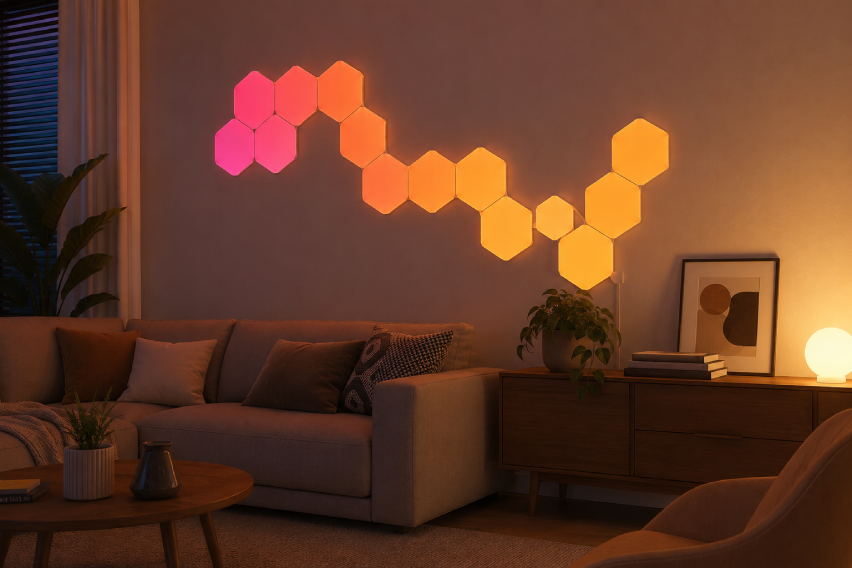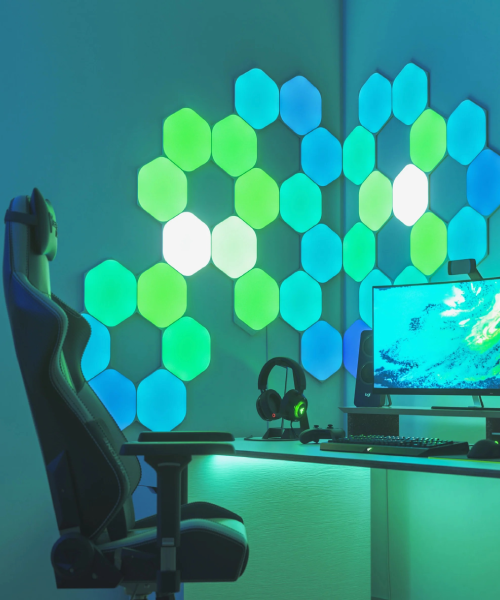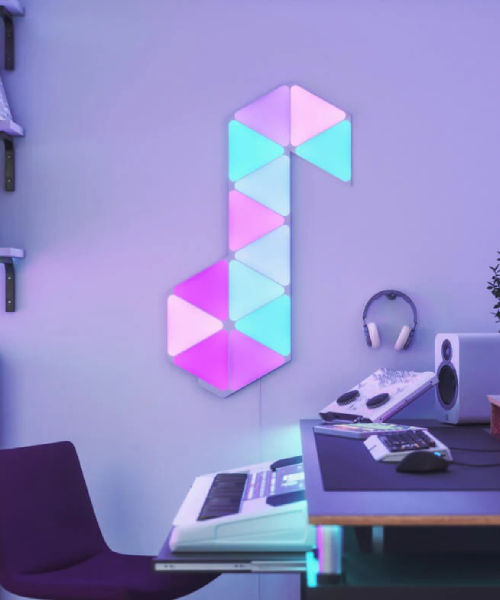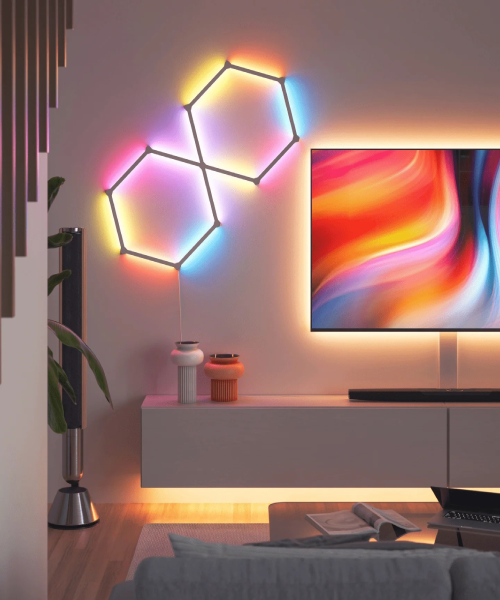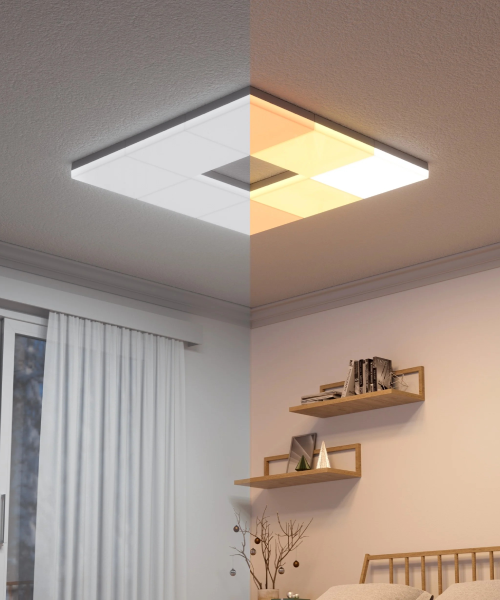
Nanoleaf’s most compelling evidence in 2026 comes from a specific, unprompted reaction: “As soon as I powered on the Hexagon, I was amazed at how much I felt like they improved the aesthetics of the space.” That’s from a TechCrunch reviewer who had never been more than “mildly interested” in Nanoleaf before. Paired with Tom’s Guide’s verdict — “the ultimate mood-booster” and “smart home upgrade I didn’t know I needed” — the visual impact evidence is both specific and consistent across independent sources. The honest counterpart: Nanoleaf’s own support FAQ confirms that panels falling off walls is a documented, real occurrence — with a submitted warranty claim process available specifically for this scenario. Understanding when it looks extraordinary and when the adhesive fails is what this review is for.
Best for: Gaming rooms, home offices, entertainment spaces, and any buyer wanting modular, visually distinctive ambient lighting that doubles as wall art — who plan installation on smooth, clean, painted drywall and who are comfortable with 2.4GHz WiFi setup.
Nanoleaf is a Canadian-founded smart LED lighting company established in 2012, headquartered in Toronto with operations globally. The brand launched to prominence with its Aurora triangular light panels and has since developed multiple product lines: Shapes (Hexagons, Triangles, Mini Triangles), Elements (wood-look finish), Lines (linear panels), Canvas (square panels), Skylight (ceiling panels), Essentials (smart bulbs and lightstrips), and Blocks (newer square format). As of 2026, Nanoleaf supports Thread and Matter protocols alongside the established Alexa, Google Assistant, and HomeKit ecosystems, positioning it as one of the better cross-platform smart home lighting integrations available.
This is where Nanoleaf earns its reputation, and the evidence is both broad and specific. A TechCrunch reviewer who expected to be unimpressed: “as soon as I powered on the Hexagon, I was amazed at how much I felt like they improved the aesthetics of the space.” A Walmart buyer: “Once you start using these, it’s hard to go back to boring lights — they’ve become the centerpiece of my living room. Everyone who visits is instantly impressed.” A remote worker: “I work remotely and these hexagons have become the highlight of my video calls. They add such a professional but fun vibe.”
The specific visual property that makes Nanoleaf distinctive: the color gradients flow between panels rather than each panel being a single static color. This creates the effect of ambient light moving across a wall surface — dynamic in a way that individual smart bulbs or LED strips cannot replicate. The hexagon shape specifically is praised for being more “organic” and less visually busy than the original triangles.
Nanoleaf panels are mounted using double-sided adhesive tape included with the kit. The brand confirms on its own support page that panels falling is a documented occurrence with specific conditions that increase the risk: “dust or oil on the wall before mounting, uneven or textured surfaces, or wallpaper.” These aren’t niche edge cases — textured walls are standard in most homes built in the last 30 years, and any wall that hasn’t been cleaned immediately before installation may have sufficient dust or residue to reduce adhesion.
The practical preparation: clean the wall surface with isopropyl alcohol immediately before installation, ensure the wall is smooth drywall or plaster (not textured), and allow the adhesive to cure for 24 hours before powering on. Buyers who follow these steps report strong, sustained adhesion. Buyers who skip them report fallen panels, sometimes within weeks.
For buyers with textured walls specifically: Nanoleaf’s warranty covers fallen panels if they meet the claim criteria, but the coverage process requires photos and documentation. The more direct solution is to use third-party adhesive mounting strips rated for the panel weight rather than the included tape.
WiFi connectivity issues — panels dropping offline, apps failing to connect, controllers becoming unresponsive — are documented frequently enough in the support knowledge base and user reviews to warrant direct mention. Nanoleaf’s own support documentation identifies “network interference” as the primary cause and recommends: power cycling, ensuring the network is broadcasting 2.4GHz (not 5GHz only), firmware updates, and reducing distance between the device and router.
The 2.4GHz-only limitation is a specific, practical concern for buyers in apartments or homes where the 2.4GHz band is congested with multiple devices. It doesn’t prevent Nanoleaf from working, but it means placement near the router or mesh network node matters more than for devices that support both bands.
The starter kit pricing ($119 for 5 panels, $199 for 9 panels) appears reasonable for a premium smart home lighting product. The honest total cost calculation looks different: 24 hexagons covering a meaningful wall space requires 2–3 expansion packs beyond a 9-panel starter kit, meaning a full installation realistically costs $350–600. This is disclosed but not prominently featured in the brand’s marketing materials.
Best for: First-time Nanoleaf buyers wanting the brand’s most popular, most reviewed, most visually impactful product — and the most likely to generate the “amazed when I powered it on” reaction documented across independent sources.
Top Features: 16 million RGBW colors, music synchronization, touch-reactive panels, physical controller array, Thread and Matter support, Alexa/Google/HomeKit compatible. 9-panel kit provides enough panels for a meaningful wall installation without requiring immediate expansion.
One Honest Drawback: Adhesive-only mounting — clean the wall with isopropyl alcohol immediately before installation and allow 24-hour cure time before powering on. Textured walls require additional mounting preparation.
Verdict: The right first Nanoleaf purchase for most buyers. The visual impact evidence is the most consistently documented of any Nanoleaf product line.
Best for: Existing Shapes owners wanting to extend an installation beyond the starter kit panels.
Top Features: Same hexagon dimensions as all Shapes panels, compatible with the existing controller and power supply (up to 21 panels on a single 24W adapter). The controller supports up to 500 panels.
One Honest Drawback: Expansion packs add up quickly — budget for 1–3 expansion packs alongside your starter kit if you want a wall-covering installation rather than a small accent cluster.
Verdict: A necessary consideration for buyers who want more than the starter kit provides — factor the cost of 1–2 expansion packs into your initial purchase budget.
Best for: Buyers who prefer a geometric linear aesthetic over the hexagonal panel format — Lines create a grid or diagonal pattern that reads differently from the organic hexagon arrangement.
Top Features: Linear panels with the same 16 million color capability and music sync. The linear format works particularly well in home offices for background lighting in video calls. Compatible with Shapes panels (different aesthetic but technically compatible).
One Honest Drawback: Less extensively reviewed than the Hexagons — fewer long-term durability accounts available. The adhesive mounting concern applies equally.
Verdict: A strong alternative for buyers who find the hexagonal format too prominent or who specifically want the grid-line aesthetic for office or gaming room use.
Best for: Buyers wanting ambient ceiling lighting rather than wall art — Skylight panels mount on the ceiling to provide overhead illumination with color capability.
Top Features: The MyProsAndCons assessment confirms: “Skylight ceiling panels deliver versatile ambient and functional lighting, combining bright overhead illumination with dynamic colour scenes.” Addresses the dimness limitation of wall-mounted decorative panels by positioning the light source where it can illuminate a room functionally.
One Honest Drawback: Ceiling installation is more complex than wall installation — ensure ceiling surface is compatible with the mounting system before purchasing.
Verdict: The right Nanoleaf product for buyers whose primary need is room illumination rather than wall art. More functionally useful than wall panels as a primary light source.
For gaming rooms, home offices used for video calls, entertainment spaces, and any buyer who wants a living space that genuinely surprises visitors: yes, with confidence — the visual impact is real, consistent, and specifically documented across multiple independent sources.
For buyers wanting primary room lighting: less compelling. The wall panels are decorative and ambient — not bright enough to illuminate a room adequately. The Skylight ceiling version or smart bulbs alongside the panels address this gap.
For buyers with textured walls or congested 2.4GHz WiFi environments: manageable but requiring preparation — clean wall surfaces, third-party mounting for textured surfaces, and WiFi optimization.
For buyers on a budget: calculate the real total cost (starter kit + expansion packs) before purchasing — the full installation cost is meaningfully higher than the starter kit price suggests.
Nanoleaf Shapes | Govee Glide Hexa | LIFX Beam | Philips Hue Play | |
Visual impact | ✅ Highest rated | Good | Good | Moderate |
Modular design | ✅ Yes | ✅ Yes | Limited | No |
Smart home integration | ✅ Alexa/Google/HomeKit/Matter | Alexa/Google | Alexa/Google/HomeKit | ✅ Full ecosystem |
Starter kit price | $119–199 | $89–139 | ~$80 | ~$70 |
Music sync | ✅ Yes | ✅ Yes | No | No |
Adhesive mounting concern | ❌ Documented | Similar | N/A | N/A |
Best for | Statement wall art | Budget alternative | Linear accent | Hue ecosystem users |
nanoleaf.me — direct, full product range. Also available at Best Buy, Amazon, and Apple Store. 2-year warranty confirmed. Register your product at purchase for warranty access.
It’s a documented risk — Nanoleaf’s own support page has a specific FAQ for fallen panels. Clean the wall with isopropyl alcohol immediately before installation, ensure the surface is smooth (not textured), and allow 24-hour adhesive cure time before powering on.
Yes, all three simultaneously, plus Thread and Matter as of the Shapes and newer lines.
Yes, 2.4GHz WiFi required. 5GHz networks are not supported. Ensure your router broadcasts a 2.4GHz signal.
One 24W power adapter supports up to 21 hexagon panels. One controller supports up to 500 panels.
Nanoleaf earns genuine, sustained praise for delivering the most visually impactful smart home lighting aesthetic available in the modular panel category. The “amazed when I powered it on” reaction appears too consistently across too many independent sources to dismiss. The adhesive mounting limitation, the 2.4GHz-only WiFi, the connectivity troubleshooting requirement, and the real full-installation cost all deserve honest acknowledgment. Buy with proper wall preparation, budget for expansion packs, optimize your WiFi, and Nanoleaf will reliably deliver the living space transformation it’s known for.
Category | Score |
Visual Impact | 9.5 / 10 |
Color Range & Music Sync | 9 / 10 |
Smart Home Integration | 8.5 / 10 |
Mounting Reliability | 6.5 / 10 |
Connectivity Stability | 7 / 10 |
Value for Money (full install) | 7 / 10 |
App & Controls | 8 / 10 |
Overall | 8.2 / 10 |