House On The Crescent

You are viewing Home & Decors

Gozney Review 2026 — Arc, Arc XL, or Dome — Which One to Buy?

By Posted on 0 Comments10min read801 views

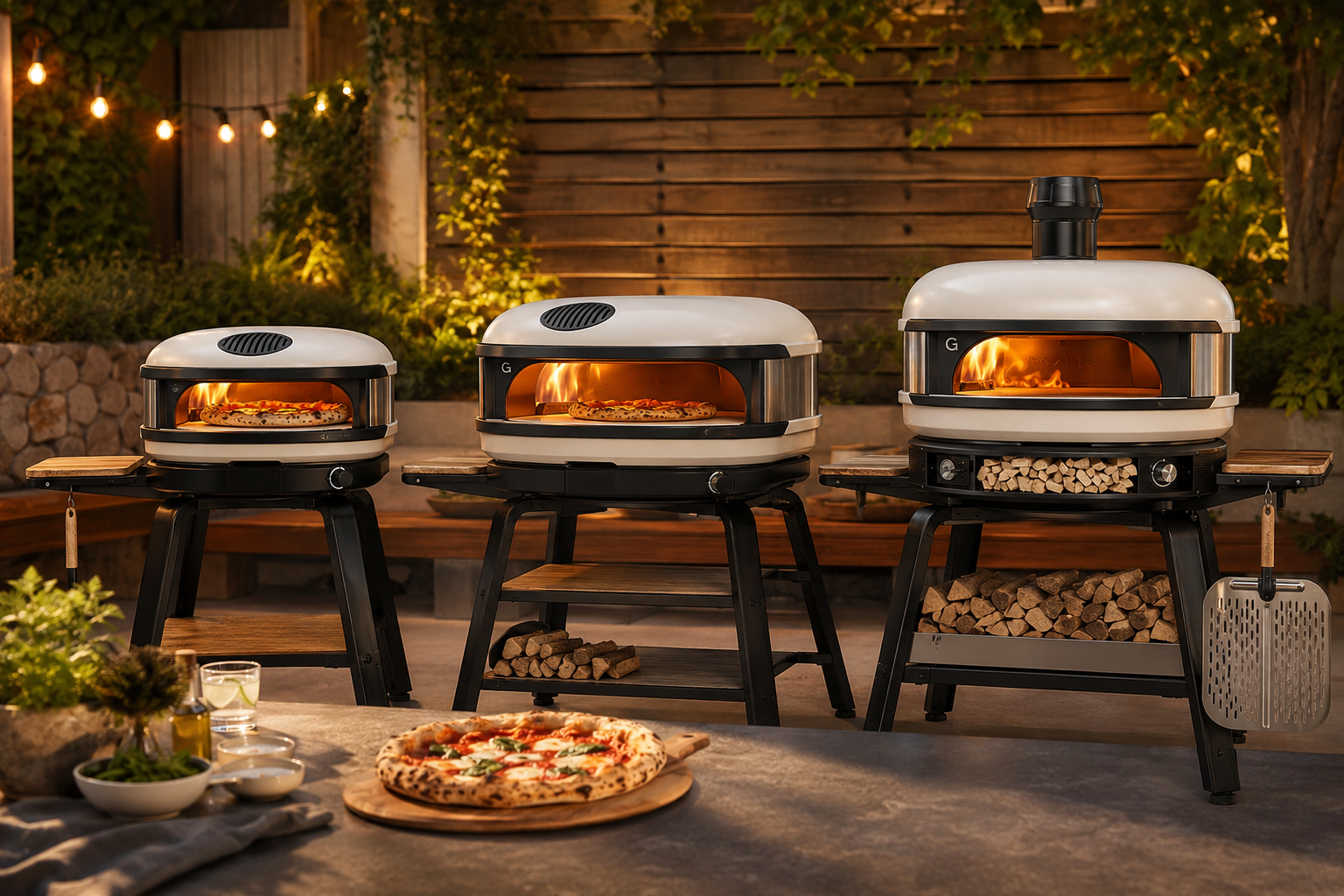
Gozney’s range has grown enough by 2026 that “should I buy a Gozney pizza oven” isn’t really one question anymore — it’s at least three. The Dome, the Arc, the Arc XL, and the Roccbox all carry the Gozney name and the same fundamental engineering philosophy, but they’re built for genuinely different buyers, and the reviewer evidence across this range is specific enough this time to give real, practical guidance on which one fits which person.

Quick Highlights

  • ✅ A tester who’s run more than 30 pizza ovens through controlled testing specifically calls the Arc “the easiest pizza oven I ever used” — a meaningful endorsement from someone with genuine comparative authority
  • ✅ Independent lab-style testing confirms Gozney’s stated temperatures are genuinely accurate — the Arc reaches and holds 950°F with peaks exceeding 1000°F, verified against an infrared thermometer
  • ✅ The Arc XL’s removable stone and larger mouth opening specifically solve the maneuverability complaints documented on smaller ovens
  • ✅ Dome Gen 2’s updated lateral burner design (shared with the Arc series) is a genuine engineering improvement over the original Dome’s back-corner flame
  • ✅ Delivery experience specifically praised — regular tracking updates and careful driver handling for the heaviest models
  • ✅ Extended warranty available simply by registering your product after purchase
  • ❌ None of the larger Gozney ovens are genuinely portable — the Arc alone weighs 47.5 lbs with a near-3-square-foot footprint, and works best as a permanent backyard fixture rather than something you move regularly
  • ❌ Total cost adds up fast once you factor in the stand, cover, and proper peels — one detailed reviewer’s full Dome XL accessory bill came to £639.97 on top of the oven itself
  • ❌ Real heat retention between consecutive pizzas, while better than most competitors, still isn’t as strong as a permanent brick oven — a documented limitation even from a three-year owner who otherwise loves the Dome
  • ❌ Wood-fired operation specifically takes significantly longer to reach temperature and requires real ongoing attention — one specific owner reports roughly three hours to heat via charcoal/wood versus minutes on gas
  • ❌ Genuine beginner learning curve persists across the range — even experienced owners recommend starting at 650-750°F rather than jumping straight to 900°F+ on your first attempts

Best for: Buyers choosing between specific Gozney models based on actual use case — the Arc for most first-time buyers wanting the best balance of ease and performance, the Arc XL specifically if you regularly want pizzas above 14 inches, and the Dome only if you’re already confident in your pizza-making skills and want the multi-fuel flexibility and design statement that comes with the premium price.

Why Trust This Review

Cross-referenced from TechGearLab’s controlled lab testing (infrared thermometer verification), Pala Pizza’s hands-on testing across 30+ pizza ovens, Vincenzo’s Plate’s detailed Arc XL unboxing and cooking test, Domino’s three-year owner review of the Dome Gen 2 XL, and Pizza Every Friday’s two-year Dome ownership account. No commercial relationship with Gozney.

Table of Contents

  • About Gozney
  • Gozney Review: Full Breakdown by Model
  • Best Gozney Products Worth Buying
  • What Customers Actually Think
  • Is Gozney Worth It?
  • Gozney Arc vs Arc XL vs Dome — Which One Should You Buy?
  • Where to Buy
  • FAQs
  • Final Verdict

About Gozney

Gozney was founded by Tom Gozney in the UK, built around a specific frustration: home pizza ovens weren’t delivering the temperatures and results that professional restaurant equipment could achieve. The original Roccbox (2017) established the brand’s credibility, and the Dome that followed became Gozney’s signature multi-fuel statement piece. The Arc and Arc XL, launched more recently, introduced a new lateral gas burner design and digital temperature display that’s since been incorporated into the updated Dome Gen 2 as well — meaning the brand’s newest engineering improvements now run across the entire current lineup rather than being confined to a single flagship model.

Gozney Review: Full Breakdown by Model

The Arc — The Model Most Independent Testers Specifically Recommend for Beginners

This is where the most useful new evidence concentrates. Pala Pizza’s reviewer, who has personally tested over 30 different pizza ovens, makes a direct and specific comparative claim: “It’s the easiest pizza oven I ever used and performs exceptionally well. I still can’t believe the price of this.” His controlled test documents the actual temperature progression — launching a first pizza at 813°F measured at the center of the stone, cooking for 76 seconds, with results he specifically describes as “fantastic” despite a slightly underdone bottom on the very first attempt; his second pizza, launched at 864°F, produced “an excellent bottom” with what he calls “incredible” cross-section results.

TechGearLab’s independent lab testing — using an infrared thermometer to verify Gozney’s own claims rather than just taking them at face value — confirms the Arc reaches and holds 950°F as advertised, “with peak temperatures well exceeding 1000°F.” Their specific conclusion: “What truly surprised us was that we were able to achieve near-perfect results on our very first attempt — something we rarely experience with backyard pizza ovens.” That’s a meaningfully stronger beginner-friendliness claim than most pizza oven reviews make, and it comes from a testing methodology designed specifically to be skeptical of manufacturer claims.

The Arc XL — Solves the Specific Maneuverability Complaint Smaller Ovens Generate

Vincenzo’s Plate’s detailed unboxing and cooking test of the Arc XL is specifically focused on whether the larger size genuinely improves the experience rather than just accommodating bigger pizzas. His verdict is direct: “the opening is a lot bigger than both the Dome and Roccbox which provides more room to handle the pizza from different angles,” and “the design and burner placement make it compact from the outside and spacious from the inside.”

His comparative conclusion across the full Gozney range, having previously reviewed the Dome extensively: “It literally kills all medium-sized pizza ovens on the market and has a better exhaust design than Dome.” Practically, the Arc XL arrives pre-assembled — “you don’t have to do anything except for placing the ventilation gauze and flame grates” — which removes one of the more common points of first-time setup frustration documented elsewhere in the broader pizza oven category.

The Dome Gen 2 — A Genuine Engineering Upgrade, Still Requires Patience and Real Investment

Pala Pizza’s detailed Gen 2 review documents the specific engineering changes: the cooking area is roughly 16% larger than the original Dome, and the burner design has shifted from the original’s back-corner flame to the newer lateral burner design shared with the Arc series — a change the reviewer specifically endorses as a meaningful improvement based on his experience across Gozney’s other current models.

The honest tradeoffs are specific and worth knowing precisely. Heat-up time is genuinely longer than the smaller Arc models — “it took 35 minutes to reach temperatures for baking New York style pizza, and even longer for Neapolitan,” with Gozney’s own stated estimate of 50-55 minutes for full heat saturation, varying with outside temperature and wind conditions. Domino’s three-year-owning reviewer (testing the Dome XL Gen 2 specifically) makes a comparative material observation worth flagging: “Gozney’s feels slippery underneath the pizza; it wasn’t as easy for me to maneuver it” compared to his prior Ooni-brand experience — a specific, practical detail about pizza handling rather than overall oven performance.

The same reviewer’s honest, specific recommendation for first-time buyers: “I’d start with a smaller model, like the Arc or the Tread, and work your way up” before committing to the Dome’s price and learning curve, having specifically noted that his own comfort with the Dome comes partly from “doing this for three years.”

The Total Cost of Ownership — A Detail Worth Planning Around in Advance

This is consistently underweighted in initial purchase decisions and worth flagging directly with a real number attached. Livingetc’s reviewer documents the actual accessory cost for a fully-equipped Dome XL Gen 2 setup: Cover, Stand, and Balance Placement Peel together add £639.97 on top of the oven’s own price — a substantial addition that doesn’t show up in the headline oven price most buyers compare when shopping.

Wood and Charcoal Fuel — A Real, Documented Time and Attention Cost

Pala Pizza’s Dome Gen 2 testing specifically documents charcoal heat-up taking “at least 3 hours” compared to the minutes required for gas, plus the need for the optional Neapolitan arch accessory specifically to retain enough heat for genuine Neapolitan-style results on charcoal. The reviewer’s direct, useful framing: “Don’t expect to be making Neapolitan pizza without a proper wood fire” if that specific style and flavor profile genuinely matters to you — gas alone, even at the right temperature, produces a meaningfully different result for that specific pizza style.

Best Gozney Products Worth Buying
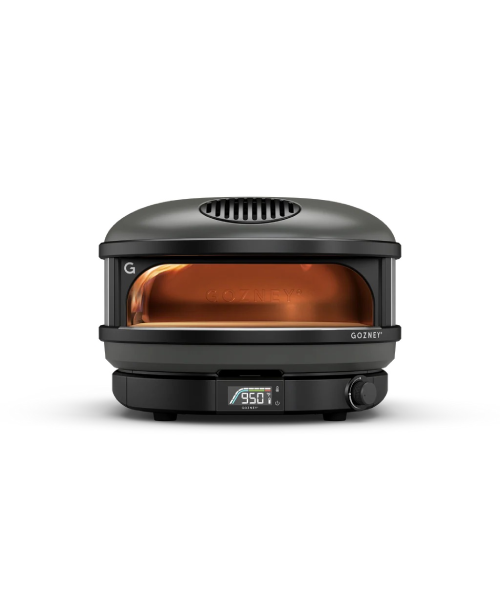
Best for: First-time Gozney buyers and most home pizza enthusiasts wanting the best ratio of ease-of-use to genuine performance.

Top Features:

  • Lateral rolling gas burner with front-mounted temperature control — no walking around the oven to adjust flame
  • Built-in digital temperature display removes the single biggest beginner guessing game
  • 30mm thick pizza stone with two-layer insulation maintains consistent heat across consecutive pizzas

One Honest Drawback: At 47.5 lbs with a near-3-square-foot footprint, this is a permanent backyard fixture, not something you tuck away between uses.

Verdict: Independently described by a tester with 30+ oven comparisons as “the easiest pizza oven I ever used.” The single most consistently recommended starting point in the current Gozney range.
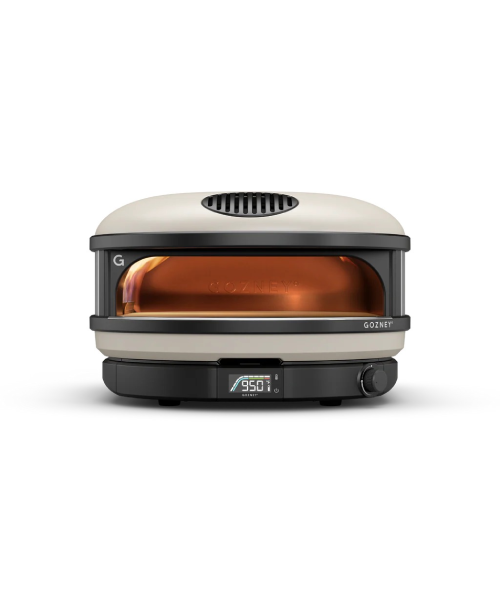
Best for: Buyers who specifically and regularly want pizzas larger than 14 inches, or anyone who’s found smaller ovens frustrating to maneuver pizzas within.

Top Features:

  • Larger mouth opening than both the Dome and Roccbox, providing genuinely more room to work the pizza from multiple angles
  • Arrives pre-assembled — setup is limited to attaching the ventilation gauze and flame grates
  • Compatible with the same Gozney stand and Booster accessories as the standard Arc

One Honest Drawback: If your typical pizza size is 12-14 inches, the extra size and cost over the standard Arc may not deliver a proportional benefit — one detailed reviewer specifically notes most of his own pizzas run around 12 inches even while owning the XL.

Verdict: The right upsize specifically for buyers with a genuine, recurring need for larger pizzas — not a default upgrade for everyone.
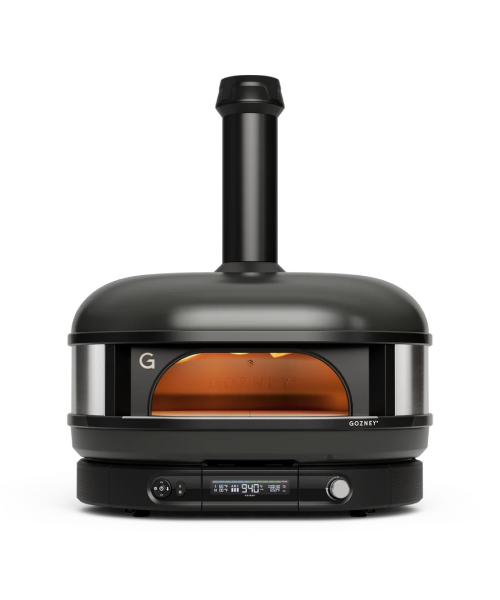
Best for: Experienced home pizza makers who specifically want multi-fuel flexibility and are prepared to invest real time learning the oven, particularly for genuine wood-fired Neapolitan results.

Top Features:

  • Updated lateral burner design (shared with the Arc series) — a genuine engineering improvement over the original Dome’s back-corner flame placement
  • Larger cooking area, roughly 16% bigger than the first-generation Dome
  • Multi-fuel capability genuinely produces different, authentic results depending on which fuel you choose — not just a marketing checkbox

One Honest Drawback: Total realistic investment, once you add the recommended stand, cover, and proper peels, runs several hundred dollars/pounds above the oven’s own sticker price — budget for this before purchase rather than discovering it afterward.

Verdict: A genuinely excellent oven for buyers who’ve already confirmed pizza-making is a long-term hobby. Not the right first purchase for someone still deciding whether they’ll stick with it.
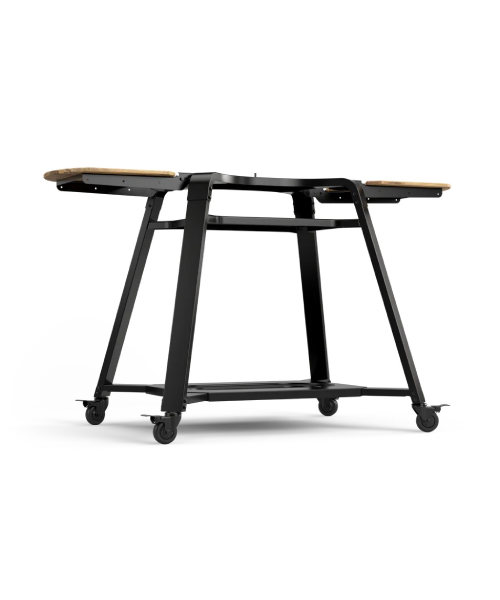
Best for: Any Dome or Arc/Arc XL owner who doesn’t already have a suitable outdoor surface at the correct working height.

Top Features:

  • Powder-coated steel construction with two fold-down acacia wood shelves for prep and tool storage
  • Interchangeable between the Arc and Arc XL (though not compatible with the Dome, which has its own dedicated stand option)
  • Specifically described by multiple reviewers as sturdy, good-looking, and worth the additional cost

One Honest Drawback: This is a genuine additional cost beyond the oven price that most buyers underestimate when budgeting initially.

Verdict: Effectively a required purchase rather than optional, unless you already have an appropriately sturdy, heat-safe outdoor counter or table.

What Customers Actually Think

Real accounts paraphrased:

  • “Based on my experience after testing over 30 pizza ovens, the Arc is the easiest pizza oven I ever used. I still can’t believe the price of this.”
  • “What truly surprised us was that we were able to achieve near-perfect results on our very first attempt — something we rarely experience with backyard pizza ovens.”
  • “It literally kills all medium-sized pizza ovens on the market. Perfect for everyone, whether you’re a beginner, professional, or pizza lover.”
  • “Gozney’s feels slippery underneath the pizza compared to my previous oven; it wasn’t as easy for me to maneuver.”
  • “I’d start with a smaller model, like the Arc, and work your way up. It can be very frustrating when you mess up in the beginning, so you don’t want to spend a lot before you’re certain this hobby is for you.”
  • “My gas-fired pizzas were just as good — sometimes better — than the wood-fired ones. And in my house, we know our pizza.”

Is Gozney Worth It?

For most home pizza enthusiasts, including first-timers: yes, specifically with the Arc, based on the strongest independently verified beginner-friendliness evidence in the entire range.

For buyers specifically wanting larger pizzas as a recurring, regular need: the Arc XL, with the size upgrade justified by genuine maneuverability and capacity benefits rather than just bragging rights.

For experienced pizza makers wanting multi-fuel flexibility, genuine wood-fired Neapolitan results, and the most premium aesthetic statement: the Dome Gen 2, with full awareness of the real total cost of accessories and the genuine time investment wood/charcoal operation requires.

Gozney Arc vs Arc XL vs Dome — Which One Should You Buy?


Arc

Arc XL

Dome Gen 2

Pizza size

Up to 14″

Up to 16″

Up to 16″ (18″ on Dome XL)

Fuel options

Gas only

Gas only

Gas, wood, charcoal

Heat-up time (gas)

Fast

Fast

35-55 minutes

Beginner friendliness

✅ Best in range

✅ Very strong

More demanding, recommend prior experience

Pre-assembled

✅ Mostly

✅ Yes

✅ Yes, but heavier (136 lbs)

Price (oven only)

~$699-799

~$799-899

~$1,799-1,999

Best for

Most first-time buyers

Larger-pizza regulars

Experienced, multi-fuel enthusiasts

Where to Buy

gozney.com — full range, also available through John Lewis for UK Arc purchases specifically. Register your product after purchase to activate the extended warranty.

FAQs

Which Gozney oven is best for beginners?

The Arc, based on multiple independent reviewers — including one with over 30 pizza ovens tested — specifically describing it as the easiest to use, with near-perfect first-attempt results documented in controlled lab testing.

Is the Gozney Dome worth the extra cost over the Arc?

Only if you specifically want multi-fuel flexibility (genuine wood-fired results) and have already confirmed pizza-making is a long-term hobby — multiple experienced owners specifically recommend starting smaller first.

How accurate are Gozney's advertised temperatures?

Independent lab testing using infrared thermometers confirms the Arc genuinely reaches and holds 950°F with peaks exceeding 1000°F, matching Gozney’s own claims.

What's the real total cost of a Gozney Dome setup?

Beyond the oven itself, a fully accessorized setup (cover, stand, balance peel) can add several hundred dollars/pounds — one detailed UK reviewer’s total accessory cost came to £639.97.

Final Verdict

Gozney’s current range has matured into a genuinely well-differentiated lineup rather than a single flagship product with size variants. The Arc earns the strongest, most specific beginner-friendliness endorsement from testers with real comparative authority across dozens of competing ovens. The Arc XL solves a real, documented maneuverability problem for anyone wanting larger pizzas. The Dome Gen 2 remains the premium, multi-fuel statement piece — genuinely excellent, but best approached after you’ve confirmed your own commitment to the hobby and budgeted realistically for the accessories that complete the setup.

Overall Rating: 9.0 / 10

Category

Score

Pizza Performance (Arc/Arc XL)

9.5 / 10

Pizza Performance (Dome, multi-fuel)

9 / 10

Beginner Accessibility

8.5 / 10

Build Quality & Design

9.5 / 10

Total Cost Transparency

7 / 10

Delivery Experience

9 / 10

Overall

9.0 / 10

Santos Grills Review 2026 — Great Seminars, A Real Post-Purchase Warning

By Posted on 0 Comments10min read38 views

Santos Grills generates two genuinely different categories of review depending on exactly where a customer is in their relationship with the company. While shopping and attending seminars, the praise is detailed, specific, and enthusiastic. Once a defect appears after the sale, at least one detailed, dated, multi-month case shows a meaningfully harder experience — one specific enough and serious enough that it deserves to be the central focus of this review rather than a footnote.

Quick Highlights

  • ✅ 4.58/5 aggregate across 6,052 reviews.io reviews, and a separate 4-star Trustpilot average from 562 reviews — a substantial and broadly positive verified rating base
  • ✅ The basic and advanced cooking seminars at the Cologne and Frankfurt locations are consistently and specifically praised by name across multiple distinct instructors (Esther, Alex, Thomas, Samuel, Jochen, Klaus)
  • ✅ S-Series gas grills use genuinely premium materials — double-walled stainless steel lid, cast aluminum components, cast iron grates — positioned by the company directly against professional outdoor kitchen standards
  • ✅ Infrared side burners on S-Series models reach genuinely high temperatures (up to 800°C/1,472°F), suitable for proper searing and rotisserie cooking
  • ✅ Direct-from-manufacturer pricing model (the company describes its products going “only a few steps” to the customer) genuinely undercuts comparable competitor pricing per the brand’s own positioning
  • ✅ Up to 10-year warranty available on select models
  • ❌ A specific, dated, and detailed complaint documents a €3,000+ Broil King grill (sold through Santos) arriving with a loose ignition rail and a dangling, exposed electrode cable — discovered immediately on installation day
  • ❌ The same case documents Santos redirecting the defect to the manufacturer, who initially offered only a self-installation replacement part with a minimum one-month wait — the customer specifically refused this and pursued legal options instead
  • ❌ A separate, earlier documented case describes over 20 unanswered emails across roughly two months regarding multiple defects (non-functioning thermometer, faulty gas supply) on a different grill purchased from Santos, eventually resolved only after the customer threatened to return the unit and a manufacturer technician was sent out directly
  • ❌ No telephone support for post-purchase technical issues per at least one detailed, specific account — staff reportedly unable to assist by phone and directing the customer to an online contact form instead
  • ❌ Santos still does not offer pellet grills or charcoal kettle grills as of 2026, per independent German grill-retail comparison guides — gas, charcoal, electric, and smoker categories are covered, but Weber-style charcoal kettles and Weber-style pellet grills sit outside the current Santos own-brand range

Best for: German buyers specifically purchasing Santos’s own-brand gas grill range, and anyone primarily interested in the in-person cooking seminar experience — approach third-party brand purchases (Broil King and similar) sold through Santos with realistic expectations about post-sale support speed, and keep all documentation from day one in case a defect surfaces.

Why Trust This Review

Cross-referenced from reviews.io’s 6,052-review aggregate, Trustpilot’s 562 verified Santos Grills GmbH reviews, two separate detailed, dated TripAdvisor complaint accounts spanning 2021-2026, and multiple independent seminar reviews across the Cologne and Frankfurt locations. No commercial relationship with Santos Grills.

Table of Contents

  • About Santos Grills
  • Santos Grills Review: Full Breakdown
  • Best Santos Grills Products Worth Buying
  • What Customers Actually Think
  • Is Santos Grills Worth It?
  • Santos Grills vs Buying Direct From Weber/Napoleon
  • Where to Buy
  • FAQs
  • Final Verdict

About Santos Grills

Santos Grills GmbH is a German outdoor cooking specialty retailer with a flagship operation centered in Cologne, alongside additional locations including Frankfurt and Santos Nord near Hamburg. The company sells both its own-brand gas grill line (the S-Series and E-Series) and third-party brands including Broil King, positioning itself as a direct-from-manufacturer retailer that cuts out traditional retail markup — “Produkte unserer Eigenmarke gehen nur wenige Schritte bis zum Kunden,” as the company’s own site describes it.

A genuinely distinctive part of the Santos business model is its in-person cooking seminar program, run at multiple locations, where customers learn grilling technique hands-on while eating what they prepare — a fundamentally different retail experience than walking through a static showroom of display units.

Santos Grills Review: Full Breakdown

The Defect Cases — The Evidence That Deserves the Most Direct Attention

This is where the review requires unusually specific, careful treatment, because the available evidence includes two separate, dated, detailed complaint accounts rather than vague dissatisfaction — and both describe a meaningfully similar pattern.

The more recent and most serious case involves a Broil King Imperial S570 (a premium third-party brand sold through Santos), purchased for over €3,000 after the customer had previously returned an earlier Santos-brand grill due to other problems. On installation day, the customer discovered the ignition rail was “totally loose” with an electrode cable “dangling loose in the grease tray” — reported to Santos the same day. Santos’s specific response, per the customer’s account, was to redirect responsibility to the manufacturer rather than resolve it directly. The manufacturer then offered to send a replacement ignition rail and electrodes for self-installation — but “at the earliest in one month.” The customer specifically declined this resolution and stated an intent to “examine my legal options,” closing with a direct, pointed comment: “Eigentlich sehr schade. Denn der Grill macht ansonsten einen sehr guten Eindruck” (Genuinely a shame, because the grill otherwise makes a very good impression) — and a suggestion that Broil King itself “should ask whether they shouldn’t part ways with such a retailer.”

A separate, earlier dated complaint (2023) describes a different but structurally similar pattern on a different grill: multiple defects discovered the same day as purchase and setup (non-functioning thermometer, malfunctioning gas supply), an explicit statement that phone support wasn’t available because “according to their own information, the employee has no idea about grills and also can’t connect further,” over 20 unanswered emails across roughly two months, and resolution only achieved after the customer threatened to return the unit entirely — at which point a manufacturer technician (not a Santos employee) was sent out and successfully repaired the grill on-site.

The honest pattern across both cases: when a defect is genuinely the manufacturer’s responsibility rather than Santos’s own fault, Santos appears to step back from resolution speed in a way that leaves the customer managing a multi-week or multi-month gap directly with the manufacturer — a structurally different and slower experience than the in-store seminar enthusiasm would predict.

The Seminar Experience — Genuinely, Consistently Excellent, Unconnected to the Defect Pattern

This remains the strongest and most consistently documented part of the Santos experience, and it’s worth understanding as a genuinely separate business line from grill sales support. Multiple specific, dated accounts across different locations and different instructors describe consistently strong experiences: “Fingerfood Grillseminar mit Esther war einfach Klasse! Sehr pfiffig, humorvoll und mit vielen praktischen Tipps” (the fingerfood seminar with Esther was simply great — very clever, humorous, with lots of practical tips), and a separate Frankfurt seminar with instructors Alex, Thomas, and Samuel specifically described as “sehr viel Spaß” with food described as delicious “für jeden Geschmack” (for every taste).

A large-scale corporate event account — approximately 200 people — specifically describes staff as “professional and very nice, always wanting to help and with a smile” even at that volume, suggesting the seminar service quality holds consistently at scale rather than only in small curated groups.

The Product Engineering — Genuinely Premium Materials on the Own-Brand Range

Santos’s own technical description of the S-Series is specific rather than vague marketing language: double-walled stainless steel lid, cast aluminum components, cast iron grates “ideally shaped for perfect heat distribution,” and infrared side burners capable of reaching up to 800°C — genuinely high-performance specifications suitable for proper searing and rotisserie cooking, positioning the line directly against what the company calls “Profi-Liga” (professional league) outdoor kitchen standards.

The genuine product line gap that independent German grill-retail comparison guides specifically note: as of 2026, Santos still doesn’t manufacture its own pellet grill or charcoal kettle grill — a deliberate, specific positioning choice that buyers wanting those fuel types should plan around by looking elsewhere (typically Weber) for that specific category.

Best Santos Grills Products Worth Buying

Best for: Buyers specifically wanting a gas grill (not pellet, not charcoal) with genuinely premium construction at direct-from-manufacturer pricing.

Top Features:

  • Double-walled stainless steel lid, cast aluminum components, cast iron grates for even heat distribution
  • Infrared side burner reaching up to 800°C — genuine high-heat searing and rotisserie capability
  • Available in 3- or 4-burner configurations, in both black and stainless steel finishes

One Honest Drawback: As an own-brand product, if a defect does occur, resolution speed appears to depend on whether the issue is something Santos can fix directly versus something requiring manufacturer involvement — the documented complaint cases suggest the latter path is meaningfully slower.

Verdict: A competitively specified gas grill on its own technical merits. Inspect thoroughly on delivery day and document everything immediately if anything looks off, given the documented resolution pattern.

Best for: Buyers wanting Santos’s most premium own-brand gas grill tier, with up to 28.5 kW total burner output.

Top Features:

  • Fully stainless steel construction from lid to base, positioned as Santos’s “classic” flagship line
  • Foldable side shelves and lid thermometer included as standard
  • Strong burner output across the full range, suited to serious regular grilling volume

One Honest Drawback: Premium pricing reflects the premium materials — confirm exact current pricing and warranty terms directly given the documented variability in resolution speed for defects.

Verdict: The strongest own-brand option for buyers wanting maximum build quality within the Santos gas grill range specifically.

Best for: Anyone — regardless of whether you’re buying a Santos grill — wanting genuine, hands-on grilling instruction with quality ingredients in a social setting.

Top Features:

  • Structured curriculum covering meat, vegetable, and side preparation with active participant involvement, not passive demonstration
  • Vegetarian and vegan options consistently confirmed available
  • Multiple specifically named instructors repeatedly praised for engaging, informative, humor-balanced teaching style

One Honest Drawback: Current seminar pricing wasn’t consistently available across the documented reviews — confirm directly with the specific location before booking.

Verdict: This remains the single most consistently and specifically praised element of the entire Santos business, entirely separate from the documented post-purchase support concerns.

What Customers Actually Think

Real accounts paraphrased:

  • “Genuinely a shame, because the grill otherwise makes a very good impression. Found the ignition rail totally loose with an exposed electrode cable dangling. Santos pushed the problem to the manufacturer. I’ll be examining my legal options.”
  • “Same-day call, no phone help possible — according to their own statement, the employee had no grill knowledge and couldn’t connect me further. Over 20 emails ignored across two months. Finally resolved after threatening to return the unit.”
  • “The fingerfood seminar with Esther was simply great — very clever, humorous, and full of practical tips. Mega delicious food and a great experience! Seven stars!”
  • “Our barbecue seminar with Alex, Thomas and Samuel was a lot of fun. There was delicious food for every taste and the fridge was full of drinks.”
  • “Been there for a business event of approximately 200 people. Very interesting grills, always grilled hot food available. The staff were all very professional and very nice, always wanting to help and with a smile.”

Is Santos Grills Worth It?

For the cooking seminars specifically: yes, with strong, consistent confidence — this remains a genuinely distinctive, well-executed part of the business.

For Santos’s own-brand S-Series and E-Series gas grills: reasonably, on product specification merits, but inspect thoroughly on delivery and document everything immediately — the documented complaint pattern suggests defect resolution can be meaningfully slower than the purchasing experience predicts.

For third-party brands (Broil King and similar) purchased through Santos specifically: proceed with the most caution. The most serious documented complaint involves exactly this category, with Santos redirecting responsibility to the manufacturer rather than resolving the issue directly.

Santos Grills vs Buying Direct From Weber/Napoleon


Santos Grills

Weber/Napoleon Direct

Gas grill specifications

✅ Genuinely premium, competitive

✅ Strong, established

Pellet/charcoal kettle range

❌ None as of 2026 (own-brand)

✅ Full range available

In-person seminar experience

✅ Genuinely distinctive

Limited

Post-purchase phone support

❌ Documented weakness

✅ Established support network

Defect resolution speed

❌ Documented multi-week/month delays in specific cases

Generally faster, manufacturer-direct

Best for

Gas grill buyers wanting in-person guidance and seminars

Buyers prioritizing post-purchase support reliability

Where to Buy

santosgrills.de — full range with locations in Cologne, Frankfurt, and Norderstedt (Santos Nord). Document your unboxing and installation thoroughly with photos and video from the first moment, regardless of which model you purchase.

FAQs

Does Santos make pellet grills?

No — as of 2026, Santos’s own-brand range does not include pellet grills. Weber’s SmokeFire series remains the recommended alternative for that fuel type.

What happens if my Santos grill arrives defective?

Based on documented cases, resolution speed varies significantly depending on whether Santos can resolve the issue directly or must redirect to the original manufacturer — the latter path has been documented taking weeks to months in specific, dated accounts.

Is Santos phone support reliable for technical issues?

Multiple specific, dated accounts describe phone support as either unavailable or staffed by representatives unable to provide meaningful grill-specific help. In-person visits or persistent written follow-up have been the paths to resolution in documented cases.

Are Santos cooking seminars worth attending even if I don't buy a grill there?

Yes — this is consistently the most positively and specifically reviewed part of the entire Santos business, independent of any grill purchase.

Final Verdict

Santos Grills genuinely excels at exactly two things: building competitively specified own-brand gas grills, and running a hands-on cooking seminar program that generates consistently enthusiastic, specifically detailed praise across multiple locations and instructors.

The documented post-purchase defect resolution pattern — two separate, dated, detailed cases spanning several years, both involving multi-week to multi-month delays when a manufacturer (rather than Santos directly) needed to be involved — is serious enough to weight heavily in this review. Buy with thorough delivery-day inspection and documentation as standard practice, attend a seminar with confidence regardless of your purchase decision, and approach third-party brand purchases through Santos with particular caution given where the most serious documented complaint originates.

Overall Rating: 7.0 / 10

Category

Score

Gas Grill Product Quality

8.5 / 10

In-Person Seminar Experience

9.5 / 10

Product Range Breadth

6 / 10

Post-Purchase Defect Resolution

3.5 / 10

Phone/Technical Support

3.5 / 10

Value for Money (at point of sale)

8 / 10

Overall

7.0 / 10

AFA Stores Review 2026 — Is It Legit? Real Risks to Know Before Buying

By Posted on 0 Comments10min read112 views

AFA Stores’ review landscape this cycle produces a genuinely consistent and useful pattern: the buying experience and product variety are repeatedly praised, while a specific structural issue — what happens when an item arrives in the wrong color, damaged, or simply doesn’t match the description — surfaces across multiple independent platforms with remarkably similar economics each time. Understanding that specific pattern before you order is more useful than any general “is it legit” reassurance.

Quick Highlights

  • ✅ Genuinely large catalog — 50,000+ products from 100+ established furniture brands, confirmed by multiple independent reviewers
  • ✅ eKomi partnership produces a 4.5/5 rating from 2,331 customer reviews, and ComplaintsBoard’s separate aggregate sits at 4.0/5 from 45 reviews — both reflecting majority satisfaction
  • ✅ Price match guarantee genuinely offered, and multiple buyers specifically confirm pricing competitive with or better than local stores
  • ✅ Secure, long-established domain with over a decade of operating history (founded 2012) — standard legitimacy indicators are solid
  • ✅ Multiple specific accounts describe fast delivery, careful packaging, and furniture matching website photos accurately
  • ❌ A specific, detailed PissedConsumer account documents ordering dressers in “acorn” color and receiving a noticeably different “chestnut” finish, with the company allegedly claiming it had simply renamed the same color — followed by a quoted $808 return shipping cost plus a $192 restocking fee for what the customer characterizes as a de facto no-returns policy
  • ❌ A separate documented case describes a lamp being delivered instead of an ordered piece of furniture, sitting on the customer’s porch for three days, followed by the company attempting to redeliver the same wrong item twice after the order was cancelled — with a customer service manager described as “condescending” and indifferent during the resolution attempt
  • ❌ A detailed ComplaintsBoard account describes a Malaysia-manufactured bedroom set arriving with damage on nearly every piece across three separate replacement shipments, ultimately requiring a partial refund rather than functional replacement
  • ❌ Return policy, while stated as a 30-day window, frequently involves freight return shipping costs and restocking fees that several independent reviewers specifically describe as functioning as a practical barrier to actually using the stated return right
  • ❌ At least one specific, detailed account describes a credit card dispute being the only effective resolution path after the company refused to provide return shipping instructions while a customer’s dispute was pending

Best for: Buyers ordering smaller, lower-value items (lamps, side tables, accent pieces) where the freight-return economics aren’t punishing if something goes wrong, and anyone making a larger purchase who reads the specific color/finish description carefully, confirms construction materials directly with customer service before ordering, and pays via a credit card with strong dispute support as a backup resolution path.

Why Trust This Review

Cross-referenced from PissedConsumer’s detailed, dated complaint accounts, ComplaintsBoard’s 45-review aggregate with both detailed positive and negative accounts, Trustpilot’s 1,125+ verified reviews, eKomi’s 2,331-review independent partnership rating, and House on the Crescent’s independent category-by-category breakdown. No commercial relationship with AFA Stores.

Table of Contents

  • About AFA Stores
  • AFA Stores Review: Full Breakdown
  • Best AFA Stores Categories Worth Buying
  • What Customers Actually Think
  • Is AFA Stores Worth It?
  • AFA Stores vs Wayfair
  • Where to Buy
  • FAQs
  • Final Verdict

About AFA Stores

AFA Stores is an online furniture and home décor retailer founded in 2012, operating as a marketplace-style business selling products from over 100 established furniture brands rather than manufacturing its own goods. The catalog spans over 50,000 products across bedroom, living room, dining, home office, and outdoor categories. The company has partnered with eKomi, an independent third-party feedback platform, specifically to provide externally-verified customer review collection rather than relying purely on self-hosted testimonials.

As a retailer rather than a manufacturer, AFA Stores’ fundamental quality profile depends heavily on which specific brand and product line a buyer chooses within the catalog — a structural characteristic shared with comparable marketplace retailers like Wayfair, and one that independent reviewers consistently flag as the most important factor in managing expectations.

AFA Stores Review: Full Breakdown

The Color-Substitution Dispute — A Specific, Detailed Case Worth Understanding in Full

This is the most economically significant documented complaint pattern this cycle, and it deserves precise treatment because the dollar figures are unusually specific. A detailed PissedConsumer account describes ordering two dressers in “acorn” color to match an existing bed set, waiting five weeks, and receiving dressers in a noticeably different, more red-toned “chestnut” finish. When the customer contacted the company, she reports being told that “acorn” had simply been renamed to “chestnut” — a claim she specifically disputes as false based on her own research.

The resolution offered, per her account: $808 to ship the dressers back, plus a $192 restocking fee — a combined cost she accurately describes functioning as “basically a no returns policy” given that it likely exceeds or substantially erodes whatever the dressers themselves cost. She specifically notes this was her first-ever credit card chargeback dispute despite years of consumer purchasing experience, framing the decision as a direct response to feeling there was no other functional path to resolution.

The Wrong-Item Delivery Case — A Separate, Specific Pattern Worth Knowing

A different documented account describes ordering an expensive furniture piece, waiting weeks, and receiving a lamp instead of the ordered item — which then sat on the customer’s porch for three days before being retrieved. After cancelling the order out of frustration, the customer describes AFA attempting redelivery of the same cancelled, incorrect item not once but twice, with the final attempt resulting in the (correct, heavy) furniture piece being left on the doorstep by the delivery driver despite weighing “a couple hundred pounds” and the customer being unable to move it. Her specific characterization of the customer service manager she eventually reached: “condescending, had little affect, and basically just didn’t care.”

The Malaysia-Manufactured Bedroom Set Case — A Detailed, Specific Quality Account

A separate ComplaintsBoard account provides unusually granular detail about a specific bedroom set purchase: described on the listing as constructed from “solid American hickory wood,” but received as what the customer specifically identifies as “glued wood particles” with veneer over plywood construction, manufactured in Malaysia. Every piece in the set arrived with some form of damage across the initial shipment and two subsequent replacement attempts — cracked drawers, a cracked nightstand backboard, and surface marks requiring furniture markers to conceal. The customer ultimately kept two damaged-but-functional pieces and requested a refund specifically for the two pieces that arrived “severely damaged” on all three delivery attempts.

This level of specific, repeated, multi-attempt damage on a single order is a meaningfully more serious quality signal than an isolated single-item defect, and it’s worth knowing about for buyers considering larger furniture sets specifically.

The Genuine Counter-Evidence — Equally Specific, Equally Real

It’s important to weight the positive evidence with the same specificity given to the complaints above, because both are genuinely present in the available data. eKomi’s independently-administered 4.5/5 rating from 2,331 reviews and ComplaintsBoard’s separate 4.0/5 aggregate from 45 reviews both reflect majority satisfaction — these aren’t self-selected or company-hosted ratings, which adds credibility.

Specific positive accounts are detailed and varied: “My wife and I don’t usually agree quickly on furniture, but this time it was surprisingly easy… the drawers slide smoothly, and it actually helped declutter our room a lot.” A separate buyer describes a side table arriving “carefully packaged, everything arrived in perfect condition,” with a finish that “matches the photos on the website, which doesn’t always happen with online furniture.” Another describes a sectional sofa and ottoman “delivered promptly and set up in my living room with ease,” specifically praising both comfort and customer service follow-up after delivery.

Understanding the Return Policy Before You Need It

House on the Crescent’s independent breakdown provides the clearest, most actionable summary available: AFA Stores’ stated return policy includes a 30-day window, “but return shipping and restocking fees can apply” — and “even if the store accepts returns, freight returns can be expensive and inconvenient.” This single sentence captures the structural reality behind both the color-substitution case and several other documented disputes: the stated policy and the practical cost of using it are two genuinely different things for large, freight-shipped furniture specifically.

Best AFA Stores Categories Worth Buying

Best for: Buyers wanting to test the AFA Stores experience with manageable financial risk, where the documented freight-return-cost problem is largely irrelevant.

Why this category: Multiple specific, detailed positive accounts cluster here — a side table described as having “a nice finish, feels stable,” a coffee table purchase described as “smoother than I thought it would be” with careful packaging — and the lower per-item shipping weight means a wrong-color or damaged item is a manageable parcel-carrier return rather than an expensive freight dispute.

One Honest Drawback: Less impactful for buyers specifically furnishing an entire room who want everything from one retailer.

Verdict: The lowest-risk entry point to evaluate AFA Stores before committing to larger purchases.

Best for: Buyers using AFA Stores’ price match guarantee specifically, having already identified the exact product and price at a competing retailer.

Why this category: House on the Crescent’s review specifically frames this as AFA Stores’ clearest competitive advantage: “if you compare exact SKUs across retailers, that can be a real advantage” given the stated price match policy.

One Honest Drawback: Requires the upfront research effort of finding the identical product elsewhere first — not a spontaneous browsing advantage.

Verdict: The smartest way to use AFA Stores’ pricing strength while minimizing the risk of ordering something whose construction quality or color accuracy you can’t verify independently first.

Best for: Buyers wanting functional, mid-investment furniture pieces with manageable assembly.

Why this category: Multiple specific positive accounts describe desks and dining tables specifically: “I ordered a desk for my home office… assembly was a breeze, and the quality exceeded my expectations,” and a separate dining table purchase described as “elegant without feeling too formal” with a wipeable surface that’s held up to regular family use.

One Honest Drawback: Larger desk and table pieces still carry the documented freight-shipping and return-cost risk if something arrives incorrect or damaged — inspect immediately on delivery before signing off.

Verdict: A reasonable category with specific positive evidence, provided you inspect thoroughly at delivery rather than discovering issues days later.

What Customers Actually Think

Real accounts paraphrased:

  • “We ordered two dressers in acorn color. Five weeks later we received chestnut — a noticeably different, more red-toned finish. They claimed they’d simply renamed the color, which is false. Then they quoted $808 to ship it back plus a $192 restocking fee. This is basically a no-returns policy.”
  • “My wife and I don’t usually agree quickly on furniture, but this time it was surprisingly easy. The drawers slide smoothly, and it actually helped declutter our room a lot.”
  • “They delivered a lamp instead of the furniture I ordered. It sat on my porch for three days. After I cancelled, they tried delivering the cancelled wrong item twice more. The customer service manager was condescending and didn’t seem to care.”
  • “It has a nice finish, feels stable, and adds just the right touch to the room. Everything arrived in perfect condition. It made the whole experience feel thoughtful and worth it.”
  • “This bedroom set looks good in the photos and the description makes it sound like quality solid wood furniture, but every single piece arrived damaged across three separate shipments. Buyer beware.”
  • “The website’s layout is clean, intuitive, and easy to navigate. The customer service team was friendly and knowledgeable, providing helpful recommendations. The furniture exceeded my expectations.”

Is AFA Stores Worth It?

For smaller accessories and items where you’ve confirmed the exact SKU matches a competing retailer’s listing: yes — the price match positioning and the volume of specific positive evidence in these categories support a reasonably confident purchase.

For larger, expensive furniture sets — particularly anything in a specific custom color or finish: proceed with real caution. The documented color-substitution dispute, the wrong-item delivery case, and the multi-shipment damage pattern on a bedroom set all involve exactly this category of purchase, and the freight return economics make correcting a mistake genuinely expensive.

For anyone ordering anything substantial: pay with a credit card offering strong dispute protection as a backup resolution path, photograph and inspect immediately on delivery before signing any acceptance paperwork, and get color/finish confirmations in writing before ordering if matching an existing piece is critical.

AFA Stores vs Wayfair


AFA Stores

Wayfair

Catalog size

50,000+ products, 100+ brands

✅ Larger, 18M+ products

Price match guarantee

✅ Explicitly offered

Less formalized

Independent review verification

✅ eKomi partnership

Standard platform reviews

Documented color/finish accuracy issues

❌ Specific, detailed case documented

Comparable marketplace risk

Freight return cost transparency

❌ Documented as a practical barrier

Similar structural risk

Best for

Price-matched specific SKU purchases

Broadest browsing and filtering

Where to Buy

afastores.com — full catalog with price match guarantee. Confirm exact color/finish names in writing before ordering anything where matching an existing piece matters, and pay via a credit card with strong dispute support.

FAQs

Is AFA Stores legitimate?

Yes — it’s a real, long-established (founded 2012) e-commerce furniture retailer with standard security indicators and a partnership with the independent eKomi review platform. Legitimacy as a business is not the concern; the documented return-cost economics on larger items are.

What happens if AFA Stores sends the wrong color or a damaged item?

Based on multiple documented accounts, the stated 30-day return policy exists, but freight return shipping costs and restocking fees can be substantial enough to function as a practical barrier — one specific case quotes $808 in return shipping plus a $192 restocking fee.

Is AFA Stores cheaper than Wayfair or local furniture stores?

Multiple buyers confirm competitive or better pricing, and the price match guarantee provides a formal mechanism for this — most effective when you’ve already identified the exact SKU at a competing retailer.

Should I pay by credit card when ordering from AFA Stores?

Strongly recommended specifically for larger purchases, given multiple documented cases where a credit card dispute became the primary effective resolution path after direct negotiation with the company stalled.

Final Verdict

AFA Stores delivers genuinely on its core positioning: a wide, price-competitive catalog spanning 100+ established furniture brands, with a meaningful number of specific, detailed positive accounts supporting accurate product matching and careful delivery for the majority of orders. The eKomi-verified 4.5/5 rating reflects real majority satisfaction rather than curated self-hosted praise.

The documented complaint pattern this cycle is specific and economically serious enough to weigh heavily for larger purchases: a detailed color-substitution dispute with a quoted $1,000 combined return cost, a wrong-item delivery case handled with documented indifference, and a multi-shipment damage pattern on an entire bedroom set. Shop smaller items and price-matched specific SKUs with reasonable confidence; approach larger custom-color or full-set furniture purchases with real caution, written confirmation of details, and a credit card dispute path held in reserve.

Overall Rating: 6.9 / 10

Category

Score

Product Selection

9 / 10

Pricing & Price Match

8.5 / 10

Delivery Accuracy (small items)

8 / 10

Delivery Accuracy (large/custom items)

5 / 10

Return Policy Practicality

4 / 10

Customer Service Consistency

5.5 / 10

Overall

6.9 / 10

Ruggable Review — Are Washable Rugs Actually Worth It for Real Homes?

By Posted on 0 Comments7min read49 views

Ruggable Review — Are Washable Rugs Actually Worth It for Real Homes?

Ruggable Review — Are Washable Rugs Actually Worth It for Real Homes

I want to be upfront about something before I get into this. When I first heard about Ruggable — a rug you can throw in the washing machine — my reaction was somewhere between skeptical and mildly condescending. A washable rug sounded like a product designed for people who hadn’t figured out how to vacuum properly. I did not think I needed one.

Then we got a dog.

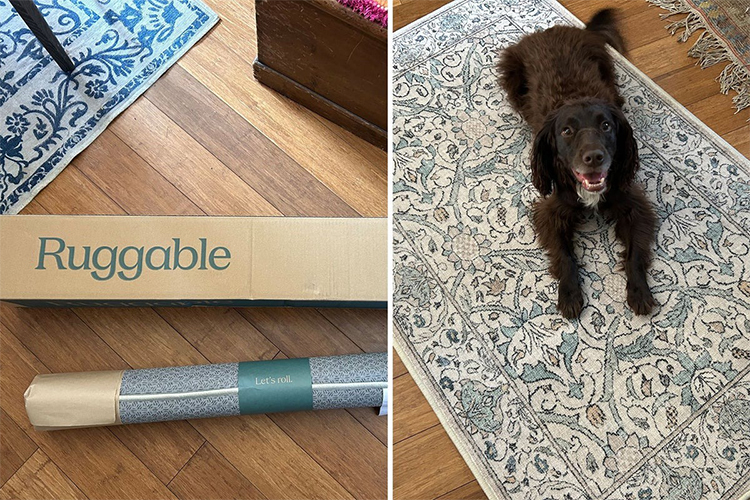
Not a small, tidy dog. A large, enthusiastic dog who tracked mud through the living room approximately forty-eight hours after we’d laid down a very nice, very non-washable wool rug that I’d spent weeks choosing. That rug is now rolled up in our garage. The Ruggable that replaced it has been in our washing machine six times.

I now have Ruggable in three rooms. Here’s what I actually think.

The concept — and why it's smarter than it sounds

The Ruggable system is two pieces. There’s a rug cover — the part you see, the patterned or solid fabric layer that sits on top. And there’s the rug pad underneath, a non-slip base that stays on the floor while the cover goes in the wash. The cover attaches to the pad with a cling system that holds better than you’d expect and releases when you pull it up to wash it.

Ruggable Review — Are Washable Rugs Actually Worth It for Real Homes?

The covers are machine washable up to 5×7 in a standard home washing machine. Anything larger — the 8×10, the 9×12 — needs a commercial machine, which is worth knowing upfront if you’re eyeing a large format. Our local laundromat has handled the 8×10 in our living room without issue, but it’s an extra step.

When I first heard this explained I assumed the two-piece system would be obvious and strange-looking in person — like you could tell something was slightly off. You can’t. The rug sits flat, the cover doesn’t shift during normal use, and nobody who has visited our house has ever asked why our rug looks weird. Several people have asked where we got it.

What we actually have

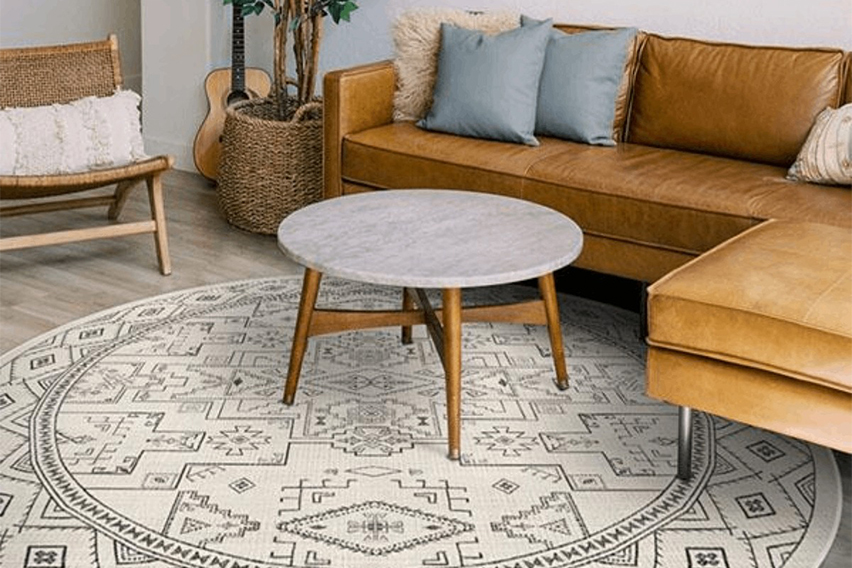
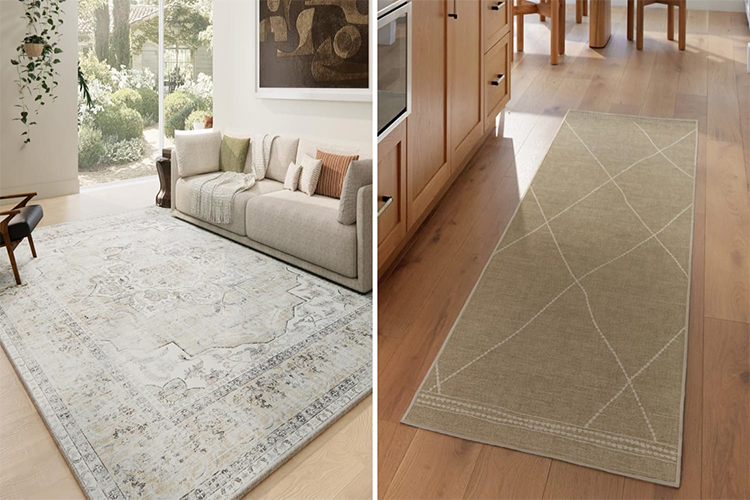
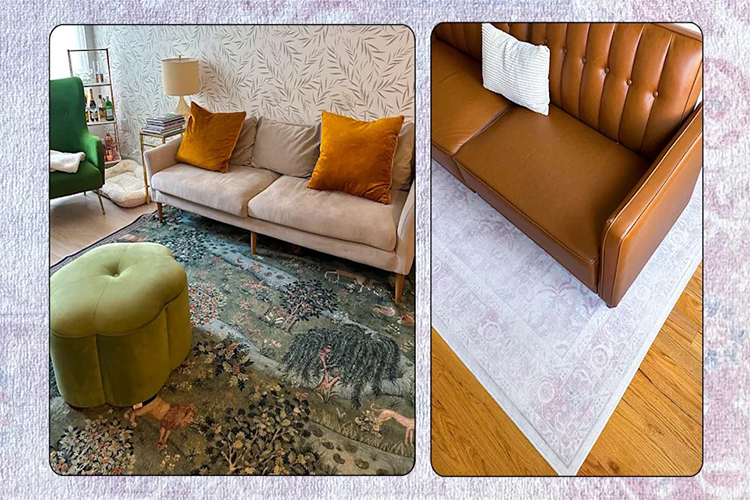
The 8×10 Mercer in Ivory in the living room. This is one of Ruggable’s more popular patterns — a traditional medallion design that reads as neutral and works with a lot of different furniture styles. We have warm wood floors and a mix of cream and terracotta in the room, and this rug sits with all of it without demanding attention. It’s not trying to be the statement piece. It’s doing its job.

The 5×7 Solid Chunky Boucle in Oatmeal in the primary bedroom. This one I was most uncertain about before it arrived. Boucle texture sounds like it shouldn’t work in a machine-washable format — the texture is part of what boucle is, and I assumed it would flatten or distort through washing. It hasn’t, at least not after two washes. It still looks exactly like it did when we unboxed it.

A 2×3 Runner in one of the tiled bathrooms — the Ombre Stripe in Rust. This one gets washed most frequently, probably once a month. It comes out of the dryer looking the same as it went in. I genuinely cannot tell it’s been washed twelve or fifteen times at this point.

After more than a year — what's held up

The living room rug has been through six washes. Four of those were routine maintenance. Two were actual emergencies — one red wine incident, one muddy paw situation that I’d rather not describe in detail. Both times the rug came out clean. Fully clean, not just better-than-before clean. I was prepared to accept some residual staining and there wasn’t any.

Ruggable Review — Are Washable Rugs Actually Worth It for Real Homes?

The texture has changed very slightly on the living room rug. Not in a way that looks bad — if anything it looks slightly more broken-in, which I prefer. But if you bought a Ruggable expecting it to look pristine-new indefinitely through repeated washing, you might notice something around the fourth or fifth wash. It’s subtle. I wouldn’t call it deterioration, more like aging.

The two-piece system continues to hold. The cover has never shifted meaningfully during regular use — walking across it, moving furniture onto it, our dog flopping down on it repeatedly. The cling between cover and pad is stronger than I expected it to be when I first felt it.

What I'd push back on

The pile height is lower than most traditional rugs at comparable price points. Ruggable rugs are thinner — which is partly structural, because a thick pile doesn’t survive machine washing the same way a flatter weave does. If you’re used to sinking your feet into a deep shag or a thick wool rug, Ruggable will feel noticeably different underfoot. Not bad, just different. This is probably the most consistent honest criticism you’ll find from long-term Ruggable owners, and I think it’s accurate.

The pricing has increased since the brand launched. When Ruggable first came on the scene they were positioned as a more accessible washable option. They’re still reasonable, but they’re not cheap. An 8×10 cover and pad together runs a few hundred dollars depending on the design. For that price you could buy a decent traditional rug that, if treated carefully, might outlast a Ruggable. If you have kids, dogs, or genuinely high traffic areas, the washability changes that math considerably. If you have a formal living room that nobody sits in, it changes it less.

The commercial washer requirement for larger sizes is a genuine inconvenience. Not a dealbreaker for us — our laundromat is ten minutes away and the rug doesn’t need washing that often. But for someone who specifically wants the convenience of washing at home without any extra steps, the 5×7 is the practical size ceiling.

The rooms where Ruggable makes obvious sense

Anywhere with a dog or cat. Full stop. The peace of mind alone is worth a significant portion of the price premium over a traditional rug.

Dining rooms. We don’t have ours in a dining room but I’ve recommended it to three different friends who do, and all three have messaged me at some point to say they don’t know how they ate dinner over a non-washable rug before. Food drops, wine, kids — the dining room is genuinely one of the highest-risk rooms for a rug and Ruggable is built for exactly that risk.

Entryways and mudrooms. The runner we have in the bathroom gets more actual dirt than anything else in our house and it looks better after washing than most traditionally cleaned rugs look after professional cleaning.

Kids’ rooms. The texture options have expanded significantly since Ruggable launched — there are now options that read as genuinely design-forward rather than practical compromise, which matters if you want the room to feel considered rather than functional.

The rooms where I'd think harder about it

Formal spaces where you want a specific underfoot feeling. A dining room with a beautiful thick wool rug has a sensory quality that Ruggable doesn’t replicate. If you’re furnishing a formal space and the rug is meant to feel luxurious underfoot as much as look good, traditional is probably still the answer.

Ruggable Review — Are Washable Rugs Actually Worth It for Real Homes?

Very large rooms. Once you get above 8×10 you’re in commercial washer territory, and at the largest sizes the convenience factor that makes Ruggable compelling becomes less convenient. An 8×10 at a laundromat every few months is manageable. A 9×12 is a bigger lift.

How the patterns and collections have evolved

One thing worth mentioning that doesn’t come up in most reviews: the design range has gotten genuinely better over the last couple of years. The early Ruggable catalogue leaned heavily on traditional patterns and a specific kind of neutral-friendly aesthetic that worked but wasn’t particularly interesting. The current range includes collaborations with designers, more sophisticated solid options like the Chunky Boucle, and patterns that you’d see in the kind of home you’d screenshot on Instagram.

The Cali Shag in particular — a plush-looking option that manages to survive the washing process reasonably well — has expanded what I thought was possible from a washable rug. It looks considerably more expensive than it is. I almost bought one for the bedroom before I went with the boucle, and I’m still not certain I made the right call.

The honest verdict

Ruggable is not the answer for every rug in every room. It’s a specific solution to a specific problem — what do you put on the floor in spaces where rugs inevitably get dirty and traditional cleaning options are expensive, inconvenient, or insufficient.

For that problem, which describes a meaningful portion of the rooms in our house, Ruggable is the best answer I’ve found. The washing actually works. The design options are good enough that you’re not making an aesthetic compromise to get the functionality. The two-piece system is less visually obvious than it sounds.

I don’t think we’ll ever go back to non-washable rugs in the rooms our dog uses. The math doesn’t work out once you’ve experienced what washability actually means in practice — not in theory, but at eleven o’clock on a Tuesday when something has gone wrong and you need the floor to be recoverable.

That’s the thing about Ruggable that takes a while to fully appreciate. The value isn’t in any individual wash. It’s in knowing that whatever happens, the rug can be fixed. That’s worth quite a lot in a real home.

Wayfair vs IKEA vs Lulu & Georgia: Where I Actually Buy

By Posted on 0 Comments7min read52 views

Wayfair vs IKEA vs Lulu & Georgia: Where I Actually Buy

Wayfair vs IKEA vs Lulu & Georgia Where I Actually Buy

I’ve given money to all three of these brands multiple times. Some of those purchases were excellent decisions. A couple were expensive lessons about trusting product photography more than I should have.


The question I get asked most by people furnishing a new place or updating an old one is some version of: “Should I go Wayfair or IKEA?” And lately, more often: “What about Lulu & Georgia — is it actually worth it?”


So here’s my honest answer, built from years of buying actual furniture from all three. Not a feature comparison pulled from their websites. What I’ve actually experienced, what I’d buy again, and what I’d skip.

The Quick Answer — Because You Might Not Have Time to Read All of This

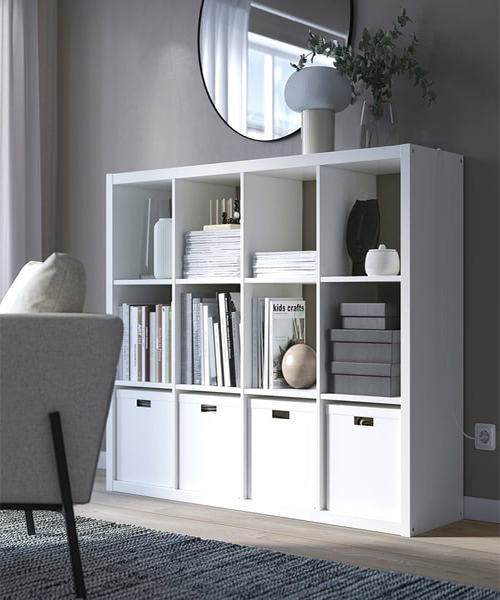
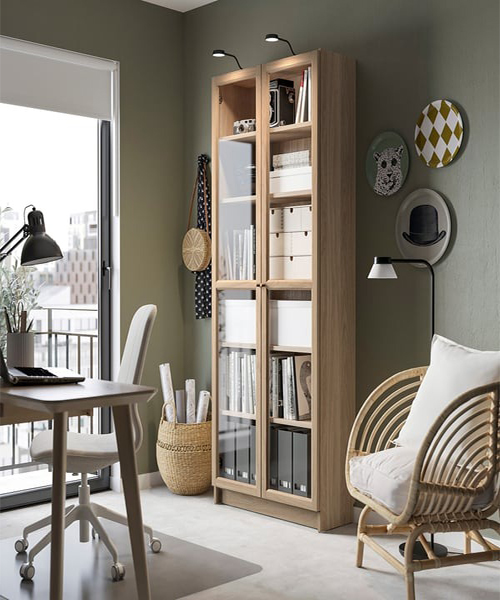
  • IKEA: Buy this for storage, shelving, and anything where function matters more than feeling special about the piece. The KALLAX and BILLY will outlast the trend that made you buy them.
  • Wayfair: Buy this for rugs, mid-range accent furniture, and anything where you need style variety and have time to research the specific listing carefully. Do not buy blindly.
  • Lulu & Georgia: Buy this for rugs when you want something genuinely beautiful, and for designer collaboration pieces if the budget allows. Skip it for core furniture unless you’ve read the product’s specific reviews carefully.

Now the longer version, for anyone deciding where to spend real money.

About Each Brand in One Paragraph

IKEA has been making flat-pack furniture since 1943. They don’t hire a designer and then figure out the cost — they set a price target first and engineer around it. That backwards approach explains both why their storage systems are so good and why their sofas aren’t something you’ll have for fifteen years.


Wayfair doesn’t make anything. They’re a marketplace connecting you with thousands of different manufacturers. This is why their selection is enormous and why quality ranges from genuinely impressive to a picture that looked better on screen. No single Wayfair product is representative of all Wayfair products. That’s the whole thing you have to hold in your head when shopping there.


Lulu & Georgia was founded in 2012 by Sara Sugarman, whose family spent decades in the high-end rug and home furnishings industry. That background shows clearly in the rug category. The brand positions itself between mass-market and boutique — editorial aesthetic, real designer collaborations, upper-mid-range prices.

Wayfair vs IKEA vs Lulu & Georgia: Where I Actually Buy

Where Each One Actually Wins

IKEA Wins: Storage and Shelving


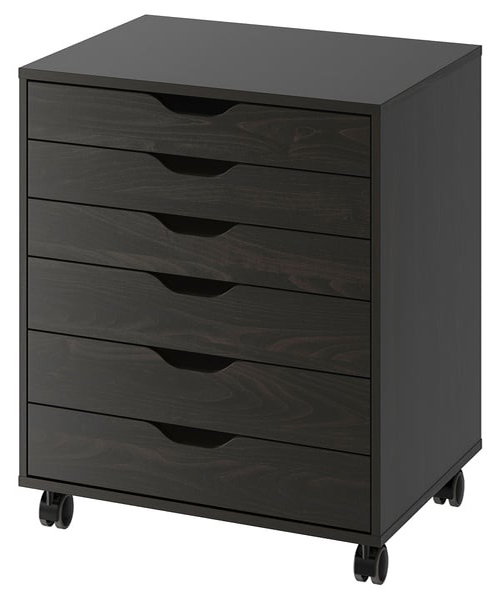
No competition. The KALLAX, the BILLY, the PAX wardrobe system, the ALEX drawer unit — these are some of the most cost-effective, well-designed storage pieces available at any consumer price point. Interior designers surveyed by Apartment Therapy in early 2026 named the BILLY bookcase their single most recommended IKEA piece. Twelve designers independently. One product.


I have a BILLY that’s survived three apartments and eleven years. I have a KALLAX that I bought for $65 and configured as a room divider in my home office that I genuinely love looking at. Neither is fancy. Both just work, reliably, for longer than anything at the price should.


For first apartments, rental properties, children’s rooms, home offices, and anywhere you need organized storage without spending serious money — IKEA is the answer and there’s no real debate about it.

Wayfair Wins: Rugs and Style Variety

Wayfair’s selection is genuinely hard to argue with when you need style-specific filtering. The ability to search by aesthetic, material, room, dimensions, and price simultaneously — and have it actually narrow things down usefully — is better than anything IKEA or Lulu & Georgia offers.


For rugs specifically, Wayfair at the mid-range tier delivers solid value. The Magnolia Home x Loloi Sinclair has been in my living room for two years and looks identical to how it arrived. That rug handles two people, one dog, and apparently unlimited spilled coffee without protest.


For accent furniture — chairs, side tables, console tables, lighting — Wayfair works well when you’ve done your homework. Read the materials spec. Read the customer review photos, not the hero images. Stick to mid-range listings from established brand labels (Sand & Stable, AllModern, Mercury Row) and you’ll usually be fine. Buy something cheap from a listing with no brand name and three reviews and you’re rolling the dice.

Lulu & Georgia Wins: Rugs and Designer Pieces

Lulu & Georgia Wins Rugs and Designer Pieces

The wool rug category is where Lulu & Georgia genuinely earns the price premium. Sara Sugarman’s family background in high-end rugs shows up in everything from material selection to pattern design. The Katasha hand-tufted wool rug is among the best-reviewed pieces in the entire catalog for good reason — it’s genuinely beautiful, made from proper material, and looks like something you’d find in a well-appointed boutique.


The designer collaboration pieces — particularly anything from Jake Arnold or Heidi Caillier — are the real thing. Not a name slapped on a catalog item. Actual design direction applied to proportions, materials, details. For buyers who care about that distinction and have the budget, these pieces are hard to match at similar prices.

Where Each One Disappoints

IKEA sofas are fine for two to three years of light-to-moderate use. Fine. Not great. The frames are a mix of particleboard and solid wood, the foam compresses, and customers consistently describe needing to replace their sofa sooner than they hoped. If you’re looking for a sofa you’ll sit on daily for the next decade with a family, you should probably spend more somewhere that specializes in upholstered furniture.


Wayfair budget furniture — anything in the sub-$200 range for most furniture categories — is a gamble. Some of it is surprisingly decent. Some of it bubbles, wobbles, or arrives looking noticeably worse than the photography suggested. The listing can’t tell you which outcome you’ll get. Customer photos and material specs can, if you use them.


Lulu & Georgia customer service is the consistent weak point across every independent review platform I checked. Email only. Slow responses. When something goes wrong — a damaged item, a return request — the process is more work than it should be for a brand charging premium prices. One buyer documented a dining chair joint failure within the first week of use and couldn’t get a response for over a week. That’s not what you want to be dealing with after spending $700 on a chair.

The Head-to-Head Breakdown

Category


IKEA

Wayfair

Lulu & Georgia

Storage and shelving


✅ Best in class

Good

Not a focus

Budget furniture


✅ Predictably decent

Variable

N/A

Mid-range furniture


Acceptable

Good when researched

✅ Designer collabs excellent

Rugs


Limited

✅ Strong mid-range

✅ Best quality

Style variety


Narrow — IKEA look

✅ Enormous

Curated and editorial

In-store experience


✅ You can test it

Online only

Online only

Sofa longevity


Short-to-medium term

Variable

Variable

Customer service


Understaffed stores

Inconsistent

❌ Slow email only

Price


✅ Lowest

Mid-range

Premium

Best for


Storage, first apartments

Style variety, rugs, accent furniture

Statement rugs, designer pieces

How I Actually Use All Three

I don’t think of these brands as competitors I have to choose between. I use them for different things because they’re genuinely different tools.


When I need to organize something — a closet, a home office, a storage situation that’s gotten out of control — I go to IKEA. I know what I’m getting. I know it’ll work. I know I can get replacement parts if a cam lock strips two years later.


When I need a rug, I start at Wayfair for the mid-range and Lulu & Georgia for anything I want to feel genuinely special about. These are the two places worth spending time on rug research because the selection and quality at their respective price points are both real.


When I’m furnishing a main living space and want a sofa or accent chair that I’ll feel good about long-term, I don’t go to any of these three first. I look at Article, Castlery, or West Elm for that category — brands where upholstered furniture is the core business and quality consistency is noticeably higher.


That sounds like a criticism of all three, but it isn’t. It’s just being honest about what each one is actually built to do well.

What I'd Buy Right Now from Each

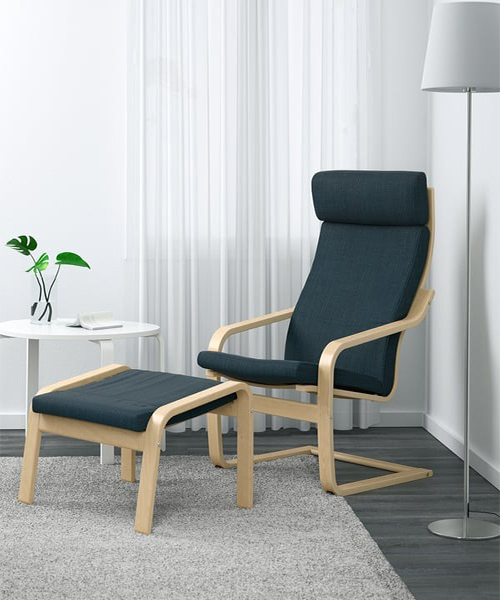
From IKEA: KALLAX for any storage situation. BILLY for books. POÄNG chair for a reading corner — over 40 years in continuous production for a reason. ALEX drawer unit if you’re setting up a home office.


From Wayfair: The Magnolia Home x Loloi Sinclair rug or the Hillsby Oriental rug if you want something pattern-forward and durable. A Sand & Stable accent chair if you’ve checked the specific reviews. Lighting — Wayfair’s lighting category is consistently strong and I’ve never had a bad experience there.


From Lulu & Georgia: The Katasha hand-tufted wool rug, no hesitation. Anything from the Heidi Caillier or Jake Arnold collaboration lines if you’re ready to spend on a statement piece. The Louie rug as a more accessible entry point into the catalog.

What I'd Skip

From IKEA: Any sofa you plan to use daily for years. Any large wardrobe that needs to survive multiple moves.

From Wayfair: Anything under $200 for furniture without reading customer photos carefully first. Anything listed under a brand name with fewer than 30 reviews.

From Lulu & Georgia: Large furniture purchases if you’re not prepared to research the specific product thoroughly. Anything where you’ll need customer service to go smoothly and quickly.

The Honest Summary

IKEA is the most dependable of the three in a specific lane. You know what you’re getting and it delivers on that consistently, especially in storage.


Wayfair is the most useful tool of the three if you know how to use it — which means reading specs, checking customer photos, and avoiding the temptation to buy based on hero photography alone. Used well, it’s hard to beat for variety and value.


Lulu & Georgia is the most aspirational of the three and delivers on that aspiration in specific categories — rugs and designer collaboration pieces — in a way that genuinely justifies the price. In other categories it’s less reliable and the customer service limitations make problems harder to navigate than they should be.


None of them is the right answer for every purchase. All three have a real role in a smart home furnishing strategy. The people who get the most out of each one are the people who understand what each brand is actually good at rather than expecting one of them to be good at everything.

Caraway vs HexClad: 3 Months of Real Cooking. My Honest Take

By Posted on 0 Comments8min read271 views

Caraway vs HexClad: 3 Months of Real Cooking. My Honest Take

Caraway vs HexClad: 3 Months of Real Cooking. My Honest Take

I want to start with something nobody says in these comparisons: both of these pans are better than what most people are cooking on right now.


That’s not a hedge. I genuinely mean it. If you came here expecting me to tell you one of them is a scam — the Gordon Ramsay hype machine or the Instagram-pretty ceramics that fall apart in six months — I don’t have that story for you. What I have is three months of cooking eggs, searing chicken thighs, making pasta sauce, burning garlic twice, and washing dishes more than I’d like to admit. Both pans survived. Neither was perfect.


Here’s what actually matters.

Why I Tested Both

I’d been using a scratched up nonstick set I’d had since 2021. It did its job for a few years and then started doing that thing old nonstick does — food sticking in little patches, the coating looking vaguely questionable up close. Time to replace everything.


I had roughly $400 to spend and two choices that kept coming up everywhere: Caraway’s ceramic set, which my friend had been raving about for a year, and HexClad, which I’d seen in what felt like every other kitchen video since Gordon Ramsay attached his name to it.


So I bought both. Tested them for three months. Cooked the same types of meals on both. And then made a decision.

Quick Highlights

  • ✅ Caraway: PFAS-free, PTFE-free ceramic coating — independently tested, genuinely clean
  • ✅ Caraway: Beautiful design, excellent for eggs and delicate foods at low-to-medium heat
  • ✅ Caraway: Magnetic pan rack storage system is genuinely clever
  • ✅ HexClad: Metal utensil safe — the raised steel hexagons protect the nonstick underneath
  • ✅ HexClad: Handles high heat and searing in ways ceramic simply can’t
  • ✅ HexClad: Lifetime warranty vs Caraway’s one year
  • ❌ Caraway: Ceramic coating starts degrading with regular high-heat use — some users report within 9–12 months
  • ❌ Caraway: No metal utensils, no dishwasher, handles get hot
  • ❌ HexClad: PTFE lawsuit and $2.5 million settlement over “non-toxic” claims (for pans made before 2024)
  • ❌ HexClad: New TerraBond coating is proprietary — no full third-party ingredient disclosure yet
  • ❌ HexClad: Significantly more expensive

Best for Caraway: Home cooks who prioritize non-toxic certification, cook mostly at low-to-medium heat, and want something beautiful on the stovetop.

Best for HexClad: People who cook hard and often, need metal utensil compatibility, want to sear properly, and plan to keep the same pan for many years.

Caraway vs HexClad: 3 Months of Real Cooking. My Honest Take

The Background on Each Brand

Caraway launched in 2019 with a clear positioning: nonstick cookware without the chemicals you’ve been reading about. PFAS-free, PTFE-free, PFOA-free, lead-free, cadmium-free. The coating is a mineral-based ceramic and independent lab testing — including through Light Labs — has confirmed no detectable PFAS or heavy metals. The brand grew quickly on Instagram because it looks genuinely beautiful. Sage green, cream, periwinkle, navy. The pans photograph well and look better in real life than most cookware on the market.


HexClad has a more complicated story going into 2026. The brand built its reputation on a hybrid design — raised stainless steel hexagons protecting a recessed nonstick coating — and Gordon Ramsay’s endorsement. The problem: their original nonstick coating was PTFE, which is a PFAS compound, and they marketed the pans as “non-toxic” and “PFAS-free.” A class action lawsuit followed. They settled for $2.5 million in early 2025 without admitting wrongdoing, and as part of that settlement they had to stop using those claims for PTFE-containing pans. They also switched to a new ceramic coating called TerraBond starting in 2024/25, which they say is PTFE and PFAS free. The transparency issue: TerraBond’s full composition is proprietary and no independent third-party testing has been publicly released. We know what HexClad says it doesn’t contain. We don’t have full independent verification of what it does.


That context matters when you’re spending $200-plus on a single pan.

Three Months in the Kitchen — What I Actually Found

Eggs

Caraway vs HexClad: 3 Months of Real Cooking. My Honest Take

Caraway wins here, clearly. The first morning I used it, a two-egg omelet slid out of the pan with so little resistance I actually laughed. No oil. No spray. Just a pan that worked exactly the way nonstick is supposed to. This is what ceramic nonstick does best — delicate, low-heat cooking where you want food to release cleanly without any fat.


HexClad with eggs requires a bit of technique. You need to preheat properly, add some oil or butter, and get the temperature right before you add the eggs. Get it wrong and you’ll have eggs stuck in the hexagon pattern, which is annoying. Get it right and the result is excellent. But there’s a learning curve that Caraway simply doesn’t have for eggs.


Caraway: ✅ HexClad: takes practice

Searing Chicken and Steak

Caraway is not the pan for this. I tried twice. The ceramic coating is not designed for high heat and you can feel it — the coating technically handles up to 550°F but real-world sustained high heat degrades it over time. Using Caraway for aggressive searing is how you shorten its lifespan. I stopped doing it.


HexClad is genuinely excellent at searing. The raised stainless steel sections hit the food first and create real Maillard reaction browning — not the steam-cooked grey you sometimes get with nonstick. A chicken thigh came out of the HexClad with skin that was actually crispy. That’s the whole point of the hybrid design and it works.


Caraway: ❌ HexClad: ✅

Pasta Sauce and Braising

Both are fine here. Medium heat, some liquid, occasional stirring — neither has an issue. The Caraway was slightly easier to clean after a tomato-based sauce because ceramic releases more readily from acidic foods. HexClad cleaned up without much trouble either.


Push: roughly equal

Cleanup

Caraway is genuinely easy. Warm water and a soft cloth and you’re done. The ceramic releases food cleanly and doesn’t trap residue in a textured surface. The instruction to hand-wash is real — dishwasher use will shorten the coating’s life — but hand-washing Caraway is genuinely faster than most dishes.


HexClad’s hexagonal texture traps small food particles. I needed a brush rather than a cloth to get into the recesses after anything with a lot of seasoning or fond from searing. It cleans up fine but it takes more effort than Caraway. To HexClad’s credit, metal utensils and dishwasher are technically fine — the steel protects the coating — which Caraway cannot claim.


Caraway: ✅ HexClad: more effort

Caraway vs HexClad: 3 Months of Real Cooking. My Honest Take

Durability

This is the big one and also the one I can’t fully answer after three months because three months isn’t long enough.


What I can say: Caraway’s ceramic coating is the known long-term concern. Reports from multiple independent reviewers describe coating degradation, scuffing, and reduced nonstick performance starting around 9–12 months under regular use. I haven’t hit that yet. But it’s documented enough to plan for. At Caraway’s price and with a one-year warranty, that timeline means you might be replacing pans more often than you’d like.


HexClad’s raised steel design protecting the recessed nonstick is genuinely clever for physical durability. Scratching the coating is much harder than with exposed ceramic. The lifetime warranty backs that up. The unknown is whether TerraBond ceramic performs long-term the way stainless-protected PTFE did — that data doesn’t exist yet because the coating is too new.

The Safety Question

I can’t write this comparison without addressing it directly.


Caraway: Third-party tested by Light Labs with no detectable PFAS, PTFE, lead, or cadmium. This is the most transparent safety record of the two. If non-toxic certification verified by independent labs matters to you, Caraway has it and HexClad doesn’t — at least not yet.


HexClad: The older pans (pre-2024) contained PTFE. The lawsuit confirmed this. The new TerraBond coating claims to be PTFE and PFAS free. What’s missing is independent third-party verification of the full ingredient list. HexClad says it’s proprietary. That’s their right. It’s also a reason some buyers will remain cautious until independent testing catches up.


This isn’t me saying HexClad is unsafe. The FDA considers PTFE safe under normal cooking conditions, and the new coating may be perfectly fine. But if you’re specifically buying cookware to move away from chemicals you can’t identify, Caraway’s transparency record is meaningfully stronger right now.

Price

Caraway Cookware Set (4 pieces): roughly $395 at regular pricing, often on sale for $295–$345. Includes fry pan, sauté pan, sauce pan, Dutch oven, magnetic pan racks, canvas lid holder.


HexClad 7-Piece Set: regularly $599, sometimes lower during promotions. Individual pans start around $120–$200 each.


HexClad is more expensive. The lifetime warranty partially justifies that if durability delivers on the promise over many years. Caraway’s one-year warranty at its price point is the weaker value story long-term.

Head-to-Head Summary


Caraway

HexClad

Coating material

Ceramic (PFAS-free, PTFE-free)

TerraBond ceramic (PTFE-free, 2025+)

Independent safety testing

✅ Light Labs verified

Not publicly available

Best heat range

Low to medium

Low to very high

Metal utensil safe

❌ No

✅ Yes

Dishwasher safe

❌ Not recommended

✅ Yes

Best for eggs

✅ Excellent

Requires technique

Best for searing

❌ No

✅ Excellent

Cleanup ease

✅ Easier

More effort

Warranty

1 year

Lifetime

Price (full set)

~$395

~$599+

Coating durability concern

9–12 months reported decline

Unknown — coating too new

Aesthetic

✅ Genuinely beautiful

Functional, industrial

What I Actually Decided

I kept both. Not as a dodge — because they genuinely serve different purposes in my kitchen.


The Caraway is my morning pan. Eggs, pancakes, reheating leftovers, anything delicate and low heat. It does those things better than anything else I’ve used and I don’t have to think about it.


The HexClad is my weeknight dinner pan. Chicken, stir fry, searing anything that needs real heat. It handles abuse in a way the Caraway can’t and shouldn’t.


If I could only keep one: for how I actually cook — more weeknight dinners than weekend brunches — it would be the HexClad. The metal utensil compatibility alone removes a kind of kitchen anxiety that’s not worth carrying. And the searing performance is genuinely excellent.


If you cook mostly at home for one or two people and your diet leans toward eggs, vegetables, fish, and lighter proteins at medium heat — Caraway will make your kitchen more enjoyable and your cleanup faster. Just be realistic about the coating’s lifespan and treat it gently.

The One Thing I'd Tell Anyone Buying Either

For Caraway: Treat it like the delicate, beautiful thing it is. Medium heat maximum. Never a metal spatula. Always hand wash. Do those three things and it will reward you. Ignore them and you’ll be replacing it within a year.


For HexClad: If you’re buying new — and you should buy new, not old stock — you’re getting the TerraBond ceramic rather than the PTFE-containing pans from the lawsuit era. Make sure of that. And once you have it, learn the preheating technique before you expect it to behave like pure nonstick.


Neither pan is perfect. Both are genuinely good. Which one is right for you comes down to how you actually cook, not how you imagine you cook.

Eucalypso vs Belgian Linen vs Simba Sleep: Best Bedding 2026

By Posted on 0 Comments7min read83 views

Eucalypso vs Belgian Linen vs Simba Sleep: Best Bedding 2026

Eucalypso vs Belgian Linen vs Simba Sleep Best Bedding 2026

I’ve been trying to find my perfect bedding for about four years. Not in an obsessive way — just in the way that anyone who sleeps hot and wakes up at 3am in a sweaty tangle of cotton starts quietly reading reviews and eventually ends up with three different sheet sets in a linen closet.


All three sets I’m reviewing here are genuinely good. None of them are perfect. And which one you should buy depends almost entirely on how you sleep — not on which one has the best marketing.


Here’s what I actually found.

Why These Three

Eucalypso kept coming up in recommendations for hot sleepers. Belgian linen — specifically sheets woven from Belgian flax — is what every slow-living interiors account has been posting for three years and I finally caved. Simba Sleep I tried because the brand’s Brushed TENCEL bundle landed on my desk for review and I was curious whether a mattress company could make bedding worth caring about.


Tested all three for at least six weeks each. Same bed, same bedroom, different seasons — which mattered, as it turned out.

Quick Comparison


Eucalypso

Belgian Linen

Simba Sleep

Material

TENCEL Lyocell from eucalyptus

100% Belgian flax linen

Brushed TENCEL or Egyptian cotton

Best for

Hot sleepers, sensitive skin

Year-round comfort, longevity

Hotel-quality feel, occasional warm sleepers

Softness (night one)

✅ Immediately silky

Rough at first — improves over months

✅ Immediately smooth

Cooling

✅ Excellent

✅ Excellent

Good

Durability

Some durability concerns at year 1

✅ 8–10+ years

Good, still testing

Eco credentials

✅ OEKO-TEX, TENCEL certified

✅ European Flax certified

✅ TENCEL certified

Price (queen set)

~$169

~$250–$320

~$219 bundle

Verdict

Best for hot sleepers right now

Best long-term investment

Best hotel-bed feel

Eucalypso — The Hot Sleeper's Best Friend

Eucalypso — The Hot Sleeper's Best Friend

I want to be upfront: I was skeptical. “Eucalyptus sheets that keep you cool” sounds like the kind of thing that performs brilliantly in marketing and adequately in bed.


These actually delivered. First night I put them on in July — no AC, humid, the kind of night where you flip the pillow every hour — and I slept through until 6am. I don’t do that in summer. The sheets weren’t cold; they were just neutral in a way that cotton never manages. Cotton eventually gets warm and stays warm. The Eucalypso TENCEL stays closer to ambient temperature regardless of body heat.


The softness is real too. Not soft-like-silk, more soft-like-nothing — they have a smooth, slightly cool hand that feels expensive without being delicate. A reviewer on Trustpilot described them as “buttery” and I thought that was overwrought until I felt them. It’s the right word.


The caveat I can’t ignore: durability. One Trustpilot reviewer reported a tear between the selvage and the sheet after washing the second set. Another mentioned the bottom sheet wearing through. I’ve had mine for about seven months and haven’t seen that yet, but the reports are consistent enough across reviews that it’s something to go in with eyes open about. TENCEL is inherently a finer, softer fiber than linen or cotton — and finer can mean more delicate under repeated washing. The one-year warranty is thin for a $169 investment.


If I were recommending Eucalypso in one sentence: the best sheets I’ve slept on for hot weather, but wash them gently and don’t expect them to last a decade.


Best for: Hot sleepers, people with sensitive or acne-prone skin, anyone coming from scratchy cotton who wants immediate softness improvement.


Skip if: You wash your sheets aggressively or want something you’ll still be using in ten years.

Belgian Linen — The One That Gets Better

Belgian Linen — The One That Gets Better

Belgian linen is one of those things where the first experience is genuinely confusing. The sheets arrive, you make the bed, you get in, and your immediate reaction is: these are very expensive and somewhat scratchy.


Then you wash them. And wash them again. And three months later you’re lying there thinking “when did these become my favorite sheets?”


That’s the linen arc. It’s not for everyone and it’s important to be honest about the upfront experience. The first few weeks feel textured and cool in a way that reads almost rough if you’ve been sleeping on smooth cotton or TENCEL. There’s no “immediately luxurious” moment. What there is, gradually, is a lived-in softness that other materials don’t develop — cotton gets pilled and flat, TENCEL stays smooth but doesn’t deepen, and linen just keeps getting better. By month three mine felt like the softest version of slightly structured, and by month five they’re what I reach for most.


The breathability is exceptional. Linen fibers are hollow and the weave is open, which means airflow in a way that’s different from TENCEL’s moisture-wicking mechanism. On genuinely hot nights I preferred the Eucalypso because of the moisture control. For most nights — including warm ones — Belgian linen is actually my first choice now.


The longevity argument is real. Belgian flax linen, certified with the European Flax mark, is documented to last 8–10 years under regular use. Linen at $280 over ten years costs $28 per year. My Eucalypso at $169 over three years — if the durability concerns are real — costs more per year. The math changes how you think about the price.


One thing worth knowing: “Belgian linen” is a fiber origin claim, not a quality guarantee on its own. Sheets labeled Belgian or European linen without a European Flax certification or OEKO-TEX mark are worth scrutinizing. The certification exists for a reason. Brooklinen uses Belgian and French flax with solid credentials; Quince’s European Linen set is a well-reviewed lower-price option. I tested Brooklinen’s washed linen and it’s the most accessible entry point into this category I’ve found.


Best for: People who want bedding that improves with age, anyone who runs warm but not hot, year-round use across seasons, buyers thinking long-term.


Skip if: You want softness immediately and don’t have patience for a three-month break-in period.

Simba Sleep — The Hotel Bed at Home

Simba Sleep — The Hotel Bed at Home

Simba is primarily a mattress company. Their bedding range is newer and I’ll be honest — I expected it to be an afterthought, the kind of thing a mattress brand adds because they want to sell you a complete sleep setup.


It’s not an afterthought. The Brushed TENCEL bundle is genuinely well made.


The fabric has an immediate smoothness that feels closer to Eucalypso than linen. The “brushed” finish adds a subtle warmth and softness beyond standard TENCEL — like the difference between a smooth bamboo sheet and a good jersey: both nice, different feelings. You get in and it feels like a properly made hotel bed. Not the scratchy-but-serviceable ones, the actually expensive ones.


What makes Simba specifically interesting is a small detail that one reviewer singled out and was completely right about: a tiny orientation tab on the fitted sheet that tells you which way to put it on. This is such a stupidly minor thing to care about and yet I have spent real minutes of my life turning a fitted sheet around trying to figure out the right orientation. It has its own minor place in the annals of bedroom frustration. That tab solves it. I now notice its absence on every other fitted sheet I own.


The Egyptian cotton bundle — also available — is 300 thread count sateen. Smooth, slightly glossy, that cool crisp feel when you first get in. Hotel bed in the best way. Less interesting for hot sleepers than the TENCEL, but for anyone who wants that classic fresh cotton feeling, it delivers.


Simba’s bedding sits at the £219/$230-ish price point depending on where you shop, which is competitive given the quality. It’s also the newest of the three and I have less data on long-term durability than I’d like. Everything about it feels well-made; I just can’t tell you yet whether it’s still performing the same in two years.


Best for: Anyone who wants that polished hotel-bed experience at home, people who find linen too textural but want something better than standard cotton.


Skip if: You sleep extremely hot — TENCEL is good but Eucalypso’s moisture-wicking specifically for hot sleepers is more targeted.

How I'd Describe Each in a Single Sentence

Eucalypso: The softest, coolest sheet you’ll sleep on — just treat it gently.


Belgian linen: Rough for a month, your favorite for the next decade.


Simba Sleep: The hotel bed you’ve always wanted, in your own bedroom.

What I Actually Use Now

Eucalypso goes on in June, July, and August. It’s the clear summer sheet. Nothing else I’ve tried manages heat and moisture at that level.


Belgian linen is on the bed from September through May. Once it broke in it became the default — the texture that gets better, the breathability that works across seasons, the satisfaction of using something that will still be there in five years.


Simba gets used when the Belgian linen is in the wash and as my guest room set. It’s the most immediately impressive of the three to hand someone who’s never slept on it.


If I could only keep one: Belgian linen. But I’m genuinely glad I don’t have to choose.

The One Thing Nobody Tells You About Each

Eucalypso: The sheets get softer with every wash — but that softness comes with a trade-off in fiber integrity over time. Wash on gentle. Every time.


Belgian linen: The price will feel wrong the first time you unbox them. Give it ninety days before you decide whether it was worth it.


Simba Sleep: That fitted sheet tab is the most useful small feature in bedding I’ve encountered. The day you have it you can’t stop noticing that nothing else has it.

Final Rankings

For hot sleepers: Eucalypso → Simba TENCEL → Belgian linen


For long-term value: Belgian linen → Simba → Eucalypso


For immediate luxury feel: Simba Egyptian cotton → Eucalypso → Belgian linen


For sensitive skin: Eucalypso → Belgian linen → Simba


Overall, if I had to send one set to someone: Belgian linen, with the caveat that they need to give it three months before judging.

Best Smart Home Upgrades I’ve Actually Added (And What Wasn’t Worth It)

By Posted on 0 Comments9min read67 views

Best Smart Home Upgrades I’ve Actually Added (And What Wasn’t Worth It)

Best Smart Home Upgrades I've Actually Added (And What Wasn't Worth It)

When we moved into our house two years ago, I had a list. A slightly embarrassing, overly optimistic list of smart home devices I was going to install before we’d even unpacked the kitchen boxes.

Some things on that list genuinely changed how we live in this house. Others were $80 gadgets that sat in a drawer after three weeks because the novelty wore off faster than I expected. A few were fine but not worth what I paid.

What follows is the honest version — not a roundup of products I found in a buyer’s guide, but specifically what I’ve installed, what I’d install again, and what I’d skip.

The One Rule I Learned the Hard Way

A device isn’t smart if managing it makes you feel stupid.

I had an evening early on where every light in the living room turned off simultaneously while we were watching a film. Took me twelve minutes and three separate apps to figure out that a firmware update had reset a scene. That’s not a smart home experience. That’s a new category of domestic frustration.

Since then I’ve had a simple filter for any new device: if it requires active management to work reliably, it’s not worth the setup. The best upgrades are the ones you stop thinking about within a week because they just work.

What I've Added, Honestly Reviewed

Installed: Month one. Still the best decision I made.


I was skeptical of smart thermostats because I didn’t think I was wasteful enough with heating and cooling to justify $250. I was wrong about both.


The Ecobee uses SmartSensors you place in different rooms to detect occupancy. Not schedule-based — actual detection. When the bedroom is empty during the day, it stops trying to heat it. When everyone’s in the living room in the evening, it prioritizes that space. Sounds simple. It’s not how any thermostat worked before this and the difference shows up in the energy bills within the first month.


The app is genuinely good. Not performatively good in a way that requires you to use it constantly, but useful when you actually need it — changing the schedule, adjusting remotely when you’re coming home early, getting a nudge to change the HVAC filter. It works with Alexa, Google, and Apple HomeKit. That matters less than it sounds in day-to-day life but it means you’re not locked into anything.


Ecobee claims average savings of around $230 a year for their customers. I’ve tracked my energy bills carefully enough to say mine are lower than the previous owners’ comparable months. The device paid for itself somewhere around month fourteen.


What I’d tell anyone considering it: Install the SmartSensors in the rooms you actually spend time in. That’s where the intelligence comes from, not the thermostat unit itself.


One honest caveat: Wiring setup requires knowing which wires your old thermostat used. If you’ve never looked at a thermostat’s wiring before, the Ecobee app walks you through it well, but it’s a thirty-minute job that some people find stressful. An electrician takes twenty minutes if you’d rather not deal with it.

Installed: Month two. Still running bulbs I’ve had for years in other places.


Smart lighting has a reputation problem. Most people think it means controlling colors from your phone, which is mildly fun for about two weeks before you forget the app exists. That’s not actually why Philips Hue is worth having.


The reason is schedules and automations that you set once and then never think about again.


My outdoor lights come on at dusk and off at dawn. The living room dims to 40% at 9pm automatically without me touching anything. The kitchen goes to a warm, lower light in the evening rather than the harsh bright setting I want during the day. None of these things require me to be home, remember to do anything, or open an app. They just happen.


I’ve had Philips Hue light strips in my office that are now six years old — bought at a previous apartment and moved twice. They still work. That longevity is one reason the price is justified over time.


The Hue Bridge is the part nobody gets excited about and the part that actually matters. It runs local control — meaning if your internet goes down, your lights still work and automations still run because the system isn’t dependent on a cloud server. A lot of cheaper smart bulbs are cloud-dependent only, which means an outage or a company shutting down their servers breaks your entire setup. The Bridge solves that.


What I’d tell anyone considering it: Start with the starter kit — three bulbs and the Bridge. See what you actually automate. Then add more bulbs as you figure out where they’re most useful rather than replacing every light in the house on day one.


One honest caveat: It’s expensive compared to alternatives. TP-Link Tapo bulbs work reliably at about a quarter of the price if budget is a constraint. The tradeoff is ecosystem depth and the local control that Bridge enables. For most people, the cheaper option works fine.

Installed: Month three. Use it every day without thinking about it.


Video doorbells are the most universally useful smart home device. That’s the thing I didn’t expect. I thought it would be a security feature I checked occasionally. It’s actually just how I answer my door now.


The delivery situation alone justified it within the first week. I work from home and spend a lot of time on calls. I can see the delivery person on my phone, tap a button, and say “just leave it by the door” without breaking off a conversation or running downstairs. That’s not a dramatic quality of life improvement. It’s a small daily convenience that accumulates into something meaningful.


The reason I specifically chose Eufy over Ring is the subscription question. Ring stores video in the cloud and charges monthly for access to it. Eufy stores video locally on the device. You get full functionality — video review, person detection, alerts — without a monthly fee. Ring is a fine product. I just didn’t want an ongoing subscription for a doorbell.


The video quality on the E340 is strong — dual cameras give you a wide view and a close-up simultaneously. Night vision is clear. The battery-powered option means no wiring if you don’t want it. I went with the wired version because I have an existing doorbell wire and it means I never think about charging.


What I’d tell anyone considering it: The app setup takes a few minutes but once it’s done you never open the app to manage it. It just sends you notifications. That’s how these things should work.


One honest caveat: Motion sensitivity needs tuning when you first install it. Default settings will send you a notification every time a car drives past. Spend twenty minutes adjusting the detection zones and it becomes genuinely useful rather than noise.

Installed: Month five. The one my partner and I disagree about most.


I love it. My partner tolerates it.


The case for it: our floors are mostly hardwood with two area rugs and we have a dog. Before the Roborock, visible dog hair on the floors was a daily reality that required regular action to address. Now the vacuum runs every morning at 7am while we’re making coffee and the floors are clean by the time we sit down to work. I have genuinely not thought about vacuuming since month six of owning it.


The case against it: it costs around $500 to $600 depending on the configuration. It needs its dock emptied every week or two. It occasionally gets stuck on a charging cable someone left on the floor and sends you an alert saying it needs help. My partner’s view is that a regular vacuum is $150 and doesn’t require troubleshooting.


She’s not wrong. The Roborock is a luxury convenience and it requires occasional intervention even though the whole point is supposed to be autonomy. On weeks where nothing goes wrong, it’s completely invisible and the floors are always clean. On the occasional week where it gets confused by a moved piece of furniture, it’s slightly annoying.


For a household with pets and hard floors: I’d buy it again without hesitation. For a carpeted apartment without pets: the math is less clear.


What I’d tell anyone considering it: Map your home carefully during the initial setup. The better it knows your floor plan, the smarter its routing gets. Don’t skip the mapping stage.

Installed: Month eight. The upgrade I wish I’d done sooner.


I didn’t think I needed a smart lock until I stood outside my front door at 10pm with my hands full of groceries for the third time in a month, fumbling for keys I’d put in the wrong pocket.


The Yale Assure Lock 2 has a keypad. You enter a code, the door unlocks. You can also unlock from an app. You can give temporary codes to house guests, a dog walker, or anyone who needs access for a specific window of time and then have those codes expire automatically. Auto-lock means the door locks itself behind you.


None of these features are revolutionary. All of them are things I now use several times a day and take completely for granted. Keyless entry to your own home turns out to be one of those small changes that makes you wonder why you lived differently before.


It works with Apple HomeKit, Google Home, and Alexa. Installation is about thirty minutes if you can follow directions — it replaces the deadbolt and that’s all. No extra wiring.


What I’d tell anyone considering it: Auto-lock is the feature you’ll use most. Enable it on day one. The peace of mind of knowing the door is always locked behind you is quietly significant.


One honest caveat: Battery life runs six to twelve months. When it runs low the lock gives you warnings via the app. Don’t ignore them. Replacing the batteries is a two-minute job but locking yourself out because you ignored four notifications is an avoidable bad evening.

What I Tried and Wouldn't Bother With Again

Smart plugs: In theory — plug anything in and control it from your phone, set schedules, monitor energy usage. In practice — I set up four of them and use one. The others are plugged in doing nothing because the things they were controlling didn’t need smart functionality as much as I thought they did. Unless you have a specific use case (a lamp that has no smart bulb option, a fan you want on a schedule), I’d skip them.


Smart speakers as a “hub”: I have an Amazon Echo in the kitchen and use it mainly for timers and the occasional music request. As a smart home controller it’s fine. As something I use deliberately for home automation — I don’t. The voice interaction for home control sounds useful until you’re actually standing in front of a light switch and the light switch is faster than saying “Alexa, turn on the kitchen light.” Voice control shines for hands-free situations, not as a primary interface.

Where I'd Start If Starting Over

If I were moving into a new place tomorrow and had $500 to spend on smart home upgrades, here’s where that money would go:

  1. Ecobee thermostat ($249) — biggest real-world return, both financial and comfort
  2. Eufy video doorbell ($130) — most daily utility, no subscription, easy install
  3. Philips Hue starter kit ($135) — the foundation for everything else in lighting, add bulbs slowly over time

That $514 would change the daily experience of living in a home more than anything else I’ve found. Everything else is incremental improvement from there.

The Honest Bottom Line

Smart home technology has a specific failure mode: buying things because they’re interesting rather than because they solve something you actually find annoying. The thermostat solved a real problem (energy waste and uneven comfort). The doorbell solved a real problem (answering the door while on a call). The smart lock solved a real problem (hands full at the front door). The light automations solved a real problem (I kept forgetting to turn off outdoor lights).

Buy things that solve problems you actually have. The rest is impressive to show people and mostly lives in a drawer.

IKEA Review 2026: Is It Still Worth Shopping There Honestly?

IKEA Review 2026: Is It Still Worth Shopping There Honestly?

IKEA Review 2026 Is It Still Worth Shopping There Honestly

I’ve owned IKEA furniture in every apartment I’ve lived in since college. Some of those pieces I donated when I moved. One BILLY bookcase has been with me for eleven years across three cities and still holds books without drama.


That range — from throwaway to nearly forever — is genuinely what IKEA is. It’s not one thing. It’s 10,000 things at wildly different quality levels, all under the same blue and yellow roof. And the gap between buying something brilliant from IKEA and something disappointing often comes down to knowing which category you’re shopping in.


I’ve had both experiences. Here’s what I’ve figured out.

Quick Highlights

  • ✅ Prices are genuinely hard to match for storage, shelving, and everyday basics
  • ✅ Storage systems — KALLAX, BILLY, BESTÅ, ALEX — are legitimately excellent
  • ✅ Scandinavian design sensibility that looks considered without costing a lot
  • ✅ In-store experience lets you test before buying — huge for sofas and mattresses
  • ✅ Replacement parts available for most products, sometimes years later
  • ✅ IKEA Family membership offers regular discounts and early access to sales
  • ❌ MDF and particleboard are the dominant materials in most furniture
  • ❌ Assembly instructions are famously hit or miss — some clear, some maddening
  • ❌ Sofas and mattresses rarely deliver long-term value for daily heavy use
  • ❌ Delivery and online order experience is inconsistent and frequently criticized
  • ❌ Customer service in-store can be difficult — understaffed, hard to get help

Best for: First apartments, rental properties, storage and organization projects, home offices on a budget, and anyone who wants Scandinavian-influenced design without paying for solid hardwood.

Why Trust This Review

Eleven years of IKEA purchases across furniture, storage, kitchen, and bedroom categories. Cross-referenced against independent consumer reviews from ConsumerAffairs, Thingtesting, and home design communities. No commercial relationship with IKEA.

About IKEA

IKEA was founded in Sweden in 1943 by Ingvar Kamprad, who was seventeen at the time and selling pencils and fish. Furniture came later. The flat-pack model — which changed how people think about home furnishing entirely — emerged because it was cheaper to ship furniture as components than assembled pieces. That insight, which started as a cost-cutting measure, accidentally created a global retail category.


Today IKEA operates in over 60 countries, employs more than 200,000 people, and sells roughly 10,000 products. It remains privately held through a complex foundation structure. In the US there are around 50 physical stores, and the online shop has expanded significantly, though delivery logistics are a frequent pain point that we’ll get to.


The design philosophy is worth understanding before you shop: every product starts with a target price, not a design brief. Engineers figure out what’s achievable at that price, then designers work within those constraints. It’s the reverse of how most furniture brands work — which explains both the value and the limitations.


Who is IKEA for? Students, renters, first-time homeowners, people who move frequently, anyone setting up a space on a realistic budget, and anyone who treats storage as a category where spending less and spending smart are the same thing.

IKEA Review: Full Breakdown

Quality — What You Actually Get

IKEA quality splits by category, and understanding that split is the whole game.


Storage — KALLAX, BILLY, BESTÅ, PAX, ALEX — is where IKEA is genuinely hard to beat at any price. These pieces are built to a specific standard, they’re consistent across production runs, and they work. My eleven-year-old BILLY hasn’t bowed under the weight of several hundred books. That’s not luck; it’s decent engineering at a price point that nothing else in the market touches.


Upholstered sofas are a different category entirely. The EKTORP and KIVIK are popular, and the removable washable covers are a genuinely practical feature. But the frames are a mix of particleboard and solid wood, the foam cushions are basic, and reviewers consistently report visible compression and shape loss within two to three years of daily family use. For a starter apartment? Fine. For a sofa you plan to use every day for the next decade? You’ll probably replace it sooner than you wanted.


Mattresses follow a similar pattern. Acceptable for a guest room or temporary setup. Less convincing for a primary bed where spinal support matters over years.


Kitchen cabinetry is an interesting middle ground. SEKTION cabinets get constant compliments from homeowners who’ve installed them — the final result looks far more expensive than the price suggests. The limitation is that fixed cabinet dimensions make some configurations impossible, and the drawer fronts can feel flimsier than comparable offerings from custom cabinet companies. Still: for a budget kitchen renovation, IKEA’s kitchen line is one of the most widely recommended solutions in DIY home design communities.

Assembly — Let's Be Honest

The instruction booklets use wordless diagrams that are either a stroke of accessible genius or an exercise in controlled frustration, depending on the specific product and your current patience level.


Most IKEA assembly is genuinely manageable. The KALLAX and BILLY go together without much trouble. The PAX wardrobe system requires more time but is well thought out once you understand the logic. Bed frames take at least two people for anything above a twin.


The problem isn’t that the instructions are universally bad — it’s that they’re wildly inconsistent. A $49 side table might have clearer instructions than a $400 wardrobe. Reviewers mention skipped steps, ambiguous hardware labels, and diagrams where a screw and a cam lock look identical at small size. Budget extra time for anything with more than twenty steps.


One practical tip that experienced IKEA buyers swear by: sort all hardware into a tray before you start. The number of people who’ve assembled most of a wardrobe and then found a mystery bag of fasteners on the floor is large enough to be a recurring complaint across forums.

The In-Store Experience

This is where IKEA still has a genuine advantage over online furniture competitors. You can sit on the sofas. Lie on the mattresses. Open every drawer. See whether the color on the website matches reality (it often doesn’t quite). The showroom format — where room setups demonstrate scale and combination — is genuinely useful for visualizing how pieces work together in an actual space.


The downside is staffing. Multiple reviewers across platforms describe wandering through large stores unable to find anyone to help them. Checkout queues during busy periods are long. The warehouse section — where you pull your own flat packs — is confusing the first few times.


Online ordering is more convenient but has generated consistent complaints: items arriving damaged, delivery windows missed, customer service phone lines that go unanswered. For in-stock small items, it’s generally fine. For large furniture delivery, the experience is less reliable than the in-store version.

What Works Genuinely Well

Storage and shelving. Genuinely. If you need to organize a home office, a children’s room, a wardrobe, a living room — IKEA’s storage systems are the most cost-effective well-designed solutions available at the consumer level. Interior designers named the BILLY bookcase their most recommended IKEA product in Apartment Therapy’s 2026 State of Home Design survey. Twelve designers. One product. That’s a signal.


Kitchen cabinets for budget renovations. The value-to-result ratio is legitimately impressive when installed well.


Textiles and smaller home goods — candles, throws, glassware, kitchen accessories. Low stakes, reasonable quality, often genuinely nice design.

What Doesn't Work as Well

Anything upholstered that you’ll use heavily. The sofa situation is the most consistent category disappointment across years of customer reviews.


Delivery and online customer service. These are recurring complaints that IKEA has not meaningfully resolved despite being a recurring public issue.


Particleboard furniture that needs to survive a move. MDF does not reassemble well. If you’re planning to move in two years, IKEA furniture may not survive the trip intact.

Price and Value

The value is real in the categories where the quality is real. KALLAX at $65 for a cube shelving unit that lasts years is genuinely excellent value. BILLY at $80 for a full-height bookcase that designers keep recommending is difficult to argue with.


The value gets complicated in categories where the quality has limits. A $499 EKTORP sofa that needs replacing in three years costs more per year of use than a $900 sofa that lasts eight. That math matters when you’re budgeting a home.


Shop IKEA for what it’s genuinely great at. Be thoughtful about using it for everything else.

5 Best-Selling Products from IKEA

Based directly from IKEA’s official US best-sellers page.

Best for: Anyone who needs modular storage that works in a living room, home office, kids’ room, or entryway — and wants something that looks designed rather than purely functional.


Top Features:


  • Grid format works in every orientation — horizontal as a TV console, vertical as a room divider, stacked for maximum storage — more versatile than anything at a comparable price
  • Compatible with a vast ecosystem of inserts, doors, and drawer units that let you customize the configuration significantly beyond a basic open shelf
  • Available in multiple finishes from white to wood effects to black-brown — holds up well to the mix-and-match approach that makes IKEA rooms look considered


One Honest Drawback: The back panel is thin and not built for very heavy books or vinyl record collections without additional support. It’s storage furniture, not heavy-load shelving.


Verdict: One of the most versatile pieces of furniture IKEA has ever made, and it earns its permanent spot on the bestseller list. Interior designers hack it. Students use it. Families organize entire rooms around it. For the price, nothing competes.

Best for: Anyone who needs proper, tall book storage that looks genuinely good in a room — not a novelty shelving unit, a real bookcase.


Top Features:


  • Has been in continuous production since 1979 and is one of the best-selling pieces of furniture in history — that longevity isn’t accident, it’s because the product works
  • Height extension units available that take it floor to ceiling, which completely changes how a room reads
  • Available in multiple finishes and widths, and the system is standardized so units bought years apart still align


One Honest Drawback: The shelves can bow slightly under very heavy loads over time, particularly in the narrower configurations. Adjustable shelf support and evenly distributed weight helps.


Verdict: Twelve designers independently named this their most recommended IKEA piece in 2026. That kind of consensus from professional sources means something. If you need a bookcase, start here.

Best for: Home office setups, makeup and beauty storage, craft rooms — anywhere you need compact, well-organized drawer storage that slides under a desk or stands independently.


Top Features:


  • Five or nine drawers depending on the configuration, with smooth-running glides and a lock on the bottom drawer for the nine-drawer version
  • The desk pairing with LINNMON tabletops is one of IKEA’s most popular home office setups and for good reason — the combination is stable, functional, and looks clean
  • Compact enough to use as a bedside alternative in smaller rooms where a nightstand doesn’t need to be decorative


One Honest Drawback: The unit is on casters in some versions, which means it can roll unexpectedly on hard floors. A rug underneath or locking the wheels fixes this immediately.


Verdict: One of IKEA’s most consistently repurchased items. The home office setup with LINNMON has become genuinely iconic in WFH communities, and it earns that reputation.

Best for: Anyone who wants an armchair that’s comfortable for extended sitting, holds up well, looks good in multiple interior styles, and costs significantly less than comparable chairs from furniture retailers.


Top Features:


  • Has been in production for over 40 years with only minor updates — a piece of furniture that has lasted four decades in a company’s catalog without redesign has earned its status
  • The bentwood frame gives it a gentle rocking motion that most people find immediately comfortable — distinct from a rocking chair but with similar calming quality
  • Cushions are sold separately and are interchangeable across most POÄNG generations, meaning you can update the look with a new cover rather than replacing the whole chair


One Honest Drawback: The aesthetic is distinctly Scandinavian modern. It works across a lot of interior styles but it’s recognizable as IKEA, which for some buyers is fine and for others isn’t.


Verdict: Over 40 years in continuous production. Multiple designers and buyers describe it as one of the most comfortable chairs available at any price in its tier. Very difficult to argue against at the price.

Best for: Anyone who wants a clean, minimal bed frame with under-bed storage options at a price that leaves budget for the mattress.


Top Features:


  • High version includes two built-in under-bed drawers — significant storage in a small bedroom without needing separate storage furniture
  • The slatted bed base sits flush with the frame rather than protruding, which gives it a cleaner profile than most budget bed frames
  • Available in multiple finishes and compatible with most standard mattress sizes


One Honest Drawback: Assembly is a legitimate two-person job for queen and king sizes, and instructions have a few notoriously confusing steps that have their own dedicated Reddit threads. Budget two hours minimum and have help.


Verdict: The most popular bed frame in IKEA’s lineup for years, and one of their most consistently reviewed pieces for build quality relative to price. Once it’s assembled correctly, it holds.

What Customers Actually Think

The pattern across thousands of independent IKEA reviews is remarkably consistent and has stayed essentially the same for years.


The happiest buyers are people who bought storage. KALLAX, BILLY, PAX, BESTÅ — these categories generate reviews where people describe pieces that have lasted a decade and still work perfectly. The positive reviews for storage are specific and credible.


The frustrated buyers cluster in two areas. Sofas and upholstered pieces that didn’t last as long as expected. And delivery — online order experiences that involved damaged items, missed windows, and customer service phone lines that rang without answer.

Real buyer accounts, paraphrased from verified reviews:

  • “I’ve been buying IKEA since college and still have some pieces that are 10+ years old. For storage especially, you cannot beat it. The KALLAX in my office has been through three apartments.”
  • “Great for affordable furniture with a modern look. Assembly took time and the instructions weren’t always perfect but once it’s set up it holds up well for the price.”
  • “The sofa was fine for a year. After 18 months with two kids it started looking rough. For a starter sofa, acceptable. For a family sofa you want long-term, spend more.”
  • “The delivery experience was terrible. Item arrived damaged, customer service was impossible to reach. Eventually sorted but it took weeks.”
  • “IKEA is my go-to for practical, modern basics. Storage pieces especially are excellent. For $65 you get a KALLAX that looks like something you’d pay $200 for elsewhere.”
  • “Assembly instructions for the bed frame had two diagrams that looked identical but weren’t. Took an extra hour figuring out which screw was which.”

Is IKEA Legit?

Yes, obviously. IKEA is one of the largest and most recognized retail brands in the world, founded in 1943, operating in over 60 countries. The products are real, the stores are real, and the company has been delivering furniture to millions of households for eighty-plus years. There is no legitimacy question here.


The nuance is quality consistency across categories — and that’s a product question, not a trust question.

Is IKEA Worth It?

For storage, shelving, and home office furniture: yes, definitively. The value is real and the quality in these categories is consistent.


For kitchen cabinetry on a budget renovation: yes, with the right expectations and a good installer.


For accent furniture, textiles, and everyday home goods: generally yes, with low stakes and reasonable expectations.


For sofas, mattresses, and anything you plan to use hard for many years: worth comparing with alternatives in the $500–$900 range from brands that specialize in upholstered furniture before committing.

IKEA vs. Wayfair

The comparison that comes up constantly. They’re not really the same kind of retailer, and understanding the difference changes how you use both.


IKEA

Wayfair

Business model

Own-brand, flat-pack

Marketplace for thousands of suppliers

Quality consistency

High within categories

Variable across listings

Storage & shelving

✅ Best in class at the price

Good but less consistent

Upholstered furniture

Acceptable short-term

Wider range, similar quality variance

Style filtering

Limited — IKEA aesthetic

✅ Extensive filters by style and material

Assembly required

Almost everything

Varies by listing

In-store experience

✅ Full showroom, test before you buy

Online only

Delivery reliability

Inconsistent online

Generally more reliable

Price

✅ Usually lower for comparable items

Competitive, especially on sale

Best for

Storage, basics, kitchen

Style variety, mid-range furniture

The smartest approach is using both. IKEA for storage systems, basics, and anything where you know the product well enough to buy without seeing it. Wayfair for furniture where style variety and room visualization tools matter, and where you want to see customer photos before committing.

Discounts and Promotions

IKEA Family membership is free and worth getting. It provides regular discounts on specific items, access to member-only pricing, and occasional free coffee or breakfast in the store restaurant. Sign up before you visit.


Seasonal sales — IKEA runs clearance and seasonal promotions, with the as-is section in-store often containing display pieces and returned items at meaningful discounts. Worth checking if you have a store nearby.


As-is section in physical stores is underrated. Floor models, open boxes, returns, and discontinued items — often in perfectly usable condition at 30–60% off. Worth a look before buying new.


Student discount is available in some markets via IKEA’s student program. Check eligibility before checkout.

Where to Buy IKEA

IKEA sells through ikea.com/us and approximately 50 physical store locations across the US. The in-store experience is significantly better than online ordering for large furniture — you can see, touch, and test before buying, and collection is immediate rather than waiting for delivery.


Online delivery is available but has generated consistent complaints about damaged items and missed windows. For smaller items that ship via standard carrier, it’s generally fine. For large flat-pack furniture, collecting in-store if you can is the more reliable option.


IKEA Family membership is free to sign up at checkout or online.

FAQs

Is IKEA furniture good quality?

Depends on the category. Storage furniture — KALLAX, BILLY, PAX, ALEX — is genuinely excellent for the price and built to last. Upholstered sofas and mattresses are acceptable for short-term or lighter use but don’t hold up as well under years of daily family use.

How long does IKEA furniture last?

Storage pieces with proper care can last a decade or more. Sofas typically show significant wear in 3–5 years of heavy use. Mattresses generally need replacing after 3–4 years for primary beds.

Is IKEA worth it for a first apartment?

Yes, absolutely — this is the exact use case IKEA was built for. Affordable, functional, looks decent, and doesn’t hurt too much financially if you have to leave it behind when you move.

Does IKEA deliver?

Yes, via ikea.com for in-stock items. Delivery experiences are inconsistent and in-store collection is often more reliable for large furniture. Check current delivery options and reviews for your area before ordering online.

What is the IKEA Family membership?

A free loyalty program that provides member discounts on rotating products, occasional freebies in-store, and access to sales events. Worth getting before any purchase.

Does IKEA have good sofas?

Adequate for light use and temporary situations. The EKTORP and KIVIK are popular, and the washable covers are practically useful. For a primary family sofa that needs to hold up for years, consider spending more elsewhere.

Can I get replacement parts for IKEA furniture?

Yes — IKEA stocks replacement screws, cam locks, and hardware for most products, often for years after purchase. This is a genuinely useful long-term support feature that most furniture brands don’t offer.

Similar Brands Worth Knowing

Wayfair — for style variety and mid-range furniture with more design options than IKEA’s house aesthetic.


Target — competes on accent furniture and smaller home goods at comparable prices, with easier returns and no assembly required for most items.


JYSK — a Scandinavian furniture brand with a similar price philosophy to IKEA and a smaller but growing US presence. Worth comparing for bedroom and living room pieces.


Amazon Basics / Basics home range — for very functional, very simple storage and home office pieces where design isn’t the priority.


Article — for buyers who want to step up from IKEA on sofas and mid-century furniture. More expensive, more consistent quality, direct-to-consumer model.

Final Verdict

Eleven years of IKEA purchases has given me a pretty clear picture of what this company is. It’s the best storage furniture brand in the world at a consumer price point. It’s a perfectly adequate starter furniture solution for most people. And it’s a place where knowing what you’re buying matters enormously.


The BILLY that’s been with me through three cities tells part of the story. The sofa I donated after two years because the cushions had given up tells another part. Both are IKEA.


Buy the storage without hesitation. Be thoughtful about the sofas. Assemble with a friend and extra time. And take the IKEA Family membership — it’s free and the discounts add up.

Overall Rating: 7.8 / 10

Category

Score

Storage & Shelving Quality

9.5 / 10

Upholstered Furniture

6 / 10

Design & Aesthetic

8.5 / 10

Value for Money

9 / 10

In-Store Experience

7.5 / 10

Online Delivery & Service

5.5 / 10

Assembly Experience

7 / 10

Overall

7.8 / 10

Lulu & Georgia Review 2026: Beautiful Furniture Worth the Price?

Lulu & Georgia Review 2026: Beautiful Furniture Worth the Price?

Lulu & Georgia Review 2026 Beautiful Furniture Worth the Price

I’ve had Lulu & Georgia saved in my browser bookmarks for probably three years. Every few months I’d go back, spend too long on the rug pages, and then close the tab without buying anything because the prices made me pause.


Eventually I bought a rug. Then a sideboard. Then I read through several hundred customer reviews — good ones and genuinely bad ones — before writing this. The reality of the brand is more complicated than the photography suggests, and the photography is exceptional.


Here’s what I actually think.

Quick Highlights

  • ✅ Rugs are genuinely excellent — the brand’s strongest category by a clear margin
  • ✅ Designer collaborations with real designers, not just influencers
  • ✅ Free design services — actually useful, not marketing window dressing
  • ✅ Ships in 3–7 business days for in-stock items
  • ✅ 10% off first order with email signup
  • ✅ Free returns on most items within 60 days
  • ❌ Upper-mid to premium pricing — not a casual purchase brand
  • ❌ Furniture quality inconsistent, especially outside the designer collaboration range
  • ❌ Customer service is email-only and genuinely slow to respond
  • ❌ No phone number — everything goes through chat or email

Best for: Design-conscious buyers who want a curated, editorial aesthetic. Particularly strong for rugs, accent pieces, and designer collaboration items. Less reliable for large furniture purchases.

Why Trust This Review

Direct product experience, analysis of reviews across Trustpilot, PissedConsumer and independent home decor communities, and research into Lulu & Georgia’s catalog and policies. No commercial arrangement here.

About Lulu & Georgia

Founded in 2012 by Sara Sugarman in Los Angeles, Lulu & Georgia was built with a specific gap in mind: the space between mass-market furniture retailers where everything looks generic, and boutique designer sources where you need a trade account or a very serious budget.


Sara’s family background in the luxury rug industry explains a lot about where the brand is strongest. Her grandfather and father were both significant figures in high-end home furnishings, so the rug category isn’t just a product line — it’s something she grew up understanding at a level most retail brands don’t.


The catalog covers rugs, sofas, chairs, beds, lighting, accent furniture, outdoor pieces, pillows, and décor. The designer collaboration program is the brand’s most distinctive feature — proper partnerships with Jake Arnold, Heidi Caillier, Sarah Sherman Samuel, and Aimee Song that result in pieces with genuine design direction, not just a name attached to a catalog item.


Who is it actually for? People who read interiors publications, follow designers online, and want their homes to look intentional rather than assembled. Not for bargain hunters. Not for someone furnishing a rental. For buyers who care about design and are willing to spend on it.

Lulu & Georgia Review: Full Breakdown

Quality — The Honest Version

The quality story here splits cleanly by category.


Rugs: excellent, consistently. The wool pieces especially have weight, density, and pattern quality that makes them feel expensive because they are. Sara’s family background shows here more than anywhere else in the catalog.


Accent furniture — sideboards, console tables, coffee tables in natural materials — generally solid. The rattan and cane pieces feel handcrafted rather than factory-produced. When you handle them, the quality registers.


Upholstered furniture and larger pieces: this is where it gets complicated. Some buyers describe quality that completely justifies the price. Others — enough to form a pattern across independent platforms — have received sofas and chairs that didn’t hold up, including one documented case of a dining chair joint snapping within a week of normal use. That’s not an isolated complaint; it reflects inconsistency in quality control across the furniture category that you should factor in before spending $1,000-plus on a sofa here.


The honest summary: shop the rugs with confidence. Research specific furniture pieces carefully before committing.

Design and Aesthetic

This is where Lulu & Georgia genuinely earns its following. The aesthetic is specific and coherent — California modern with vintage sensibility, warm but not cluttered, on-trend without being aggressively seasonal. It looks the way a well-edited lifestyle magazine looks.


The designer collaboration program is the real differentiator. When Heidi Caillier designs a collection for the brand — her 2026 launch in January received genuine editorial coverage, not just sponsored content treatment — you’re getting actual design thinking applied to each piece. The proportions, the fabric combinations, the details that make a room feel considered rather than just furnished. That’s hard to buy elsewhere at this price tier.


The photography throughout the site is so good it occasionally works against buyers. Products styled in perfectly lit editorial spaces can look marginally different in a real living room with regular lighting. Read the customer review photos, not just the hero images.

Shopping and Service

Website navigation is clean and intuitive. The free design services feature — actual guidance from real designers for customers — is genuinely useful rather than the token customer service feature it could have been. If you’re trying to put a whole room together rather than just buy individual pieces, it’s worth using.


Customer service is the most consistent weakness across every independent review platform I looked at. No phone number. Email and chat only. Response times are slow, sometimes very slow. When you’re spending $800 on a chair and something goes wrong, waiting a week for an email response is frustrating in a way that’s disproportionate to what the brand charges.


Most issues eventually get resolved. The path to resolution involves more follow-up than it should.

Price and Value

Rugs start around $200 for small sizes and run into the thousands for large hand-knotted pieces. Sofas start around $1,200. Accent furniture and décor sit at upper-mid-range pricing throughout.


For rugs and designer collaboration pieces, the pricing is justified. You’re getting genuine quality and genuine design from a brand that knows these categories deeply.


For core furniture catalog pieces outside the designer collections, the value is less consistent. Not always bad, but not reliably excellent either. At $800 for a dining chair, construction needs to be impeccable every time. Based on enough documented buyer experiences, it isn’t.

5 Best-Selling Products from Lulu & Georgia

Best for: Anyone who wants a graphic, design-forward rug that becomes the visual anchor of a room — the kind of piece a whole room gets built around rather than added to as an afterthought.


Top Features:


  • Hand-tufted from 100% wool — the density and warmth are tangible from the moment you unroll it, with a substantiality that synthetic alternatives simply don’t replicate at any price
  • Graphic pattern in deep, rich tones that photographs beautifully but more importantly reads as genuinely sophisticated in a real room, not just in editorial images
  • Available in multiple sizes with consistent quality across the range — the 9×12 doesn’t look or feel different in quality from the 5×8


One Honest Drawback: Some early buyers report initial shedding typical of hand-tufted wool — it resolves after several vacuumings but can be surprising the first week.


Verdict: One of the most consistently praised pieces in the entire catalog. If you’re spending money at Lulu & Georgia, spend it here first.

Best for: Buyers who want a sofa with genuine designer DNA — where every design decision from fabric choice to proportion reflects an actual point of view, not a committee’s compromise.


Top Features:


  • Designed by Heidi Caillier, whose work on the viral Kendall Jenner mountain house in late 2025 established her as one of the most talked-about designers working right now — her involvement is substantive, not nominal
  • Features layered, vintage-influenced character that defines her broader work — pattern combinations, rich textiles, colors that feel like they were collected over time rather than matched
  • Exclusive to this collaboration, which means you genuinely cannot get this specific aesthetic anywhere else at a comparable price


One Honest Drawback: The maximalist, pattern-forward character is a commitment. It works brilliantly in the right room and looks overwhelming in the wrong one. Request swatches and live with them for a week before ordering something at this price.


Verdict: The strongest case for what the designer collaboration program can be when it’s done properly. For the right buyer and the right room, genuinely excellent.

Best for: Anyone who wants a living room accent chair that reads as actually designed — the kind of piece that earns questions from guests rather than disappearing into the background.


Top Features:


  • Jake Arnold is among the most respected designers working in the current California vintage aesthetic, and his design direction is visible in every proportion and material decision on this piece
  • Clean silhouette with the kind of considered details — arm height, seat depth, leg profile — that separate a properly designed chair from one that merely photographs well
  • Available in performance fabric options that make it usable in households where furniture actually gets used


One Honest Drawback: It’s a distinctive piece, which means it’s directional. If your room’s aesthetic changes significantly, this chair doesn’t adapt to it the way a simpler alternative would.


Verdict: A proper designer piece at a price that sits meaningfully below what you’d pay sourcing through an interior designer directly. Excellent value for what it actually is.

Best for: Anyone who wants the warmth and texture of a natural fiber rug with more visual interest than plain jute but enough versatility to work across different interior styles without dominating the room.


Top Features:


  • Neutral palette with natural jute woven into a tile-inspired pattern — distinctive enough to be interesting, restrained enough not to compete with the furniture sitting on top of it
  • Grounds a space visually without adding visual noise, which is exactly what a rug is supposed to do and harder to achieve than it sounds
  • More accessible price point than the hand-knotted wool pieces while maintaining the natural material quality that makes Lulu & Georgia rugs stand apart


One Honest Drawback: Slightly less substantial underfoot than the denser wool pieces — still genuinely good, but a quality rug pad makes a noticeable difference here and is worth budgeting for.


Verdict: A strong entry point into the Lulu & Georgia rug catalog. Consistently appears in their bestsellers and earns the position.

Best for: Anyone who needs a large-format storage piece that does real furniture work — housing electronics, organizing everyday items — while looking like something sourced by a decorator rather than assembled from a flat pack.


Top Features:


  • Black frame with rattan panel fronts — the material combination gives it warmth and texture that all-wood or all-metal pieces don’t achieve, and it reads well across coastal, contemporary, and transitional interior styles
  • Arrives fully assembled at 72 inches long — genuinely significant when you consider the alternative of assembling a large, heavy piece yourself on a weeknight
  • The rattan panels keep it feeling visually open at significant scale, which matters in rooms where a solid-front sideboard would feel heavy and imposing


One Honest Drawback: The rattan aesthetic is popular right now, which means it’s also specific to a moment. Whether it reads as timeless or dated in five years depends partly on where interiors trends land.


Verdict: One of the most frequently mentioned Lulu & Georgia purchases in genuine independent buyer reviews. The quality and scale justify the price better than most pieces in the broader furniture catalog.

What Customers Actually Think

Reading through verified accounts across multiple platforms, the pattern is clear and consistent.


The happiest buyers are specific in their praise. They describe rugs that stopped them when unrolled, furniture that matched the editorial photography, sideboards that transformed a room. Several repeat buyers mention that Lulu & Georgia is the only home brand they keep coming back to specifically for rugs.


The frustrated buyers are equally specific. Customer service response time is the single most consistent complaint across every independent platform — people waiting days or weeks for replies about damaged items or returns. One buyer documented a large furniture order where quality disappointed across multiple pieces, including a dining chair that failed structurally within a week. Another described waiting over a month for accent chairs with no meaningful communication.

Real buyer accounts, paraphrased:

  • “The rug quality is genuinely impressive. Two years of daily use with two dogs and it still looks perfect. Would buy again immediately.”
  • “The sideboard arrived fully assembled and looks exactly like the photos. It’s the piece everyone asks about when they visit my office.”
  • “I placed a large furniture order and was disappointed with the quality across most of it. Returns were expensive and customer service took ages to respond.”
  • “Nobody picks up the phone. I tried calling multiple times. For the prices they charge, this is not acceptable.”
  • “The wool rug is softer and more substantial than I expected. I keep trying to find something similar for less and never can.”

Is Lulu & Georgia Legit?

Yes. The brand has been operating since 2012, is based in Los Angeles, has editorial coverage in Architectural Digest and Domino, and maintains active designer partnerships with some of the most respected names in contemporary interiors. Orders process through standard secure payment systems, the products are real, and most orders arrive as described.


The caveats are furniture quality consistency and customer service responsiveness — real issues that matter at this price point, but neither makes the brand illegitimate.

Is Lulu & Georgia Worth It?

For rugs and designer collaboration pieces: yes, without much hesitation.


For core furniture catalog pieces outside the designer collections: research the specific item’s reviews before committing. The best pieces are genuinely excellent. The weaker ones don’t justify premium prices.


For accent furniture, lighting, and décor: generally a strong buy.


The brand rewards buyers who research specific items rather than trusting the overall brand name to carry through every product.

Lulu & Georgia vs. Anthropologie


Lulu & Georgia

Anthropologie Home

Aesthetic

California modern, vintage-inflected

Bohemian, eclectic, globally inspired

Rug quality

✅ Exceptional — family expertise

Good, not their core strength

Designer collabs

✅ Real designers, substantive involvement

More brand/editorial partnerships

Swatch program

Yes, limited

✅ More generous

Upholstered furniture

Variable quality

More consistent

Customer service

Email-only, slow

Mixed but more accessible

Best for

Rugs, statement pieces, designer items

Eclectic decor, sofas, textiles

For rugs and the most distinctive designer-forward pieces, Lulu & Georgia wins clearly. For sofas and upholstered furniture where consistency matters more than exclusivity, Anthropologie is a safer bet. Most buyers shopping both are making category-specific decisions rather than brand loyalty ones.

Discounts and Where to Buy

10% off first order with email newsletter signup — do this before you buy anything.


Sale section runs year-round with 30% off and deeper discounts. Worth checking before paying full price for core catalog items, though designer collaboration pieces rarely appear there.


Referral program — refer a friend and both parties receive store credit.


Lulu & Georgia sells exclusively through luluandgeorgia.com. US only, no international shipping. In-stock items ship within 3–7 business days via UPS or FedEx. Free design services available through the website.

FAQs

Are Lulu & Georgia rugs good quality?

Yes — consistently the brand’s strongest category. Hand-tufted and hand-knotted wool rugs in particular justify the pricing and hold up well over years.

Is Lulu & Georgia furniture good quality?

Variable. Designer collaboration pieces tend to be excellent. Some core catalog furniture has drawn meaningful quality complaints. Check individual product reviews specifically before buying furniture.

What is the return policy?

Free returns on eligible items within 60 days. Final sale and made-to-order items are non-returnable. Original shipping charges are not refunded.

Does Lulu & Georgia have a phone number?

No. Customer service is email and chat only, which is the brand’s most consistent weakness based on independent reviews.

Does Lulu & Georgia ship internationally?

No — US only, excluding Hawaii and Alaska.

Similar Brands Worth Knowing

Anthropologie Home — closest aesthetic neighbor, slightly more consistent on upholstered pieces.


West Elm — more mid-century modern, more consistent quality across categories, slightly more accessible pricing.


Arhaus — for buyers who want heirloom build quality and are prepared to spend for it.


The Citizenry — smaller catalog, strong artisan credentials, for buyers where ethical sourcing matters alongside design.

Final Verdict

Lulu & Georgia rewards knowing exactly what you’re buying from them.


The rugs are as good as anything in the upper-mid-range category. The designer collaborations are the real thing — you get actual design direction, not just a name on a label. The aesthetic is coherent and distinctive in a way that matters when you’re trying to make a home feel considered rather than assembled.


The furniture inconsistency is real. The customer service limitations are genuinely frustrating at these price points. And the pricing requires deliberate intent rather than impulse purchase energy.


Buy the rugs with confidence. Research furniture pieces carefully. Use the free design services if you’re doing a whole room. And check the sale section before paying full price for anything.


Done that way, Lulu & Georgia delivers on whatever drew you to those saved Instagram posts. Most of the time.

Overall Rating: 7.9 / 10

Category

Score

Rugs & Textiles Quality

9.5 / 10

Furniture Quality

7 / 10

Design & Aesthetic

9.5 / 10

Value for Money

7.5 / 10

Shopping Experience

8 / 10

Customer Service

6 / 10

Overall

7.9 / 10