
Eucalypso vs Belgian Linen vs Simba Sleep: Which Bedding Wins?
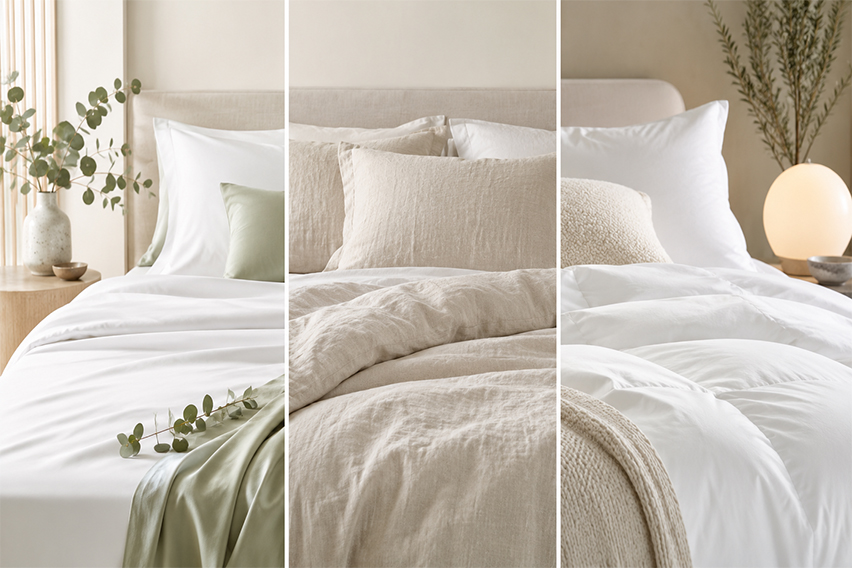
I’ve been trying to find my perfect bedding for about four years. Not in an obsessive way — just in the way that anyone who sleeps hot and wakes up at 3am in a sweaty tangle of cotton starts quietly reading reviews and eventually ends up with three different sheet sets in a linen closet.
All three sets I’m reviewing here are genuinely good. None of them are perfect. And which one you should buy depends almost entirely on how you sleep — not on which one has the best marketing.
Here’s what I actually found.
Why These Three
Eucalypso kept coming up in recommendations for hot sleepers. Belgian linen — specifically sheets woven from Belgian flax — is what every slow-living interiors account has been posting for three years and I finally caved. Simba Sleep I tried because the brand’s Brushed TENCEL bundle landed on my desk for review and I was curious whether a mattress company could make bedding worth caring about.
Tested all three for at least six weeks each. Same bed, same bedroom, different seasons — which mattered, as it turned out.
Quick Comparison
Eucalypso | Belgian Linen | Simba Sleep | |
Material | TENCEL Lyocell from eucalyptus | 100% Belgian flax linen | Brushed TENCEL or Egyptian cotton |
Best for | Hot sleepers, sensitive skin | Year-round comfort, longevity | Hotel-quality feel, occasional warm sleepers |
Softness (night one) | ✅ Immediately silky | Rough at first — improves over months | ✅ Immediately smooth |
Cooling | ✅ Excellent | ✅ Excellent | Good |
Durability | Some durability concerns at year 1 | ✅ 8–10+ years | Good, still testing |
Eco credentials | ✅ OEKO-TEX, TENCEL certified | ✅ European Flax certified | ✅ TENCEL certified |
Price (queen set) | ~$169 | ~$250–$320 | ~$219 bundle |
Verdict | Best for hot sleepers right now | Best long-term investment | Best hotel-bed feel |
Eucalypso — The Hot Sleeper's Best Friend
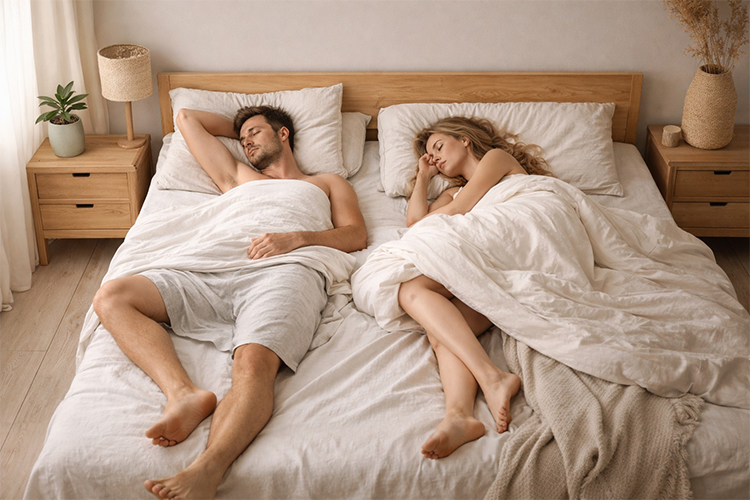
I want to be upfront: I was skeptical. “Eucalyptus sheets that keep you cool” sounds like the kind of thing that performs brilliantly in marketing and adequately in bed.
These actually delivered. First night I put them on in July — no AC, humid, the kind of night where you flip the pillow every hour — and I slept through until 6am. I don’t do that in summer. The sheets weren’t cold; they were just neutral in a way that cotton never manages. Cotton eventually gets warm and stays warm. The Eucalypso TENCEL stays closer to ambient temperature regardless of body heat.
The softness is real too. Not soft-like-silk, more soft-like-nothing — they have a smooth, slightly cool hand that feels expensive without being delicate. A reviewer on Trustpilot described them as “buttery” and I thought that was overwrought until I felt them. It’s the right word.
The caveat I can’t ignore: durability. One Trustpilot reviewer reported a tear between the selvage and the sheet after washing the second set. Another mentioned the bottom sheet wearing through. I’ve had mine for about seven months and haven’t seen that yet, but the reports are consistent enough across reviews that it’s something to go in with eyes open about. TENCEL is inherently a finer, softer fiber than linen or cotton — and finer can mean more delicate under repeated washing. The one-year warranty is thin for a $169 investment.
If I were recommending Eucalypso in one sentence: the best sheets I’ve slept on for hot weather, but wash them gently and don’t expect them to last a decade.
Best for: Hot sleepers, people with sensitive or acne-prone skin, anyone coming from scratchy cotton who wants immediate softness improvement.
Skip if: You wash your sheets aggressively or want something you’ll still be using in ten years.
Belgian Linen — The One That Gets Better
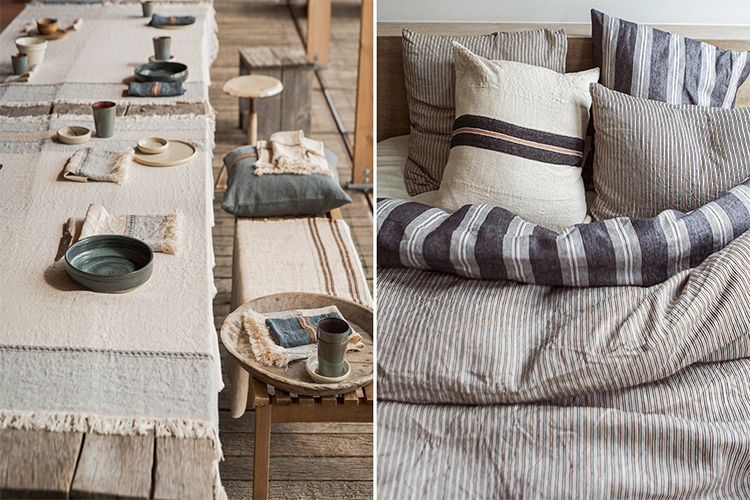
Belgian linen is one of those things where the first experience is genuinely confusing. The sheets arrive, you make the bed, you get in, and your immediate reaction is: these are very expensive and somewhat scratchy.
Then you wash them. And wash them again. And three months later you’re lying there thinking “when did these become my favorite sheets?”
That’s the linen arc. It’s not for everyone and it’s important to be honest about the upfront experience. The first few weeks feel textured and cool in a way that reads almost rough if you’ve been sleeping on smooth cotton or TENCEL. There’s no “immediately luxurious” moment. What there is, gradually, is a lived-in softness that other materials don’t develop — cotton gets pilled and flat, TENCEL stays smooth but doesn’t deepen, and linen just keeps getting better. By month three mine felt like the softest version of slightly structured, and by month five they’re what I reach for most.
The breathability is exceptional. Linen fibers are hollow and the weave is open, which means airflow in a way that’s different from TENCEL’s moisture-wicking mechanism. On genuinely hot nights I preferred the Eucalypso because of the moisture control. For most nights — including warm ones — Belgian linen is actually my first choice now.
The longevity argument is real. Belgian flax linen, certified with the European Flax mark, is documented to last 8–10 years under regular use. Linen at $280 over ten years costs $28 per year. My Eucalypso at $169 over three years — if the durability concerns are real — costs more per year. The math changes how you think about the price.
One thing worth knowing: “Belgian linen” is a fiber origin claim, not a quality guarantee on its own. Sheets labeled Belgian or European linen without a European Flax certification or OEKO-TEX mark are worth scrutinizing. The certification exists for a reason. Brooklinen uses Belgian and French flax with solid credentials; Quince’s European Linen set is a well-reviewed lower-price option. I tested Brooklinen’s washed linen and it’s the most accessible entry point into this category I’ve found.
Best for: People who want bedding that improves with age, anyone who runs warm but not hot, year-round use across seasons, buyers thinking long-term.
Skip if: You want softness immediately and don’t have patience for a three-month break-in period.
Simba Sleep — The Hotel Bed at Home
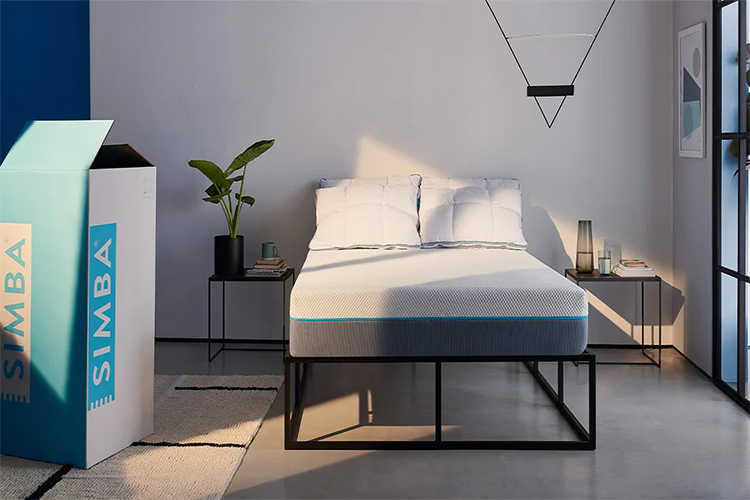
Simba is primarily a mattress company. Their bedding range is newer and I’ll be honest — I expected it to be an afterthought, the kind of thing a mattress brand adds because they want to sell you a complete sleep setup.
It’s not an afterthought. The Brushed TENCEL bundle is genuinely well made.
The fabric has an immediate smoothness that feels closer to Eucalypso than linen. The “brushed” finish adds a subtle warmth and softness beyond standard TENCEL — like the difference between a smooth bamboo sheet and a good jersey: both nice, different feelings. You get in and it feels like a properly made hotel bed. Not the scratchy-but-serviceable ones, the actually expensive ones.
What makes Simba specifically interesting is a small detail that one reviewer singled out and was completely right about: a tiny orientation tab on the fitted sheet that tells you which way to put it on. This is such a stupidly minor thing to care about and yet I have spent real minutes of my life turning a fitted sheet around trying to figure out the right orientation. It has its own minor place in the annals of bedroom frustration. That tab solves it. I now notice its absence on every other fitted sheet I own.
The Egyptian cotton bundle — also available — is 300 thread count sateen. Smooth, slightly glossy, that cool crisp feel when you first get in. Hotel bed in the best way. Less interesting for hot sleepers than the TENCEL, but for anyone who wants that classic fresh cotton feeling, it delivers.
Simba’s bedding sits at the £219/$230-ish price point depending on where you shop, which is competitive given the quality. It’s also the newest of the three and I have less data on long-term durability than I’d like. Everything about it feels well-made; I just can’t tell you yet whether it’s still performing the same in two years.
Best for: Anyone who wants that polished hotel-bed experience at home, people who find linen too textural but want something better than standard cotton.
Skip if: You sleep extremely hot — TENCEL is good but Eucalypso’s moisture-wicking specifically for hot sleepers is more targeted.
How I'd Describe Each in a Single Sentence
Eucalypso: The softest, coolest sheet you’ll sleep on — just treat it gently.
Belgian linen: Rough for a month, your favorite for the next decade.
Simba Sleep: The hotel bed you’ve always wanted, in your own bedroom.
What I Actually Use Now
Eucalypso goes on in June, July, and August. It’s the clear summer sheet. Nothing else I’ve tried manages heat and moisture at that level.
Belgian linen is on the bed from September through May. Once it broke in it became the default — the texture that gets better, the breathability that works across seasons, the satisfaction of using something that will still be there in five years.
Simba gets used when the Belgian linen is in the wash and as my guest room set. It’s the most immediately impressive of the three to hand someone who’s never slept on it.
If I could only keep one: Belgian linen. But I’m genuinely glad I don’t have to choose.
The One Thing Nobody Tells You About Each
Eucalypso: The sheets get softer with every wash — but that softness comes with a trade-off in fiber integrity over time. Wash on gentle. Every time.
Belgian linen: The price will feel wrong the first time you unbox them. Give it ninety days before you decide whether it was worth it.
Simba Sleep: That fitted sheet tab is the most useful small feature in bedding I’ve encountered. The day you have it you can’t stop noticing that nothing else has it.
Final Rankings
For hot sleepers: Eucalypso → Simba TENCEL → Belgian linen
For long-term value: Belgian linen → Simba → Eucalypso
For immediate luxury feel: Simba Egyptian cotton → Eucalypso → Belgian linen
For sensitive skin: Eucalypso → Belgian linen → Simba
Overall, if I had to send one set to someone: Belgian linen, with the caveat that they need to give it three months before judging.