By
By 
Shinola Review: Are Shinola Watches Good?
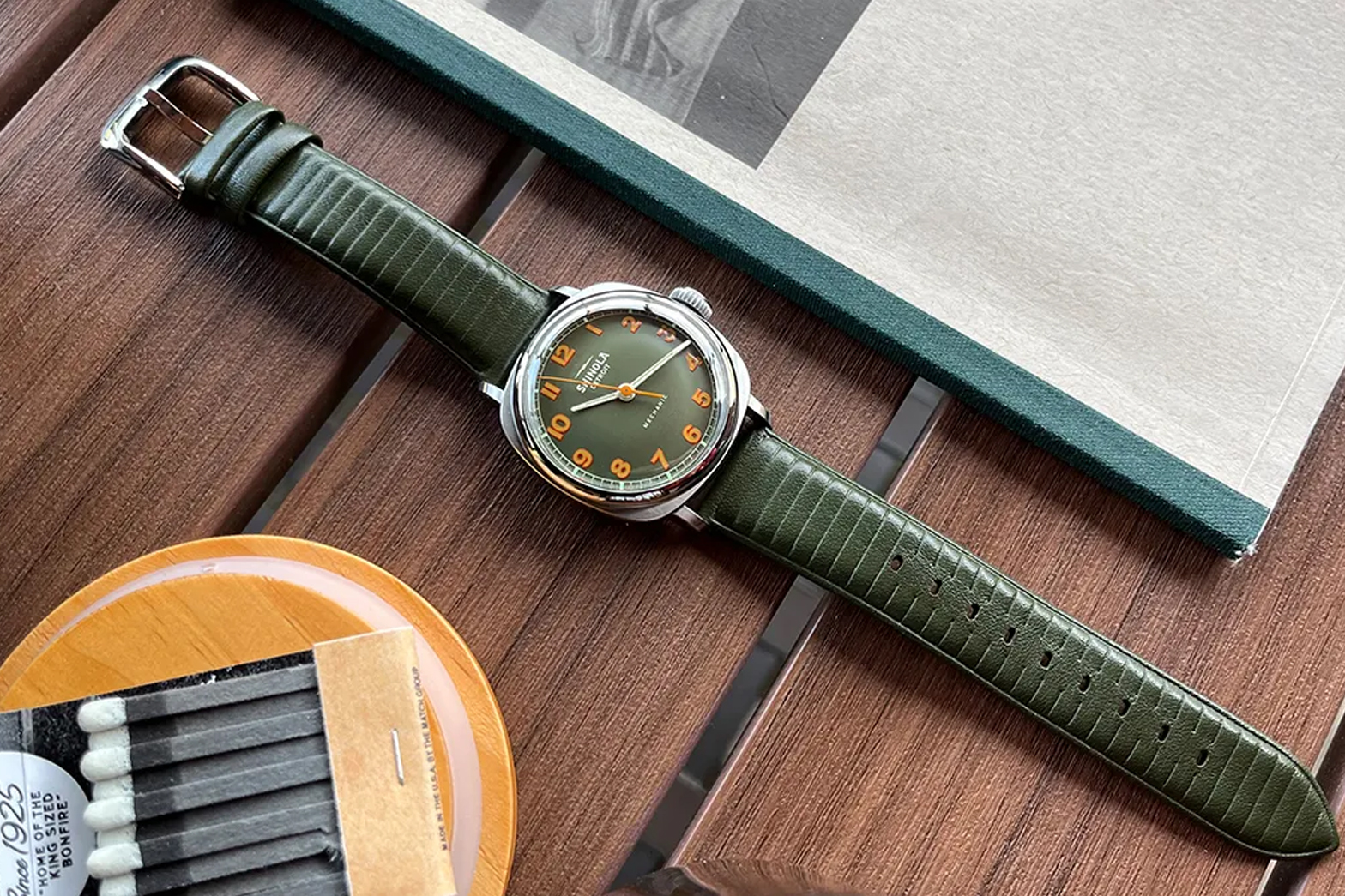
If you’ve ever held a Shinola watch in your hand, you already know the appeal: clean American styling, satisfying weight, and that “this feels like it’s built to last” vibe. But a proper Shinola review has to go beyond the showroom glow.
Because here’s the real question shoppers are asking: Are Shinola watches good once the honeymoon period is over—after a few months of daily wear, strap swaps, a couple of knocks on doorframes, and the first time you need support?
Highlights:
- Best for: people who want a classic, Americana-style everyday watch with a strong story and modern durability
- The Runwell is the brand’s most “signature” look—simple, legible, and versatile for daily wear
- Detrola brings a sportier, more playful feel with a durable resin + steel case approach
- Sapphire crystal is a major plus at this price tier for scratch resistance (common on Runwell/Detrola specs)
- Warranty coverage is strong overall, but Detrola is different (important detail many people miss)
- Free economy shipping over a threshold and free returns (contiguous US) reduces purchase risk
- Biggest drawback: you’re paying a premium for design + brand story, not just raw movement specs
- Customer sentiment is mixed—especially around customer service and fulfillment experiences
- If you love classic styling and want “buy once, wear forever” energy, Shinola can fit well
- If you’re a movement purist hunting maximum specs per dollar, you may prefer a Swiss/Japanese alternative
- Best approach: choose the right model and the right size—Shinola sizing can wear large
Why You Should Trust Us?
We evaluate watches the way real buyers live with them: comfort over long wear, readability, durability, how easy they are to maintain, and what the warranty actually covers. We also look at recurring customer feedback patterns to understand where experiences go smoothly—and where they don’t.
About Shinola
Shinola launched in 2011 with a mission rooted in craftsmanship and long-lasting goods, starting in Detroit and expanding into a broader lifestyle brand over time.
Shinola became widely known through watches and leather goods, leaning hard into Americana design—clean dials, classic case shapes, and durable everyday materials.
What they’re known for
- Detroit-built identity and a strong “made well and made to last” message
- Flagship watch families like the Runwell and sportier lines like Detrola
- Quartz models using Shinola’s “Argonite” naming (with imported parts noted by major watch coverage)
Who they’re for
Shinola is for people who value:
- timeless styling over trend-driven designs
- a watch that looks right with jeans, workwear, and smart casual
- a brand story you actually enjoy owning
- warranty support that’s clearly defined
Shinola Review
Testing criteria (what I evaluated)
Wearability: comfort, strap feel, thickness, lug presence
Readability: dial clarity, contrast, lume usefulness
Build: case finishing, crystal type, crown feel, strap hardware
Durability: how materials handle everyday bumps and moisture
Ownership: warranty terms, servicing intervals, return friendliness
Value: what you’re really paying for vs comparable brands
Quality & Build / Materials
Shinola’s core strength is how “complete” the watch feels—solid case, satisfying crown action on many models, and attention to finishing that reads premium at arm’s length.
On key best sellers like the Runwell, specs commonly highlight sapphire crystal, a screw-down crown, and a robust everyday-build approach.
Detrola leans more sporty: a stainless steel core co-molded with TR90 resin for durability and moisture resistance, plus a rubber strap designed for comfort.
Key Features
- Sapphire crystal on popular models (big value add for scratch resistance)
- Everyday water resistance commonly shown as 5 ATM on Runwell/Detrola specs
- Warranty-forward positioning, including limited lifetime coverage for core quartz/automatic timepieces
- Simple, legible design language that doesn’t get old fast
Performance / Real-World Use
In day-to-day use, Shinola shines when you want:
- quick glance readability
- a watch you don’t baby
- styling that works with almost anything
Quartz models (like many Runwell configurations) are also low-fuss—set it and go, with less day-to-day attention than mechanical watches.
Ease of Use
Shinola watches tend to be user-friendly:
- dials are generally uncluttered
- straps are straightforward to swap if you buy the right lug width
- quartz ownership is simple (battery replacement every few years)
That said: size choice is everything. Some popular Runwell sizes can wear large—great if you like presence, not ideal if you prefer subtle.
Maintenance / Care
Shinola publishes service recommendations (quartz battery replacements every 2–3 years and servicing intervals depending on movement type).
Practical tips:
- wipe down the case after sweat-heavy days
- avoid soaking leather straps
- rinse rubber straps after beach/pool use
- use a microfiber cloth to keep the crystal looking crisp
- Design longevity: Shinola’s best pieces don’t scream “this year’s trend.”
- Materials that make sense: sapphire crystal and durable case construction on popular models
- Clear warranty posture: strong coverage on core watches is reassuring
- Detrola is genuinely fun: sporty, casual, and easy to wear daily
- Good gifting brand: presentation and brand recognition help
- You can overpay if you shop purely on specs—some value brands offer more movement prestige for less.
- Customer experience can be inconsistent depending on timing and support needs.
- Some models wear big—smaller wrists should size down when possible.
- Strap replacement costs add up if you like switching looks often.
- Lifestyle branding premium: you’re paying for design, story, and build—not just mechanics.
Price & Value:
Shinola tends to live in the “premium everyday” zone. Value is best when:
- you love the design enough to wear it constantly
- you choose the right size and strap combo
- you care about warranty coverage and long-term ownership support
If you’re buying it as a “forever everyday watch,” Shinola can make sense. If you’re collecting purely for movement heritage, you may want to cross-shop Swiss/Japanese icons first.
Shinola Runwell Review
A Shinola Runwell review almost always comes down to one thing: is this the cleanest, most wearable classic in your rotation?
The Runwell is positioned as a flagship style, built around a simple, timeless dial with practical durability features. Common product details include an Argonite quartz movement, sapphire crystal, and a screw-down crown on popular configurations.
What the Runwell does best
- classic proportions and easy styling
- highly readable dial design
- “dress it up or down” flexibility
- durable crystal choice for daily wear
Runwell watch sizing note
If you’re unsure, prioritize comfort and balance over “bigger looks cooler.” A watch you forget you’re wearing is the real win.
Shinola Detrola Review
A Shinola Detrola review is for people who like Shinola’s design language—but want it more casual, sporty, and colorful.
Detrola is described with a stainless steel core co-molded with TR90 resin for durability and moisture resistance, paired with a rubber strap, and typically shown at 41mm in key listings.
What Detrola does best
- easy, grab-and-go daily wear
- sporty materials that suit active routines
- more playful personality than the Runwell
- still clean enough to work with everyday outfits
Important ownership detail
Detrola’s warranty terms differ from Shinola’s core watches: Shinola notes a limited lifetime warranty for core quartz/automatic timepieces, but a 3-year limited warranty for Detrola timepieces.
Best-Selling Products from Shinola
Runwell Watch
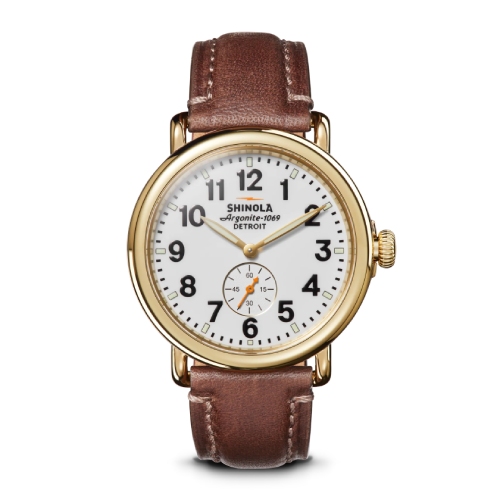
Best for: Someone who wants one classic watch to wear constantly.
Top 3 key features:
- Sapphire crystal (scratch-resistant feel in everyday life)
- Clean, highly legible dial design
- Screw-down crown and everyday-ready build details
Honest drawback: Some configurations wear large—size choice matters.
Mini verdict: The most “Shinola” Shinola—timeless and easy to live with.
Runwell Date Watch
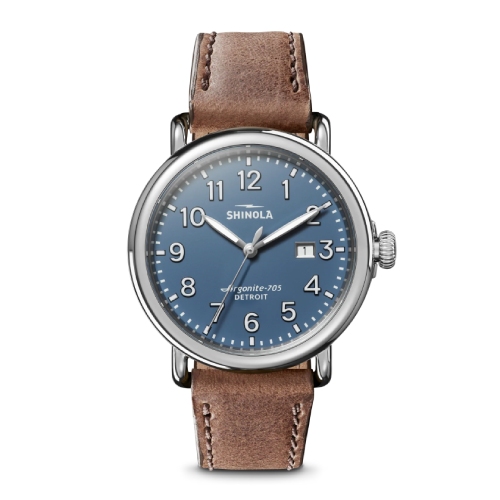
Best for: Daily wearers who want the Runwell look plus a date window.
Top 3 key features:
- Date complication for everyday practicality
- Best-seller positioning in the Runwell family
- Classic styling that won’t age out quickly
Honest drawback: If you love ultra-clean dials, any date window can feel like visual clutter.
Mini verdict: A smart “only watch” option if you actually use the date.
Runwell Chronograph Watch
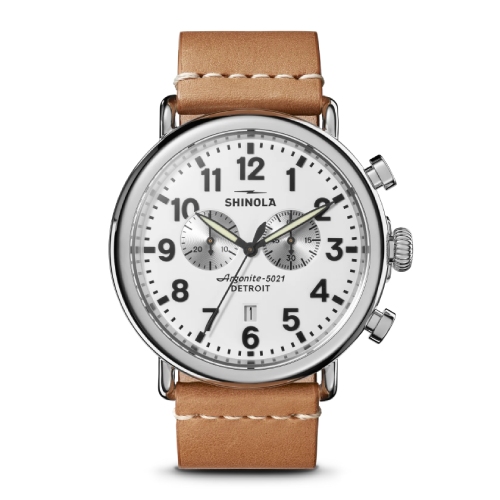
Best for: People who want a sportier tool-watch vibe without going full dive watch.
Top 3 key features:
- Chronograph function for timing tasks
- Sportier, more functional dial layout
- Strong wrist presence that suits casual looks
Honest drawback: Chronographs are visually busier—less minimal than the standard Runwell.
Mini verdict: The “weekend upgrade” Runwell—more function, more presence.
Runwell Sport Chronograph Watch
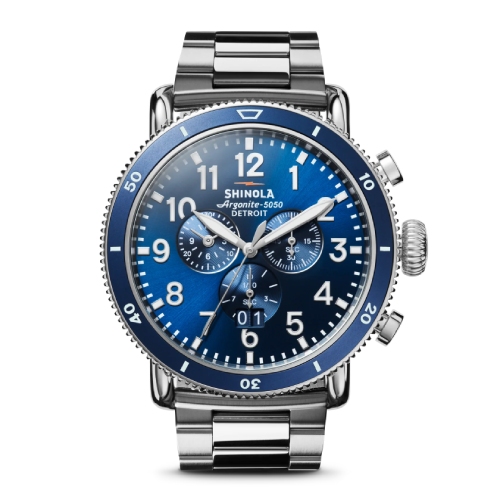
Best for: Buyers who want maximum Shinola presence and a bolder sport look.
Top 3 key features:
- Large sport-chronograph styling
- Strong “statement” wrist presence
- Multiple configurations across materials/finishes
Honest drawback: It can feel oversized on smaller wrists—try to size thoughtfully.
Mini verdict: Big, confident, sporty—great if you like statement watches.
Detrola Watch
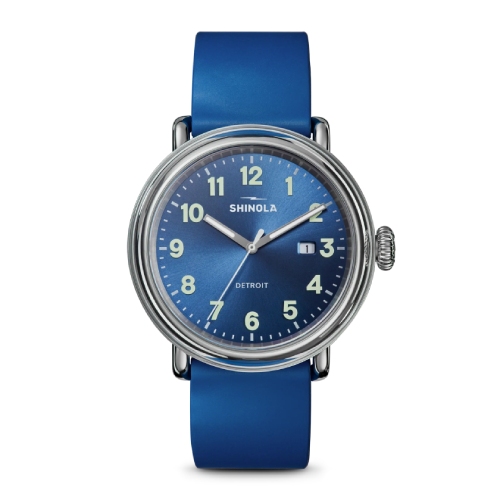
Best for: An easy, sporty everyday watch with personality.
Top 3 key features:
- TR90 resin + steel construction aimed at durability and moisture resistance
- Comfortable rubber strap designed for all-day wear
- 41mm case size in key listings
Honest drawback: Warranty is 3 years (not limited lifetime like core watches).
Mini verdict: The most “wear it everywhere” Shinola—sporty, fun, and practical.
What Do Customers Think?
Customer sentiment around Shinola tends to split into two lanes:
- People love the look and the “gift-worthy” presentation.
- Many owners enjoy the everyday wearability and classic styling.
- The brand story resonates, especially for Detroit and American craftsmanship fans.
- Shipping delays or fulfillment frustrations.
- Customer service responsiveness issues.
- Repair or parts policies can frustrate some owners, especially when a small issue becomes a send-in process.
My takeaway: product satisfaction can be strong, but service experiences appear inconsistent—so it’s smart to buy when you’re confident in sizing/model choice and to keep purchase documentation handy.
Is Shinola Legit?
Yes—Shinola is an established brand with clear warranty policies, published service recommendations, and defined product specs.
It’s also worth understanding how the brand describes production: major watch coverage notes Shinola’s quartz movement is assembled in Detroit with imported parts.
Is Shinola Worth It?
Shinola is worth it if:
- you want a classic everyday watch with premium-feeling finishing
- you care about design longevity more than movement prestige
- you like the Detroit-built identity and brand story
- you value strong warranty framing on core models
It may not be worth it if:
- you’re maximizing specs-per-dollar above everything else
- you want the strongest resale value in the category
- you’re sensitive to mixed customer service feedback
Shinola vs Tissot
Tissot is a common cross-shop if you want a respected Swiss brand at a similar “accessible luxury” feel.
Quick comparison table
| Feature | Shinola | Tissot | Who wins |
|---|---|---|---|
| Design vibe | Americana, clean, lifestyle-driven | Swiss classic / sport heritage | Depends on taste |
| Best for | Everyday style + story | Movement heritage + broad catalog | Tissot (heritage) |
| Durability features | Often sapphire + solid build | Often sapphire + proven platforms | Tie |
| Warranty clarity | Strong, with model-specific differences | Strong, brand-dependent terms | Tie |
| “Statement factor” | Higher (distinct identity) | More classic Swiss mainstream | Shinola (identity) |
Bottom line: Choose Shinola if you love the design and story and want an everyday staple. Choose Tissot if heritage and traditional watch-world credibility are your priority.
Discounts and Promotions
Shinola promotions can vary by season. The most realistic ways shoppers save are:
- brand-led seasonal sales
- limited-time promotions on select collections
- gifting periods (holidays) when offers tend to appear
If you’re price-sensitive, consider choosing a core best seller you’ll wear constantly rather than chasing a “deal” on a model you’re only half-sure about.
Where Can I Buy Shinola?
You can buy Shinola through:
- Shinola’s official storefront
- Shinola retail stores
- select authorized retailers (especially for gifting or in-person try-ons)
Buying from an authorized source matters for warranty and support.
FAQs:
Similar Brands You Might Like
Final Verdict
The main caution is consistency of customer experience: feedback is mixed, with recurring complaints around service and fulfillment. Buy when you’re confident in sizing/model choice, and you’ll likely enjoy what Shinola does best.
Rating: 8.2/10
Share