House On The Crescent

All Posts By houseonthecrescent.com

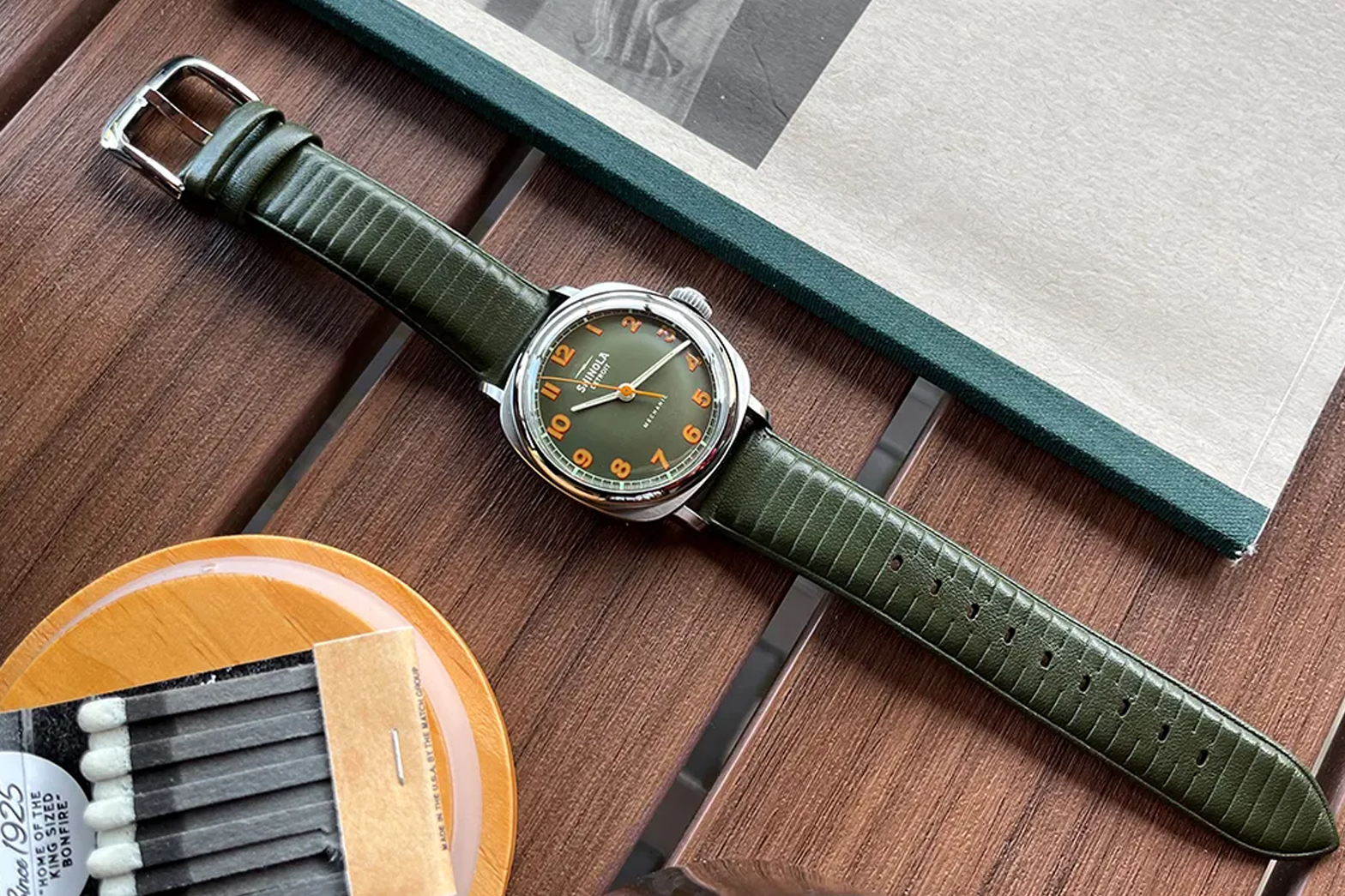
Shinola Review: Are Shinola Watches Good?
Shinola Review: Are Shinola Watches Good?

Shinola Watches Featured Image

If you’ve ever held a Shinola watch in your hand, you already know the appeal: clean American styling, satisfying weight, and that “this feels like it’s built to last” vibe. But a proper Shinola review has to go beyond the showroom glow.

Because here’s the real question shoppers are asking: Are Shinola watches good once the honeymoon period is over—after a few months of daily wear, strap swaps, a couple of knocks on doorframes, and the first time you need support?

Highlights:

    • Best for: people who want a classic, Americana-style everyday watch with a strong story and modern durability
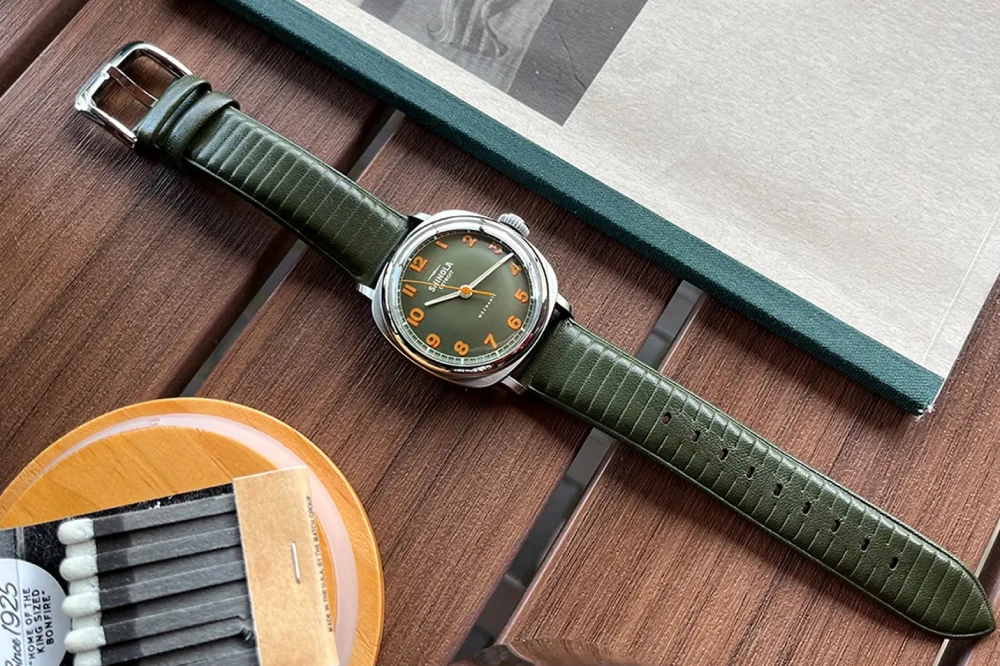
    • The Runwell is the brand’s most “signature” look—simple, legible, and versatile for daily wear
    • Detrola brings a sportier, more playful feel with a durable resin + steel case approach
    • Sapphire crystal is a major plus at this price tier for scratch resistance (common on Runwell/Detrola specs)
    • Warranty coverage is strong overall, but Detrola is different (important detail many people miss)
    • Free economy shipping over a threshold and free returns (contiguous US) reduces purchase risk
    • Biggest drawback: you’re paying a premium for design + brand story, not just raw movement specs
    • Customer sentiment is mixed—especially around customer service and fulfillment experiences
    • If you love classic styling and want “buy once, wear forever” energy, Shinola can fit well
    • If you’re a movement purist hunting maximum specs per dollar, you may prefer a Swiss/Japanese alternative
    • Best approach: choose the right model and the right size—Shinola sizing can wear large

Why You Should Trust Us?

We evaluate watches the way real buyers live with them: comfort over long wear, readability, durability, how easy they are to maintain, and what the warranty actually covers. We also look at recurring customer feedback patterns to understand where experiences go smoothly—and where they don’t.

About Shinola

Shinola launched in 2011 with a mission rooted in craftsmanship and long-lasting goods, starting in Detroit and expanding into a broader lifestyle brand over time.

Shinola became widely known through watches and leather goods, leaning hard into Americana design—clean dials, classic case shapes, and durable everyday materials.

What they’re known for

    • Detroit-built identity and a strong “made well and made to last” message
    • Flagship watch families like the Runwell and sportier lines like Detrola
    • Quartz models using Shinola’s “Argonite” naming (with imported parts noted by major watch coverage)

Who they’re for

Shinola is for people who value:

    • timeless styling over trend-driven designs
    • a watch that looks right with jeans, workwear, and smart casual
    • a brand story you actually enjoy owning
    • warranty support that’s clearly defined

Shinola Review

Testing criteria (what I evaluated)

Wearability: comfort, strap feel, thickness, lug presence

Readability: dial clarity, contrast, lume usefulness

Build: case finishing, crystal type, crown feel, strap hardware

Durability: how materials handle everyday bumps and moisture

Ownership: warranty terms, servicing intervals, return friendliness

Value: what you’re really paying for vs comparable brands

Quality & Build / Materials

Shinola’s core strength is how “complete” the watch feels—solid case, satisfying crown action on many models, and attention to finishing that reads premium at arm’s length.

On key best sellers like the Runwell, specs commonly highlight sapphire crystal, a screw-down crown, and a robust everyday-build approach.

Detrola leans more sporty: a stainless steel core co-molded with TR90 resin for durability and moisture resistance, plus a rubber strap designed for comfort.

Key Features

    • Sapphire crystal on popular models (big value add for scratch resistance)
    • Everyday water resistance commonly shown as 5 ATM on Runwell/Detrola specs
    • Warranty-forward positioning, including limited lifetime coverage for core quartz/automatic timepieces
    • Simple, legible design language that doesn’t get old fast

Performance / Real-World Use

In day-to-day use, Shinola shines when you want:

    • quick glance readability
    • a watch you don’t baby
    • styling that works with almost anything

Quartz models (like many Runwell configurations) are also low-fuss—set it and go, with less day-to-day attention than mechanical watches.

Ease of Use

Shinola watches tend to be user-friendly:

    • dials are generally uncluttered
    • straps are straightforward to swap if you buy the right lug width
    • quartz ownership is simple (battery replacement every few years)

That said: size choice is everything. Some popular Runwell sizes can wear large—great if you like presence, not ideal if you prefer subtle.

Maintenance / Care

Shinola publishes service recommendations (quartz battery replacements every 2–3 years and servicing intervals depending on movement type).

Practical tips:

    • wipe down the case after sweat-heavy days
    • avoid soaking leather straps
    • rinse rubber straps after beach/pool use
    • use a microfiber cloth to keep the crystal looking crisp
What I Like
  • Design longevity: Shinola’s best pieces don’t scream “this year’s trend.”
  • Materials that make sense: sapphire crystal and durable case construction on popular models
  • Clear warranty posture: strong coverage on core watches is reassuring
  • Detrola is genuinely fun: sporty, casual, and easy to wear daily
  • Good gifting brand: presentation and brand recognition help
What I Don’t Like
  • You can overpay if you shop purely on specs—some value brands offer more movement prestige for less.
  • Customer experience can be inconsistent depending on timing and support needs.
  • Some models wear big—smaller wrists should size down when possible.
  • Strap replacement costs add up if you like switching looks often.
  • Lifestyle branding premium: you’re paying for design, story, and build—not just mechanics.
Price & Value:

Shinola tends to live in the “premium everyday” zone. Value is best when:

    • you love the design enough to wear it constantly
    • you choose the right size and strap combo
    • you care about warranty coverage and long-term ownership support

If you’re buying it as a “forever everyday watch,” Shinola can make sense. If you’re collecting purely for movement heritage, you may want to cross-shop Swiss/Japanese icons first.

Shinola Runwell Review

A Shinola Runwell review almost always comes down to one thing: is this the cleanest, most wearable classic in your rotation?

The Runwell is positioned as a flagship style, built around a simple, timeless dial with practical durability features. Common product details include an Argonite quartz movement, sapphire crystal, and a screw-down crown on popular configurations.

What the Runwell does best

    • classic proportions and easy styling
    • highly readable dial design
    • “dress it up or down” flexibility
    • durable crystal choice for daily wear

Runwell watch sizing note
If you’re unsure, prioritize comfort and balance over “bigger looks cooler.” A watch you forget you’re wearing is the real win.

Shinola Detrola Review

A Shinola Detrola review is for people who like Shinola’s design language—but want it more casual, sporty, and colorful.

Detrola is described with a stainless steel core co-molded with TR90 resin for durability and moisture resistance, paired with a rubber strap, and typically shown at 41mm in key listings.

What Detrola does best

    • easy, grab-and-go daily wear
    • sporty materials that suit active routines
    • more playful personality than the Runwell
    • still clean enough to work with everyday outfits

Important ownership detail
Detrola’s warranty terms differ from Shinola’s core watches: Shinola notes a limited lifetime warranty for core quartz/automatic timepieces, but a 3-year limited warranty for Detrola timepieces.

Best-Selling Products from Shinola

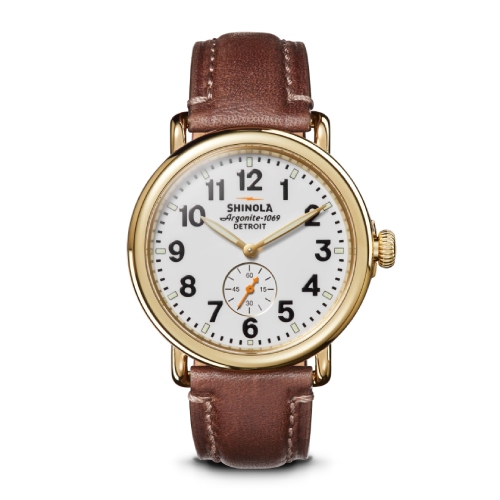
Runwell Watch
Runwell Watch

Best for: Someone who wants one classic watch to wear constantly.

Top 3 key features:

    • Sapphire crystal (scratch-resistant feel in everyday life)
    • Clean, highly legible dial design
    • Screw-down crown and everyday-ready build details
      Honest drawback: Some configurations wear large—size choice matters.
      Mini verdict: The most “Shinola” Shinola—timeless and easy to live with.

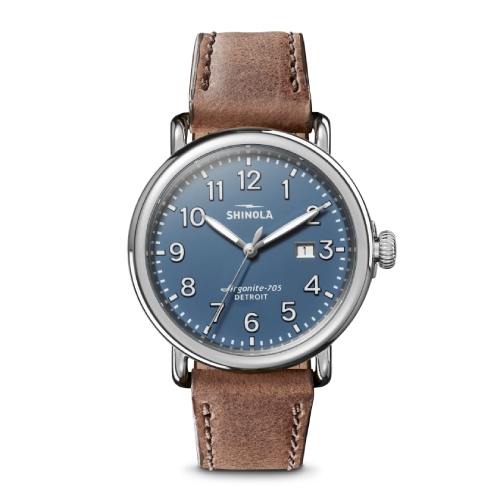
Runwell Date Watch
Runwell Date Watch

Best for: Daily wearers who want the Runwell look plus a date window.

Top 3 key features:

    • Date complication for everyday practicality
    • Best-seller positioning in the Runwell family
    • Classic styling that won’t age out quickly
      Honest drawback: If you love ultra-clean dials, any date window can feel like visual clutter.
      Mini verdict: A smart “only watch” option if you actually use the date.

Runwell Chronograph Watch

Runwell Chronograph Watch

Best for: People who want a sportier tool-watch vibe without going full dive watch.

Top 3 key features:

    • Chronograph function for timing tasks
    • Sportier, more functional dial layout
    • Strong wrist presence that suits casual looks
      Honest drawback: Chronographs are visually busier—less minimal than the standard Runwell.
      Mini verdict: The “weekend upgrade” Runwell—more function, more presence.

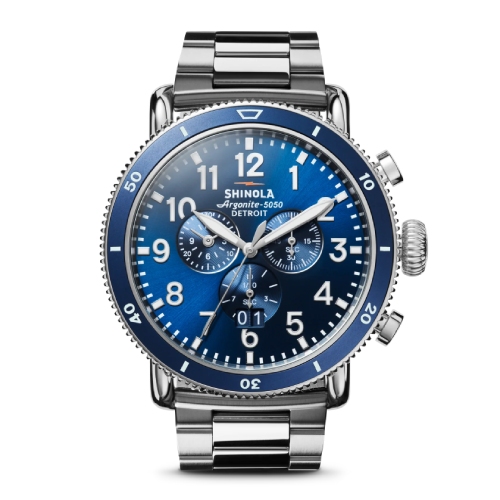
Runwell Sport Chronograph Watch
Runwell Sport Chronograph Watch

Best for: Buyers who want maximum Shinola presence and a bolder sport look.

Top 3 key features:

    • Large sport-chronograph styling
    • Strong “statement” wrist presence
    • Multiple configurations across materials/finishes
      Honest drawback: It can feel oversized on smaller wrists—try to size thoughtfully.
      Mini verdict: Big, confident, sporty—great if you like statement watches.

Detrola Watch
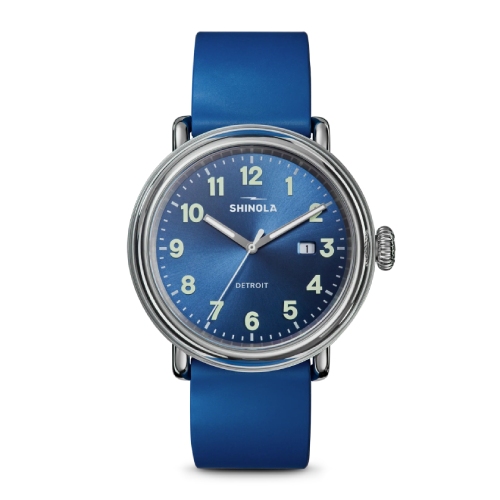
Detrola Watch

Best for: An easy, sporty everyday watch with personality.

Top 3 key features:

    • TR90 resin + steel construction aimed at durability and moisture resistance
    • Comfortable rubber strap designed for all-day wear
    • 41mm case size in key listings
      Honest drawback: Warranty is 3 years (not limited lifetime like core watches).
      Mini verdict: The most “wear it everywhere” Shinola—sporty, fun, and practical.

What Do Customers Think?

Customer sentiment around Shinola tends to split into two lanes:

Common positive themes
  • People love the look and the “gift-worthy” presentation.
  • Many owners enjoy the everyday wearability and classic styling.
  • The brand story resonates, especially for Detroit and American craftsmanship fans.
Common complaints
  • Shipping delays or fulfillment frustrations.
  • Customer service responsiveness issues.
  • Repair or parts policies can frustrate some owners, especially when a small issue becomes a send-in process.

My takeaway: product satisfaction can be strong, but service experiences appear inconsistent—so it’s smart to buy when you’re confident in sizing/model choice and to keep purchase documentation handy.

Is Shinola Legit?

Yes—Shinola is an established brand with clear warranty policies, published service recommendations, and defined product specs.

It’s also worth understanding how the brand describes production: major watch coverage notes Shinola’s quartz movement is assembled in Detroit with imported parts.

Is Shinola Worth It?

Shinola is worth it if:

    • you want a classic everyday watch with premium-feeling finishing
    • you care about design longevity more than movement prestige



    • you like the Detroit-built identity and brand story
    • you value strong warranty framing on core models

It may not be worth it if:

    • you’re maximizing specs-per-dollar above everything else
    • you want the strongest resale value in the category
    • you’re sensitive to mixed customer service feedback

Shinola vs Tissot

Tissot is a common cross-shop if you want a respected Swiss brand at a similar “accessible luxury” feel.

Quick comparison table

Feature Shinola Tissot Who wins
Design vibe Americana, clean, lifestyle-driven Swiss classic / sport heritage Depends on taste
Best for Everyday style + story Movement heritage + broad catalog Tissot (heritage)
Durability features Often sapphire + solid build Often sapphire + proven platforms Tie
Warranty clarity Strong, with model-specific differences Strong, brand-dependent terms Tie
“Statement factor” Higher (distinct identity) More classic Swiss mainstream Shinola (identity)

Bottom line: Choose Shinola if you love the design and story and want an everyday staple. Choose Tissot if heritage and traditional watch-world credibility are your priority.

Discounts and Promotions

Shinola promotions can vary by season. The most realistic ways shoppers save are:

    • brand-led seasonal sales
    • limited-time promotions on select collections
    • gifting periods (holidays) when offers tend to appear

If you’re price-sensitive, consider choosing a core best seller you’ll wear constantly rather than chasing a “deal” on a model you’re only half-sure about.

Where Can I Buy Shinola?

You can buy Shinola through:

    • Shinola’s official storefront
    • Shinola retail stores
    • select authorized retailers (especially for gifting or in-person try-ons)

Buying from an authorized source matters for warranty and support.

FAQs:

Yes—many models are designed for daily use with practical durability features like sapphire crystal and solid case construction.
Runwell is the classic flagship look; Detrola is sportier and more playful, using TR90 resin + steel construction and a rubber strap.
Not at all. Quartz is accurate, low-maintenance, and ideal for an everyday watch—especially if you don’t want the habits that come with mechanical ownership.
If you like a bold presence, go larger. If you want comfort and subtlety, consider sizing down. When in doubt, choose the size you’ll wear for hours without noticing.
Detrola is positioned with a durable resin + steel approach and a rubber strap, making it a natural pick for casual and active routines.
Shinola notes limited lifetime warranty coverage on core quartz and automatic timepieces, while Detrola timepieces have a 3-year limited warranty.
Shinola states free returns for orders shipped within the contiguous US, along with free economy shipping over a qualifying threshold.
The brand emphasizes Detroit watchmaking, with assembly in Detroit using imported parts.
If you prioritize heritage movements and specs-per-dollar, Swiss brands may win. If you value style identity, build feel, and aesthetic consistency, Shinola can absolutely be worth it.
A Runwell (classic) or a Detrola (sporty) are the most straightforward entry points—choose timeless minimalism or playful casual based on your lifestyle.

Similar Brands You Might Like

Tissot
Seiko
Hamilton
Citizen
Bulova

Final Verdict

Shinola makes handsome, well-finished watches that feel premium in everyday life—especially best sellers like the Runwell and Detrola. If you love the Americana design language and want a watch you’ll actually wear constantly, Shinola can be a satisfying long-term buy.

The main caution is consistency of customer experience: feedback is mixed, with recurring complaints around service and fulfillment. Buy when you’re confident in sizing/model choice, and you’ll likely enjoy what Shinola does best.

Rating: 8.2/10

Caraway Review: Pretty Pans – But Do They Actually Hold Up?

Caraway Review: Pretty Pans – But Do They Actually Hold Up?

Caraway Review

You know that moment when you open your cabinet and think, why do my pans look tired even though I barely feel like I cook that much? That’s usually when Caraway starts popping up in your feed.

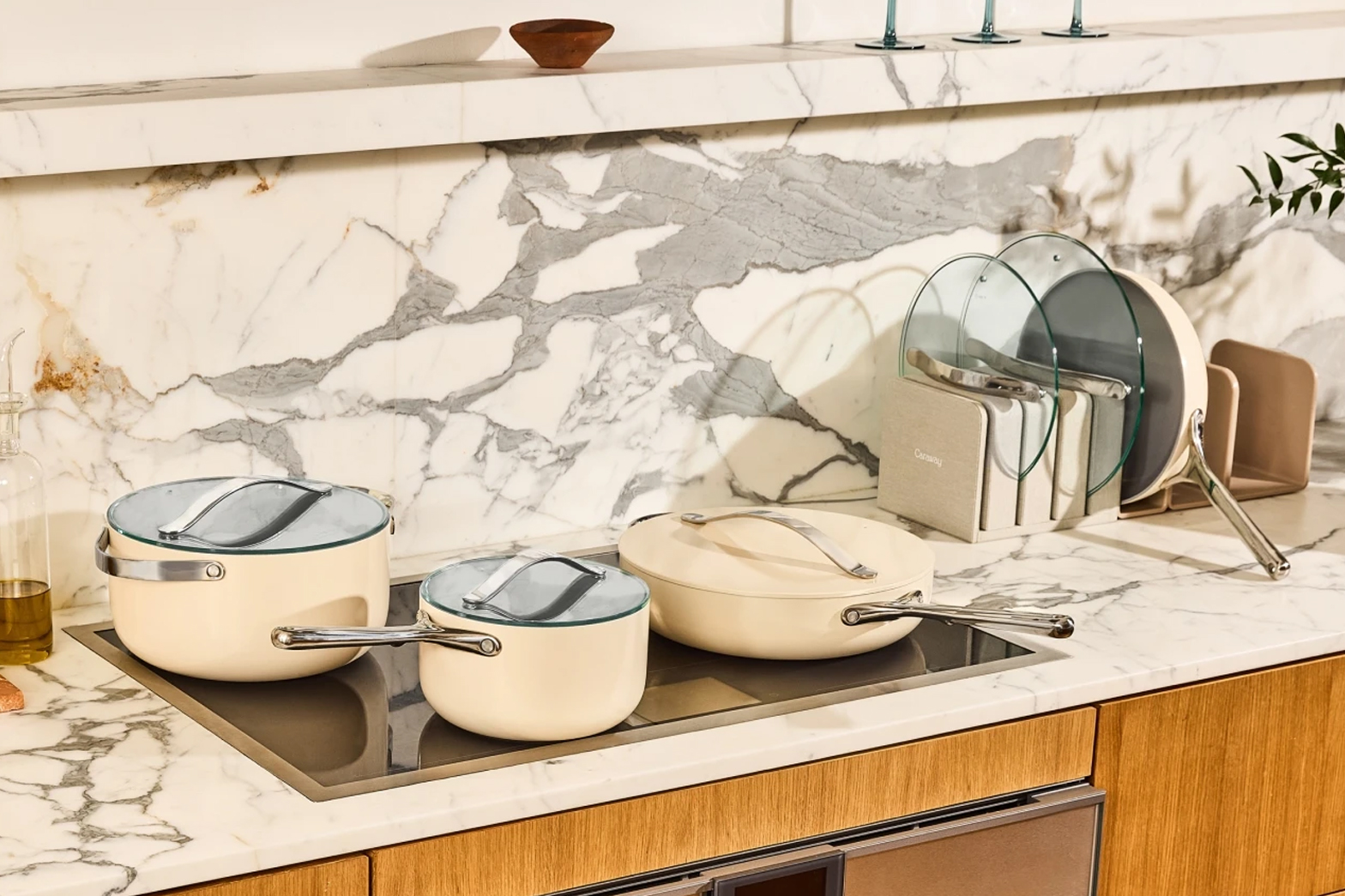
Caraway is basically the “aesthetic cookware” brand that also leans hard into the better-for-you angle: ceramic-coated nonstick, lots of color options, matching storage, and the promise of cooking without the usual forever-chemical worries. Their sets look like something you’d happily leave on the stovetop instead of hiding away.

But cookware isn’t wall art. It has to survive daily heat, oils, utensils, cleaning, and real-life mistakes (like someone in the house cranking the burner too high). So the real question is: does Caraway perform like premium cookware, or is it mostly a pretty upgrade? Caraway also sits inside a bigger “non-toxic ceramic cookware” trend that’s been questioned in mainstream reporting—mostly around what “ceramic” actually means and how much transparency brands provide. Caraway’s answer to that is publishing third-party test reports for materials that touch food.

What Caraway is (and who it’s for)

Caraway sells ceramic-coated cookware (plus other kitchen categories) aimed at people who want:

    • a slick, easy-release cooking surface for everyday meals
    • a cleaner “no PFAS/PTFE” message
    • cookware that looks good enough to keep out
    • sets that come with storage organizers so your cabinets don’t become a pan jungle

If you’re the type who loves a tidy kitchen, cooks eggs often, and hates scrubbing… Caraway’s pitch is basically made for you.

Caraway Cookware Review: The quick “how it performs” reality check

Caraway’s ceramic nonstick can feel amazing when it’s treated right: lower-to-medium heat, not too much metal-on-pan action, gentle cleaning. The cooking surface is designed for everyday convenience—eggs, pancakes, sautéed veggies, chicken cutlets—things where you want release and fast cleanup.

But ceramic nonstick (as a category) usually has a tradeoff: it can be less forgiving over time than people expect if it’s regularly overheated or aggressively cleaned. That’s why you’ll see a split in customer experiences: some people are obsessed, and others feel like performance dropped faster than they hoped.

Highlights:

    • The design is genuinely good. It’s not just “pretty colors”—the whole system is meant to be cohesive, including storage.
    • Brand transparency is better than many competitors. Caraway publishes third-party testing around PFAS being “not detected” within reporting limits for food-contact materials.
    • Oven-safe claims are high for the category (commonly listed up to 550°F for cookware).
    • Stovetop compatibility is broad, including induction on listed products/sets.
    • The “easy-clean” experience is real when you stay in the brand’s recommended heat/care zone.
Pros
  • It makes everyday cooking feel simpler
    Caraway’s biggest win is the day-to-day stuff: eggs that slide, sauces that wipe clean, less stuck-on mess after dinner. If you cook often, that little convenience adds up.
  • The storage is actually useful
    A lot of cookware sets come with “extras” that end up in a drawer forever. Caraway’s storage pieces are designed to solve a real problem: lids and pans becoming a messy stack.
  • The aesthetic motivates people to cook
    This sounds silly until you experience it. When your pans look nice and your kitchen feels put-together, you’re more likely to cook at home instead of defaulting to takeout.
  • Clear messaging around PFAS/PTFE
    Caraway’s marketing is very direct about being made without PFAS, PTFE, and related chemicals—and they back that with third-party testing information rather than vague claims.
  • A lot of customers genuinely love them
    You’ll find plenty of “I’m obsessed” energy—especially from people who bought for easy cleanup and the look.
Cons
  • Ceramic nonstick has a learning curve
    If you treat it like a tough stainless steel pan (high heat, crank it and forget it), you’ll probably be unhappy. Ceramic nonstick usually rewards medium heat and patience more than brute force. Caraway also emphasizes avoiding too-high heat because it can hurt performance.
  • “Nonstick forever” expectations don’t match reality
    A lot of negative feedback tends to cluster around durability—sticking later on, staining, or surface wear. That’s not unique to Caraway, but it matters because Caraway is priced like a premium lifestyle buy.
  • Hand-wash is the safer route
    Many listings and care guidance recommend handwashing. If you’re a dishwasher-only household, that’s a lifestyle mismatch.
  • The “non-toxic cookware” conversation is messy
    Across the wider category, “non-toxic” and “ceramic” language can be confusing for shoppers. Caraway’s third-party reports help, but the broader space still comes with debate and skepticism.
  • You’re paying for the system, not just the pan
    If all you care about is pure cooking performance per dollar, you might find better value elsewhere. Caraway’s price includes design, branding, colorways, the set experience, and storage.

5 Caraway products that make the most sense to buy

Cookware Set

Caraway Cookware Set

This is the “one purchase, big visual upgrade” option. You’re getting the core lineup (fry pan, sauté pan, saucepan, Dutch oven) plus storage pieces that help keep everything neat.

Why people buy it: the set looks cohesive and instantly makes the kitchen feel upgraded.

Best for: new apartments, wedding gifts, full kitchen refresh
Heads-up: it’s a bigger spend, and it’s only worth it if you actually want and will use most pieces.

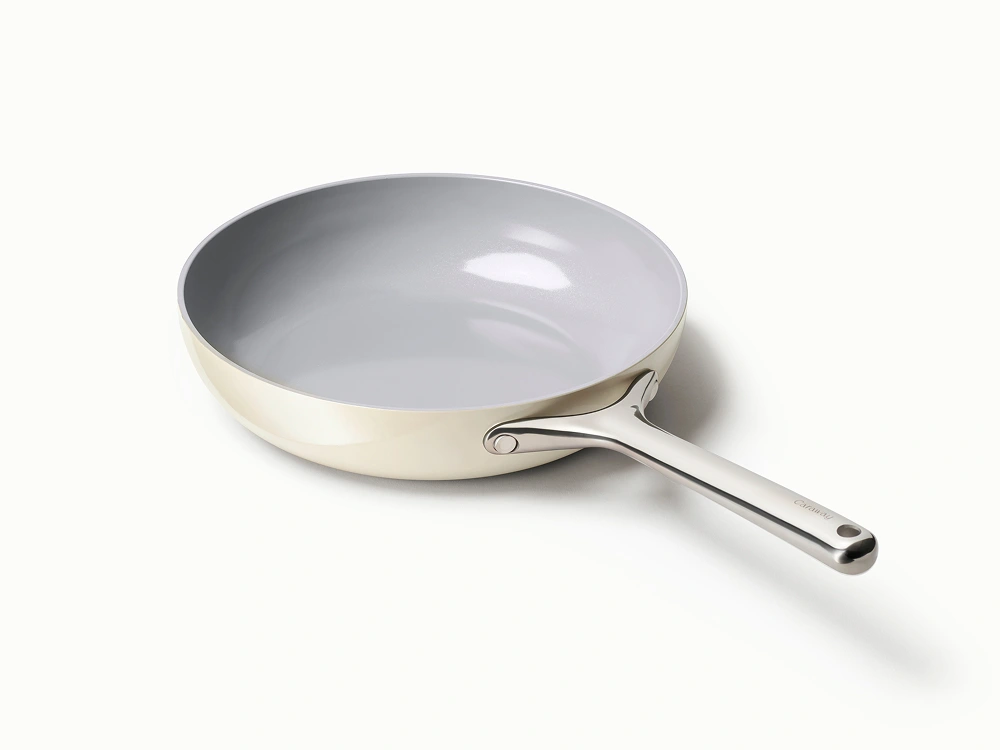
Fry Pan

Caraway Fry Pan

This is the “daily driver.” Eggs, grilled cheese, quick sauté—this is where nonstick makes life easier.


Why it’s a smart first buy: you’ll know quickly if you like how Caraway cooks and cleans.

Best for: breakfast, quick dinners, low-mess cooking
Heads-up: like most ceramic nonstick, it tends to prefer medium heat—high heat all the time is where people shorten the lifespan.

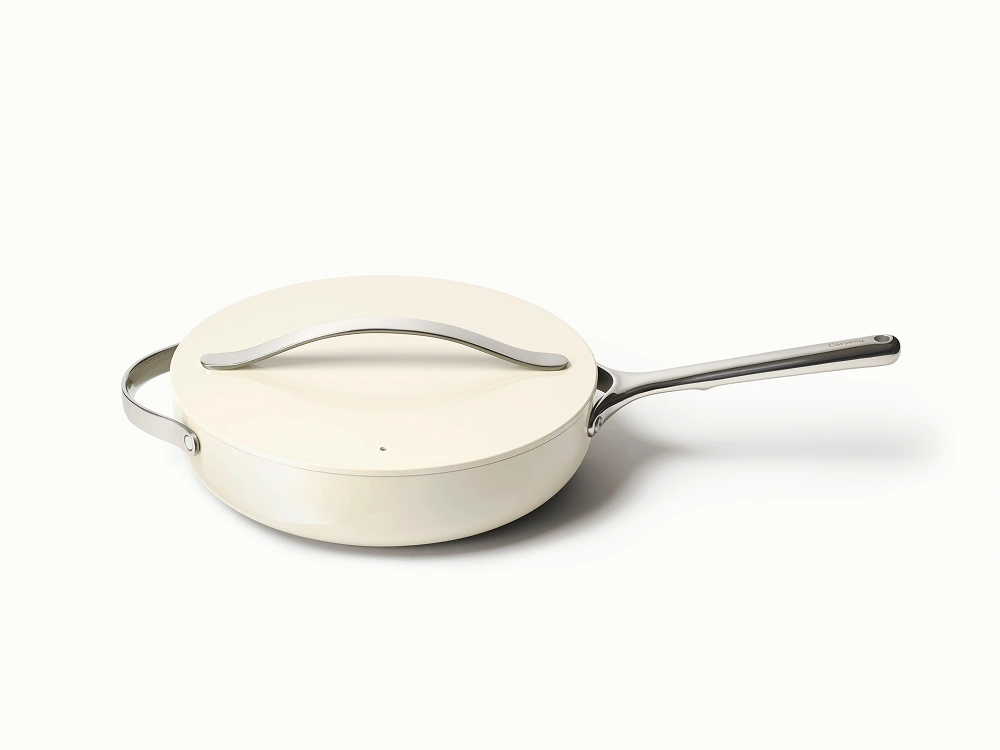
Sauté Pan

Caraway Sauté Pan

Think “one-pan meals.” It’s deeper than the fry pan, usually comes with a lid, and handles sauces, braises, and bigger batches better.

Why people love it: it’s versatile—stir-fry, creamy pasta, curries, shallow frying.
Best for: families, meal prep, anything saucy
Heads-up: bigger surface area + higher sides means it can feel bulky in smaller sinks/cabinets.

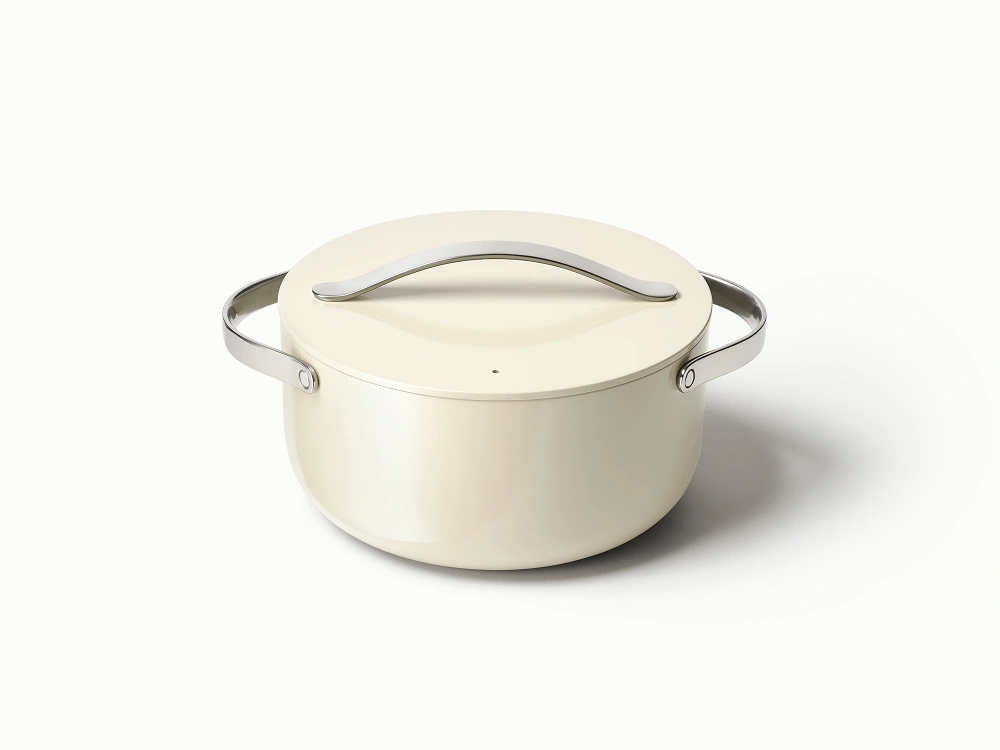
Dutch Oven

Caraway Dutch Oven

For soups, stews, and slow simmer moments—this is the cozy one.

Why it’s worth considering: if you cook comfort food often, it earns its space.

Best for: stews, biryani-style cooking, chili, slow sauces
Heads-up: if you’re expecting “classic enameled cast iron” vibes, remember Caraway’s ceramic-coated lines are a different construction category—set expectations accordingly.

Bakeware

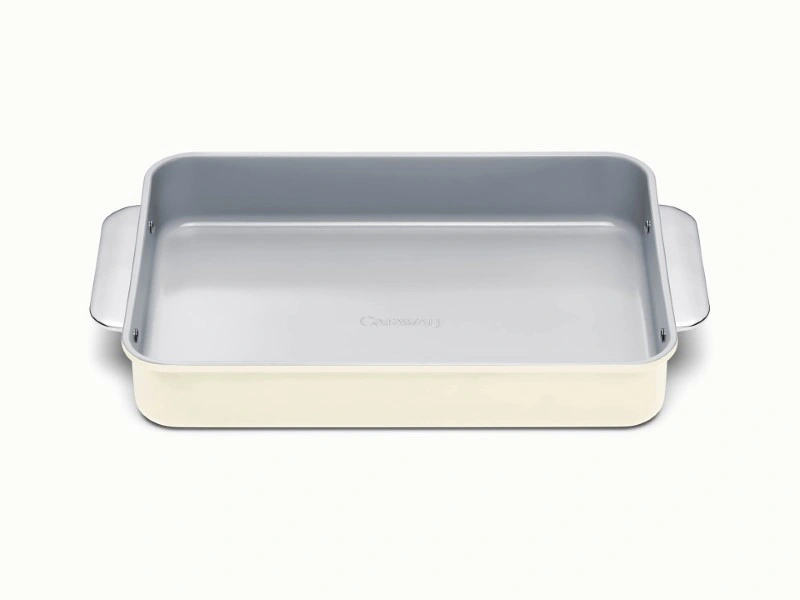
Caraway Large Rectangle Pan

Caraway’s bakeware gets attention because the same “easy release + easier cleanup” promise applies to baking.

Why people buy it: less sticking, less scrubbing, plus it matches the cookware aesthetic.
Best for: cookies, roasted veggies, sheet-pan meals
Heads-up: bakeware (any brand) can stain over time depending on oils, sugars, and heat.

Caraway Customer Reviews:

People rave about:
  • How the pans look and feel out of the box
  • Easy cleanup
  • Eggs/pancakes and “low drama” cooking
  • Storage making cabinets neater
People complain about:
  • Performance dropping if used on high heat regularly
  • Staining or discoloration over time
  • Frustration when expectations were “this will stay perfect for years”

FAQs:

Is Caraway really “non-toxic”?
Caraway says its cookware is made without PFAS (including PTFE and PFOA) and publishes third-party testing reports for food-contact materials showing PFAS “not detected” within reporting limits. At the same time, the broader “non-toxic cookware” space can be confusing because marketing terms vary brand to brand.
Is Caraway good for induction?
Many Caraway cookware items are sold as compatible with induction, along with gas and electric.
Can it go in the oven?
Caraway cookware is commonly listed as oven-safe up to 550°F (always follow the exact product’s care notes, especially for lids/handles).
What warranty do they offer?
Caraway commonly lists a one-year limited warranty for many products, and longer coverage on certain lines (with conditions). Always check the warranty section for the specific collection you’re buying.
How do I make it last longer?
  • Use low to medium heat most of the time
  • Let the pan heat

Final Verdict: Is Caraway worth it?

Caraway is worth it if you want a good-looking cookware system that makes everyday cooking easier, and you’re willing to treat ceramic nonstick the way it wants to be treated (medium heat, reasonable care, hand wash when possible).

If you want cookware you can abuse on max heat, scrub aggressively, and still expect perfect release forever… Caraway will probably frustrate you.

Speediance Review: Smart Gym But is it Actually a Good Idea to Buy?

Speediance Review: Smart Gym But is it Actually a Good Idea to Buy?

Speediance Featured Image

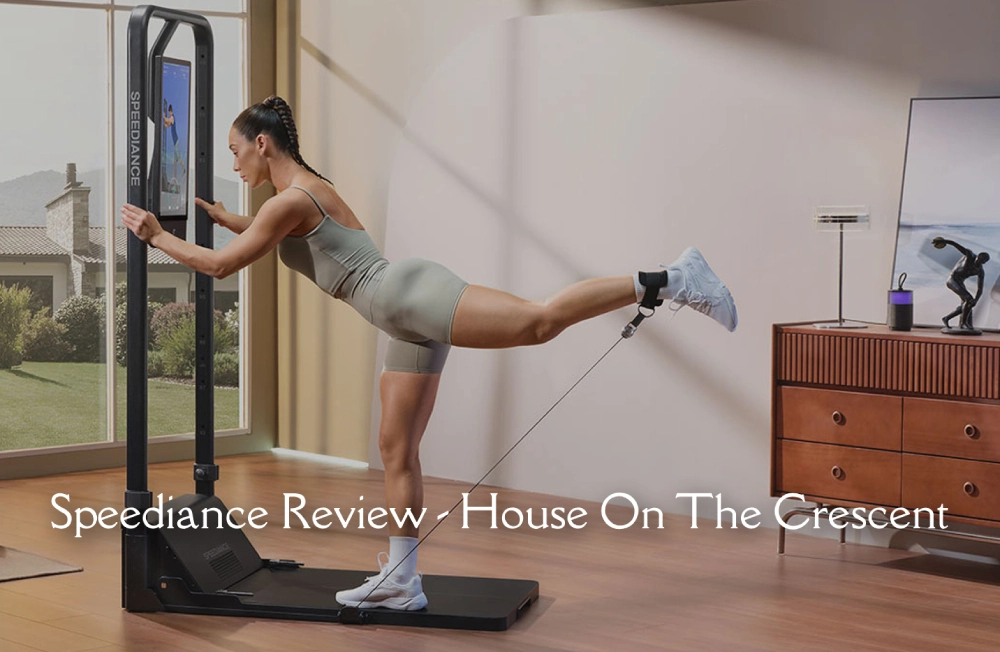
If you’ve ever priced out a “real” home gym and quietly closed the tab—rack, plates, cables, bench, dumbbells, plus the space it eats—Speediance starts to make sense fast. It’s one of those products that looks almost too clean to be serious: a freestanding screen, foldable base, digital resistance, and a promise that you can do everything at home without bolting anything into a wall.

But smart gyms live or die on two things:

    1. how good the resistance feels (not just the number on paper), and
    2. how painless the ownership is (setup, software, support, and “what happens if something goes wrong?”).

This Speediance Gym Monster 2 review breaks it down like a normal buyer would: what’s awesome, what’s annoying, what customers keep repeating, and which add-ons are actually worth caring about.

Highlights

    • Freestanding setup (no wall mounting), with a compact/foldable approach that suits smaller homes
    • Digital resistance with fast weight changes and multiple resistance modes (including eccentric/chain-style options)
    • Strong “all-in-one” versatility: squats, presses, pulls, belt squats, rows, plus cardio-style emulation with add-ons
    • Useful safety concepts for solo training, depending on the bundle and features available
Pros
  • It’s genuinely convenient in real life
    People romanticize home gyms, then forget the hassle: loading plates, storing plates, noise, and setup time. Speediance’s “tap to change weight” approach is the point—and it really can make workouts feel quicker and smoother.
  • It covers a lot of training styles, not just one lane
    You can do classic strength work (squats, deadlifts, presses, rows), but also tempo work and eccentric-focused training. That flexibility is why it often gets compared to other smart gym systems.
  • Great for households with mixed fitness levels
    One person can be a total beginner while another is more advanced, and both can use the machine without it becoming a daily argument. Adjustable resistance + guided programs make it more “shared household friendly” than traditional heavy setups.
  • Built-in coaching reduces decision fatigue
    A lot of people don’t fail because they’re lazy—they fail because they’re guessing. A library of guided sessions, progress tracking, and structured programs can remove that “what should I do today?” problem.
  • It can feel like strong value if it replaces a membership
    It’s a big upfront purchase, but if you actually use it consistently and it replaces your gym routine, the cost-per-workout can start to make sense—especially if it removes commute time and excuses.
Cons
  • Price is the first punch
    No sugarcoating: it’s expensive. It’s an investment, not an impulse buy—and the bundle pricing can change what the “real total” looks like.
  • The resistance cap is real for heavy lifters
    For most people, the resistance is enough. But if you’re already strong on squats, deadlifts, heavy rows, or you train like a powerlifter, you may hit the ceiling—especially on movements where you’d normally load very heavy.
  • You need more space than you think
    It looks compact, but once you actually train—bench out, cables moving, body positioning—you’ll want clear space around it. Real usage footprint is bigger than “marketing footprint.”
  • Tech is tech (and tech sometimes acts like tech)
    Even with updates, software can glitch, tracking can be imperfect, and features can occasionally misread movement. That’s not unique to Speediance, but it matters more when you’ve paid premium money.
  • Subscription confusion depends on region and package
    Some buyers love it because they feel they’re not trapped in a mandatory subscription. Others discover certain features or experiences are better with paid options. The real takeaway: know what’s included in your package and region before you buy.

Quick Brand Snapshot

Speediance’s headline product is the Gym Monster line (including the Gym Monster 2). It uses motor-driven / digital resistance and packs strength training into a compact, freestanding setup with a big touchscreen.

A big selling point versus some competitors: many reviewers note you can get a lot of training value without a mandatory monthly subscription, although Speediance also markets memberships/paid options depending on region and package. Translation: you need to be clear what’s included in your checkout.

Product Overview:

Gym Monster 2

Gym Monster 2

This is the main event: digital resistance, cable positions, touchscreen workouts, and smart modes (like eccentric/chain-style resistance) designed to mimic a bunch of gym movements in one footprint.

Best for: people who want strength training at home without a full rack + plates setup
Heads-up: the top resistance is plenty for most people, but serious lifters may outgrow the cap on certain movements.

Bench

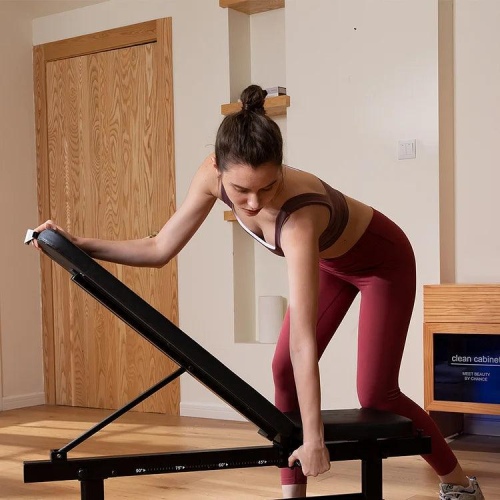
Speediance Incline Bench

The bench is more important than it sounds. With machines like this, your bench is your “platform” for half your program—pressing, rows, split squats, step-ups, incline work, the lot. It’s often part of higher bundles because it changes what you can comfortably do.

Best for: anyone training full-body
Heads-up: measure your space—bench + cables needs more room than the product photos imply.

Rowing / Cardio Add-On

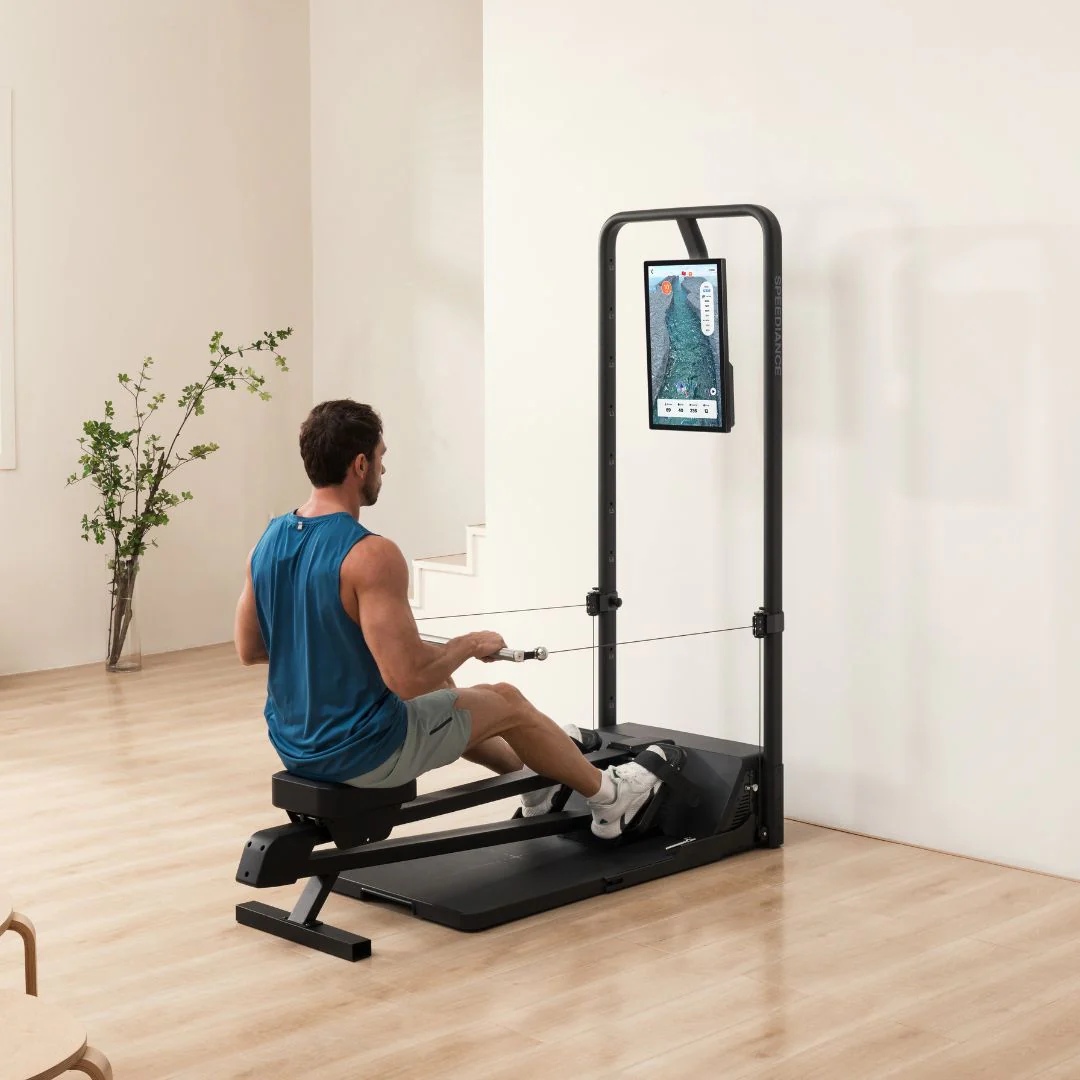
Rowing Bench

Speediance leans into the “strength + cardio” pitch with add-ons that let you do rowing-style sessions (and some SkiErg-style movements). Some people love the variety; others see it as “nice, but optional.”

Best for: people who get bored doing only lifting
Heads-up: if you already own a dedicated rower, this add-on may feel redundant.

Handles / Accessory Kit

Speediance Handles

These bundles are basically about comfort and variety—different grips, attachments, and small extras that make it feel more “gym-like.” Not everyone needs them day one, but people who train frequently tend to appreciate having the right handle for the right movement.

Best for: regular lifters who want more exercise variety
Heads-up: don’t overbuy accessories before you know your routine.

Training Library + Tracking Features

Training Library

This is a big part of the Speediance experience: guided workouts, rep tracking, range-of-motion feedback, and “smart” resistance features. These tools can be a huge win for consistency—especially if you normally struggle to structure workouts on your own.

Best for: beginners, busy people, anyone who wants structure
Heads-up: smart features are only as good as the software—some people still mention occasional glitches or imperfect tracking summaries.

Customer Reviews

What People Love
  • Convenience (no commute, no waiting, quick setup)
  • The “all-in-one” feeling—strength training in a compact system
  • Feeling motivated because workouts are guided and the machine feels premium
  • Positive outcomes when support is responsive
What People Complain About
  • Shipping/handling realities for a heavy, expensive item
  • Delays or hiccups that require customer service follow-up
  • Learning curve for software + setup
  • Expectation mismatch (buyers expecting a commercial gym feel at home)

FAQs:

If you’ll use it 3–5x a week and it replaces your gym membership (or solves your “I never go” problem), it can be a solid investment. If you’re hoping the machine itself will magically make you consistent, it may end up as a very expensive coat rack.
Some people buy it because they want a smart gym without monthly payments. Others prefer paid options for extra training content or features. Core training may be accessible; premium extras may cost more—confirm based on your package.
Many reviews and listings describe it as offering up to around 220 lb of digital resistance (varies by model/version and how the number is presented).
Return policies vary by region and sales channel, and can change over time. Always read the version that applies to your purchase location before checkout.
Warranty terms depend on region and whether you buy from official or authorized channels. Check coverage length and what parts/labor/shipping are included.
Smart gyms include safety-oriented modes and stop/start controls to help solo lifting. Still, train smart—especially with kids/pets nearby—because you’re dealing with cables, moving parts, and digital resistance.

Final Verdict

Speediance is best for busy people who want real strength training at home, without building a full garage gym. It gets praise for being versatile, compact, and genuinely convenient—plus the guided workouts help a lot of people stay consistent.

The tradeoffs are what you’d expect: high upfront cost, a real resistance ceiling for very strong lifters, and occasional tech/software rough edges. If you’re a heavy lifter chasing huge numbers, you may outgrow it. If you’re a normal human who just wants consistent training without gym drama, it can be a very solid “one machine does it all” solution.

Grilla Grills Review – Is It The Best Grill For You?

Grilla Grills Review – Is It The Best Grill For You?

Grilla Grills Review

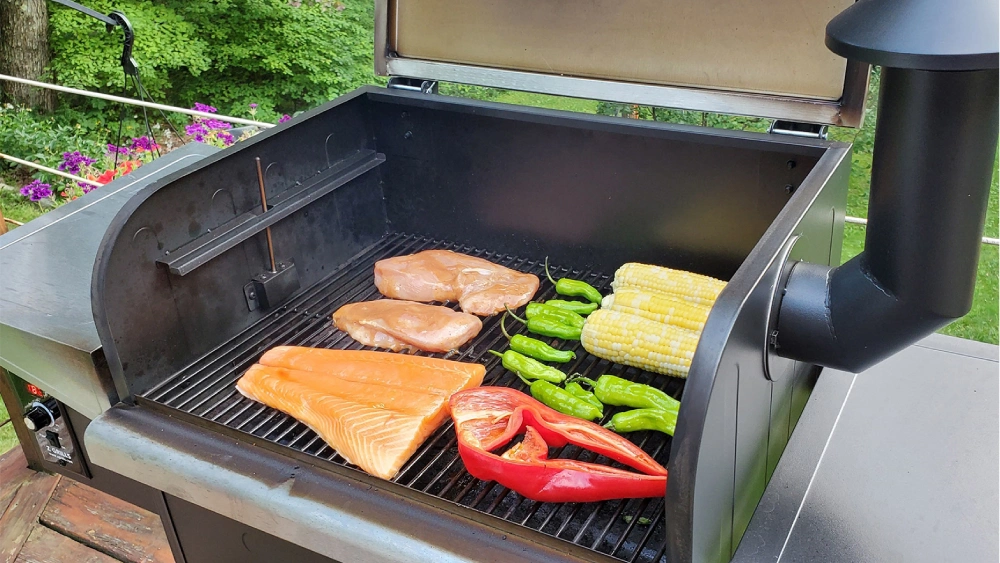
If you’ve been shopping pellet grills for more than five minutes, you’ve probably noticed the pattern: the big brands shout the loudest, and the smaller “grill nerd” brands quietly win people over with real-world performance. Grilla Grills sits in that second camp.

People usually find Grilla the same way: they want better build quality than entry-level pellet grills, steady temps without babysitting, and a grill that feels like it was designed by someone who actually cooks outdoors—without paying luxury-brand pricing just for a logo.

But pellet grills are one of those purchases where the details matter: controller behavior, smoke flavor at low temps, heat recovery when you open the lid, grease management, and (most importantly) how things go when you need parts or support. This review breaks it down like a normal buyer would: what Grilla does great, where it can annoy you, and the five product areas that make the most sense for most households.

Quick brand snapshot

Grilla Grills is primarily known for pellet grills and a “serious backyard” approach—sturdier builds, sensible features, and models that cover everything from weeknight chicken to long brisket cooks. The brand has a strong following among people who actually use their grill a lot (not just on holidays), because pellet cooking is all about consistency—and that’s what buyers are chasing.

In simple terms: Grilla is for people who want something that feels more solid and more dialed-in than a basic big-box pellet grill, but still want it to be easy.

Pros
  • Consistency is the big win
    Pellet grills are popular for a reason: they’re the closest thing to “set it and cook” in outdoor BBQ. Grilla’s reputation tends to come from owners who like that stability—once dialed in, it just runs.
  • It feels like a serious piece of gear
    This is one of the biggest reasons people upgrade to brands like Grilla: the grill doesn’t feel like a disposable patio appliance. Doors, lids, shelves, and overall construction tend to feel more confidence-inspiring than entry-level options.
  • Great for people who want BBQ without the babysitting
    If your dream is brisket without staying up all night feeding a fire, pellet cooking is your lane. Grilla is a good fit for people who want BBQ results while still living a normal life.
  • Strong “daily use” design
    Little things matter: where grease goes, how easy it is to access the firepot area, whether shelves feel stable, how easy it is to move the grill, and whether it’s annoying to clean. Brands win loyalty with these boring details.
  • You can build a simple system
    Once you have a routine—good pellets, a reliable meat probe, and a couple of repeatable temperatures—your results become very predictable. That predictability is what makes people love pellet grills long term.
Cons
  • Pellet grills don’t give you charcoal flavor by default
    Let’s be honest: pellets create a cleaner smoke profile. You can absolutely get great BBQ, but if you’re expecting the heavy charcoal punch, you may need to lean into low-temp smoke phases, better pellets, or add-ons that increase smoke intensity.
  • Searing isn’t the “main strength” of most pellet grills
    Some pellet grills can sear well, but pellet cooking shines at roasting and smoking. If you’re a “high heat steak every week” household, you might want a grill setup that includes gas/charcoal, or you’ll end up buying extra tools to get the sear you want.
  • Long cooks require planning
    Pellets run out. Grease builds up. Weather changes cooking behavior. A pellet grill is easier than charcoal, but it’s still outdoor cooking—you can’t treat it like a microwave and expect perfection.
  • Tech features can be a mixed bag
    If your model includes WiFi/app control, it’s convenient… until it isn’t. Smart features are great when they work smoothly, but some users across the whole pellet-grill world get annoyed when apps lag, disconnect, or update at the worst time.
  • You’ll still need a thermometer strategy
    Even the best grill temp readout isn’t the same as knowing your meat temp in the thickest spot. If you don’t already own a good probe setup, budget for it. It’s the cheapest upgrade that improves results instantly.

The Grilla vibe: what you’re really paying for

With Grilla, you’re typically paying for:

  • stable temperature control (set it and cook)
  • practical design (storage, access, cleanup)
  • a sturdier feel than flimsy “sheet metal” grills
  • a pellet experience that’s less fussy once you learn the basics

You’re not paying for:

  • ultra-minimal, designer patio aesthetics
  • the biggest possible touchscreen experience
  • “smart home” hype for the sake of it

It’s more “meat-first” than “marketing-first.”

Product overview: 5 Grilla Grills picks that make the most sense

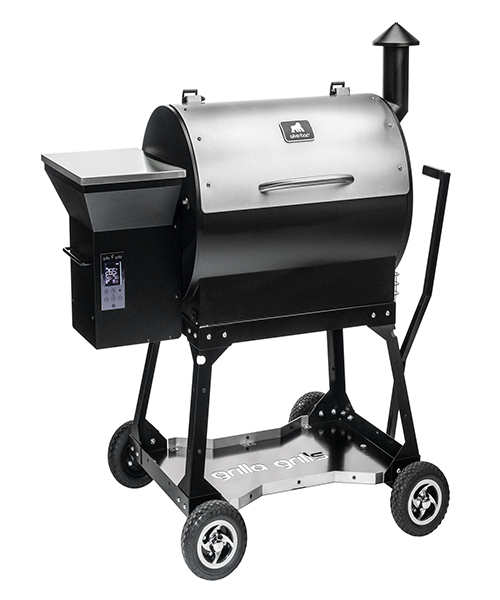
Silverbac (the safe, do-it-all pick)

Silverbac

If you’re buying one grill to handle most backyard cooking—ribs, burgers, smoked chicken, brisket attempts—this is usually the model people point to first. It’s the “balanced” choice: big enough for real cooking, practical layout, and a strong all-rounder for most households.
Best for: families, weekend BBQ people, “I want one grill that does everything”
Heads-up: pellet grills cook differently than charcoal/gas—expect a learning curve on bark development and heat zones.

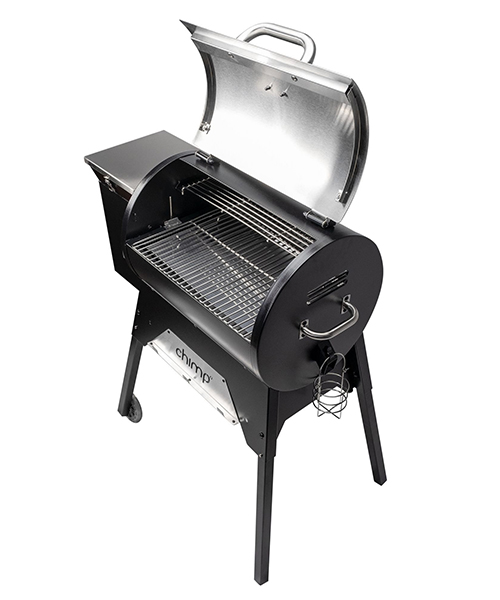
Chimp (the space-saver that still feels serious)

Chimp

This is for people who want the pellet lifestyle without giving up half the patio. Smaller footprint, easier to move around, good for balconies/compact spaces where a full-size unit feels like too much.
Best for: apartments/patios, couples, smaller households
Heads-up: smaller grills can mean less multi-zone cooking space and tighter capacity for big parties.

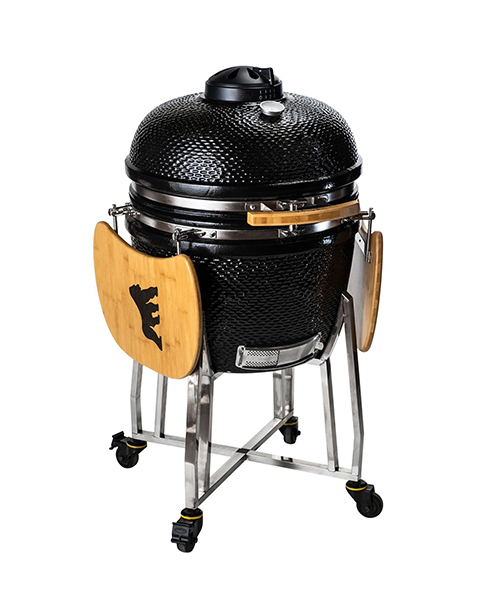
Kong (the charcoal option for “real smoke” people)

Kong

If you’re the type who reads “pellet grill” and immediately thinks, but I want that charcoal flavor, the Kong is the answer inside the Grilla lineup. It’s designed for charcoal cooking with the convenience features that make temperature control less annoying than traditional kettle setups.
Best for: smoke purists, steak lovers, people who like fire management
Heads-up: charcoal is more hands-on than pellets. If you want maximum convenience, stick to pellets.

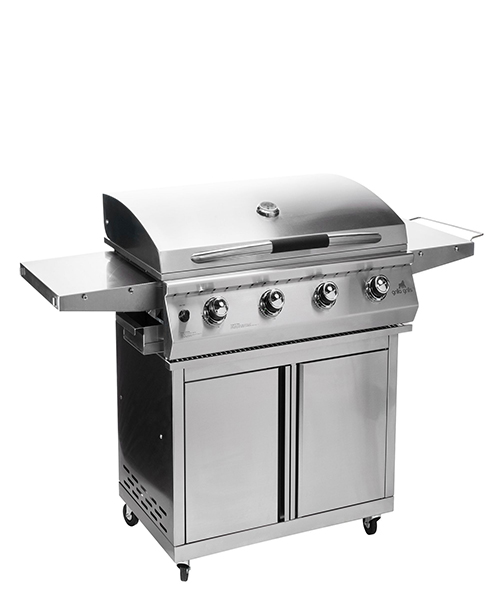
Primate (gas grill for people who want speed + sear)

Primate

Pellet grills are amazing, but they aren’t always the fastest for weeknight meals or the most aggressive for searing. If you want a “flip-and-cook” experience with strong heat and quick startup, a gas option can make sense—especially in households that cook outdoors often.
Best for: quick dinners, high-heat grilling, busy families
Heads-up: gas is great for speed; it won’t replace the low-and-slow smoke vibe unless you add smoke accessories and accept the limitation.

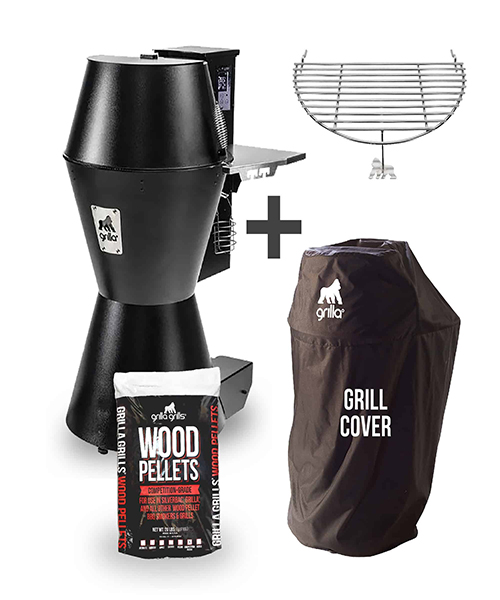
Add-ons & essentials (covers, pellets, probes, griddles)

Add-ons & essentials

This category matters more than people expect. A good cover, reliable pellets, and accurate temperature probing change your entire experience—especially on long cooks.
Best for: anyone buying their first grill
Heads-up: the “right” pellet and the “right” probe setup can fix half the complaints people have about pellet cooking.

Highlights

  • Built for people who actually cook a lot outside (less fluff, more function)
  • Pellet cooking convenience with steady temps and repeatable results
  • Models that match different lifestyles: compact, full-size, charcoal, gas
  • Generally strong value if you compare “feel + performance” rather than just price tags
  • Best results when you treat it like a cooking tool (pellet choice + temperature probing matters)

Customer review themes (what people tend to repeat)

What Fans Usually Love
  • Steady temps once they learn the grill
  • The sturdier “built better than my last one” feeling
  • Easier long cooks without constant checking
  • Results that feel consistent across multiple weekends
What Frustrated Buyers Usually Mention
  • Expecting heavy smoke flavor like charcoal (and feeling underwhelmed)
  • Wanting stronger searing without extra steps
  • Learning curve with pellets, pellet quality, and airflow/cleanup habits
  • Shipping/assembly realities (big outdoor equipment is rarely “fun” to unbox)

The pattern is simple: people who buy Grilla for reliability and repeatable BBQ usually end up happy. People who buy it expecting charcoal intensity with zero effort are the ones who complain.

FAQs:

Generally, Grilla is positioned a step above entry-level pellet grills. Owners like the sturdier feel and repeatable cooking results once they learn the basics.
If you want one grill for most cooking, start with the Silverbac “do-it-all” model. For tight spaces, go compact. If smoke flavor is your priority, consider charcoal.
Not a lot, but a routine is required: empty ash and clean the firepot periodically, manage grease, and keep pellets dry. This is normal for pellet grill ownership.
Pellet grills can reach high heat, but not as instantly aggressive as gas. For serious searing, choose a model designed for high-heat or use a searing tool/second grill.
Pellets cost money, but most find it reasonable for convenience. Usage, temperature, and cook length determine fuel consumption.
Yes—pellet grills are among the easiest ways to start smoking. Using a meat thermometer and giving yourself 2–3 cooks helps you learn how your grill behaves.

Final verdict

Grilla Grills is a strong choice if you want repeatable BBQ results with less effort, and you care about a grill that feels more solid and more thoughtfully designed than the cheapest pellet options.

If your priority is maximum smoke punch (charcoal-style) or fast weeknight searing above everything else, you may want to choose charcoal/gas—or build a two-grill setup.

But if you want the “I can actually do brisket on a Saturday without turning it into a full-time job” lifestyle, Grilla Grills is exactly the kind of brand people end up keeping for years.

Seattle Coffee Gear Review – Pros, Cons & Coffee Gear Insights

Seattle Coffee Gear Review – Pros, Cons & Coffee Gear Insights

Seattle Coffee Gear Review

Buying coffee equipment online can feel weirdly risky. A machine looks perfect in photos, then you wonder: Will it actually fit my routine? Will I know how to use it? And if something breaks… am I just stuck with a giant expensive paperweight?

That’s the lane Seattle Coffee Gear (SCG) lives in. They’re not just a storefront — they’re one of the better-known specialty retailers that tries to make home coffee less confusing through demos, education, and service. You’ll find everything from entry-level espresso machines to serious grinders, plus a repair center and in-person retail options where you can test gear before committing.

But, like any retailer shipping high-value machines, the experience isn’t perfect for everyone. Customer feedback online is mixed: lots of praise for expertise and selection, and recurring complaints around order issues, returns, or how smoothly problems get resolved.

Here’s the full, practical review—what SCG is great for, what to watch out for, and the five “product areas” that matter most.

What Seattle Coffee Gear is (and who it’s for)

Seattle Coffee Gear is best for:

  • People who want better coffee at home but don’t want to self-teach everything from scratch
  • Buyers who like hands-on guidance (videos, demos, and support resources)
  • Anyone who prefers buying from a retailer that can also service equipment (not just sell it)

If you’re the type who wants to compare machines properly, understand workflow (grind → dose → tamp → brew), and avoid “wrong purchase regret,” SCG’s model makes sense.

Pros
  • You get “decision support,” not just a checkout button
    A lot of coffee buyers don’t need 300 options—they need someone to say: If you drink milk drinks daily, don’t buy the machine that makes you do a 12-step routine. SCG’s education-first approach helps people buy gear they’ll actually use.
  • The selection is built for home coffee people
    It’s not just commercial gear or cheap appliances. SCG sits in that middle where most enthusiasts live: “I care about coffee, but I also have a life.”
  • Service capability adds peace of mind
    If something goes wrong, you’re not starting from zero. Having a real repair center matters—especially for espresso machines and grinders.
  • Retail demos reduce regret
    Seeing machines in person is huge. Buttons, lever feel, steaming workflow, noise—those things don’t translate through product photos.
  • They push maintenance and “ownership reality,” not fantasy
    Coffee gear lasts longer when people clean it and treat it correctly. SCG puts a lot of emphasis on the unsexy stuff (cleaning, descaling, water choices), which is honestly what separates happy owners from frustrated ones.
Cons
  • Shipping expensive gear always has risk
    Espresso machines are heavy and sometimes fragile. Even with careful packaging, damage can happen in transit. The practical move: inspect quickly, keep the box until you’re sure everything is fine, and document issues immediately.
  • Returns can feel strict if you’re not prepared
    Home coffee equipment is one of those categories where “opened and used” changes resale value fast. Many retailers (including specialty ones) have “like new” expectations and restocking rules that can surprise people.
  • Repair timelines can test your patience
    Repair work can be slow depending on parts availability and service volume. That’s normal, but it’s still frustrating when you just want your machine back.
  • Customer experience reviews are mixed
    You’ll see both “great expertise” and “stressful resolution” stories. That doesn’t mean most orders go wrong—it means when something does go wrong, the outcome matters a lot, and not everyone loves how it plays out.
  • It’s easy to overspend if you get carried away
    Because SCG has everything, it’s tempting to build a perfect coffee station in your cart. The smarter move is buying in stages: grinder + machine (or brewer) first, then accessories once you know what you actually need.

4 Seattle Coffee Gear picks (what most shoppers actually buy)

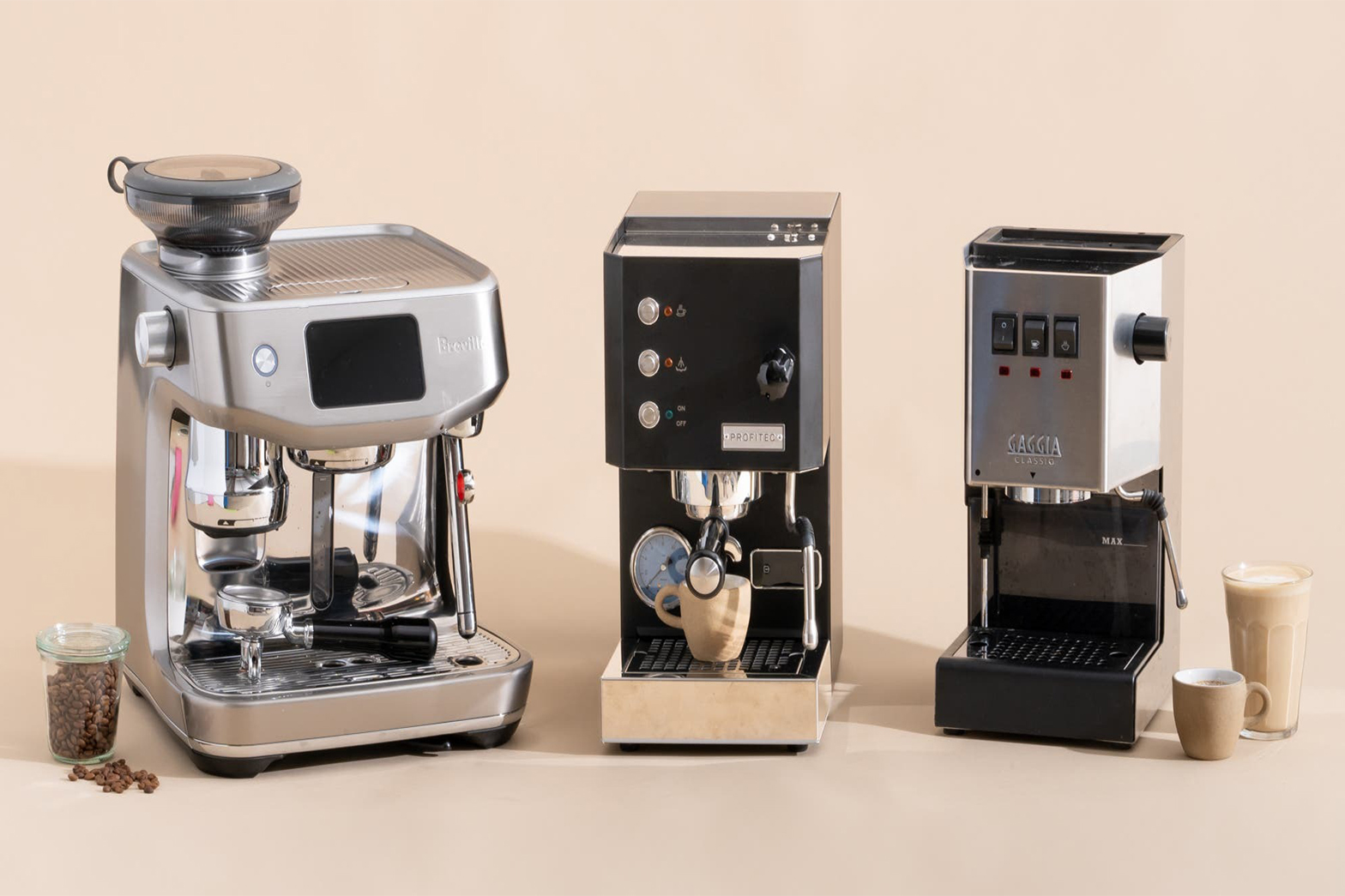
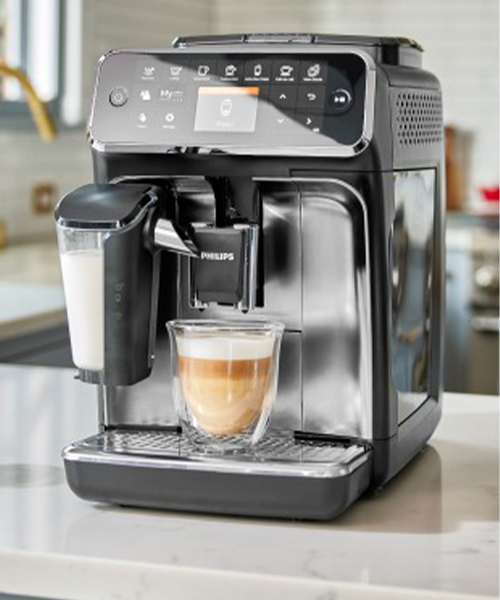
Espresso machines

Espresso machines

This is the main attraction: semiautomatic and superautomatic machines across a wide range of budgets. SCG’s advantage here is not that they invented espresso—it’s that they test and explain machines in a normal-person way, so you can match the machine to your routine instead of chasing specs you’ll never use.

Best for: home espresso beginners, upgrade buyers, gift purchases
Heads-up: espresso is a system. The machine matters, but your grinder matters almost as much.

Grinders (arguably the smartest upgrade)

Grinders

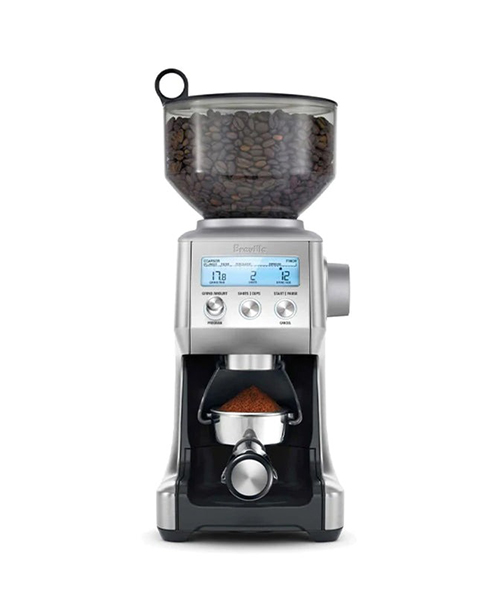
If you’re serious about improving coffee, a grinder is usually the best “return on effort.” SCG carries both espresso grinders and brew grinders, and they do a lot of education around dialing in.

Best for: anyone making espresso, anyone buying nicer beans
Heads-up: many “espresso problems” are actually grind problems.

Brewing gear (drip, pour-over, and manual)

Brewing gear

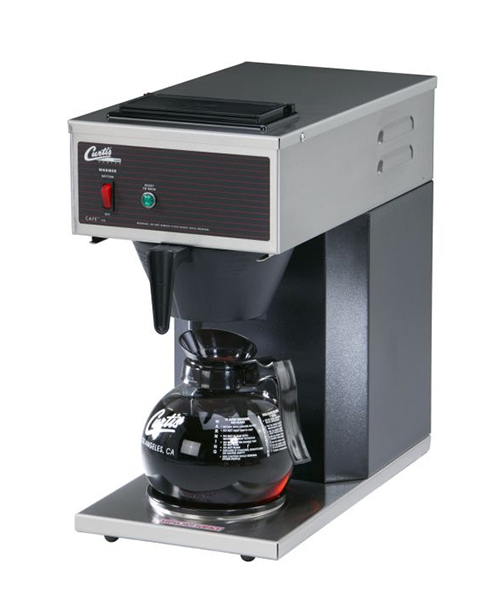
Not everyone wants espresso—some people just want clean, repeatable coffee. SCG’s brewing section covers the everyday options that fit normal life: quick weekday coffee, weekend slow brews, cold brew setups, and the tools that reduce guesswork.

Best for: people who want consistency without espresso-level fuss
Heads-up: if you don’t want a learning curve, choose the simplest method you’ll actually use daily.

Accessories (the small stuff that changes everything)

Accessories

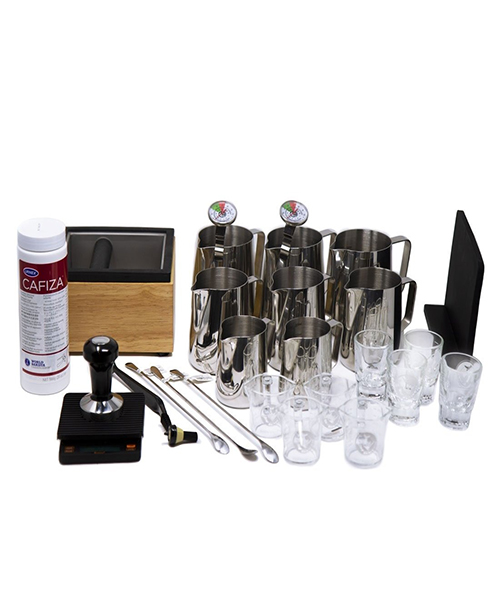
This is the category people underestimate: scales, tampers, milk pitchers, distribution tools, knock boxes, filters, cleaning supplies. These “boring” items often make your coffee taste better because they improve consistency.

Best for: espresso workflow improvements, dialing in, maintenance
Heads-up: accessories add up fast—buy what solves a problem you already have.

Highlights (what SCG does really well)

  • Education is a major strength. Their video content focuses on practical demos and “what to buy for your routine” guidance, not just marketing.
  • In-person demos exist. If you’re local, you can test machines and talk to staff before buying.
  • They actually service machines. A real repair center matters when you’re spending real money.
  • Clear policies are published. You can read how they handle delivery damage, returns, and restocking expectations.

Customer review themes (what people keep repeating)

What People Love
  • Helpful education and demos that make buying easier
  • Strong selection for home espresso and brewing
  • Appreciation for having a repair option (especially locally)
What People Complain About
  • Returns or restocking expectations feeling strict
  • Shipping or order issues being stressful when they happen
  • Frustration with resolution speed in some cases

FAQs:

Yes—SCG operates retail locations where you can test machines, attend tastings, and join classes or workshops. Availability varies by location and schedule.
Inspect the shipment immediately, take photos, keep all packaging, and contact support right away. With high-value coffee gear, fast reporting and documentation are extremely important.
Often yes—but condition matters. Opened or used equipment may involve restocking fees and “like-new” requirements. Always review the return policy before purchasing.
Yes. SCG runs a repair and service operation. Drop-off rules, appointment needs, turnaround time, and parts availability all depend on the specific machine and situation.
Yes—especially for buyers who want guidance. Their education resources and demos help prevent choosing a machine that doesn’t match your daily coffee habits.

Final verdict

Seattle Coffee Gear is a strong choice if you want a legit specialty retailer experience—good selection, lots of education, and the comfort of knowing there’s a service side behind the sale. It’s especially useful for espresso buyers who want clarity and support rather than guesswork.

Just shop smart: treat the policies seriously (keep packaging, inspect quickly, don’t assume used returns are frictionless), and buy in stages so you don’t overspend before you know your real routine.

Ariat Review: Which Ariat Stuff is Actually Worth Buying?

Ariat Review: Which Ariat Stuff is Actually Worth Buying?

Ariat Review: Which Ariat Stuff is Actually Worth Buying?

Ariat is one of those brands you don’t stumble into by accident. People usually find it in one of two ways:

  • You need boots that can handle real wear (work, ranch, outdoors, long days).
  • Or you want that Western / equestrian look—without buying something that feels like a costume after two weeks.

And the reason Ariat keeps popping up is simple: they’ve managed to sit in a sweet spot where comfort + function + style can all exist in the same product. Not every item is perfect, and not every line is built the same—but as a brand, Ariat has earned a reputation for being “a safe buy” when you want gear you’ll actually use.

This review covers what Ariat does best, what people complain about, and 5 Ariat product types that usually make the most sense.

Quick brand snapshot

Ariat is best known for boots and performance-focused Western/equestrian/workwear. They make products for people who are on their feet a lot—riders, ranch folks, tradespeople, and also regular buyers who just want a durable boot that still looks good.

The general vibe is: practical first, but still clean enough to wear casually.

Pros
  • Comfort is a real priority
    Ariat generally does a good job of making boots people can wear for long periods—especially compared to many traditional boots that look great but punish your feet.
  • The lineup covers different lifestyles
    You can buy one brand for multiple roles: a work boot for weekdays, a Western boot for weekends, jeans that match both, and a jacket that actually handles weather.
  • Durability is usually solid (when you choose the right line)
    A big reason people become repeat buyers is simple: their boots don’t fall apart instantly, and they feel like they were built to be worn, not babied.
  • Styles feel “classic,” not trendy
    A lot of Ariat products are designed to last visually. That’s why people feel comfortable spending more—because the item doesn’t look outdated next season.
  • Good value in the middle tier
    Ariat often wins in that zone where you want better than entry-level, but you’re not trying to pay purely for luxury branding.
Cons
  • Quality can vary by product line
    This is the biggest thing to understand: Ariat makes a wide range. Some boots are absolute tanks; others are more fashion-leaning. If you assume every boot is “work-grade,” you might end up disappointed.
  • Sizing can feel inconsistent (especially boots)
    Boot sizing is already tricky—toe shape, width, arch, and leather thickness change the fit a lot. Some buyers nail it immediately; others need an exchange to get the right feel.
  • Break-in isn’t the same for every style
    Some Ariat boots feel great quickly; others take time. People who expect “instant slippers” sometimes regret it, even though the boot might become excellent after a week or two.
  • Price can creep up fast
    Ariat isn’t bargain gear. It’s usually “pay once, wear a lot,” but the upfront cost can still sting—especially if you’re buying multiple pieces.
  • Online buying can be hit-or-miss without planning
    Boots are a fit-heavy product. If you buy without measuring, reading fit notes, and checking return rules, you’re more likely to have a frustrating first experience.

Product overview: 5 Ariat picks that make the most sense

Western boots

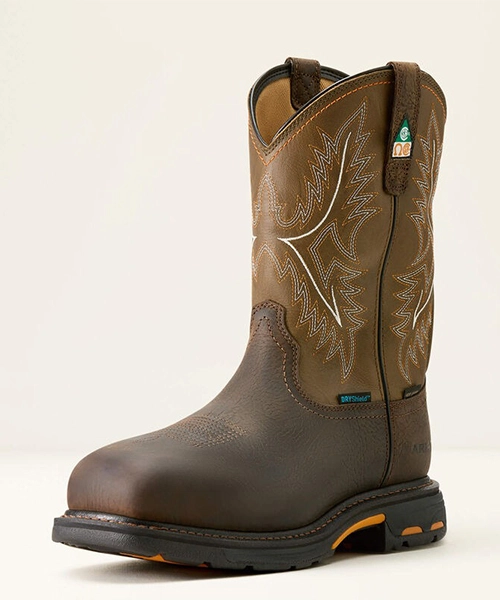
Ariat Western Boots Review

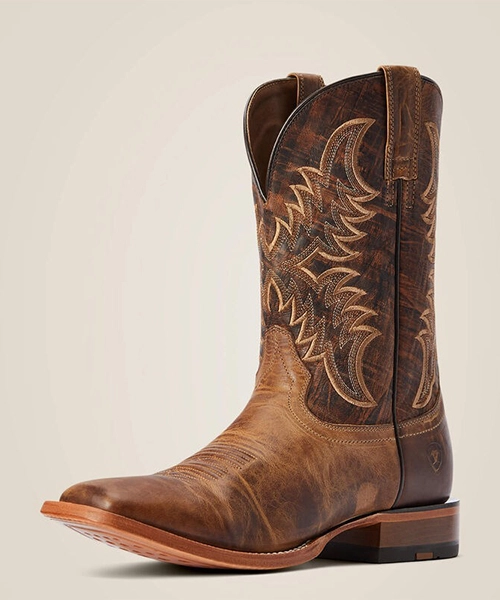
This is Ariat’s signature lane—classic Western silhouettes that feel more wearable day-to-day than many “traditional only” cowboy boots. People buy these because they want the look, but also want to walk around in them without suffering.
Best for: casual wear, Western style, events, everyday boots that stand out
Heads-up: some styles are comfy out of the box, others still need a break-in. Leather thickness and toe shape make a big difference.

Work boots (including safety toe options)

Ariat Work boots Review

If you’re buying Ariat for pure function, this is usually where the brand shines. Work boots are built for long shifts, rough ground, and being used hard.
Best for: job sites, warehouse work, outdoor labor, long standing/walking days
Heads-up: don’t buy just by looks—match the boot to your job (toe type, sole grip, waterproofing, insulation). The “wrong” boot feels like a bad purchase even if the boot is fine.

Riding boots / equestrian footwear

Ariat Riding boots equestrian footwear Review

Ariat is popular with riders because the brand focuses on comfort and stability while still keeping the profile appropriate for riding.
Best for: daily riding, barn work, lessons, show practice (depending on style)
Heads-up: calf fit matters a lot. People often love them when sizing is right—and get frustrated when it isn’t.

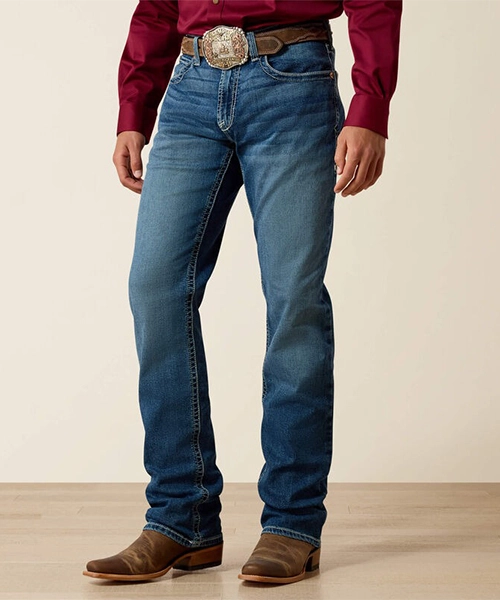
Jeans

Ariat Jeans Review

Ariat jeans are a sleeper hit. Many buyers stick around because they like the fit and the “wearable toughness” feel—especially if they want something that works for daily life and isn’t overly trendy.
Best for: everyday jeans, work-casual, Western style without being loud
Heads-up: fit can vary by cut. If you’re between sizes, read the fit notes and treat your first pair like a “test run.”

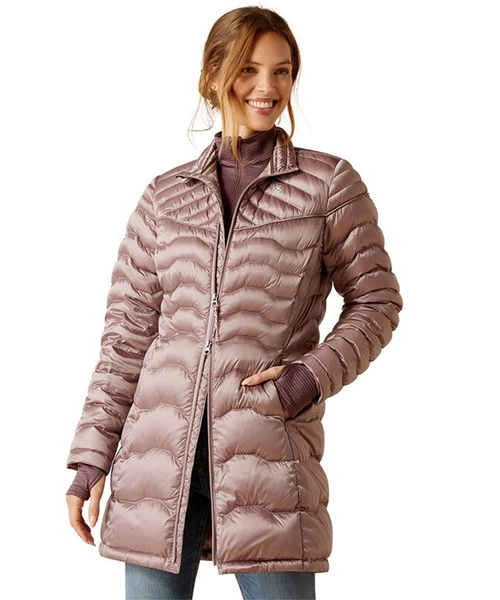
Jackets & outerwear

Ariat Jackets & outerwear Review

Ariat outerwear is usually about practical warmth and durability, not runway fashion. People buy it because it’s easy, reliable, and built for being outside.
Best for: cold weather, outdoor chores, casual layering, ranch/work lifestyle
Heads-up: some pieces run roomy for layering; others are more fitted. Check measurements and intended use.

Highlights

  • Strong “comfort-meets-durable” identity across boots and workwear
  • Lots of choices: Western, work, riding, casual—without switching brands
  • Many products feel designed for people who actually move and work, not just pose
  • Easy to style: looks good with jeans, casual outfits, and Western fits
  • Good “one brand wardrobe” potential if you like the aesthetic
What Fans Usually Love
  • Comfortable boots for long wear
  • “Looks better than my old boots and feels better too”
  • Good everyday durability
  • Jeans that fit well and hold up
What Complaints Usually Sound Like
  • “Sizing wasn’t what I expected”
  • “This pair didn’t last like my last Ariats” (often a line-to-line difference)
  • Occasional defects or finishing issues
  • Confusion about which boot is best for which job

The pattern is pretty consistent: people are happiest when they pick the right Ariat line for their use, and most disappointed when they buy based on looks alone.

FAQs:

Often close, but it depends heavily on toe shape, width, and the specific model. If you’re between sizes or new to boots, a wide option or half size adjustment is common.
Some do, some barely do. Softer leathers and certain constructions break in faster; stiffer work-focused boots can take longer.
Yes—if you choose the work line that matches your job needs (safety toe, waterproofing, slip resistance, insulation). The “right spec” matters more than the brand name.
Many riders like Ariat because they balance comfort with a riding-friendly profile. Just make sure the boot is intended for riding, because not every Western boot fits the same in the stirrup.
Basic care usually wins: clean dirt off, condition occasionally, and let them dry naturally if they get wet (no direct heat). If you maintain them, most leather boots age much better.
If you want the brand experience: start with one boot (Western or work, depending on your life). If you want low-risk: start with jeans or a jacket to test sizing and quality.

Final verdict

Ariat is worth it if you want boots and apparel that are made to be worn, not just photographed. The brand is strongest in boots (Western, work, riding) and tends to be a reliable pick when you choose the right product line for your needs.

My practical advice:

  • If you’re new to Ariat, start with a single “main” boot that matches your lifestyle.
  • Don’t guess on sizing—measure, read fit notes, and plan for a possible exchange.
  • Once you find your fit, Ariat becomes one of those brands people stick with for years.

The McGee & Co. Edit: 4 Best-Sellers I’d Style in Every Room

The McGee & Co. Edit: 4 Best-Sellers I’d Style in Every Room

McGee & Co Best Sellers

You know that look that feels expensive but not try-hard? Like the room has history, but also feels clean, calm, and current? That’s the McGee & Co. vibe in one sentence: classic silhouettes + warm materials + a little quiet drama.

The McGee & Co. Aesthetic, Explained Like an Influencer Would

McGee & Co. does “timeless, but make it fresh.” Everything lives in that sweet spot where:

    • neutrals feel warm, not cold,
    • details feel elevated, not fussy,
    • and pieces look good alone and even better layered.

If you’re building a home that looks curated without needing a full redesign, these best-sellers are the kind of staples you buy once and keep styling forever.

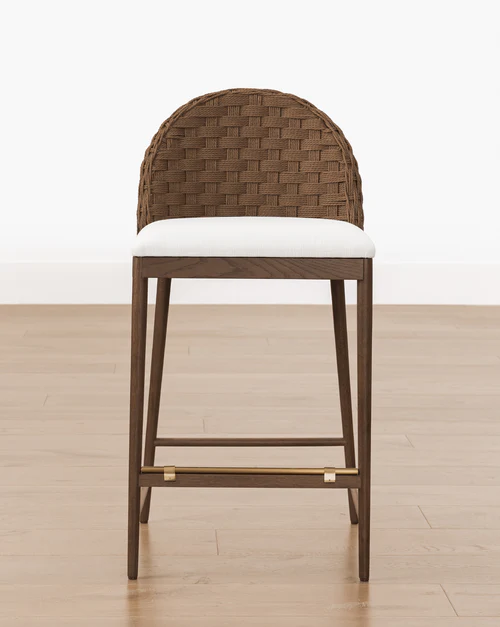
1) The Molly Stool: The “quiet luxury” kitchen upgrade
Molly Stool

If you want your kitchen to instantly feel designer, start with seating. The Molly Stool is one of those pieces that makes an island look styled even when the counters aren’t perfectly clean (real life).

Why it’s a best-seller energy item

    • It has that tailored, classic silhouette—nothing trendy that’ll feel dated later.
    • The woven texture adds softness (so your kitchen doesn’t feel like all stone + metal).

How I’d style it

    • For a light kitchen: pair with warm white cabinetry, creamy stone, and a hint of brass.
    • For a moodier kitchen: choose deeper wood tones + simple black accents so the stool becomes the “warm moment.”

Influencer tip: Add a linen runner + a bowl of lemons on the island and suddenly it looks like a Sunday morning Pinterest board.

2) The Scarlett Pendant: The statement piece that still feels timeless
Scarlett Pendant

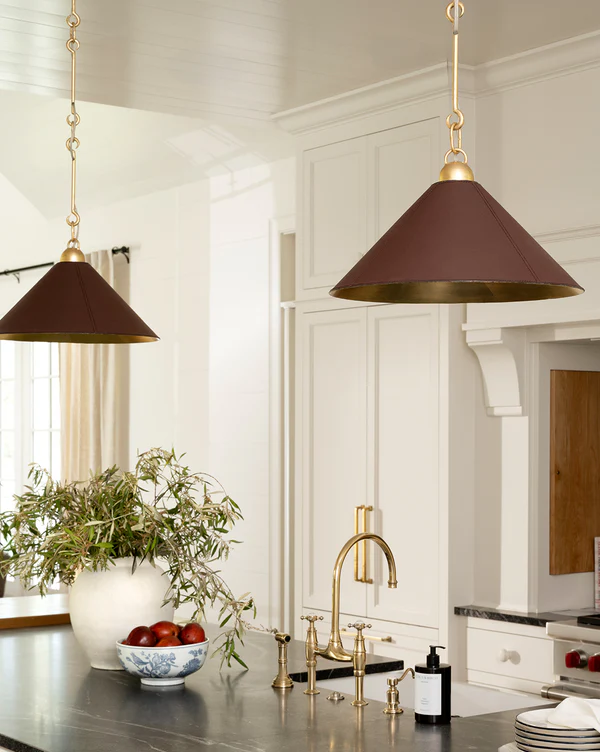
Lighting is jewelry for the home—and the Scarlett Pendant is that “I hired a designer” detail. It has presence, but it’s not loud. It’s sculptural, warm, and gives your ceiling an actual point of view.

Where it hits hardest

    • Over a kitchen island (especially in pairs or a trio—instant editorial)
    • In an entryway with height
    • Above a round table to echo that soft, classic shape

How I’d style it
Keep everything else calm: think neutral paint, natural wood, minimal decor. Scarlett is the outfit—let the room be the clean makeup and good hair.

3) The Wayland Hand-Knotted Wool Rug: The “collected home” foundation
Wayland Hand-Knotted Wool Rug

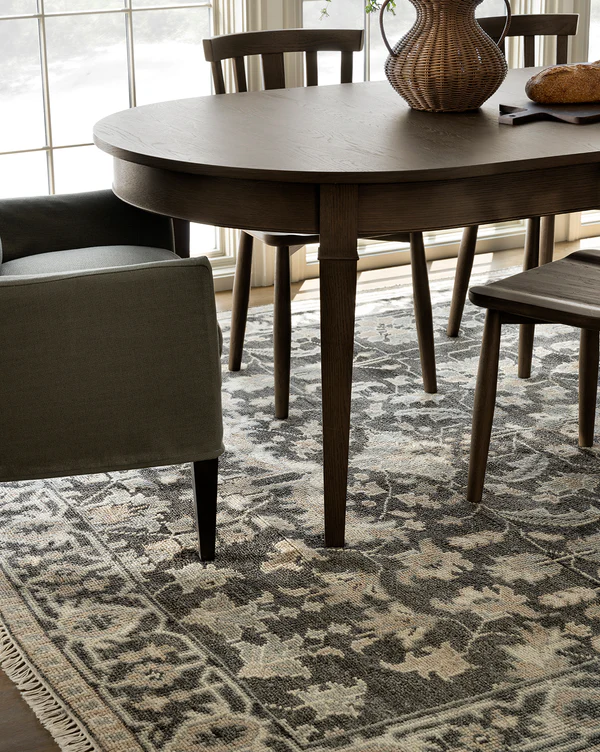
If your space is feeling a little too new-build, too blank, too flat—a rug like Wayland fixes that fast. This is the anchor piece that gives a room depth, history, and that layered feeling you usually only get after years of collecting.

Why it works

    • Hand-knotted wool rugs have that slightly imperfect, artisanal look that makes a room feel lived-in (in the best way).
    • The pattern reads classic, not busy—so it doesn’t hijack the room.

How I’d style it

    • Living room: neutral sofa + Wayland rug + textured pillows (no extra pattern needed).
    • Bedroom: crisp bedding + warm wood nightstands + rug peeking out = hotel energy.
    • Dining: keep chairs simple and let the rug add that “designed” layer.

Influencer tip: If you want your space to photograph well, a rug like this adds dimension in every shot (flat rooms = flat photos).

4) The Laila Circle Mirror: The accessory that makes a space look finished
Laila Circle Mirror

The Laila Circle Mirror is a styling cheat code. A round mirror softens everything—lines, corners, heavy furniture—while still feeling clean and classic.

Where I’d put it

    • Entryway above a console (most impact, least effort)
    • Bedroom above a dresser
    • Living room over a mantel when you want height without a giant art piece

How I’d style it
Keep the console styling simple:

    • one lamp,
    • one stack of books,
    • one tray or bowl,
    • and a small organic element (branch stems, greenery).

That’s it. The mirror already brings the “detail.”

My Favorite “McGee & Co.” Styling Formula Using These Pieces

If you want the full look to feel cohesive, this is the combo:

    • Wayland Rug = grounded base layer
    • Molly Stools = texture + warmth
    • Scarlett Pendant = the statement moment
    • Laila Mirror = polish + finish

It’s basically the interior version of a perfect capsule wardrobe.

Conclusion: The Best McGee & Co. Buys If You Want a Home That Feels Effortless

If you’re investing in McGee & Co., I’d focus on pieces that do the heavy lifting—the ones that change the vibe of a room without needing a renovation.

    • Choose Molly Stool if you want your kitchen to feel instantly elevated.
    • Choose Scarlett Pendant if you want a single detail to make the room feel designer.
    • Choose Wayland Rug if your space needs depth, character, and that “collected” look.
    • Choose Laila Circle Mirror if you want a quick, high-impact upgrade that makes everything around it look more intentional.

If your style is warm, timeless, and a little editorial—but still livable—these are the best-seller picks that make sense and photograph beautifully.

Layla Sleep Mattress Review 2026

Layla Sleep Mattress Review 2026

Get 20% Off Coupon Code

Get 20% Off Coupon Code

Get 20% Off Coupon Code
TATIANA20
SHOW COUPON
On Going Offer
  • It Works 100% Success It Doesn’t

  • Enjoy $10 Off Any Purchase

    Enjoy $10 Off Any Purchase

    Enjoy $10 Off Any Purchase
    FRIEND41954
    SHOW COUPON
    On Going Offer
  • It Works 100% Success It Doesn’t

  • Fall Sale: Save Upto $228 on a Mattress

    Fall Sale: Save Upto $228 on a Mattress

    Fall Sale: Save Upto $228 on a Mattress
    ACTIVATE DEAL
    On Going Offer
  • It Works 100% Success It Doesn’t

  • Save Upto $210 & Get 2 Free Pillows

    Save Upto $210 & Get 2 Free Pillows

    Save Upto $210 & Get 2 Free Pillows
    ACTIVATE DEAL
    On Going Offer
  • It Works 100% Success It Doesn’t

  • $10 OFF Storewide

    $10 OFF Storewide

    $10 OFF Storewide
    STRATEGIST
    SHOW COUPON
    On Going Offer
  • It Works 100% Success It Doesn’t

  • Save Upto $428 Off On Mattress

    Save Upto $428 Off On Mattress

    Save Upto $428 Off On Mattress
    ACTIVATE DEAL
    On Going Offer
  • It Works 100% Success It Doesn’t

  • $15 OFF Storewide for Members Only

    $15 OFF Storewide for Members Only

    $15 OFF Storewide for Members Only
    HELLO15
    SHOW COUPON
    On Going Offer
  • It Works 100% Success It Doesn’t

  • $20 OFF Orders $100+

    $20 OFF Orders $100+

    $20 OFF Orders $100+
    cart20
    SHOW COUPON
    On Going Offer
  • It Works 100% Success It Doesn’t
  • Brio Water Reviews 2026

    Brio Water Reviews 2026

    Enjoy 20% Off Coupon Code

    Enjoy 20% Off Coupon Code

    Enjoy 20% Off Coupon Code
    CLEANWATER
    SHOW COUPON
    On Going Offer
  • It Works 100% Success It Doesn’t

  • Get 15% Off On Your Orders

    Get 15% Off On Your Orders

    Get 15% Off On Your Orders
    MOBILE15
    SHOW COUPON
    On Going Offer
  • It Works 100% Success It Doesn’t

  • Upto 25% Off Discount Code

    Upto 25% Off Discount Code

    Upto 25% Off Discount Code
    SAVE25
    SHOW COUPON
    On Going Offer
  • It Works 100% Success It Doesn’t

  • Avail 15% Extra Promo Code

    Avail 15% Extra Promo Code

    Avail 15% Extra Promo Code
    BW25
    SHOW COUPON
    On Going Offer
  • It Works 100% Success It Doesn’t

  • Hot Deal Upto 50% Off

    Hot Deal Upto 50% Off

    Hot Deal Upto 50% Off
    ACTIVATE DEAL
    On Going Offer
  • It Works 100% Success It Doesn’t

  • Save Upto 25% Off Now

    Save Upto 25% Off Now

    Save Upto 25% Off Now
    CART25
    SHOW COUPON
    On Going Offer
  • It Works 100% Success It Doesn’t

  • Free Shipping All Orders

    Free Shipping All Orders

    Free Shipping All Orders
    ACTIVATE DEAL
    On Going Offer
  • It Works 100% Success It Doesn’t

  • Upto 29% Off Crock Water Dispenser

    Upto 29% Off Crock Water Dispenser

    Upto 29% Off Crock Water Dispenser
    ACTIVATE DEAL
    On Going Offer
  • It Works 100% Success It Doesn’t

  • Replacement Filters Collection Under $499.99

    Replacement Filters Collection Under $499.99

    Replacement Filters Collection Under $499.99
    ACTIVATE DEAL
    On Going Offer
  • It Works 100% Success It Doesn’t
  • Pit Barrel Cooker Co. Real Taste, Easy Grilling, and American Craftsmanship

    Introduction

    In a world of complex grills and digital gadgets, Pit Barrel Cooker Co. stands out for its refreshing simplicity. Founded by Noah and Amber Glanville, this American family business has one mission: to make the enjoyment of world-class barbecue accessible to everyone.

    Unlike traditional smokers or pellet grills that require constant attention, the Pit Barrel® Cooker offers the joy of grilling—simply set it up and forget it. Its vertical drum design, carefully engineered airflow system, and even heat distribution make it one of the easiest and most reliable ways to achieve that classic, smoky flavor.

    Proudly handcrafted in the USA, the Pit Barrel is more than just a grill—it’s a brand dedicated to community, built on craftsmanship, simplicity, and a love of good food.

    Brand Mission

    Pit Barrel Cooker Co.’s goal is simple:

    To create a high-quality, hassle-free grilling experience that brings people together over good food and good company.

    The founders developed the Pit Barrel® after years of frustration with complicated smokers and inconsistent results. Their focus was on:

    Simplicity – No complicated temperature controls or electronics. Just add charcoal, hang the meat, and let the physics of the Pit Barrel® do the rest.

    Consistency – Each smoker is calibrated for precise airflow, ensuring perfect heat distribution and smoke every time.

    Premium Craftsmanship – Made from durable steel and porcelain enamel, the Pit Barrel® is designed for years of backyard grilling enjoyment.

    Community – Pit Barrel isn’t just about selling smokers; it’s about sharing recipes, techniques, and a passion for authentic barbecue.

    This approach has earned the brand a loyal following of home cooks, grill masters, and barbecue competitors nationwide.

    Highlights

    Family-owned and operated company based in the USA

    Known for the Pit Barrel® Cooker, a vertical charcoal grill and smoker in one

    Designed for effortless, foolproof results – no constant monitoring required

    Made of high-quality steel with a durable porcelain enamel coating

    Available in a variety of sizes, including Pit Barrel® Classic, Junior, and PBX (Extra-Large)

    Unique hanging system for even heat distribution

    Use as a grill and smoker

    Compatible with a wide range of accessories for maximum versatility

    Excellent customer service and strong community engagement

    The Pit Barrel® Classic is the flagship model and a favorite with both novice and experienced grill masters. It’s a 18-inch drum grill that uses vertical hanging bars to cook meat evenly from all sides.

    What makes it special is its simplicity: no temperature control or complicated electronics are needed – simply fill the charcoal basket, hang up your ribs or brisket, and you’re done. Within minutes, the grill reaches the ideal cooking temperature (usually between 135°C and 155°C) and maintains it consistently for hours.

    The Junior model offers the same design and performance in a smaller, more portable format. Ideal for barbecue parties, camping trips, or small patios: compact yet powerful. It delivers the same intense, consistent flavor and proves that great barbecue doesn’t require huge equipment.

    For ambitious cooks who cater for large groups, the PBX offers more cooking space without unnecessary hassle. And without sacrificing performance. This is a 22.5-inch drum grill designed for multiple racks of ribs, large cuts of meat, or even a whole turkey. Despite its size, the PBX offers the same even heat distribution and ease of use that the brand is known for.

    Pure Experience

    Cooking on the Pit Barrel feels less like technology and more like art. Its vertical design allows fat to drip naturally onto the coals, creating aromatic smoke that enhances every dish.

    You don’t need to constantly monitor the temperature or adjust the vents – the grill’s design ensures a natural balance of airflow and heat. Whether you’re hanging ribs, smoking chicken, or even grilling burgers, the results are impressively consistent.

    It’s not about high-tech cooking, but about rediscovering simplicity and flavor, the way barbecue was originally intended.

    Pros and Cons

    Pros:

    Constant and reliable temperature control through natural air circulation

    Excellent smoky flavor thanks to the vertical cooking method

    Easy to use – ideal for beginners and professionals

    Sturdy steel and porcelain enamel construction

    Portable and durable

    Excellent customer service and responsive support team

    No moving parts or electronics that can break

    Cons:

    Limited temperature settings (optimized for automatic cooking)

    Requires some practice with the hanging system

    Can be heavy when fully loaded

    Accessories for added versatility sold separately

    Shipping Policy

    Pit Barrel Cooker Co. ships nationwide within the USA. Orders are typically processed within 1–2 business days and delivered within 3–5 days via reliable shipping carriers (depending on the delivery location).

    Products are shipped directly from the US headquarters and carefully packaged to prevent damage during transit.

    Return and Refund Policy

    The company offers a 30-day satisfaction guarantee on unused items in their original packaging. For defects in workmanship or shipping damage, customers can contact Pit Barrel Cooker Co. directly for prompt assistance, repair, or replacement.

    Warranty Terms

    Every Pit Barrel® Smoker comes with a limited lifetime warranty against materials and workmanship for home, non-commercial use. The brand is known for its American-made quality and excellent customer service.

    Customer Reviews

    Positive Feedback

    Customers consistently praise the Pit Barrel Smoker for its ease of use and the results it delivers. Many say it’s the easiest smoker they’ve ever used—allowing them to prepare competition-quality barbecue with minimal effort. Reviews frequently highlight the even cooking, durable construction, and excellent customer service.

    Critical Voices

    Some users note that the smoker, due to its single-temperature function, is not suitable for finely tuned temperature settings or quick searing. However, most agree that the Pit Barrel is hard to beat for true low-and-slow barbecue.

    Frequently Asked Questions

    How is the Pit Barrel® different from a conventional smoker?

    Unlike conventional smokers, the Pit Barrel’s vertical design and calibrated airflow automatically regulate the temperature—no manual ventilation control is required.

    Can you grill on a Pit Barrel Cooker?

    Yes. With the included grill grate, it also works as a charcoal grill for burgers, steaks, and vegetables.

    How long does it cook on a full load of charcoal?

    Typically 6–8 hours of consistent heat with a full basket of briquettes.

    Is assembly required?

    Minimal—assembly takes only a few minutes.

    Where is the Pit Barrel® manufactured?

    All cookers are handcrafted in the USA from thick-walled steel and high-quality porcelain enamel.

    Conclusion

    Pit Barrel Cooker Co. stands for American simplicity, craftsmanship, and authentic barbecue flavor. This brand brings back the true joy of grilling—no apps, no electronics, just heat, smoke, and patience.

    While the grill isn’t designed for precise temperature settings or high-tech controls, it doesn’t need them. What it does, it does perfectly: It delivers consistently tender, smoky grilled food every time with minimal effort.

    For everyone who loves the tradition of backyard grilling, values ​​high-quality workmanship, and wants uncomplicated, flavorful results, Pit Barrel Cooker Co. delivers on every promise—proudly made for those who believe that good barbecue should be simple, honest, and social.