
Speediance Review: Smart Gym But is it Actually a Good Idea to Buy?
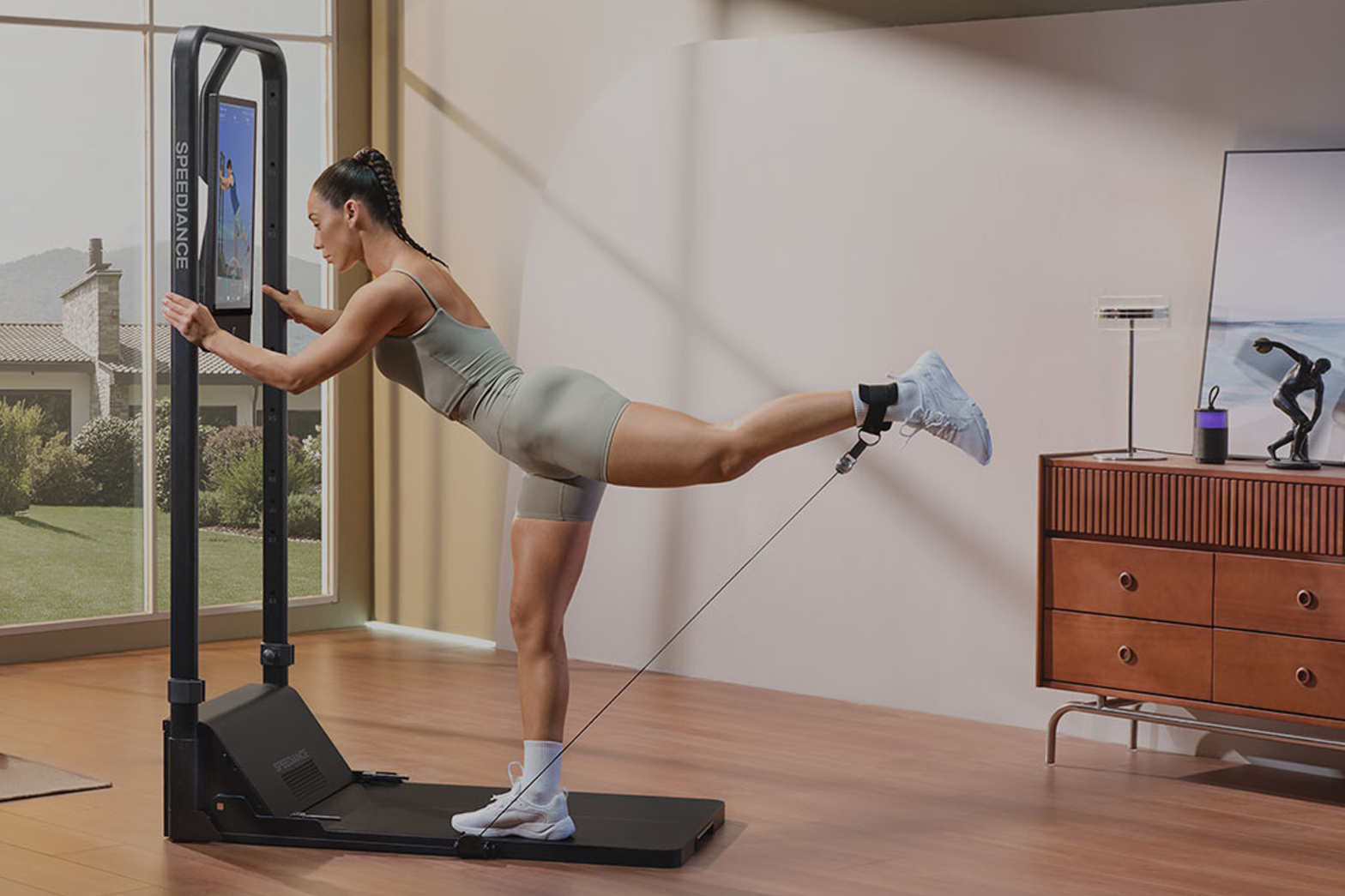
If you’ve ever priced out a “real” home gym and quietly closed the tab—rack, plates, cables, bench, dumbbells, plus the space it eats—Speediance starts to make sense fast. It’s one of those products that looks almost too clean to be serious: a freestanding screen, foldable base, digital resistance, and a promise that you can do everything at home without bolting anything into a wall.
But smart gyms live or die on two things:
- how good the resistance feels (not just the number on paper), and
- how painless the ownership is (setup, software, support, and “what happens if something goes wrong?”).
This Speediance Gym Monster 2 review breaks it down like a normal buyer would: what’s awesome, what’s annoying, what customers keep repeating, and which add-ons are actually worth caring about.
Highlights
- Freestanding setup (no wall mounting), with a compact/foldable approach that suits smaller homes
- Digital resistance with fast weight changes and multiple resistance modes (including eccentric/chain-style options)
- Strong “all-in-one” versatility: squats, presses, pulls, belt squats, rows, plus cardio-style emulation with add-ons
- Useful safety concepts for solo training, depending on the bundle and features available
Pros
-
It’s genuinely convenient in real life
People romanticize home gyms, then forget the hassle: loading plates, storing plates, noise, and setup time. Speediance’s “tap to change weight” approach is the point—and it really can make workouts feel quicker and smoother. -
It covers a lot of training styles, not just one lane
You can do classic strength work (squats, deadlifts, presses, rows), but also tempo work and eccentric-focused training. That flexibility is why it often gets compared to other smart gym systems. -
Great for households with mixed fitness levels
One person can be a total beginner while another is more advanced, and both can use the machine without it becoming a daily argument. Adjustable resistance + guided programs make it more “shared household friendly” than traditional heavy setups. -
Built-in coaching reduces decision fatigue
A lot of people don’t fail because they’re lazy—they fail because they’re guessing. A library of guided sessions, progress tracking, and structured programs can remove that “what should I do today?” problem. -
It can feel like strong value if it replaces a membership
It’s a big upfront purchase, but if you actually use it consistently and it replaces your gym routine, the cost-per-workout can start to make sense—especially if it removes commute time and excuses.
Cons
-
Price is the first punch
No sugarcoating: it’s expensive. It’s an investment, not an impulse buy—and the bundle pricing can change what the “real total” looks like. -
The resistance cap is real for heavy lifters
For most people, the resistance is enough. But if you’re already strong on squats, deadlifts, heavy rows, or you train like a powerlifter, you may hit the ceiling—especially on movements where you’d normally load very heavy. -
You need more space than you think
It looks compact, but once you actually train—bench out, cables moving, body positioning—you’ll want clear space around it. Real usage footprint is bigger than “marketing footprint.” -
Tech is tech (and tech sometimes acts like tech)
Even with updates, software can glitch, tracking can be imperfect, and features can occasionally misread movement. That’s not unique to Speediance, but it matters more when you’ve paid premium money. -
Subscription confusion depends on region and package
Some buyers love it because they feel they’re not trapped in a mandatory subscription. Others discover certain features or experiences are better with paid options. The real takeaway: know what’s included in your package and region before you buy.
Quick Brand Snapshot
Speediance’s headline product is the Gym Monster line (including the Gym Monster 2). It uses motor-driven / digital resistance and packs strength training into a compact, freestanding setup with a big touchscreen.
A big selling point versus some competitors: many reviewers note you can get a lot of training value without a mandatory monthly subscription, although Speediance also markets memberships/paid options depending on region and package. Translation: you need to be clear what’s included in your checkout.
Product Overview:
Gym Monster 2
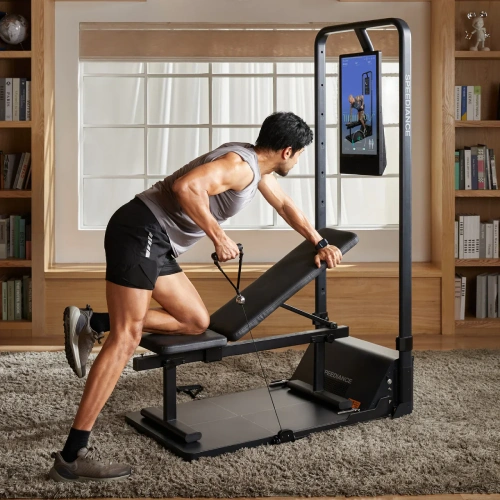
This is the main event: digital resistance, cable positions, touchscreen workouts, and smart modes (like eccentric/chain-style resistance) designed to mimic a bunch of gym movements in one footprint.
Best for: people who want strength training at home without a full rack + plates setup
Heads-up: the top resistance is plenty for most people, but serious lifters may outgrow the cap on certain movements.
Bench
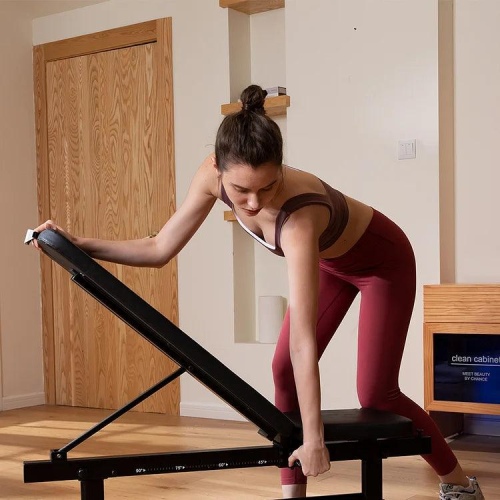
The bench is more important than it sounds. With machines like this, your bench is your “platform” for half your program—pressing, rows, split squats, step-ups, incline work, the lot. It’s often part of higher bundles because it changes what you can comfortably do.
Best for: anyone training full-body
Heads-up: measure your space—bench + cables needs more room than the product photos imply.
Rowing / Cardio Add-On
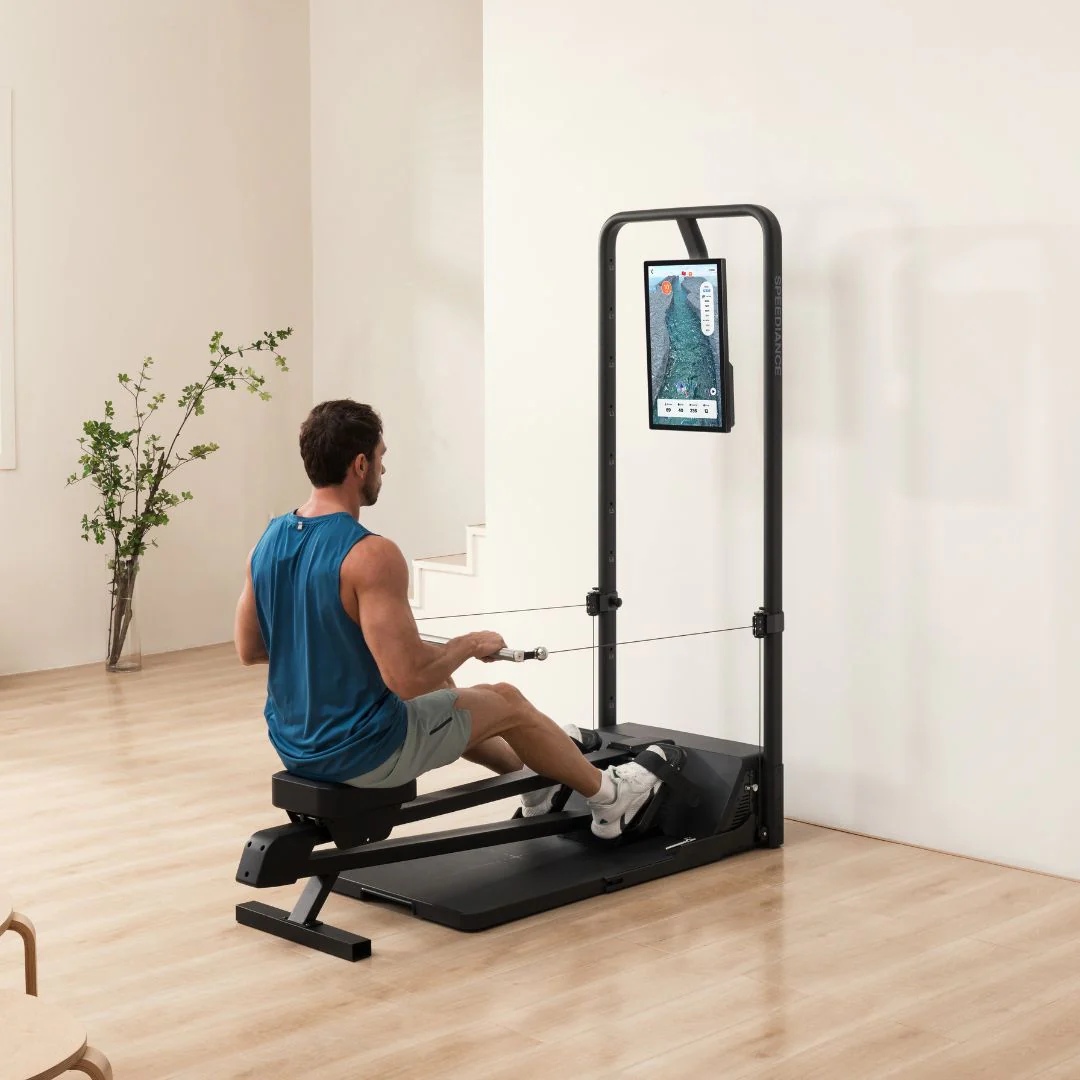
Speediance leans into the “strength + cardio” pitch with add-ons that let you do rowing-style sessions (and some SkiErg-style movements). Some people love the variety; others see it as “nice, but optional.”
Best for: people who get bored doing only lifting
Heads-up: if you already own a dedicated rower, this add-on may feel redundant.
Handles / Accessory Kit
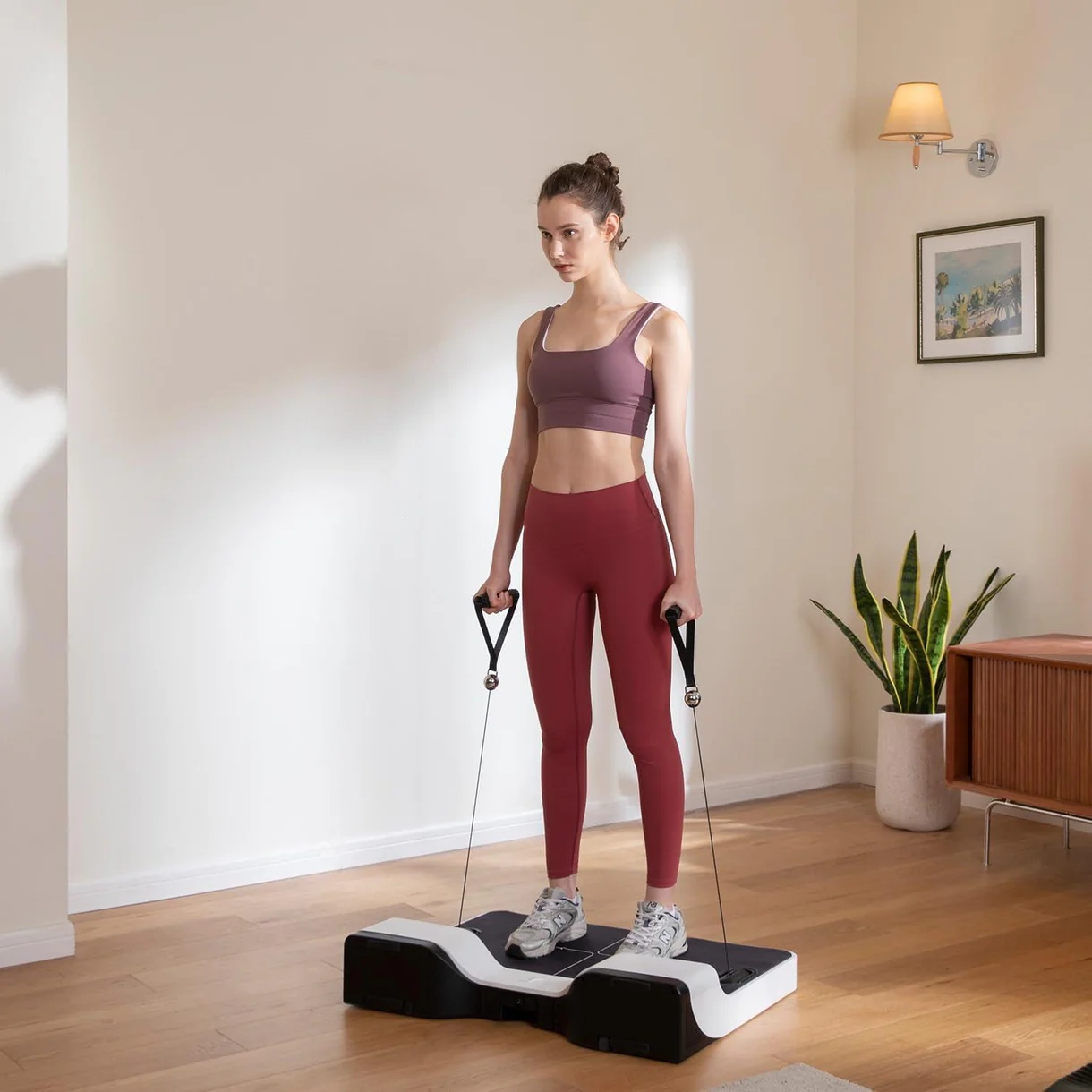
These bundles are basically about comfort and variety—different grips, attachments, and small extras that make it feel more “gym-like.” Not everyone needs them day one, but people who train frequently tend to appreciate having the right handle for the right movement.
Best for: regular lifters who want more exercise variety
Heads-up: don’t overbuy accessories before you know your routine.
Training Library + Tracking Features
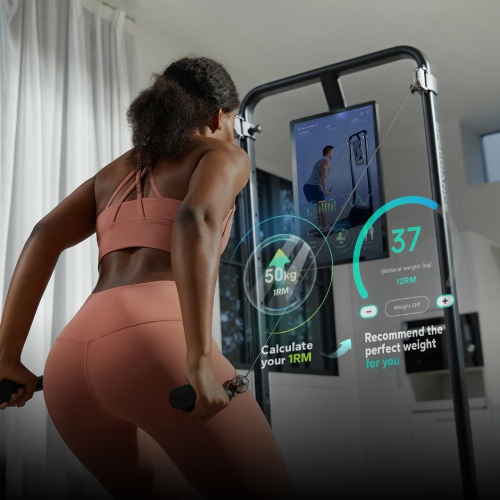
This is a big part of the Speediance experience: guided workouts, rep tracking, range-of-motion feedback, and “smart” resistance features. These tools can be a huge win for consistency—especially if you normally struggle to structure workouts on your own.
Best for: beginners, busy people, anyone who wants structure
Heads-up: smart features are only as good as the software—some people still mention occasional glitches or imperfect tracking summaries.
Customer Reviews
What People Love
- Convenience (no commute, no waiting, quick setup)
- The “all-in-one” feeling—strength training in a compact system
- Feeling motivated because workouts are guided and the machine feels premium
- Positive outcomes when support is responsive
What People Complain About
- Shipping/handling realities for a heavy, expensive item
- Delays or hiccups that require customer service follow-up
- Learning curve for software + setup
- Expectation mismatch (buyers expecting a commercial gym feel at home)
FAQs:
If you’ll use it 3–5x a week and it replaces your gym membership (or solves your “I never go” problem), it can be a solid investment. If you’re hoping the machine itself will magically make you consistent, it may end up as a very expensive coat rack.
Some people buy it because they want a smart gym without monthly payments. Others prefer paid options for extra training content or features. Core training may be accessible; premium extras may cost more—confirm based on your package.
Many reviews and listings describe it as offering up to around 220 lb of digital resistance (varies by model/version and how the number is presented).
Return policies vary by region and sales channel, and can change over time. Always read the version that applies to your purchase location before checkout.
Warranty terms depend on region and whether you buy from official or authorized channels. Check coverage length and what parts/labor/shipping are included.
Smart gyms include safety-oriented modes and stop/start controls to help solo lifting. Still, train smart—especially with kids/pets nearby—because you’re dealing with cables, moving parts, and digital resistance.
Final Verdict
Speediance is best for busy people who want real strength training at home, without building a full garage gym. It gets praise for being versatile, compact, and genuinely convenient—plus the guided workouts help a lot of people stay consistent.
The tradeoffs are what you’d expect: high upfront cost, a real resistance ceiling for very strong lifters, and occasional tech/software rough edges. If you’re a heavy lifter chasing huge numbers, you may outgrow it. If you’re a normal human who just wants consistent training without gym drama, it can be a very solid “one machine does it all” solution.