Made In Cookware built its reputation almost entirely online, selling direct-to-consumer without the department store markup that older cookware brands carry, and promising restaurant-grade performance for noticeably less than names like All-Clad. That pitch is exactly the kind that makes careful shoppers pause and search “is Made In legit” before entering a card number. We looked at the company’s actual history, where the cookware is manufactured, multi-year durability testing, and real customer feedback to answer both questions honestly.
Who Makes Made In Cookware?
Made In was founded in 2017 by Jake Kalick and Chip Malt, childhood friends from Boston. Kalick’s family had been in the kitchen supply business for four generations dating back to 1929, while Malt brought a marketing background from the apparel industry. The company moved to Austin in 2018 and raised a $5 million seed round led by Brian Spaly, the founder of Bonobos – a notable early vote of confidence from someone with a track record building direct-to-consumer brands. Made In cookware is now used in more than 2,000 restaurants, and the company has built relationships with well-known chefs including Tom Colicchio and Alinea’s Grant Achatz and Nick Kokonas, both of whom are also investors, along with a 2021 bakeware collaboration with pastry chef Nancy Silverton.
Is Made In Cookware Legit?
Yes. Beyond the founding story, Made In has real institutional backing, a multi-year operating history, international expansion (Canadian and UK sites launched in 2024), and restaurant-industry adoption that would be very hard to fake. On Trustpilot, the brand sits at 3.7 out of 5 stars across 203 reviews – a solid, believable score for a growing direct-to-consumer company, not the kind of pattern associated with a scam. The complaints that exist are concentrated on specific, plausible issues (more on those below), not on the basic question of whether orders arrive or the company is real.
Where Is Made In Cookware Manufactured?
Made In doesn’t run its own single factory – it partners with specialist manufacturers in the regions historically known for each craft:
- Stainless steel cookware – Italy and Tennessee
- Knives – Thiers, France, often called the birthplace of the chef’s knife
- Plateware – Stoke-on-Trent, England, a historic center of English pottery
- Enameled cast iron – a village in northeast France that has produced it since 1920
Product Line and Pricing
Product | Price |
8″ Stainless Steel Skillet | $129 |
5-Piece Stainless Set | $399 |
10-Piece Stainless Set | $799 (reg. $1,024) |
13-Piece Stainless Set | $1,199 (reg. $1,488) |
Complete Kitchen Set | $2,999 (reg. $3,719) |
Carbon Steel Pans | $139–$199 |
The catalog also includes non-stick pans, stockpots, saucepans, woks, knives, and bakeware, with financing available through Afterpay on larger sets.
How It Performs: 3+ Years of Real Testing
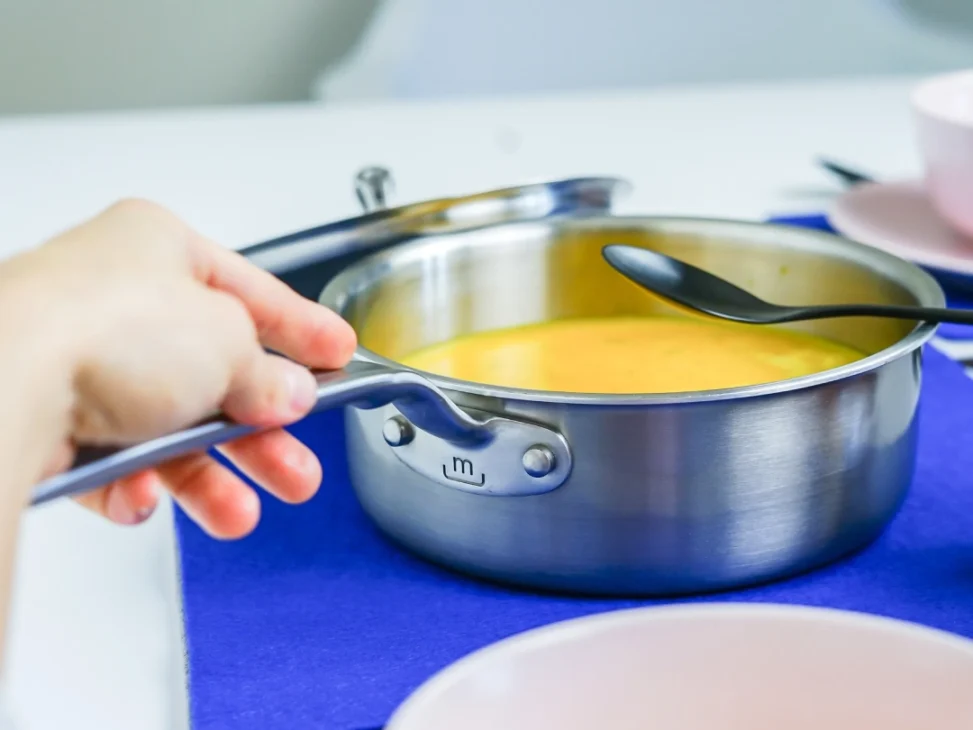
One long-term test tracked a Made In 12-inch stainless skillet (part of its 5-ply stainless line) over three-plus years of regular use. On heat conduction, it boiled water in 2 minutes 21 seconds, faster than All-Clad, Calphalon, and Misen, and beaten by only one brand (Farberware) out of more than 20 tested. On heat retention, it ranked second overall behind Demeyere Atlantis, holding 121.1°F after five minutes off the burner. The tester reported no warping with normal use, and the interior’s brushed starburst finish held up well with only minor surface marks after years of cooking. The non-stick line showed visible marks under a deliberate stress test (a steel pan dropped onto it), though normal cooking use didn’t show the same damage. One recurring annoyance: a small gap at the base of the handle collects residue and discoloration over time, needing a toothbrush to keep clean.
Made In vs All-Clad: How It Compares
Made In positions itself directly against All-Clad, the long-standing leader in clad stainless cookware, and the comparison holds up reasonably well. An 8-inch stainless skillet runs $129 at Made In versus $149 at All-Clad – a modest but real difference, especially multiplied across a full set. Performance-wise, independent testing puts Made In’s heat conduction and retention ahead of All-Clad’s on paper, though All-Clad has decades more of real-world longevity data behind it simply by having existed since 1971 versus Made In’s 2017 founding. Made In’s stainless line is also narrower – effectively one core collection – where All-Clad offers several tiers at different price points.
Pros and Cons
Pros
- Excellent heat conduction and retention, outperforming several established premium brands in independent testing
- Noticeably cheaper than All-Clad at a comparable performance level
- Lifetime warranty against defects, with reviewers specifically praising the warranty claims process
- Manufacturing sourced from specialist regions (Italy, France, Tennessee, England) rather than a single generic factory
- Real restaurant adoption and chef backing beyond marketing claims
Cons
- Non-stick coating has reported chipping and peeling issues in some long-term reviews
- Only one core stainless steel collection, versus more tiered options from older competitors
- 5-ply construction conducts heat efficiently enough that high heat settings can scorch food – it rewards a disciplined medium-heat cooking style
- Heavier pans (around 3.2 lbs for a 12-inch skillet) than some users expect
- As a company founded in 2017, it lacks the multi-decade durability track record of brands like All-Clad
Who Made In Cookware Is Worth It For
Made In makes the most sense for home cooks who want premium, restaurant-grade stainless performance without paying full All-Clad pricing, and who are comfortable cooking on medium rather than high heat – a habit 5-ply cookware generally rewards regardless of brand. It’s a weaker fit if you specifically want a wide range of product tiers to choose from, or if you’re drawn to brands with decades of proven long-term durability rather than a company that’s eight years into its history.
Frequently Asked Questions
Is Made In Cookware a real, trustworthy company?
Yes. It’s backed by institutional seed funding, used in over 2,000 restaurants, has real chef partnerships, and operates internationally. Its Trustpilot rating of 3.7/5 reflects a normal mix of praise and specific complaints rather than fraud.
Where is Made In Cookware actually made?
Manufacturing is split by product: stainless steel in Italy and Tennessee, knives in Thiers, France, plateware in Stoke-on-Trent, England, and enameled cast iron in a French village that’s produced it since 1920.
Is Made In cookware better than All-Clad?
In independent heat conduction and retention testing, Made In performed as well as or better than All-Clad at a lower price. All-Clad still has a longer real-world track record, having been in business since 1971 versus Made In’s 2017 founding.
Does Made In Cookware’s non-stick line have quality issues?
Some long-term reviewers have reported coating chips or peeling over time, which is a more common complaint than with Made In’s stainless line. If coating durability is your top priority, the stainless or carbon steel lines have a stronger track record.
Final Verdict
Made In Cookware is a legitimate, well-funded company with real restaurant and chef credibility, and its stainless steel line backs up the marketing with genuinely strong independent test results. The brand earns its reputation on stainless and carbon steel; the non-stick line is the one area where buyers should temper expectations around long-term durability. For most home cooks comparing it against pricier legacy brands, Made In is one of the more credible “better value than the big name” claims in cookware right now.