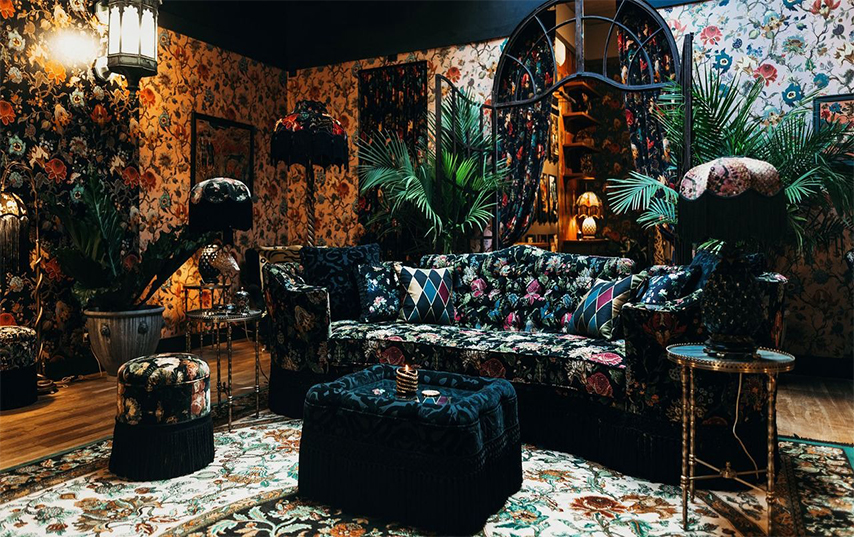
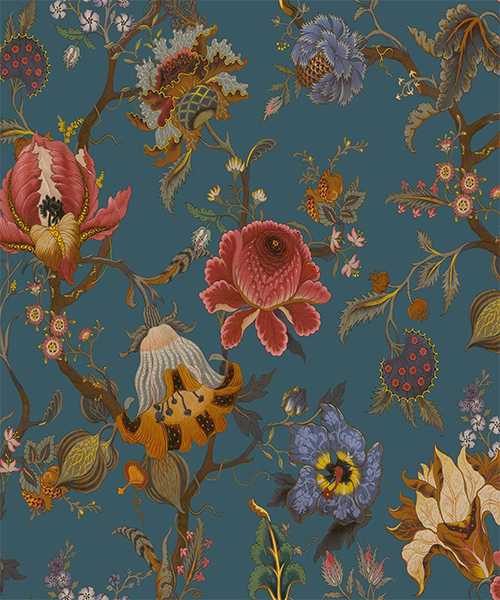
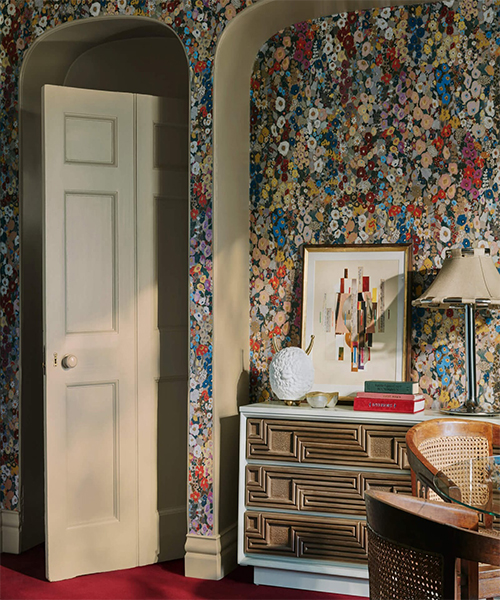
House of Hackney is the kind of interiors brand you notice from across the room: saturated color, unapologetic prints, and a “collector’s cabinet” approach to home décor that leans more artful than purely minimal or trend-led. The US site carries the brand’s signature categories—wallpaper, fabric, paint, home décor, and furnishings—plus design services for shoppers who want help pairing color, print, and texture without turning their space into visual chaos.
What makes House of Hackney especially interesting is that the aesthetic isn’t the whole story. The brand positions itself around nature-inspired design and a wider “restoration” purpose—so the purchase pitch is as much about values as it is about visuals.
House of Hackney describes itself as a “restoration project” rooted in Nature, Craft, Community, and Awe—using creativity and business to help “regenerate our common home.”
They’re also listed as a Certified B Corporation, and in their own writing they frame this as an accountability tool as they move from “sustainable” toward “regenerative.”
A tangible example of that mission is their stated conservation support: they describe a donation model tied to sales (per meter of fabric, roll of wallpaper, and individual items sold) that funds the protection of threatened habitat via the World Land Trust, and the World Land Trust also outlines this partnership publicly.
Nature-forward prints that feel like heirloom decor (not disposable trends). Their “future heirlooms” positioning is central—designed pieces meant to last aesthetically and physically.
A full “room story” ecosystem: wallpaper + paint + fabrics + soft furnishings + selected furniture, so you can build a cohesive scheme rather than buying one-off accents.
Considered material messaging on key categories: for example, wallpaper is described as PVC-free and printed in small, made-to-order batches using water-based inks (helpful for buyers who care about what’s on their walls).
Paint formulated for real homes: the brand describes water-based, low-VOC, low-odour emulsion and positions eggshell as a tougher finish for woodwork/trim and furniture.
Conservation tie-ins beyond forests (select products): some items note donations to specific causes—e.g., certain SABER cushions mention support for Panthera (wild cat conservation).
If House of Hackney has a “signature,” it’s the immersive wallpaper—often built like a scene rather than a simple repeat. The PLANTASIA design is a good example: it’s described as a panoramic forest mural in calming sage tones, intended to create a sanctuary feel rather than a loud feature wall.
Practical details matter with mural-style wallpaper, and the product page spells out the roll structure: one roll is made up of multiple vertical lengths/panels with defined coverage per roll, which helps you plan (and helps explain why accurate measuring is non-negotiable).
On the sustainability/material side, House of Hackney states their wallpaper is PVC-free, printed in small made-to-order batches to reduce waste, and uses water-based inks—exactly the kind of information detail-oriented renovators want before committing.
Best for: statement rooms, dining spaces, studies, entryways, or anywhere you want an intentional “world” on the wall (not just decoration).
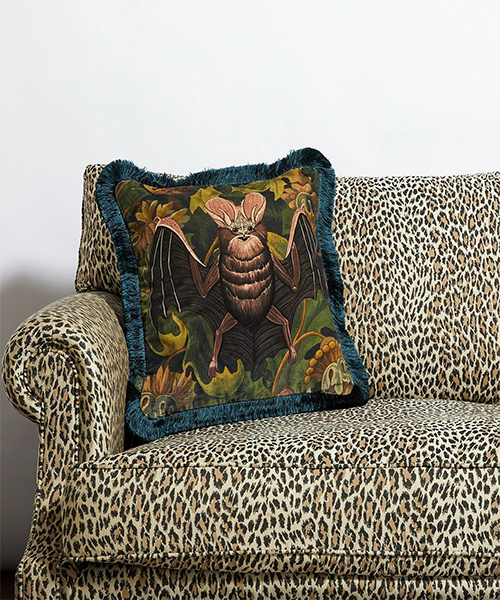
House of Hackney cushions are “small object, big impact” pieces—useful when you want to introduce pattern without redoing an entire room. The SABER velvet cushion is built around a Tibetan-inspired tiger motif designed to pop against rich background colorways, so it reads bold but still decorative rather than novelty.
The product page also highlights the fill: 100% British wool, positioned as naturally anti-allergy and resistant to dust mites and bacteria—details that matter for households sensitive to synthetic fills.
And for shoppers who like purchases that “do something,” certain SABER cushions state that a portion of proceeds goes to Panthera, a wild cat conservation organization.
Best for: elevating a sofa/bed instantly, adding color to neutral rooms, or bridging two patterns in the same space.
House of Hackney paint is marketed as “designer paint with a nature palette,” but the more compelling part is how they explain use cases. Their US paint pages emphasize two finishes:
Emulsion for walls and ceilings (smooth, luxurious look)
Eggshell for trim/woodwork/furniture (more resilient)
They also describe their emulsion as water-based, low-VOC, and low-odour—helpful if you’re painting lived-in spaces and don’t want lingering fumes.
If you’re color nervous, there are sample options (like curated sample packs), and the brand mentions support tools like a free color chip card and complimentary consultation to help you land the shade with confidence.
Best for: print-lovers who want paint that harmonizes (not fights) with wallpaper/fabric, and for shoppers who want a clearer “which finish goes where” structure.
High-impact, design-forward collections across multiple categories (wallpaper/fabric/paint/decor) for cohesive interiors.
Transparent on several practical details—like wallpaper panel/coverage info and paint finish use cases.
Conservation partnership messaging is specific (e.g., donation model tied to product types; World Land Trust confirms the partnership).
Certified B Corp listing available publicly.
Many core categories are treated as made-to-order (notably wallpaper/paint/fabric/furniture), which affects cancellations and returns.
Lead times can be estimates; terms caution against booking installers before goods arrive.
The look is distinctive—if you prefer subtle, barely-there design, you may find the aesthetic “too much” without careful styling.
House of Hackney’s US terms note that items may be dispatched separately.
For larger furnishings (and made-to-measure items), the terms describe delivery coordination once an order is ready, with options like curbside delivery and the possibility of upgrading to white glove delivery (where available).
They also state that orders are shipped DDP (Delivery Duty Paid)—meaning taxes and duties are included in the final price, and there should be no additional charges due on delivery.
This is the section shoppers should read twice, because it’s stricter than many mainstream home retailers:
No returns on items made to order/bespoke/personalized or made to specific measurements. The terms explicitly include wallpaper, paint, tiles, fabric, flooring, and furniture under this non-returnable umbrella (because they’re produced/cut/created specifically).
For returnable products, the window is 14 days from receipt.
Returns by post/courier are generally at the customer’s cost and risk, and the terms recommend recorded delivery/secure packaging.
Cancellations/changes are limited: the terms state you may only amend or cancel by contacting them up to 24 hours after placing the order, after which costs may apply.
I did not find a standalone “warranty” program for House of Hackney on the US site. What is clearly described is how defects/damage are handled:
Products should be inspected on delivery; for certain deliveries, defects/damages must be reported within 24 hours and before use.
They also emphasize checking items before installation and raising quality issues prior to installation; they outline investigation and replacement/return steps if a defect is deemed their fault.
On Trustpilot, the domain is shown with a 3.8 “Great” TrustScore and 13 reviews (at the time the page was accessed for this write-up).
In practice, with design-led home brands, feedback tends to cluster around three themes:
Visual impact/quality when it lands (people buy for drama and craftsmanship),
Lead times and logistics (especially for made-to-order categories),
Customer service responsiveness when something arrives damaged or a project timeline shifts.
Many key categories are treated as made-to-order in their terms—specifically including wallpaper, paint, fabric, flooring, tiles, and furniture.
Their US terms state orders are shipped DDP (Delivery Duty Paid), meaning taxes and duties are included in the final price with no extra charges due on delivery.
The US terms explicitly include wallpaper in the list of made-to-order items they can’t accept returns for.
Their shipping terms require inspection on delivery and reporting defects/damage promptly (within 24 hours in the relevant section), and they outline a process for defective product claims—especially emphasizing raising issues before installation.
Their US emulsion paint collection describes it as water-based, low-VOC, and low-odour.
They describe a donation model supporting habitat protection via World Land Trust, and the World Land Trust lists them as a corporate supporter with matching details.
House of Hackney is best approached as an “intentional design” brand: you’re not just buying a product, you’re buying a point of view—lush nature symbolism, bold color, and craft-driven decor built to become part of your home’s identity. The upside is a genuinely distinctive look backed by clear category expertise (especially wallpaper, cushions, and paint). The trade-off is that many hero products are made-to-order, which tightens return flexibility and makes planning/measurements essential.
If you want interiors that feel expressive, layered, and collected—with a brand story tied to impact and regeneration—House of Hackney is a strong fit. If you prefer “try it and return it” shopping, you’ll want to stick to clearly returnable accessories (or buy through a retailer with different return terms).