
Caraway Review: Pretty Pans – But Do They Actually Hold Up?
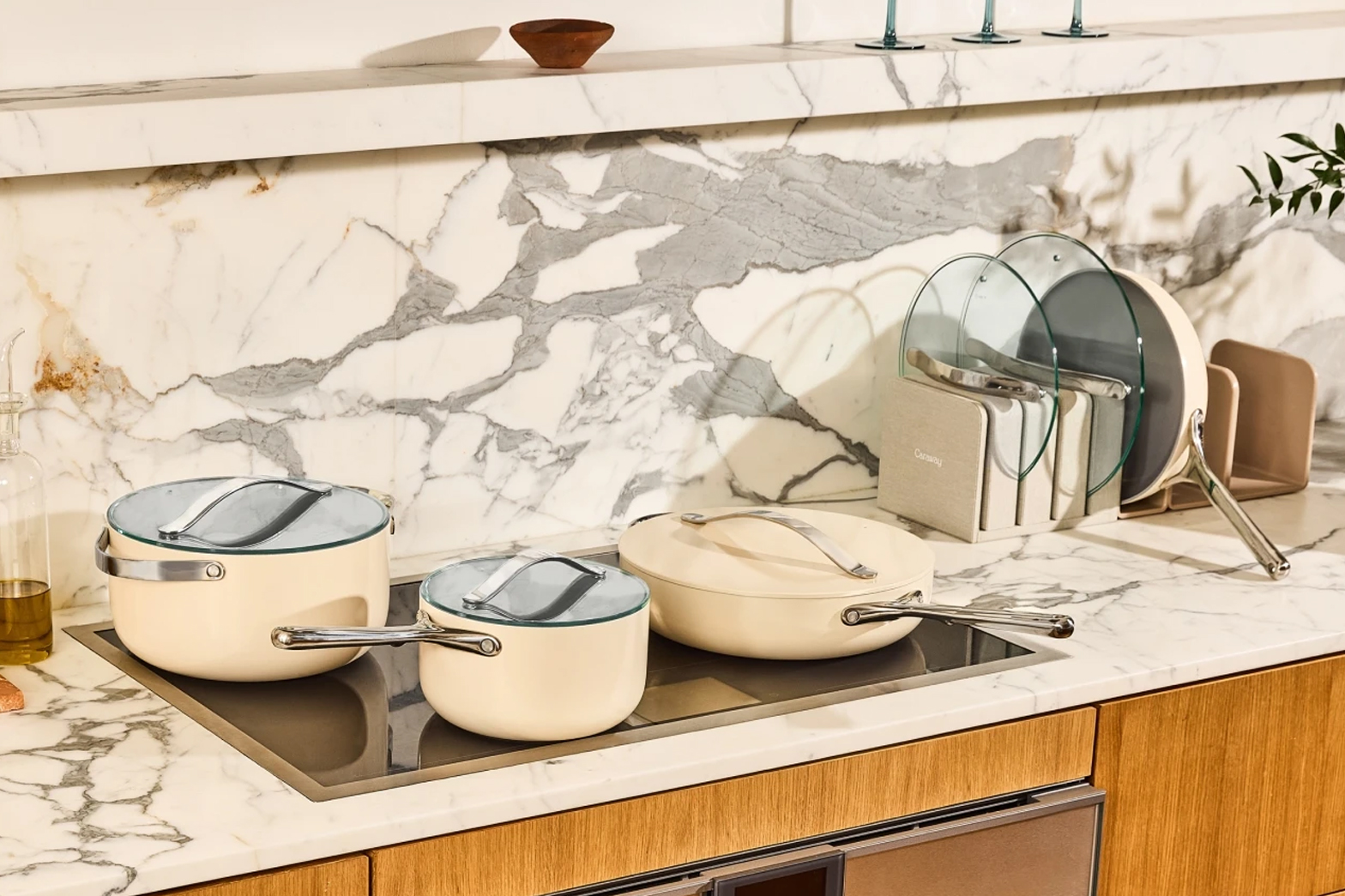
You know that moment when you open your cabinet and think, why do my pans look tired even though I barely feel like I cook that much? That’s usually when Caraway starts popping up in your feed.
Caraway is basically the “aesthetic cookware” brand that also leans hard into the better-for-you angle: ceramic-coated nonstick, lots of color options, matching storage, and the promise of cooking without the usual forever-chemical worries. Their sets look like something you’d happily leave on the stovetop instead of hiding away.
But cookware isn’t wall art. It has to survive daily heat, oils, utensils, cleaning, and real-life mistakes (like someone in the house cranking the burner too high). So the real question is: does Caraway perform like premium cookware, or is it mostly a pretty upgrade? Caraway also sits inside a bigger “non-toxic ceramic cookware” trend that’s been questioned in mainstream reporting—mostly around what “ceramic” actually means and how much transparency brands provide. Caraway’s answer to that is publishing third-party test reports for materials that touch food.
What Caraway is (and who it’s for)
Caraway sells ceramic-coated cookware (plus other kitchen categories) aimed at people who want:
- a slick, easy-release cooking surface for everyday meals
- a cleaner “no PFAS/PTFE” message
- cookware that looks good enough to keep out
- sets that come with storage organizers so your cabinets don’t become a pan jungle
If you’re the type who loves a tidy kitchen, cooks eggs often, and hates scrubbing… Caraway’s pitch is basically made for you.
Caraway Cookware Review: The quick “how it performs” reality check
Caraway’s ceramic nonstick can feel amazing when it’s treated right: lower-to-medium heat, not too much metal-on-pan action, gentle cleaning. The cooking surface is designed for everyday convenience—eggs, pancakes, sautéed veggies, chicken cutlets—things where you want release and fast cleanup.
But ceramic nonstick (as a category) usually has a tradeoff: it can be less forgiving over time than people expect if it’s regularly overheated or aggressively cleaned. That’s why you’ll see a split in customer experiences: some people are obsessed, and others feel like performance dropped faster than they hoped.
Highlights:
- The design is genuinely good. It’s not just “pretty colors”—the whole system is meant to be cohesive, including storage.
- Brand transparency is better than many competitors. Caraway publishes third-party testing around PFAS being “not detected” within reporting limits for food-contact materials.
- Oven-safe claims are high for the category (commonly listed up to 550°F for cookware).
- Stovetop compatibility is broad, including induction on listed products/sets.
- The “easy-clean” experience is real when you stay in the brand’s recommended heat/care zone.
Pros
-
It makes everyday cooking feel simpler
Caraway’s biggest win is the day-to-day stuff: eggs that slide, sauces that wipe clean, less stuck-on mess after dinner. If you cook often, that little convenience adds up. -
The storage is actually useful
A lot of cookware sets come with “extras” that end up in a drawer forever. Caraway’s storage pieces are designed to solve a real problem: lids and pans becoming a messy stack. -
The aesthetic motivates people to cook
This sounds silly until you experience it. When your pans look nice and your kitchen feels put-together, you’re more likely to cook at home instead of defaulting to takeout. -
Clear messaging around PFAS/PTFE
Caraway’s marketing is very direct about being made without PFAS, PTFE, and related chemicals—and they back that with third-party testing information rather than vague claims. -
A lot of customers genuinely love them
You’ll find plenty of “I’m obsessed” energy—especially from people who bought for easy cleanup and the look.
Cons
-
Ceramic nonstick has a learning curve
If you treat it like a tough stainless steel pan (high heat, crank it and forget it), you’ll probably be unhappy. Ceramic nonstick usually rewards medium heat and patience more than brute force. Caraway also emphasizes avoiding too-high heat because it can hurt performance. -
“Nonstick forever” expectations don’t match reality
A lot of negative feedback tends to cluster around durability—sticking later on, staining, or surface wear. That’s not unique to Caraway, but it matters because Caraway is priced like a premium lifestyle buy. -
Hand-wash is the safer route
Many listings and care guidance recommend handwashing. If you’re a dishwasher-only household, that’s a lifestyle mismatch. -
The “non-toxic cookware” conversation is messy
Across the wider category, “non-toxic” and “ceramic” language can be confusing for shoppers. Caraway’s third-party reports help, but the broader space still comes with debate and skepticism. -
You’re paying for the system, not just the pan
If all you care about is pure cooking performance per dollar, you might find better value elsewhere. Caraway’s price includes design, branding, colorways, the set experience, and storage.
5 Caraway products that make the most sense to buy
Cookware Set

This is the “one purchase, big visual upgrade” option. You’re getting the core lineup (fry pan, sauté pan, saucepan, Dutch oven) plus storage pieces that help keep everything neat.
Why people buy it: the set looks cohesive and instantly makes the kitchen feel upgraded.
Best for: new apartments, wedding gifts, full kitchen refresh
Heads-up: it’s a bigger spend, and it’s only worth it if you actually want and will use most pieces.
Fry Pan
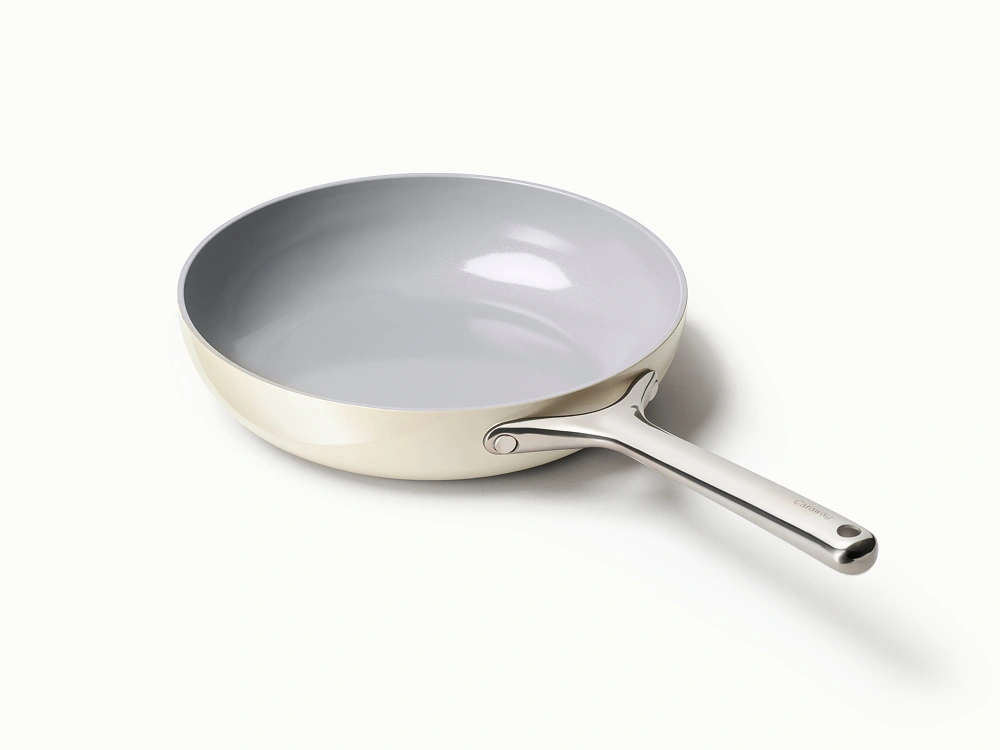
This is the “daily driver.” Eggs, grilled cheese, quick sauté—this is where nonstick makes life easier.
Why it’s a smart first buy: you’ll know quickly if you like how Caraway cooks and cleans.
Best for: breakfast, quick dinners, low-mess cooking
Heads-up: like most ceramic nonstick, it tends to prefer medium heat—high heat all the time is where people shorten the lifespan.
Sauté Pan
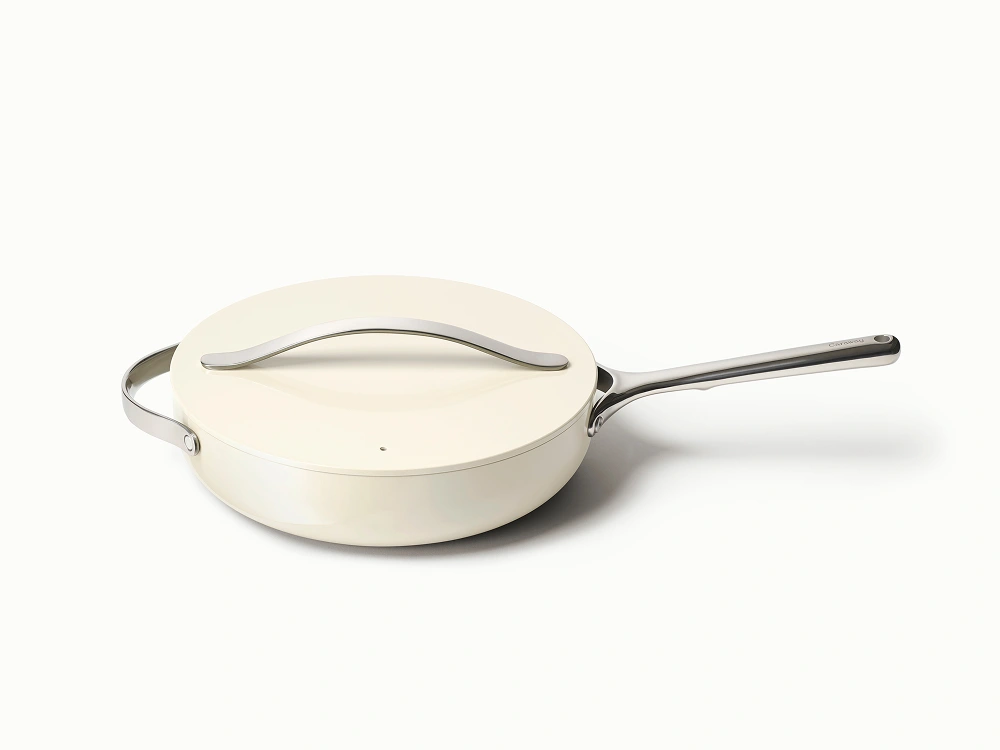
Think “one-pan meals.” It’s deeper than the fry pan, usually comes with a lid, and handles sauces, braises, and bigger batches better.
Why people love it: it’s versatile—stir-fry, creamy pasta, curries, shallow frying.
Best for: families, meal prep, anything saucy
Heads-up: bigger surface area + higher sides means it can feel bulky in smaller sinks/cabinets.
Dutch Oven
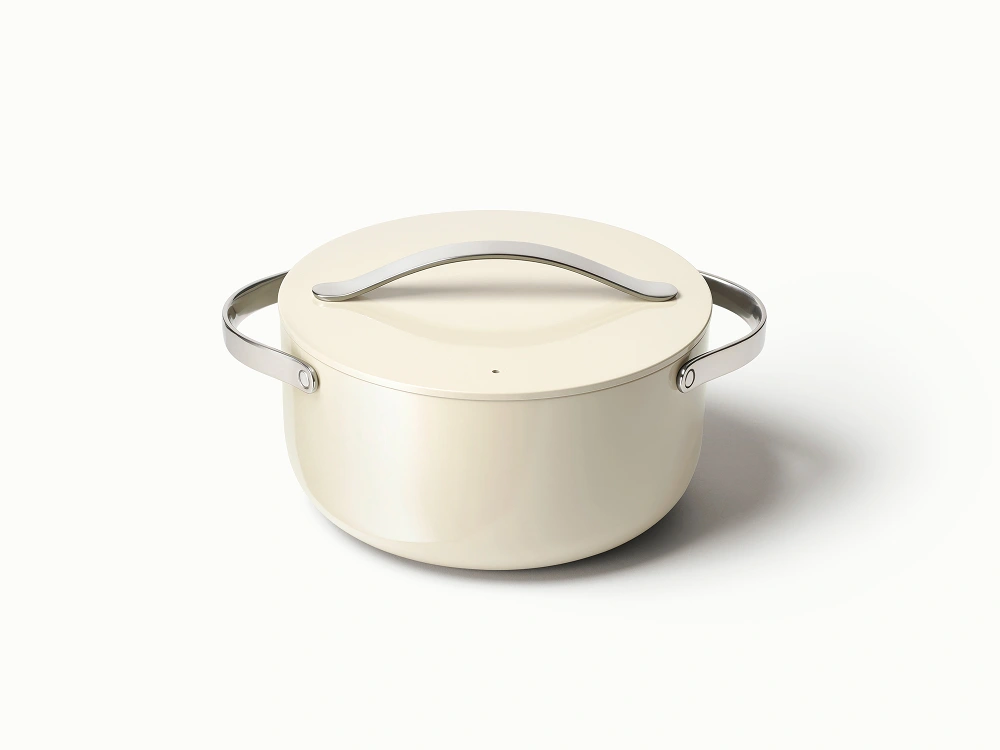
For soups, stews, and slow simmer moments—this is the cozy one.
Why it’s worth considering: if you cook comfort food often, it earns its space.
Best for: stews, biryani-style cooking, chili, slow sauces
Heads-up: if you’re expecting “classic enameled cast iron” vibes, remember Caraway’s ceramic-coated lines are a different construction category—set expectations accordingly.
Bakeware
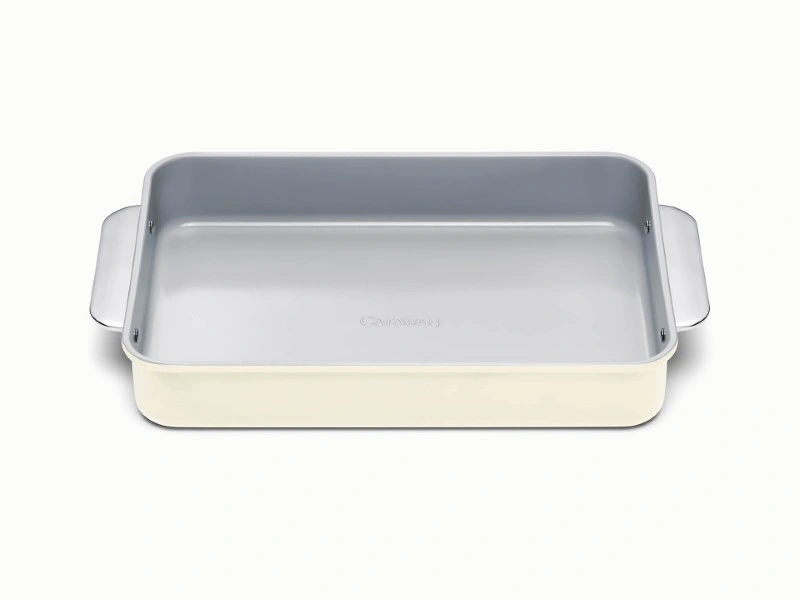
Caraway’s bakeware gets attention because the same “easy release + easier cleanup” promise applies to baking.
Why people buy it: less sticking, less scrubbing, plus it matches the cookware aesthetic.
Best for: cookies, roasted veggies, sheet-pan meals
Heads-up: bakeware (any brand) can stain over time depending on oils, sugars, and heat.
Caraway Customer Reviews:
People rave about:
- How the pans look and feel out of the box
- Easy cleanup
- Eggs/pancakes and “low drama” cooking
- Storage making cabinets neater
People complain about:
- Performance dropping if used on high heat regularly
- Staining or discoloration over time
- Frustration when expectations were “this will stay perfect for years”
FAQs:
Is Caraway really “non-toxic”?
Caraway says its cookware is made without PFAS (including PTFE and PFOA) and publishes third-party testing reports for food-contact materials showing PFAS “not detected” within reporting limits. At the same time, the broader “non-toxic cookware” space can be confusing because marketing terms vary brand to brand.
Is Caraway good for induction?
Many Caraway cookware items are sold as compatible with induction, along with gas and electric.
Can it go in the oven?
Caraway cookware is commonly listed as oven-safe up to 550°F (always follow the exact product’s care notes, especially for lids/handles).
What warranty do they offer?
Caraway commonly lists a one-year limited warranty for many products, and longer coverage on certain lines (with conditions). Always check the warranty section for the specific collection you’re buying.
How do I make it last longer?
- Use low to medium heat most of the time
- Let the pan heat
Final Verdict: Is Caraway worth it?
Caraway is worth it if you want a good-looking cookware system that makes everyday cooking easier, and you’re willing to treat ceramic nonstick the way it wants to be treated (medium heat, reasonable care, hand wash when possible).
If you want cookware you can abuse on max heat, scrub aggressively, and still expect perfect release forever… Caraway will probably frustrate you.