
The Best Sofas For Small Living Rooms Worth Buying In 2026 — Honest Picks After A Lot Of Research
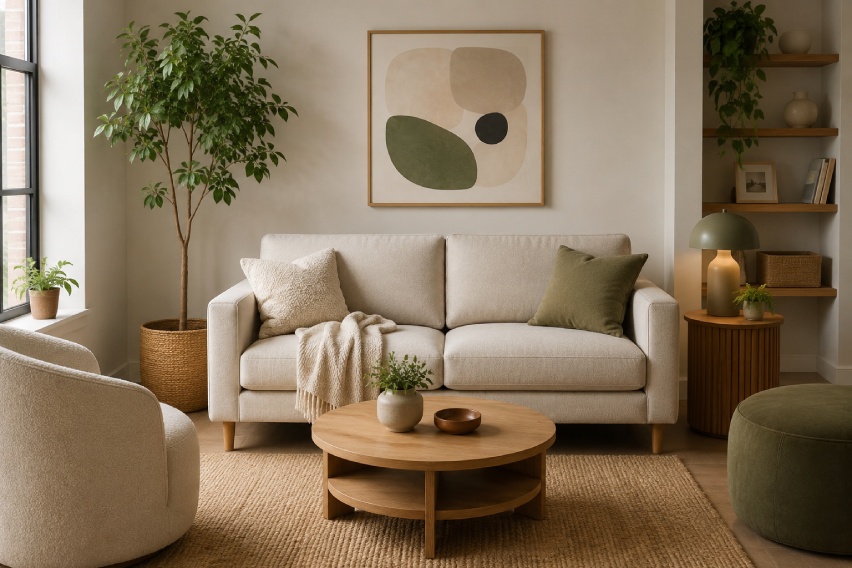
When we were furnishing our living room last year, the sofa decision took three times longer than any other piece of furniture. Not because I’m indecisive — I have opinions about most things fairly quickly — but because a sofa in a small living room is doing so much work simultaneously. It has to fit without dominating. It has to look good without overshadowing everything else. It has to be comfortable enough for actual daily life, not just for sitting upright and looking presentable.
I visited showrooms. I measured the floor with tape at least four times. I returned two sofas that looked completely different in my living room than they did in the warehouse. And I learned a lot about what makes a sofa work in a small space and what makes it fail.
What I Learned About Small Space Sofas
The single most important thing about a sofa in a small living room is the leg height. A sofa with visible legs — where you can see the floor beneath the sofa — makes the room feel larger because the eye reads the continuous floor plane rather than a piece of furniture interrupting it. A sofa that goes to the floor, or worse, has a skirt that conceals the base entirely, visually cuts the room in half at the height of the sofa seat.
The second thing: arm height and depth. Deep sofas with high, padded arms eat into the visual space of a small room aggressively. A sofa with slightly lower, firmer arms and a slightly shallower seat depth (around 85-90cm including the back cushion) provides completely comfortable sitting while taking up considerably less visual real estate.
The third thing I learned the hard way: order fabric samples before ordering. The colour difference between a fabric sample card in a showroom and the same fabric at sofa scale under your home’s specific lighting is not subtle. It’s the reason I returned a sofa.
The Best Sofas For Small Living Rooms
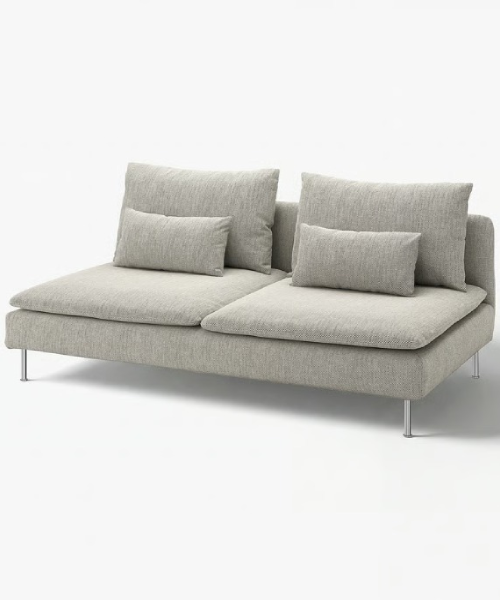
The IKEA Söderhamn is the sofa I’d recommend first to anyone furnishing a small living room on a budget because it solves the small-space sofa problem in a way that most sofas don’t. The modular configuration system allows building the exact size required for the specific space — a two-seat section that’s genuinely two seats, not two seats generously sized for a showroom, is available without compromising on the overall design.
The low profile is the Söderhamn’s strongest quality for small spaces. The back cushions sit lower than most sofas, the seat height is appropriate, and the overall silhouette reads as deliberate Scandinavian minimalism rather than as a sofa that’s been scaled down from something larger. In a small living room, the visual lightness of the Söderhamn makes the room feel more spacious rather than making the sofa feel crowded.
The seat depth is comfortable for actual sitting rather than perching — a criticism sometimes directed at low-profile sofas. At 95cm total depth (approximately 55cm seat depth with the back cushion in position), it accommodates normal adult sitting without feeling cramped.
The honest limitation: the cushion quality requires acknowledging. The Söderhamn cushions soften noticeably after the first year of regular use and will benefit from replacing or upgrading the inserts after two to three years. Budget for this when considering the total cost of ownership.
Price: From £550 for a two-seater
Available at: IKEA stores and online (ikea.com)
Best for: Those furnishing a small living room on a budget who want a genuinely stylish, adaptable sofa.
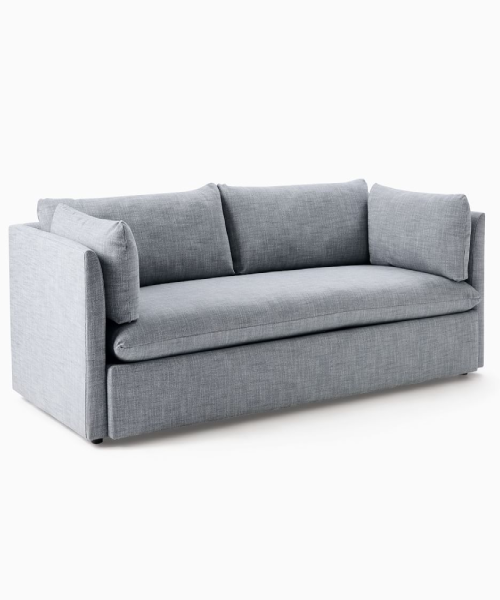
The West Elm Shelter Sofa is the mid-range option that most consistently appears in small space interior design recommendations, and the reason is the specific combination of lower arm height, visible tapered legs, and a compact overall footprint that looks considerably more expensive than the price reflects.
The tapered wooden legs (available in several finishes) are the detail that makes the most difference in a small room — they lift the sofa visually in a way that lets the floor breathe underneath and creates the sense of space that solid-based sofas prevent. The arm height at approximately 55cm (lower than the industry standard of 60-65cm) reduces the visual mass of the sofa from the side without compromising armrest function.
Available in a range of performance fabrics that the brand has improved significantly in recent iterations. The Twill and Velvet options photograph well and hold up to regular use. The performance weave is the practical choice for anyone with pets or children — it cleans more easily than the standard weave options and holds its colour better with repeated wiping.
The delivery timeline from West Elm is a genuine consideration — custom-fabric sofas typically run eight to twelve weeks from order. This is worth planning around rather than discovering after ordering.
Price: From £1,200
Available at: West Elm directly (westelm.com/co.uk), in West Elm stores
Best for: Those who want a genuinely designed, mid-range sofa with good small-space proportions.
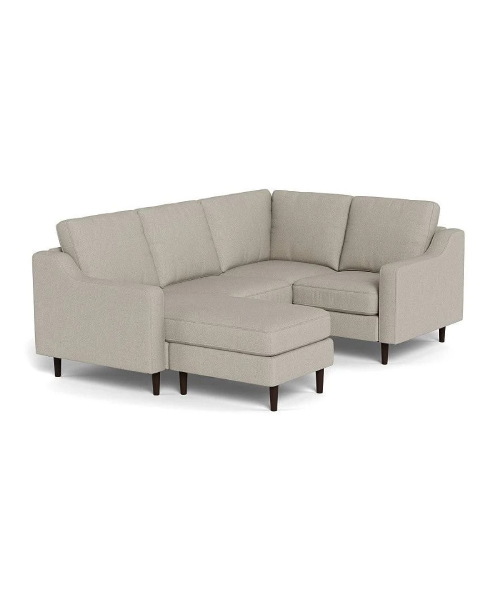
Cozey is a Canadian direct-to-consumer sofa brand that doesn’t have the same brand recognition as IKEA or West Elm but produces sofas that consistently receive strong reviews specifically from small apartment dwellers who found the proportions unusually well-suited to compact spaces.
The Core Sofa is the piece to look at — a modular design that ships flat-packed (boxes that fit through standard doorways, which is a practical consideration many larger sofas fail), self-assembles in about 45 minutes, and produces a sofa that looks considerably more expensive than its price when assembled.
The cushion quality is above what the price would suggest. The foam density maintains its shape better than many sofas at the same price point, and the fabric selection includes several performance options that resist the pilling that cheaper sofa fabrics develop within a year.
Price: From $895 CAD / approximately £520
Available at: Cozey directly (cozey.ca)
Best for: Those in Canada or willing to ship internationally who want a self-assembly sofa with genuinely good proportions for small spaces.
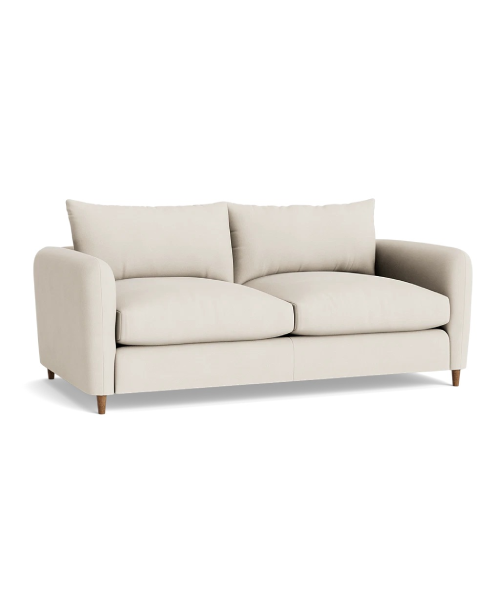
Loaf is a British sofa brand that makes the counter-argument to the minimal, small-space aesthetics described above: genuinely, deeply comfortable sofas that prioritise the experience of sitting in them rather than how they look from across the room.
The Squishmeister is a compact two-seater (220cm wide in the standard size, available in a smaller 180cm configuration) with the specific combination of feather-blend cushions and a slightly deeper seat that makes it the sofa you sink into rather than sit on. For small living rooms where the sofa is used primarily for evenings on the sofa watching films rather than for formal sitting, this distinction matters more than room proportion.
The honest trade-off: the feather-blend cushions require plumping and are not the low-maintenance option that foam cushions provide. They also need to be kept away from damp environments because feathers retain moisture. For those who accept this in exchange for genuine comfort, Loaf sofas are genuinely different to sit in.
Price: From £1,595
Available at: Loaf directly (loaf.com), in Loaf stores
Best for: Those who prioritise comfort above all else in a compact two-seater.
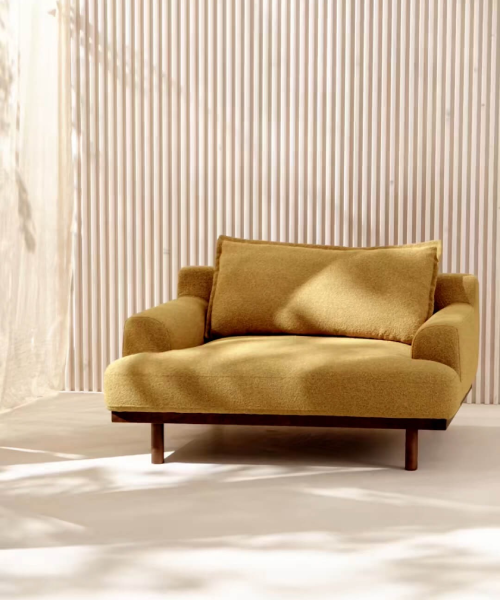
Made.com’s Archive Sofa is the design-forward option at an accessible price. The mid-century inspired silhouette — tapered legs, lower back, piped cushions — reads as significantly more expensive than the price and suits the small living room because the proportions are calibrated rather than simply scaled from a larger sofa.
Available in a genuine range of upholstery options including several velvet choices that photograph beautifully and hold up reasonably well in practice. The velvet does require more care than the fabric options — brushing rather than wiping for most marks, professional cleaning for anything significant.
Price: From £699
Available at: Made.com
Best for: Those who want a design-forward aesthetic at an accessible price with mid-century proportions.
How To Measure For A Small Living Room Sofa
Before buying any sofa for a small space, measure these specific things: the width of the narrowest point the sofa must pass through on delivery (doors, hallways, stairwell turns), the space the sofa will occupy with 45cm of clearance in front of it for passage, and the height of the sofa against the room’s proportions — specifically, the sofa back should not exceed two-thirds of the ceiling height for comfortable visual proportion.
Mark the intended sofa footprint on the floor with masking tape before ordering. Live with it for a day or two. What feels too large in theory often proves fine in practice; what seemed fine in theory sometimes proves oppressively large once you’re living around the tape.
Conclusion
The sofa for a small living room is the decision that most affects how the room feels to live in, and it deserves the deliberation its permanence warrants. IKEA’s Söderhamn is the starting point for budget-conscious buyers who want genuine style and configurability. West Elm’s Shelter provides mid-range quality with genuinely good small-space proportions. Cozey is the Canadian alternative worth investigating for its self-assembly practicality and quality above its price. Loaf’s Squishmeister is for those who want comfort above visual lightness. And Made.com’s Archive Sofa delivers design-forward aesthetics at accessible prices. Whatever you choose, measure twice, order fabric samples first, and mark the footprint on the floor before committing — the sofa you live with for five years deserves the extra two weeks of consideration.