
Best Brands to Buy at BBQGuys: A Buyer’s Guide by Budget
BBQGuys sells everything from $259 portable grills to five-figure built-in islands, and its staff actually test the stuff they sell. They’ll point an XRF gun at a grill to check the real stainless steel grade instead of just repeating whatever the manufacturer’s spec sheet says. That’s rare in this industry. But with dozens of brands crammed onto one site, figuring out where your money should actually go is the hard part, not finding a grill. Below is what we’d actually tell a friend shopping there, grouped loosely by budget, with pricing pulled straight from current listings so nothing here is guesswork.
Quick Comparison
Brand | Known For | Starting Price |
Weber | Reliable, beginner-friendly gas grills | $259 |
Kamado Joe | Ceramic kamado-style charcoal cooking | ~$759 |
Napoleon | Mid-range gas grills with infrared burners | ~$1,000 |
Blaze | Tiered built-in gas grills, budget to luxury | $1,499 |
Traeger | Smart, Wi-Fi-controlled pellet grills | ~$1,200 |
Memphis Grills | High-end smart wood-fire pellet technology | Premium |
Lynx | Professional-grade built-in outdoor kitchens | Luxury |
Fire Magic | Ultra-premium built-in grills | Up to $19,500+ |
Weber Is Still the Safe Bet
Everyone already trusts Weber, and honestly, they’re right to. It’s the brand most likely to still be grilling fine a decade from now without you ever thinking about it. On BBQGuys, that starts at $259 for the little Q 1200 portable and tops out around $3,999 for the Summit FS38 S. Most people land in the Genesis line though, $799 to $1,399, and that’s genuinely the sweet spot for a normal backyard. No learning curve, no surprises. If you just want something that works, start here and stop looking.
Kamado Joe If You Actually Cook, Not Just Grill
A ceramic kamado does something a gas grill flat-out can’t. It holds dead-steady, even heat for hours of low-and-slow smoking, then turns around and sears like a cast-iron skillet, same cooker, no swapping equipment. The Classic II starts around $759; the Classic III with the cart and side shelves runs closer to $1,376. You’ll pay for it in a steeper learning curve, airflow and charcoal management take some practice, but the versatility is real, not marketing copy.
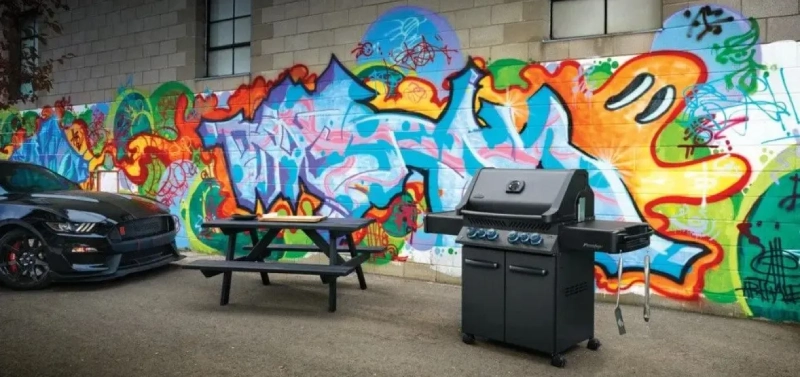
Outgrown your starter grill but not ready to drop luxury money on a built-in? That’s Napoleon’s whole lane. The Prestige and Legacy lines run $1,000 to $3,000, and they come with infrared side and rear burners standard, the kind of feature a lot of competitors still charge extra for. Good for searing, good for running a rotisserie without buying a separate attachment. It’s not flashy. It’s just a solid step up.
Blaze Lets You Pick Your Own Ceiling
What makes Blaze interesting is that one brand name covers such a huge spread. Entry-level LBM and BCM grills start around $1,499 to $1,549 with cast stainless burners and a 3-year commercial warranty, already more grill than most people need. From there you can climb: the LTE+ at $2,499 adds interior lighting and a marine-grade steel option for coastal buyers, the LTE PRO at $4,099 throws in a digital temp readout and dual meat probes, and the Professional LUX ($4,299-$5,299) gets you 18,000 BTU burners plus a built-in rotisserie. Blaze calls itself “premium-quality grills with luxury features at an affordable price.” For once, the tagline actually tracks with the lineup.
Traeger, for When You Don’t Want to Babysit the Fire
Traeger basically invented the Wi-Fi pellet grill as a category, and the flagship Timberline, $3,459.90, is where all that tech lands today. Smart Combustion keeps the burn consistent, the WiFIRE app lets you run it from your phone, there’s an induction cooktop built right into the unit, and grease and ash collect in one spot instead of three. It’s not cheap. But if you want wood-fired results without standing over the thing all afternoon, nothing else on this list gets you there as reliably.
Memphis Grills and Coyote, for the Outdoor Kitchen Crowd
Memphis Grills is chasing the same smart-tech lane as Traeger, just priced a notch higher, Wi-Fi controllers, a big LED screen, what they call an “intelligent cooking experience.” Coyote plays in similar territory, built-in and freestanding pellet units aimed squarely at people planning a real outdoor kitchen rather than just replacing a grill on the patio. Neither brand makes much sense as a standalone impulse buy. They make sense once pellet cooking is already part of a bigger design.
Lynx and Fire Magic Are a Different Conversation Entirely
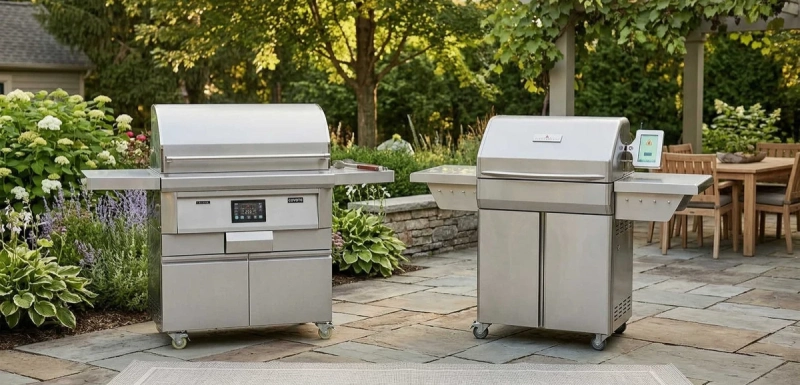
These two aren’t for someone replacing a grill. They’re for someone building an outdoor kitchen, full stop. Lynx markets itself as professional-grade, meant to slot into a custom island build. Fire Magic sits even higher, its Echelon Diamond series runs roughly $17,595 to $19,551, pricing that has nothing to do with backyard-grill economics and everything to do with commercial-grade materials and construction. You don’t buy either of these on a whim. You budget for them the way you’d budget for cabinets or countertops.
A Few Things Worth Knowing Before You Hit Order
BBQGuys sits at 3.2 out of 5 on Trustpilot across 678 reviews, which is a mixed bag, but not an alarming one. People consistently say the staff actually know what they’re talking about, delivery is often fast, and the product info on the site is thorough. The complaints cluster in a few spots: shipping dates that move without much warning, items marked in-stock that turn out to be backordered, and the occasional damaged delivery where getting a warranty claim resolved took longer than it should have. None of that is shocking for freight-shipped appliances this heavy. Just build a little cushion into your timeline if you’re ordering around an event or an installation date, and call a rep to confirm actual stock before you check out.
Why Shop BBQGuys Instead of Somewhere Else
- They’ll price-match a competitor on the identical product, no real hoops to jump through
- Financing through Bread for qualifying buyers, no repayment fees tacked on
- Staff test what they sell, down to checking stainless steel grades with an XRF gun instead of trusting the spec sheet
- An actual physical showroom, so you can put hands on a grill before dropping real money on it
- Dozens of competing brands under one checkout, which makes comparison shopping a lot less painful
Frequently Asked Questions
What’s the best budget-friendly brand at BBQGuys?
Weber, pretty much every time. The Q 1200 starts at $259, and the Genesis line covers most backyard cooks comfortably between $799 and $1,399.
Which brand should I buy for a full outdoor kitchen build?
Lynx and Fire Magic are purpose-built for custom island installs. Blaze gets you a similar built-in feel for noticeably less money if the five-figure price tags aren’t realistic.
Traeger or Memphis Grills, which is the better smoker?
Both run smart, app-connected pellet systems. Traeger’s been at it longer and has the bigger accessory ecosystem; Memphis Grills aims a tier higher with its own smart display. Either beats a plain analog pellet smoker.
Does BBQGuys actually ship on time?
Often, yes, plenty of reviewers mention fast delivery. But shifting delivery dates show up often enough in complaints that it’s worth padding your timeline, especially for big freight items, and confirming stock before you check out.
So, Which One Should You Actually Buy?
Honestly, BBQGuys’ real advantage isn’t any single brand, it’s that you can go from a $259 portable to a $19,500 built-in without ever leaving the same checkout, and the staff’s hands-on testing gives it a credibility most big-box stores just don’t have. For most backyards, Weber or Kamado Joe covers it. If you’re bridging toward a built-in setup without the luxury price tag, look at Blaze or Napoleon. And if you’ve already budgeted for a real outdoor kitchen, Lynx or Fire Magic is where that money goes. Wherever you land, give yourself some slack on delivery timing, BBQGuys’ own review history makes that worth planning around, and use the price-match policy and the showroom before you commit to anything in the five-figure range.