
Can You Wear Rothy’s in the Kitchen?
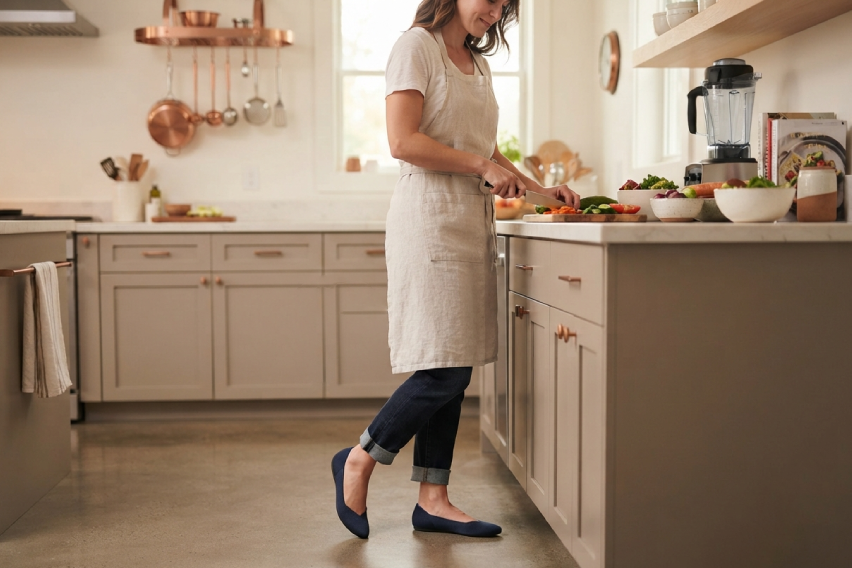
I’ll be upfront with you: this is not a question I expected to spend any serious time thinking about.
Rothy’s are fashion flats. They’re the shoes Meghan Markle wore to a castle. They live in the intersection of “sustainable lifestyle” and “I have my life together enough to spend $149 on a pair of pointed-toe flats made from recycled water bottles.” The kitchen, with its spilled olive oil and flour-dusted floors and the occasional dropped pan, does not immediately feature in that picture.
And yet.
The more I thought about it — and the more time I actually spent wearing mine around the house, including in the kitchen — the more the answer started shifting from an automatic “no” to a more considered “actually, yes, with some caveats.”
Here’s the full, honest case.
What Makes Rothy's Actually Suited to Kitchen Wear
The single feature that makes Rothy’s genuinely viable in a kitchen context is the one that defines the entire brand: machine washability.
Think about what happens to your feet in a kitchen over the course of a normal cooking session. A splash of pasta water. A dusting of flour that works its way under the counter. Olive oil on the floor that you don’t notice until your sock slides slightly. The general accumulation of cooking smells — garlic, fish, roasted vegetables — that embeds itself in fabric over time.
Now think about what happens to most shoes in that environment. They absorb it. They hold it. You wipe the outside, but the inside stays. Fabric shoes get progressively more kitchen-scented regardless of how carefully you cook. Leather shoes absorb cooking fat in ways that are genuinely difficult to reverse. Most shoes simply aren’t designed to be cleaned from the inside out on a regular basis.
Rothy’s are.
The recycled plastic knit construction that makes up the entire upper — the same material that gives these shoes their distinctive woven appearance — is fully machine washable. Gentle cycle, cold water, air dry overnight. The shoe comes out clean. Not just cleaner. Actually clean. The odors, the flour, the general kitchen accumulation — gone.
Multiple long-term Rothy’s owners confirm this holds up not just once but repeatedly, across months and years of regular washing. A PureWow editor who has owned the same pair of Rothy’s sneakers for five years describes them as maintaining their shape and structure through repeated machine wash cycles. The knit doesn’t degrade, the shape doesn’t distort, and the cleaning process is no more involved than any other item in your laundry.
For kitchen wear specifically, this is a significant practical advantage over almost every alternative at a comparable price point.
The Spill Question
Here’s where the honest answer gets more nuanced, and I want to be direct about it rather than just making the case for the purchase.
Rothy’s are not waterproof. They are not water resistant. The open-weave knit construction that makes them breathable and lightweight also means that liquid — water, cooking oil, broth, anything wet — goes straight through to your foot.
For kitchen wear, this means two things.
The first is actually fine: small splashes, flour, light mess. These sit on the surface of the knit, don’t immediately soak through if you address them quickly, and wash out completely in the next machine cycle. The everyday cooking mess that accumulates in most home kitchens — steam, light splashing, general food prep — is exactly the kind of thing the machine washability handles cleanly.
The second is genuinely not fine: significant liquid spills directly onto the shoe. If you’re draining a full pot of pasta water and some goes sideways, or you knock a glass off the counter, your feet will be wet. Not damp. Wet. The knit absorbs liquid with the same efficiency it absorbs everything else.
So the honest kitchen verdict is: Rothy’s handle normal cooking conditions well. They handle actual spills the same way any fabric flat would — which is to say, not particularly well. If you cook in a way that regularly involves significant liquid near your feet, keep that in mind.
The good news: if your feet do get wet, you throw the shoes in the wash. There’s no permanent damage. No staining. Just a cycle through the machine and they’re fine again.
The Grip and Safety Reality
This is worth addressing directly because kitchen floor safety is a genuine practical consideration, not just a theoretical one.
Rothy’s have a flat, smooth rubber sole. They’re not non-slip shoes. They’re not designed for environments where floor traction is a safety priority. On a dry kitchen floor — tile, hardwood, laminate — they perform fine. The sole grip is adequate for normal movement.
On a wet or oily kitchen floor, they’re no better or worse than any other flat-soled shoe without specific grip technology. Which means: be aware, wipe up spills when they happen, and don’t wear them in a commercial kitchen environment where floor safety standards require proper non-slip footwear.
For home kitchen use, this is rarely a practical concern as long as you’re maintaining normal kitchen floor hygiene. Most home cooks aren’t navigating oily or wet floors as a regular condition — they’re cleaning up as they go. In that context, Rothy’s grip is adequate.
The Comfort Question for Long Kitchen Sessions
Anyone who has spent three hours on their feet preparing a dinner party knows that kitchen comfort is a real, physical consideration. Standing on hard tile for extended periods in the wrong shoes produces fatigue that starts in your feet and works its way up your legs and lower back by the time you’re plating the dessert.
Here’s where I need to be honest with you about Rothy’s and arch support, because it comes up in every serious review of these shoes and it applies in the kitchen context too.
Rothy’s provide minimal arch support. The standard footbed is flat and thin. Multiple independent reviewers describe them as inadequate for extended periods of standing, particularly for anyone with flat feet, plantar fasciitis, or any pre-existing foot condition. One multi-year Rothy’s owner specifically describes needing to give away most of her pairs after having children because her support needs changed — “I just wish they had more support.”
For a thirty-minute dinner prep, this probably doesn’t matter. For a three-hour Thanksgiving cook, it might.
The practical fix, if you want to wear Rothy’s in the kitchen for extended sessions: add an aftermarket insole. A basic half-insole from any pharmacy — around $8 to $12 — provides enough additional cushioning to extend the comfortable wearing time meaningfully. It fits within the shoe without changing the external appearance and doesn’t affect the machine-washability since the insole is removed before washing.
Some Rothy’s styles now come with what the brand calls the In Love Insole — a more cushioned footbed than the original. It’s not a structural arch support insert, but it does provide more initial cushioning than the standard footbed. Worth looking for on current styles if extended standing is a concern.
Which Rothy's Style Actually Works Best in the Kitchen
Not all Rothy’s are equally suited to kitchen wear, and it’s worth being specific here rather than just saying “any pair will do.”
The styles that work best in the kitchen are the ones with the simplest construction — the fewest components that can accumulate kitchen mess and the fastest to clean. Elaborate bows, multiple-part closures, and delicate embellishments create more surface area for flour and cooking residue to settle into.
The styles with more structural complexity — the Mary Jane with the bow tie that must be tied tightly, the clog with the ankle construction — have also shown more durability concerns in independent reviews generally. A Mary Jane strap tearing after a few wears, clogs showing wear at the ankle area. These aren’t defects specifically related to kitchen use, but they suggest that the simpler, more structurally straightforward styles are better long-term bets.
For the kitchen specifically, the flat slip-on styles are the clear recommendation. Easy on, easy off, no components to catch mess, fully machine-washable from a single piece of knit construction.
The Smell Issue — and Why It's Actually Less of a Problem Than You'd Think
Every honest review of Rothy’s eventually mentions the smell concern. The recycled plastic knit doesn’t breathe the way natural materials do. After enough wear in warm conditions — a summer kitchen, an evening of cooking over a hot stove — they can develop an odor.
In a regular shoe, this is a problem you manage around. You spray them, air them out, hope for the best.
In Rothy’s, this is a problem you solve directly. Machine wash. Gentle cycle. Cold water. Air dry overnight. The next morning the shoes smell like nothing at all.
The kitchen is actually one of the better use cases for Rothy’s specifically because it’s an environment where regular washing makes sense anyway. You’re cooking. Your clothes go in the wash. Your apron goes in the wash. Throwing your Rothy’s in on the same cycle is a perfectly natural extension of the post-cooking cleanup routine rather than an additional chore.
The Honest Bottom Line
Can you wear Rothy’s in the kitchen? Yes, with clear eyes about what you’re working with.
They handle everyday home cooking conditions well. They clean up completely and repeatedly through machine washing. They’re comfortable for moderate cooking sessions, more comfortable with an added insole for longer ones. They look significantly better than dedicated kitchen shoes, which means you can go from food prep to having people over without changing your footwear.
What they won’t do: protect your feet from significant liquid spills, provide non-slip grip on genuinely wet floors, or support your arches through a marathon cooking session without some help.
The machine-washability is the thing that makes this work. Without it, Rothy’s would be a terrible kitchen shoe. With it, they become a genuinely practical option for home cooks who want something that looks good, performs adequately, and can be fully cleaned after every use.
The Products: Which Rothy's to Buy for Kitchen Wear
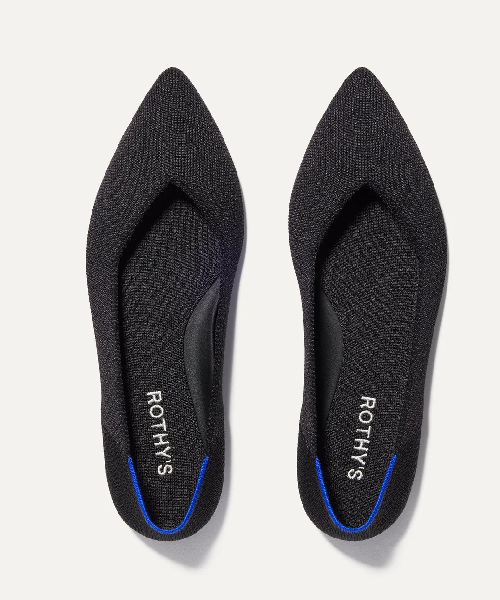
The brand’s flagship pointed-toe flat and the strongest recommendation for kitchen wear. The construction is a single piece of knit with a flat rubber sole — minimal components, maximum washability, no delicate elements to catch cooking mess. The Point is also the most extensively reviewed style in the entire Rothy’s catalog, with multiple 4–5 year ownership accounts confirming it holds up through repeated machine washing cycles.
Size up half a step from your usual. The toe box runs narrow and this is consistent across independent reviews — ordering your standard size will leave your toes compressed.
Best for: Home cooks who want a smart-looking flat that functions well during normal cooking sessions and cleans up completely afterward.
Care in the kitchen: Machine wash on gentle cycle, cold water, air dry. Do not tumble dry. If an aftermarket insole is added for support, remove it before washing.
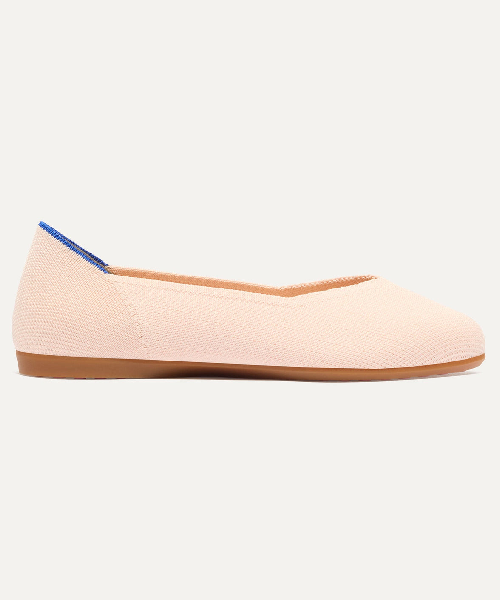
The rounded-toe version of The Point, offering the same single-knit construction and full machine washability in a slightly more relaxed silhouette. Where The Point’s pointed toe can feel slightly more formal, The Flat reads as everyday casual — which many home cooks find more appropriate for kitchen and around-the-house wear.
The same size-up-half-a-step guidance applies. The Flat runs narrow across the toe box in the same way The Point does.
Best for: Buyers who find pointed toes uncomfortable for extended wear or who prefer a more casual everyday silhouette for home cooking and kitchen use.
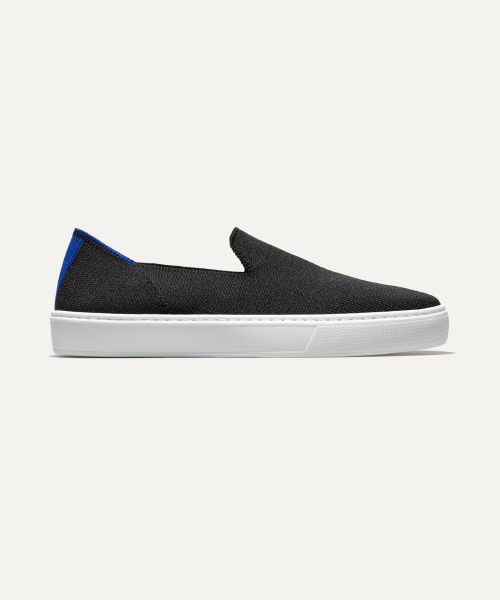
If you want the most comfortable Rothy’s for extended kitchen sessions, this is the one. The sneaker construction is the most accommodating silhouette in the lineup — it’s the style most often recommended for wider feet, and it provides slightly more structure around the foot than the flat styles. Multiple reviewers describe it as the most comfortable option for longer-duration wear.
It’s also the style with the strongest durability evidence in the entire catalog. A PureWow editor’s five-year ownership account is specifically about the sneaker — through repeated machine washes, the knit remained intact and the shape was maintained. That’s the kind of confirmed long-term durability that matters when you’re using a shoe in an environment where regular washing is part of the routine.
Best for: Home cooks who spend longer periods on their feet in the kitchen, buyers with slightly wider feet, and anyone who prioritizes durability and comfort over the more polished appearance of the flat styles.
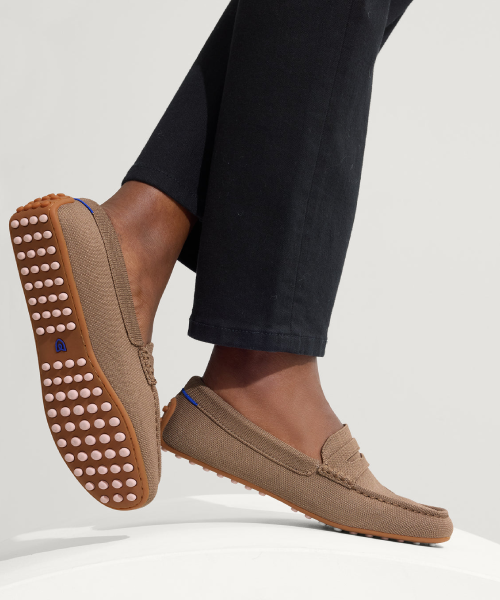
A loafer-adjacent slip-on that sits between the flat styles and the sneaker in terms of formality. Easy to get on and off — relevant in kitchen contexts where you might be stepping out to the garden and back — and the same fully machine-washable single-knit construction.
One documented note from independent reviews: the loafer and driver category has shown slightly more fabric durability variation than the core Point and Sneaker styles. At least one account describes loafer fabric deteriorating after hand-washing with mild detergent. For kitchen use specifically, machine wash rather than hand-wash, and this concern is largely avoided.
Best for: Home cooks who want a slightly more structured silhouette than a flat but don’t want the athletic look of the sneaker. Good for the transition from kitchen to sitting down with guests without looking like you’re wearing cooking shoes.
A Note on Insoles
If you’re planning to use Rothy’s for extended kitchen sessions — think full holiday cooking, lengthy dinner party prep, or any situation where you’re on your feet for two hours or more — add a basic half-insole before you start. Around $8 to $12 at any pharmacy. The arch support in Rothy’s standard footbed is minimal, and the insole makes a meaningful practical difference for longer wear without affecting the shoe’s appearance or machine-washability. Remove the insole before washing, replace it after.
Quick Reference: Rothy's in the Kitchen
The Point | The Flat | The Sneaker | The Driver | |
Kitchen suitability | ✅ Strong | ✅ Strong | ✅ Strong | ✅ Good |
Machine-washable | ✅ Yes | ✅ Yes | ✅ Yes | ✅ Yes |
Best for extended standing | Average | Average | ✅ Best | Average |
Wide foot suitability | Narrow | Narrow | ✅ Most accommodating | Moderate |
Ease of on/off | Slip-on | Slip-on | ✅ Slip-on | ✅ Slip-on |
Durability evidence | ✅ 4–5 year accounts | Good | ✅ 5-year account | Good |
Starting price | $149 | $145 | $149 | $149 |