
Inside Noom: Psychology-Driven Wellness or Just Another Diet App?

In a world obsessed with quick fixes and flashy diet trends, Noom stands out with its unusual promise: It’s designed to help you lose weight by changing your mindset about food, not just what you eat. Noom promises a blend of psychology, technology, and nutrition and markets itself as a “behavioral health platform” rather than a diet app. But does it actually deliver on this promise, or is it just another cleverly disguised calorie counter?
Let’s take a closer look at what Noom really offers, how it works, and whether it’s worth your time (and money).
What Exactly Is Noom?
At its core, Noom is a mobile app designed to help users achieve their health goals—most commonly weight loss—through behavioral change and self-awareness. Rather than focusing solely on calories or eliminating certain food groups, the app encourages users to understand why they eat the way they do.
When you first sign up, Noom asks you a series of questions about your goals, habits, medical history, and preferences. It then creates a personalized plan that includes daily calorie goals, short psychology-based lessons, and access to a personal coach. The idea is to help users identify emotional triggers, develop sustainable habits, and transform their relationship with food.
How Noom Works?
Noom’s system is based on four main pillars:
- Behavioral psychology:
Noom is based on cognitive behavioral therapy (CBT). Users read short daily lessons on topics such as willpower, stress eating, and habit loops. These are designed to help them rethink automatic behaviors and emotional eating patterns. Food Tracking:
Like most diet apps, Noom uses a food tracking feature. However, instead of labeling foods as “good” or “bad,” it uses a color-coded system:• Green foods: Low-calorie, nutrient-dense options (like fruits and vegetables).
• Yellow foods: Moderately high in calories, to be consumed mindfully (like grains and lean meats).
• Red foods: High-calorie foods that should be eaten in smaller portions (like sweets or fried foods).
This simple visual approach helps people make better choices without feeling overly restricted.
- Coaching and Support:
Each user is assigned a goal coach who encourages them, answers questions, and provides accountability. While not the same as a nutritionist, coaching adds a human element that engages and motivates users. - Progress tracking:
Noom helps you weigh yourself daily, count your steps, and track your progress. This continuous monitoring helps you keep track of your habits and celebrate small successes.
- Behavioral psychology:
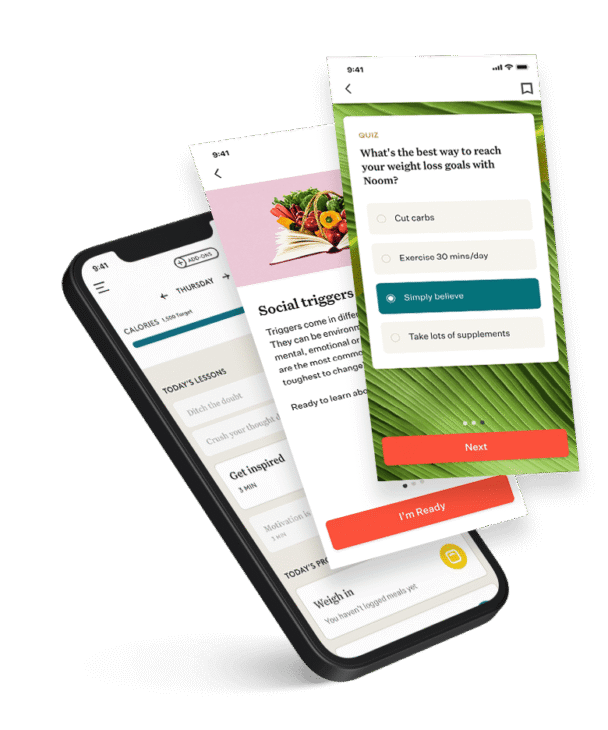
Daily lessons on your terms
Our personalized lessons help you gain confidence and acquire practical knowledge you can apply immediately. The amount of time you spend on each lesson is up to you, so you can easily fit Noom into your schedule.
Get Motivated
With one-on-one coaching, support groups, and SOS plans, you can choose the type of support you need to keep going.
At Your Speed
Our tracking tools for nutrition, exercise, and more are designed to help you reach your goals at a pace that’s comfortable for you.
What People Love About Noom?
- Mindset instead of restriction
Noom’s greatest advantage is that it focuses on why you eat, rather than simply telling you what to eat. By addressing emotional triggers and unhealthy thought patterns, it helps many users develop a healthier, more conscious relationship with food. - Learning Content That Sticks
Unlike traditional calorie-counting apps, Noom offers interactive mini-lessons that teach you more about nutrition, motivation, and behavioral psychology. The content is easy to understand and even fun, helping users internalize healthier habits over time. - Flexibility without guilt
Since no food is forbidden, users can continue to enjoy their favorite dishes – just more consciously and in moderation. This flexibility is a blessing for people who are tired of restrictive diets. - Accountability & Structure
Daily check-ins, progress charts, and motivational messages make it easier to stay on track. The combination of data and motivation helps maintain momentum, especially during periods of stagnation. - Sustainable and long-term habits
Noom’s goal isn’t just a few months of weight loss, but to support long-term behavioral changes. Users who fully adhere to the habits often develop better portion control and self-discipline.
- Mindset instead of restriction
What Falls Short?
While Noom’s concept is innovative, it’s not perfect. Here are some of its shortcomings you should be aware of before signing up:
- Coaching can feel impersonal
Although each user is assigned a coach, the responses sometimes seem generic or automated. The experience varies depending on the coach’s workload, which can make the interaction feel less personal than advertised. - The app is time-consuming
Noom requires daily commitment—logging meals, completing lessons, checking in with your coach, and weighing yourself. For busy people, this routine can quickly become overwhelming. - Subscription Costs
Noom isn’t cheap. While long-term subscriptions are more affordable, the monthly costs can seem high, especially compared to free apps. If you don’t regularly use all of Noom’s features, the value drops significantly. - Counting calories can be triggering
Although Noom focuses on psychology, counting calories and weighing yourself daily can be problematic for people with eating disorders. It’s a delicate balance between responsibility and obsession. - Results depend on consistency
Noom doesn’t offer instant results. If you skip lessons or stop tracking, your progress can stall. The app is best for people who are willing to stay active every day.
- Coaching can feel impersonal
Pricing Breakdown
Noom uses a subscription model. Exact prices can vary depending on the duration, with users typically paying more for shorter subscriptions and less for annual subscriptions. The costs cover access to the app, lessons, the food database, and coaching.
For many, the price seems justified given the educational and psychological support. However, for others who simply want a nutrition tracker, the cost may seem unnecessary compared to cheaper alternatives.
The User Experience
The app’s design is modern, colorful, and motivating. The friendly tone and playful structure make the app feel less like a diet and more like a journey toward personal development. The daily lessons are short and lighthearted—often with a touch of humor—making self-improvement feel accessible and non-clinical.
However, the daily reminders, notifications, and quizzes might be too much for people who prefer a more relaxed approach to wellness. This app works best when you actively engage with it.

Let’s Get Psychological
When you sign up for Noom, you’ll receive short daily lessons based on the latest research in psychology and behavioral science.
Our personalized courses are fun, easy to follow, and help you build your confidence with tools you can put into practice from day one.
You’re The Boss
You decide how Noom fits into your life. Not the other way around. You decide how much time you spend on our app. We also don’t tell you what you can and can’t eat, because we don’t believe in “good” or “bad” foods. Instead, we give you the knowledge and wisdom you need to make informed choices that fit your lifestyle.


Personal Coaching For Your Personal Goals
Noom provides each user with a personal coach who supports them throughout their journey. Most Noom users are successful when they have someone to hold them accountable. However, we understand that coaching isn’t for everyone. That’s why you have the option to choose the type of support you need to achieve your goals.
Progress Over Perfection
Weight tracking, food and water tracking, and step counting—Noom’s tools help you achieve your goals and manage your progress. Because the weight loss process is full of ups and downs, and we believe everyone should be able to achieve their personal goals at their own pace.
Who Should Try Noom
- Those who love learning: If you want to understand why you make certain decisions and appreciate structured guidance, Noom’s lessons are for you.
- Those who need accountability: A coach and daily reminders help maintain motivation.
- Users seeking flexibility: Noom allows you to enjoy food without guilt, making it easier to stick with it in the long run.
- Those who are ready for daily commitment: It’s not an app you just set up and forget about; it requires consistency.
Who Should Avoid It
- People with eating disorders: Counting calories and weighing themselves could rekindle unhealthy behaviors.
- People looking for quick fixes: Noom isn’t about quick results, but rather a slow, mindset-based approach.
- Users who don’t like daily tracking: If you find logging every meal tedious, you’ll likely find it frustrating.
- Budget-conscious people: The monthly subscription may not be worth it if you’re not fully committed.
Final Verdict: Psychology-Driven Wellness or Just Another Diet App?
However, counting calories and weighing yourself daily ties you into the world of diets. For some, this structure provides discipline and clarity. Others find it restrictive and unnecessary.
Ultimately, Noom is best suited for people who want to change their mindset—not just their eating plan. If you’re willing to learn, reflect, and stay consistent, Noom can be a powerful tool for lasting change. However, if you’re looking for an effortless way to lose weight, it might be too challenging or too expensive for you.
Bottom line:
Noom isn’t just another diet app—nor is it a wellness revolution. It’s an intelligent hybrid: a digital coach that combines psychology, nutrition, and accountability to help you develop a healthier and more balanced relationship with food.